FW
38th Milano Unica concludes with increased focus on Made-in-Italy products
Held in early February, the 38th edition of Milano Unica ended on a successful note with international brands expressing their interest in Made-in-Italy fabrics and accessories.
The opening ceremony was graced by Adolfo Urso, Italian Minister of Businesses and Made-in-Italy Manufacturing. During the event, Alessandro Barberis Canonico, Outgoing President, ceremoniously passed the baton to his successor, Simone Canclini.
Simone Canclini, President, Fondazione del Tessile Italiano and CEO, eponymous company established in 1925 in the silk district of Como, is renowned for producing luxury fabrics. For Milano Unica, Canclini produced an excellent product through a seamless continuation of efforts to cultivate growth, particularly within the premium and luxury segments.
During his inaugural address, President Canclini highlighted the two critical factors that contribute to Milano Unica's ongoing success:
The first factor pertains to the exhibitors. Exhibitors at the event represented a diverse array of small, medium, and large enterprises, meticulously selected for their unwavering passion and ability to navigate challenges through innovation.
The second factor revolves around the esteemed visitors, the discerning clients of the industry's finest companies. They attend Milano Unica with confidence, knowing they will encounter collections of exceptional quality.
Government announces extension of the ‘Samarth’ scheme for textiles
The central government has announced the extension of the 'Samarth' scheme, a flagship initiative aimed at bolstering capacity building in the textiles sector, for an additional year. The Ministry of Textiles disclosed that the scheme, which was slated to conclude on March 31, 2024, will now continue within the original budget of Rs 390 crore. Approved by the Department of Expenditure under the Ministry of Finance, this decision underscores a dedicated effort to enhance skill development and employment prospects within the textile industry.
Structured as a demand-driven and placement-oriented skilling scheme, Samarth was crafted under the comprehensive skilling policy framework of the Ministry of Skill Development & Entrepreneurship. Its primary goal is to stimulate job creation within the organised textile and related sectors. The scheme encompasses the entire textile value chain, excluding spinning and weaving, and prioritises aligning training programs with dynamic technological and market demands, both domestically and internationally.
Furthermore, the scheme introduces a specialised provision for upskilling and reskilling programs to augment the productivity of existing workers in the apparel and garment segments. This reflects the government's commitment to fostering continuous learning and development in the workforce. Notably, Samarth extends its support to traditional textile sectors such as handloom, handicraft, silk, and jute, addressing their upskilling and reskilling requirements.
Implemented through various partners including textile industry associations, state government agencies, and sectoral organisations of the Ministry of Textiles.
Samarth incorporates advanced features such as a Biometric Attendance System, Training of Trainers, CCTV recording of training sessions, dedicated helpline numbers, mobile apps, Web-based Management Information Systems (MIS), and online monitoring mechanisms. These technological interventions ensure transparency, accountability, and accessibility in the skilling process, making information readily available to stakeholders and the public.
IKEA to step up relocation of production operations to Turkey
Renowned Swedish furniture giant, IKEA is planning to relocate more of its production operations to Turkey in response to challenges in global supply chains and rising shipping costs. Kerim Nisel, Chief Financial Officer- Turkey, highlights the brand’s intention to manufacture various products locally, such as armchairs, bookcases, wardrobes, and kitchen cabinets, which are currently shipped over long distances from East Asia to markets in the Middle East and Europe.
Nisel emphasises the lessons learned during the COVID-19 pandemic, stressing the importance of diversification in production locations. He underlines the inefficiency of relying solely on manufacturing in one country and then transporting goods worldwide, particularly in light of shipment disruptions experienced during the pandemic.
IKEA already operates seven stores in Turkey and has a robust export business, with exports exceeding imports threefold. The company currently manufactures textile, glass, ceramic, and metal products in Turkey for global distribution.
The decision to shift more production to Turkey aligns with similar moves by other European brands, such as Benetton, which are increasingly decentralising production by expanding manufacturing in regions closer to their main markets.
Turkey's strategic geographic position straddling Europe and the Middle East makes it an attractive location for manufacturing, particularly amid shifts in global supply chains.
However, despite the advantages of Turkey's location and manufacturing capabilities, challenges persist, notably currency fluctuations. It is difficult to hedge against fluctuations in the Turkish lira, particularly with interest rates exceeding 20 per cent, says Nisel. To mitigate currency risks, IKEA employs short-term hedging contracts ranging from 3 to 6 months, he adds.
Paradised expands into menswear for spring 2024 season
For the upcoming spring 2024 season, Paradised is expanding into the menswear category. The brand is launching new collection featuring T-shirts, cardigans, sweaters, dress shirts, and trousers, priced between $90 and $500.
Sinje Lesemann, Creative Director, says, she had a longstanding interest in venturing into menswear. A rise in the number of male customers purchasing items from the women’s collection gave the brand an opportunity to explore this avenue further.
The collection stays true to Paradised's resortwear aesthetic, incorporating core design elements from its existing line. Lesemann utilised the brand's distinctive Turkish towel fabric for several pieces, such as the Wylie dress shirt adorned with fringe. Additionally, the brand remains committed to sustainability by offering T-shirts dyed with botanical extracts, all of which are crafted in Brooklyn.
Drawing inspiration from workwear, Lesemann introduced structured trousers made from faded gauze fabric. By incorporating workwear influences into its signs but imbuing them with its signature faded gauze, the brand blends functionality and style suitable for both resort and city settings.
Since rebranding from Koza to Paradised in 2018, the brand has experienced steady growth. Lesemann attributes some of this success to strategic collaborations during the COVID-19 pandemic, including partnerships with SoulCycle and Bandier. Looking ahead, the brand is preparing to launch a home collection.
India Tightens Belt on Chinese Textiles: A cause for celebration or missed opportunity?
India's recent move to impose a minimum import price (MIP) of $3.50 per kilogram on specific synthetic knitted fabrics from China has sparked debate within the textile industry. This policy follows earlier restrictions on fibre and yarn imports under Quality Control Orders (QCO)/Bureau of Indian Standards (BIS) regulations. The subject perhaps requires a deeper look analyses into its potential impact.
India's Import Curbs on China: A multi-layered story
The effectiveness of the MIP in curbing imports from China is debatable. Proponents argue that the minimum price will deter cheap imports, creating a level playing field for domestic manufacturers. However, skeptics point out that the $3.50 threshold might be easily surpassed by Chinese exporters through minor quality adjustments or by focusing on high-value fabrics not covered by the MIP.
Why China?
Despite having its own resources, India relies on China for textile imports due to several factors. China boasts a robust textile ecosystem with economies of scale, leading to lower production costs. Additionally, China offers a wider variety of fabrics and quicker turnaround times, crucial for the fast-fashion industry.
Shifting strategies?
The import curbs might incentivize Chinese exporters to shift focus to finished garments. This could play out in two ways:
Duty-Free route: China could export raw materials duty-free to countries like Bangladesh with lower labor costs. These countries could then manufacture garments and export them duty-free to India, bypassing the fabric import restrictions.
Value-Added products: China might increase exports of value-added products like high-end clothing, which might not face the same level of scrutiny as fabrics.
Policy lacuna or manufacturing woes?
The policy could be a symptom of a larger issue: a lack of competitiveness in the Indian textile industry. Upgrading technology, improving efficiency, and focusing on innovation are crucial to compete with China in the long run.
China's Role: Subsidies and dumping?
China's alleged practice of subsidizing its textile industry and dumping excess supplies at lower prices has long been a source of contention. While India has mechanisms to address dumping, stricter enforcement might be necessary.
Data snapshot
A glimpse of India's textile imports from China in recent years, with the latest available data (data sources: Ministry of Textiles, DGCI&S):
|
Year |
Fibre Imports (USD Mn) |
Yarn Imports (USD Mn) |
Fabric Imports (USD Mn) |
Garment Imports (USD Mn) |
Knitted Garment Imports (USD Mn) |
|
2022-23 (Estimated) |
2,550 |
2,000 |
5,500 |
8,500 |
1,200 (Bangladesh) |
|
2021-22 |
2,350 |
1,870 |
5,200 |
8,100 |
1,050 (Bangladesh) |
|
2020-21 |
1,980 |
1,540 |
4,700 |
6,800 |
900 (Bangladesh) |
Short-term to mid-term impact
The MIP might lead to a temporary dip in Chinese fabric imports, potentially benefiting domestic producers of those specific fabrics. However, Chinese exporters might find alternative strategies like focusing on high-value fabrics or finished garments. Increased scrutiny on Chinese garment imports, particularly from countries like Bangladesh, can be expected.
Long-term impact projections
The success of the policy hinges on India's ability to address competitiveness issues within its textile sector. Modernization, skill development, and a focus on niche markets are crucial for long-term success. India might need to revisit its trade policies to ensure a balance between protecting domestic interests and fostering healthy competition.
Impact on knitted garment imports
This concern is particularly relevant for knitted garment imports, which have seen a significant rise from China in recent years. Bangladesh, another major textile exporter, could also benefit from this shift. Data shows knitted garment imports from Bangladesh have been on the rise as well.
The actual outcome will depend on various factors, including global economic conditions, trade policies of other countries, and the effectiveness of India's initiatives to strengthen its domestic textile sector.
Kering proposes three independent Directors for Board
Kering, the luxury goods conglomerate, is set to bolster its Board of Directors with three new independent members: Rachel Duan, Giovanna Melandri, and Dominique D’Hinnin. The nominations, subject to approval at the Annual General Meeting on April 25, 2024, signal the company's strategic focus on diversity and expertise.
Rachel Duan, a seasoned executive with a 25-year tenure at General Electric, brings extensive knowledge of the Asian market and international corporate governance to the table. Giovanna Melandri, renowned for her expertise in sustainability and cultural affairs, promises to enhance Kering's commitment to social responsibility. Dominique D’Hinnin, with his vast experience as Chairman of Eutelsat Communications and former roles at Lagardère group, strengthens the board's financial acumen and governance expertise.
If ratified, these appointments will expand the Board to 13 members, with a notable 64 per cent being independent and 55 per cent representing women. The diversity extends beyond gender, with directors hailing from six different nationalities.
These nominations come on the heels of departures from the board, including Jean-François Palus, Tidjane Thiam, and Emma Watson, reflecting a dynamic shift in leadership and expertise within the company.
Kering’s strategic move underscores its commitment to global perspectives, sustainability, and effective governance, positioning the company for continued growth and resilience in the luxury goods market.
IHKIB and WRAP sign deal to boost Turkish apparel exports to USA
In a strategic move to bolster the global competitiveness of Turkey's apparel industry, the Istanbul Apparel Exporters' Association (IHKIB) has joined hands with the Worldwide Responsible Accredited Production (WRAP). This collaboration holds significant promise as IHKIB, representing a staggering 80 per cent of Turkey's apparel exports, seeks to empower its members in navigating international markets and staying attuned to sectoral advancements.
IHKIB's proactive engagement with its members includes fostering partnerships and initiatives with various ministries to bolster and streamline export activities. With the lion's share of Turkish apparel exports flowing through IHKIB members, the association assumes a pivotal role in both the national and international trade landscape.
Highlighting the importance of WRAP certification in enhancing global market competitiveness, both IHKIB and WRAP emphasized the benefits of aligning with WRAP's standards. WRAP, a US-based non-profit organization, champions safe, ethical, and lawful working conditions in the textile and apparel industry. For the more than 3,500 WRAP-certified facilities worldwide, the certification not only alleviates audit fatigue but also elevates their appeal to leading brands and retailers by showcasing commitment to workers' rights, safety, and environmental sustainability.
The collaboration between IHKIB and WRAP extends beyond mere certification endeavors. Marking a significant milestone, the two entities inked a Good-Will Agreement aimed at bolstering business relations between Turkey and the USA. This agreement encompasses a pilot project designed to identify leading Turkish apparel companies exporting to the USA and encourage them to attain WRAP certification. In reciprocation, WRAP will provide comprehensive training, both in-person and virtual, to aid these facilities in the certification process.
Expressing optimism about the collaboration, Selcuk Mehmet Kaya, Chairman of IHKIB's International Relations and Sustainability Committee, underscored its alignment with IHKIB's mission to guide members towards excellence and sustainability, thereby contributing to increased Turkish apparel exports in the lucrative US market. Avedis Seferian, President and CEO of WRAP, echoed this sentiment, emphasizing WRAP's commitment to promoting responsible practices and its eagerness to support Turkish exporters in achieving success on the global stage.
Kulin Lalbhai appointed as the new Chairman of CII-Gujarat
Currently serving as the Executive Director, Arvind Ltd, Kulin Lalbhai has recently been appointed as the Chairman of the Confederation of Indian Industry (CII) Gujarat State Council for the term 2024-25.
During his tenure at Arvind Ltd, Lalbhai has been instrumental in spearheading innovative initiatives within the group's consumer businesses. He has been actively involved in the establishment of various retail concepts and has been a key figure in driving the group's digital strategies. Additionally, Kulin has significantly contributed to shaping the corporate strategy of the organization.
With an MBA from the prestigious Harvard Business School and a BSc in Electrical Engineering from Stanford University, Kulin Lalbhai brings a wealth of experience to his new role. Prior to joining Arvind Ltd, he served as a Management Consultant at McKinsey & Co.
As the Chairman of the CII Gujarat State Council, Kulin Lalbhai is set to lead the council in advancing the interests of Gujarat's industries and fostering economic growth in the region. His leadership is anticipated to strengthen collaboration between industry stakeholders and government bodies, driving initiatives aimed at enriching Gujarat's industrial ecosystem.
PHMA pledges collaboration with government to boost textile exports
The Pakistan Hosiery Manufacturers Association (PHMA) has pledged to collaborate closely with the new government to boost exports and reignite growth in the value-added textile industry.
Farrukh Iqbal, Zonal Chairman, PHMA, emphasised the importance of supporting the value-added apparel sector, particularly in light of the declining exports to EU countries, which he deemed a significant concern.
Iqbal applauded the recent allocation of Rs 65 billion by Prime Minister Shehbaz Sharif's government for clearing pending refunds of exporters up to the previous month of 2024. He commended the efforts of key officials including Finance Minister Muhammad Aurangzeb and Commerce Minister Jam Kamal Khan, expressing optimism that this move would invigorate confidence among exporters and stimulate the export sector.
However, he cautioned against the continuous escalation of energy prices, warning that persistent hikes in gas and power rates could exacerbate inflation and render Pakistani textile products uncompetitive in the global market. Iqbal urged the government to ensure a level-playing field by maintaining regionally competitive energy tariffs and upholding schemes such as the Duty Drawback of Local Taxes and Levies (DDTL).
Highlighting the decline in exports to the EU, Iqbal pointed out a 7.54 Y-o-Y per cent decline in the first seven months of the current fiscal year, attributing it to reduced demand in various European regions. He stressed the need for continuation of concessionary energy tariffs to foster a level-playing field with regional competitors.
PHMA leaders Amanullah Khan and Khawaja Musharaf Iqbal echoed these sentiments, emphasising the challenges faced by Pakistani exporters despite preferential access to EU markets under the Generalised System of Preferences Plus (GSP+). They emphasised the urgency of resolving liquidity issues in the industry and adopting new technologies to enhance Pakistan's export competitiveness.
Top 10 Key trends at Moscow Fashion Week 2024 from Russian Designers
This analysis of the Moscow Fashion Week presentations reveals several key trends in Russian fashion for the season:
1. Reinterpreted tradition
Modern designers are drawing inspiration from historical clothing and traditional wear, incorporating elements into contemporary silhouettes. (e.g., Abzaeva, MEASURE)
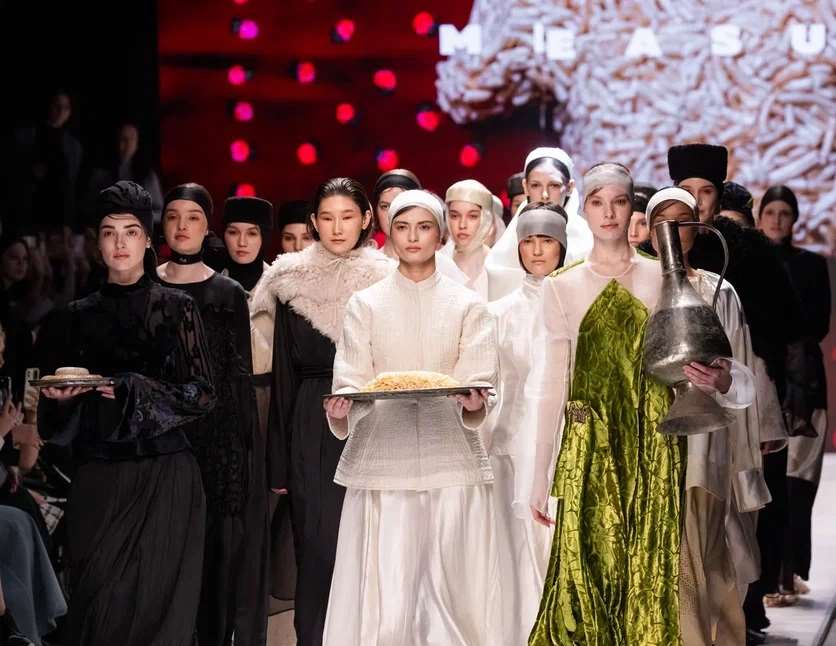
This reimagination often involves a fusion of different eras and cultures, resulting in unique and layered pieces. (e.g., MEASURE)
2. Bold femininity
The focus is on strong and confident women with collections that exude sensuality and a touch of rebellion. (e.g., LI LAB, VESTIAIRE)
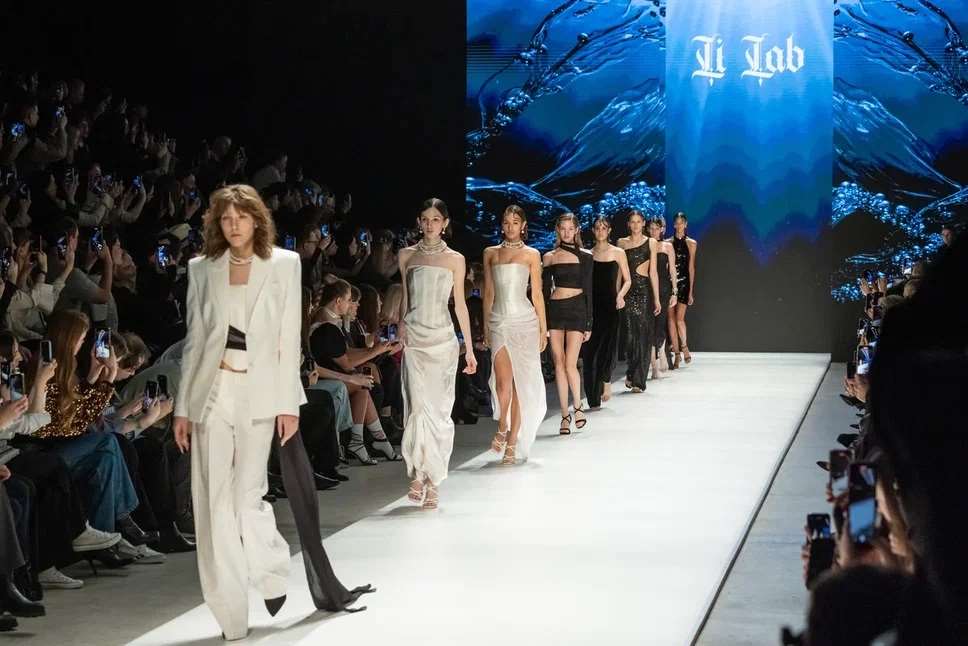
This is achieved through elements like corsets, figure-hugging silhouettes, daring cuts, and high slits. (e.g., LI LAB, BEENA)
3. Playful romance
Alongside the bold statements, there's a softer side to the trends with designers incorporating ruffles, lace, and floral motifs. (e.g., ZA_ZA, MaisonESVE)
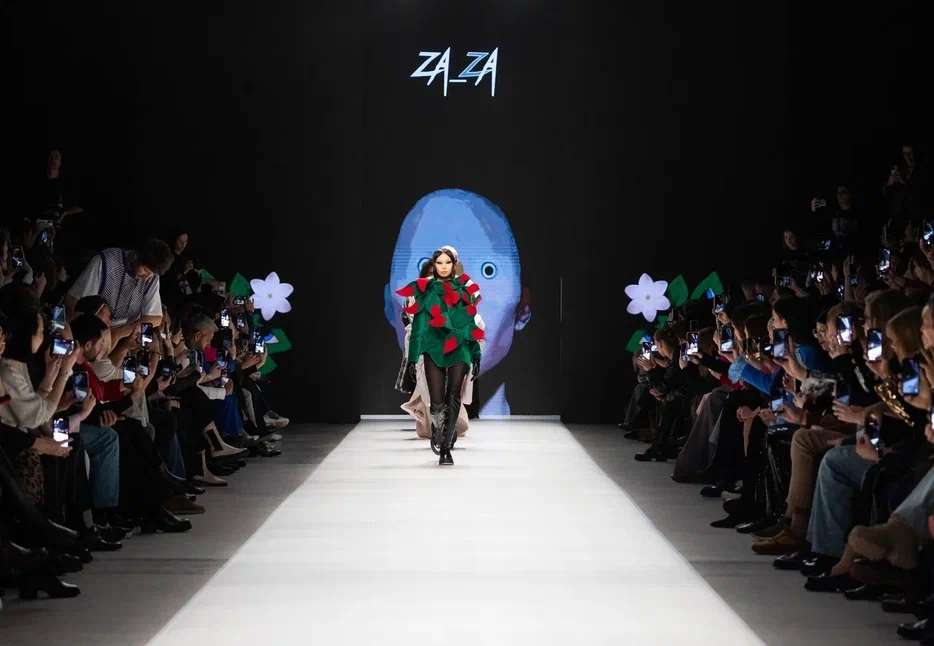
This romantic theme is often balanced with modern elements or unexpected pairings for a fresh look. (e.g., TOOMATCH)
4. Sustainable and upcycled fashion
Environmental consciousness is reflected in the use of recycled materials and upcycling techniques. (e.g., by/DAS/)

Designers are finding innovative ways to breathe new life into existing materials, creating unique and sustainable pieces.
5. Textured fabrics and layering:
Designers are experimenting with various textures and layering to add depth and visual interest to their collections. (e.g., MEASURE, DARYA KIPRIYANOVA)
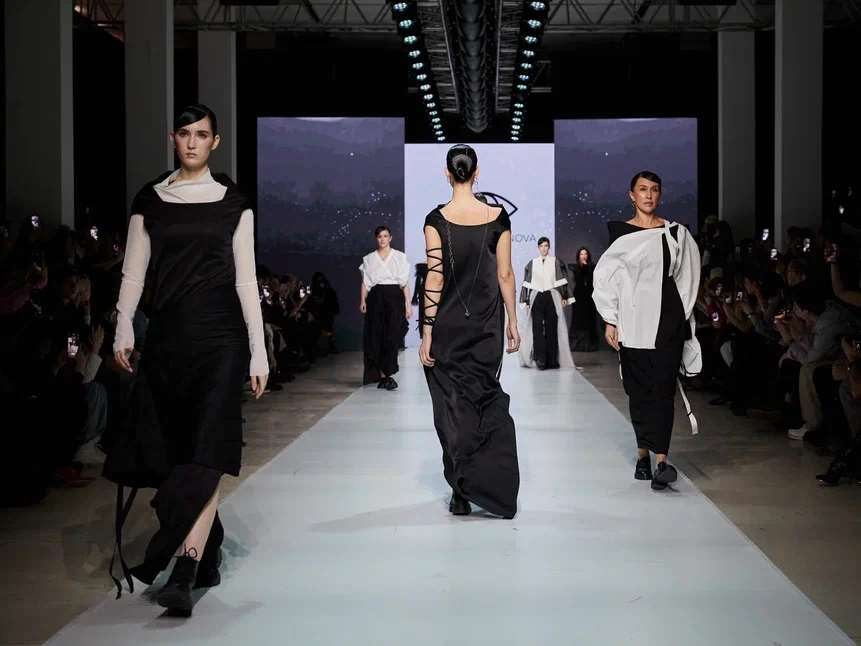
This can involve combining different fabrics, using sheer elements, and employing intricate layering techniques.
6. Monochromatic palettes
Black and white continue to be prominent colors, offering a timeless and sophisticated look. (e.g., KISSELENKO, BEENA)

However, other designers are using bold color palettes and vibrant hues for a statement-making effect. (e.g., LUTANI, VASSA&Co)
7. Futuristic elements
Some designers are incorporating futuristic elements into their collections, with a focus on unconventional cuts and technological materials. (e.g., IMK, SOLANGEL)

This trend is often paired with bold colors and dramatic silhouettes for a space-age aesthetic.
8. Gender fluidity
Several collections blur the lines between traditional menswear and womenswear silhouettes. (e.g., SASHINA DESIGNER LABEL)
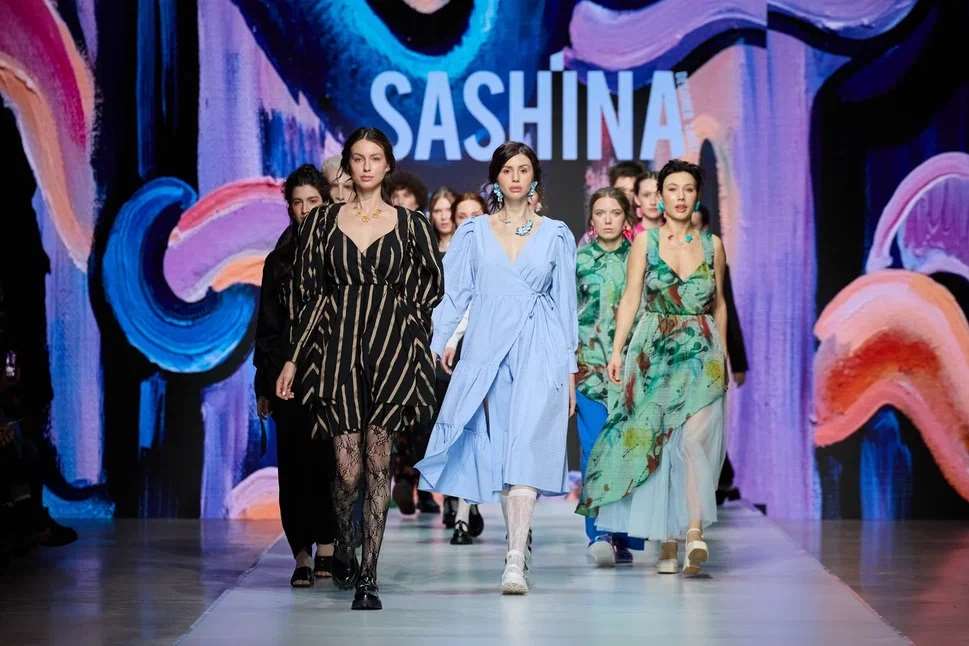
This reflects a move towards a more fluid and inclusive approach to fashion.
9. Focus on practicality
Alongside the avant-garde pieces, there's an emphasis on comfortable and practical clothing for the modern woman. (e.g., VESTIAIRE)

Designers are incorporating elements like versatility and functionality into their garments.
10. Artisanal details
Handcrafted elements, intricate embroidery, and unique embellishments add a personal touch and elevate the collections. (e.g., Gerda Irène, LESEL)
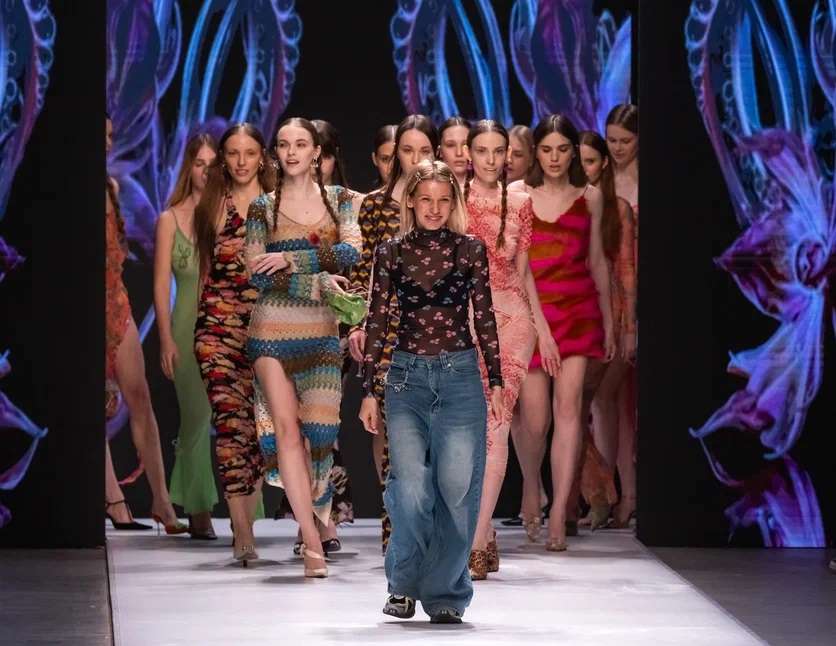
This focus on craftsmanship highlights the individuality and artistry within the fashion industry.
These trends showcase the diverse and innovative spirit of contemporary Russian fashion. Designers are drawing inspiration from various sources, experimenting with materials and silhouettes, and pushing the boundaries of traditional styles. Moscow Fashion Week serves as a platform for these emerging talents and established brands to present their unique visions and shape the future of fashion.