


FW
Fashion brands, innovators join forces for Earth Day forest protection
Fifteen prominent companies have made a commitment to cease sourcing from Ancient and Endangered Forests in their textile and packaging supply chains, marking Earth Day with a resounding dedication to environmental sustainability. Spearheaded by Canopy, an influential environmental non-profit, this pledge underscores a pivotal shift towards preserving vital ecosystems while advancing the cause of environmental stewardship.
Among the forward-thinking brands joining this initiative are John Lewis & Partners, Kering, C&A, and others, demonstrating a collective resolve to prioritize the well-being of both people and the planet. With an estimated 3.4 billion trees felled annually for man-made cellulosic fibre and paper packaging, the urgency of this commitment cannot be overstated.
In addition to safeguarding critical forests, these companies pledge to invest in low-carbon, circular fibre alternatives such as Next Gen materials. Marija Rompani, Director of Sustainability & Ethics at the John Lewis Partnership, expressed enthusiasm for this initiative, highlighting its alignment with the company's ethos of environmental responsibility.
Recognizing forests as indispensable guardians of global climate stability, these commitments signify a pivotal step towards mitigating climate change and preserving biodiversity. Rachel Kolbe Semhoun, Head of Sustainable Sourcing and Nature Initiatives at Kering, emphasized the importance of avoiding sourcing from vital ecosystems in their biodiversity strategy.
Moreover, this initiative showcases the innovative prowess of Next Gen companies such as BlockTexx and Nordic Bioproducts, offering sustainable alternatives to traditional forest-based materials. As regulatory frameworks evolve to address deforestation and climate concerns, these innovators stand poised to revolutionize global supply chains with their climate-friendly solutions.
Nicole Rycroft, Founder and Executive Director of Canopy, hailed the addition of these leading fashion brands and innovators on Earth Day as a pivotal moment in the quest to build a sustainable future. With over 1.14 Trillion $ in annual revenue represented by 566 brands in the CanopyStyle initiative and 249 billion $ by 444 brands in Pack4Good, this collective effort signals a paradigm shift towards a more sustainable and resilient global economy.
Vandewiele Sweden unveils cutting-edge e-commerce platform
Vandewiele Sweden, a pioneering member of TMAS (Swedish Textile Machinery Association), unveils a B2B e-commerce platform set to revolutionize the industry.
Spearheaded by Henrik Kruse, Area Sales Manager, the platform addresses the challenge of crafting a cohesive online narrative for traditionally dialogue-driven B2B products. With a focus on global accessibility and user experience, the platform boasts a user-friendly interface featuring "exploding view" diagrams for seamless component identification and ordering.
Embracing the trend of digitalization accelerated by the pandemic, Vandewiele Sweden's platform prioritizes accessibility and added value for customers. Initially launching with IRO-branded accessories and spare parts, the platform targets textile mills, weavers, and distributors. The phased approach ensures streamlined direct sales and transparent commission structures, catering to diverse clientele needs.
With a commitment to innovation, Vandewiele promises a 48-hour dispatch leveraging third-party payment service providers for enhanced speed and reliability. Henrik Kruse emphasizes the platform's advanced yet intuitive design, primed for future expansion into machine sales.
Scheduled for an April 2024 launch, the platform anticipates a significant shift towards online sales, driven by AI, automation, and generative tools. TMAS Secretary General Therese Premler-Andersson highlights the industry's dedication to exceeding global customer needs through forward-looking initiatives.
The platform, accessible at iroonline.com, invites potential clients to register and explore the future of textile machinery commerce. Vandewiele Sweden showcases its innovation at the Techtextil technical textiles exhibition in Frankfurt, Germany, from April 23-26, underscoring its commitment to shaping the industry's future.
China’s women’s hosiery exports rise 7.5% to 18 billion pairs in 2023
Increasing for seven consecutive years, China’s exports of socks, stockings and other women’s hosiery reached 18 billion pairs in 2023, marking a 7.5 per cent increase from the previous year.
However, in terms of value, women's hosiery exports from China dipped marginally to $6.2 billion in 2023, according to IndexBox estimates. The United States remained the primary destination for women's hosiery exports from China, accounting for 23 per cent of total exports, valued at $4.1 billion. This volume exceeded exports to the second-largest destination, Russia, by threefold. Japan secured the third spot with a 4.7 per cent share.
In terms of volume, exports to the United States grew by a CAGR of 18.3 per cent, while exports to Russia and Japan grew by 21.1 per cent and 8.6 per cent per year, respectively.
In value terms, the United States maintained its position as the leading market, comprising 24 per cent of total exports, valued at $1.5 billion. Japan followed with a 7.6 per cent share, amounting to $470 million, and Russia held a 6 per cent share.
Export prices declined by 11.3 per cent in 2023, amounting to $0.4 per pair (FOB, China) from the previous year. Notably, prices varied significantly by destination, with Japan having the highest price per pair at $0.6, while Brazil had one of the lowest at $0.2.
From 2013 to 2023, there was a notable decline in prices for exports to the Philippines, recording a rate of -11.5 per cent, while other major destinations also experienced a decrease in prices.
AGI Denim teams up with Green Story to quantify environmental performance
Vertical denim manufacturer, AGI Denim has teamed up with sustainability analytics platform Green Story to effectively quantify and communicate its environmental performance to clients. The company will leverage Green Story's expertise to present its product's environmental impact in a credible and easily understandable manner.
Green Story conducts comprehensive lifecycle assessments (LCAs) on apparel, accessories, and textiles, meticulously collecting data at every stage of product development. Through this process, they provide a thorough analysis, evaluating both environmental and social impacts of each component and supplier, all presented in visually engaging formats adhering to global standards and regulations.
The collaboration will enable AGI Denim to offer Digital Product Passports to its clients, accessible via QR codes. These passports will feature footprint assessments and supply chain visualizations, enabling clients to transparently share sustainability data with their own customers, thereby fostering trust and transparency throughout the chain.
Hasan Javed, Executive Director, AGI Denim, says, the company partnership with Green Story emphasies its significance in driving an impactful change.
Besides this collaboration, AGI Denim has undertaken various initiatives to reduce its environmental footprint and maximising social and economic benefits. These initiatives encompass water stewardship, renewable energy adoption, circular design, and empowerment of women.
AGI recently celebrated its 30th anniversary by launching a collection showcasing cutting-edge innovation and sustainability technologies available to the denim industry. These include Circ by Renewcell, Circulose, Infinna from Infinited Fiber, and Hyosung’s Creora Regen.
Registering $212 million in sales for FY22-23, AGI Denim manufactures 55 million yards of denim fabric and 24 million pairs of jeans annually.
With over 150 customers across 15 countries, including notable players like Soorty and Unspun, Green Story is dedicated to rectifying the fashion industry's misinformation problem through accurate data and insights.
Akhil Sivanandan, CEO, Green Story, opines, the collaboration with AGI Denim is a pioneering effort in promoting transparency and sustainability in the fashion industry. The partnership will enable both entities to empower AGI Denim and its clients with actionable insights into their environmental impact, driving informed decisions towards positive change and setting new standards for responsible manufacturing and ethical sourcing.
Uniqlo launches new T-shirts range for protection against hot weather
Japanese apparel and lifestyle brand Uniqlo has launched its ‘Airism’ range of t-shirts on its direct to customer e-commerce store and in its brick-and-mortar outlets across the country.
Designed to protect against UV rays and the effects of hot weather, the collection caters to men and women and features long and short sleeve t-shirts in bright and neutral shades.
Complemented by a range of inner wear, 7 per cent silk textiles of these garments have a deodorising quality to combat sweat in hot weather. The collection is a part of Uniqlo’s ‘Life Wear’ range that offers versatile, high performance apparel to enhance everyday life.
Uniqlo recently also collaborated with designer JW Anderson for a new collection with a modern, paired down style. It also launched a new collection of linen apparel in partnership with Bollywood actress Katrina Kaif. The collection blends breathability with versatility.
HKTDC hosts seven lifestyle and creative trade events
The Hong Kong Trade Development Council (HKTDC) is currently hosting seven lifestyle and creative trade events from Apr 20- 30, 2024. Among them are the four-day lifestyle fairs, Home InStyle and Fashion InStyle, taking place at the Hong Kong Convention and Exhibition Centre (HKCEC). These fairs are bustling with over 2,200 exhibitors from 17 countries and regions, showcasing a diverse array of products and innovations, and highlighting Hong Kong's role as a global hub for lifestyle products and creativity.
Sophia Chong, Deputy Executive Director, HKTDC, emphasizes the alignment of this year's offerings with the Hong Kong SAR government's 'plastic-free' initiatives. Home InStyle, in particular, showcases products that adhere to sustainability measures, while Fashion InStyle introduces eco-friendly technologies and products. A new Certification and Trade Services zone has been established at Fashion InStyle to provide sustainability accreditation services, offering eco-labels for exhibitors selling green products, thus fostering the promotion and sourcing of eco-friendly solutions within the industry.
Home InStyle is a treasure trove of traditional crafts and award-winning designer products, boasting 1,750 exhibitors from 16 countries and regions. Among its highlights are 12 pavilions, each showcasing home furnishings infused with cultural elements from various origins, including Mainland China, Taiwan, India, Japan, and Thailand. Notable mentions include the Taiwan Pavilion, offering a diverse range of kitchenware, interior decoration furnishings, and more, and the Indian Pavilion, showcasing exquisite household textiles and decor.
The Cultural and Creative Corner at the fairs presents over 50 design brands from different regions, including a debut by the Shanghai Industrial Design Association, showcasing products from Shanghai Design 100+ and traditional handicrafts from Japan. Additionally, renowned entities like Pantone and TASCHEN enrich the experience, providing color recommendations and setting up a lifestyle library respectively.
Fashion InStyle, known as Asia's leading fashion and textile sourcing event, brings together over 450 exhibitors from 10 countries and regions. This year, it introduces a Certification and Trade Services zone, emphasizing sustainable fashion technology alongside other zones such as Fashion Tech and Athleisure.
Various seminars and activities are being conducted throughout the event, offering insights into market opportunities, consumer trends, and industry developments. Notably, the HKTDC's Exhibition + model integrates offline and online elements, allowing buyers to seamlessly continue their interactions and transactions through digital platforms even after the physical fair concludes.
ITM 2024: Turkey's visa ease makes global impact
Textile industry leaders worldwide are gearing up for the highly anticipated ITM 2024 International Textile Machinery Exhibition, slated to be held at the Tüyap Fair and Congress Center in Istanbul from June 4th to 8th, 2024. This five-day event promises to showcase cutting-edge textile technologies and attract a surge of global investors and professionals.
A significant boost to visitor numbers is expected, thanks to a recent visa agreement between Turkey and several key textile-producing nations. Countries facing visa hurdles when traveling to Europe, including India, Pakistan, Bangladesh, and others, will find easier access to Istanbul for the exhibition. The agreement allows textile manufacturers to secure visas through the Consulates of the Republic of Turkey in their respective countries, eliminating previous travel barriers.
The strategic location of Istanbul further enhances the appeal of ITM 2024. Geographically positioned as a central hub connecting numerous countries, Istanbul offers unparalleled accessibility for exhibitors and visitors alike. With Turkish Airlines operating flights to 340 destinations in 129 countries, Istanbul emerges as a convenient meeting point for industry professionals from Europe, the Middle East, North Africa, Turkic Republics, and the Balkans.
Moreover, Istanbul's robust infrastructure extends to accommodation facilities, ensuring a seamless experience for attendees. Proximity to the fairgrounds ensures hassle-free lodging for both domestic and international visitors, further cementing Istanbul's status as a premier destination for textile trade events.
ITM 2024 Exhibition anticipates record-breaking participation, fueled by the convergence of innovation, accessibility, and hospitality in the vibrant city of Istanbul.
Officina39 revolutionizes indigo garment dyeing with Easyndigo
Officina39, the renowned Italian chemical company, unveils a solution set to redefine the millennia-old tradition of indigo garment dyeing. Dubbed Easyndigo, this innovation simplifies the intricate process into a few streamlined steps, marking a significant leap in the denim industry. Debuting at Kingpins Amsterdam next week, Easyndigo promises to democratize indigo dyeing, previously steeped in tradition and complexity.
At its core, Easyndigo leverages the Pull&Push Mechanism, a novel technology that facilitates the two-phase dyeing process. The Pull mechanism utilizes specialized agents like Deterwet Easyndigo and Dispersolo Easyndigo to effectively draw indigo onto raw garment fibers. This step ensures reproducibility and minimizes dye migration while reducing both time and energy consumption.
In the subsequent Push mechanism, a unique compound named Base Easyndigo, coupled with pre-reduced indigo DenimBlu30, drives indigo deep into the fibers. This results in vibrant hues, enhanced durability, and improved sustainability, as the process is formaldehyde-free.
Moreover, Easyndigo champions creativity while minimizing environmental impact, aligning with Officina39's commitment to responsible denim production. By partnering with Tonello, a leader in garment machinery and technology, Officina39 maximizes the efficacy of Easyndigo, showcasing a shared dedication to innovation and sustainability.
Andrea Venier, Managing Director of Officina39, emphasizes the collaborative nature of innovation, stating, "R&D is like a marathon." His sentiments are echoed by Alice Tonello, Marketing and R&D Director at Tonello, who highlights the transformative power of partnerships in driving industry progress.
In essence, Easyndigo represents a paradigm shift in indigo garment dyeing, merging tradition with cutting-edge technology to redefine industry standards and shape the future of denim production.
China's fabric exports to India shrink with rising domestic demand
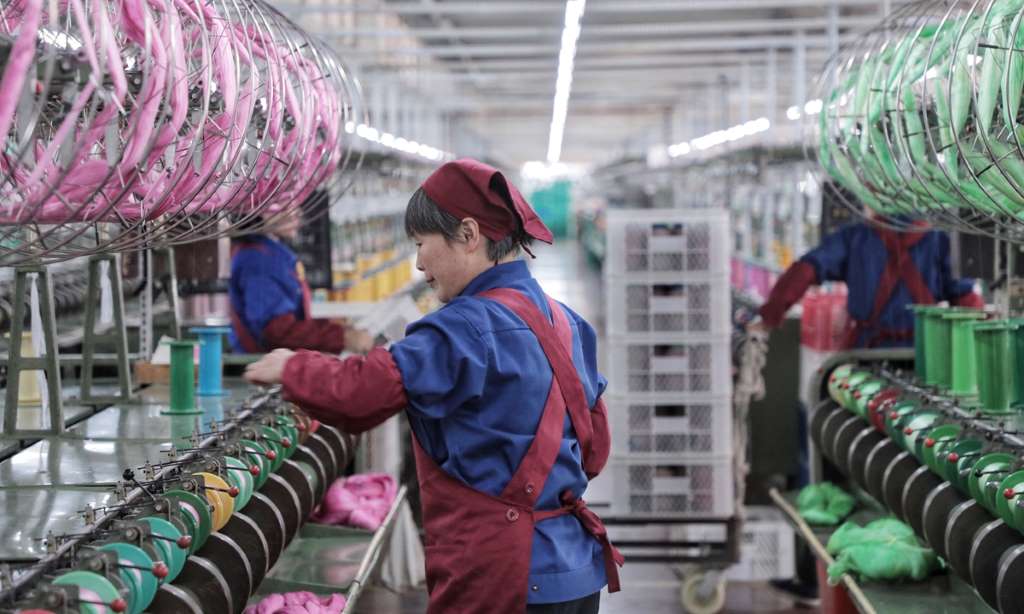
While China remains the world's leading textile producer, its grip on India's fabric import market appears to be loosening. Data from the Directorate General of Commercial Intelligence and Statistics (DGCI&S) shows a shift in recent years. India's fabric imports from China peaked at $6.4 billion in 2022-23 (April-Dec), reflecting a 40 per cent increase over the previous year. However, this figure marks a potential turning point. Experts predict continued decline in China's share, which previously hovered around a significant portion of India's total fabric imports. This trend coincides with China's rising production costs and a global ‘China Plus One’ strategy, where businesses are diversifying their sourcing beyond China.
Synthetic fabrics dominate
The types of fabrics exported from China to India also tell a story. Synthetic and knitted fabrics dominate the trade, accounting for over 60 per cent of the total value in 2022-23 (April-Dec). This is valued at $3.7 billion, a significant 40 per cent increase compared to the previous year. This aligns with China's strength in mass production of cost-effective synthetic textiles. Cotton fabrics, on the other hand, make up a smaller portion, around 30 per cent.
While India boasts of a strong domestic textile industry, some specific fabric types remain challenging to produce competitively. High-tech fabrics with specialized functionalities or intricate designs are areas where Chinese manufacturers often hold an edge due to advancements in textile technology and economies of scale
So, what sets Chinese fabrics apart? Chinese manufacturers often benefit from economies of scale and government subsidies, allowing them to produce certain fabrics at a lower cost than their Indian counterparts. Additionally, China has a well-established research and development infrastructure in the textile industry, giving them an advantage in creating innovative and high-tech fabrics that India might not be able to produce yet.
Reducing reliance on China
Recognizing the need to reduce reliance on Chinese imports, the Indian government and textile industry are taking steps. Initiatives include:
Policy measures: The government is implementing policies that incentivize domestic production, such as tax breaks and schemes to attract investment in the textile sector. This may involve lowering import duties on raw materials like yarn, while raising them on finished fabrics
Skill development: Programs are being rolled out to improve the skills of the Indian workforce, making them more competitive in the global textile market.
Technological advancement: Investments are being made in research and development to bridge the gap between Indian and Chinese capabilities in producing high-tech fabrics.
While the road to complete self-sufficiency is long, these efforts aim to make India a more competitive player in the global textile market, reducing its dependence on Chinese fabric imports.
Levi's makes big bet on DTC sales, embraces baggy denim trend
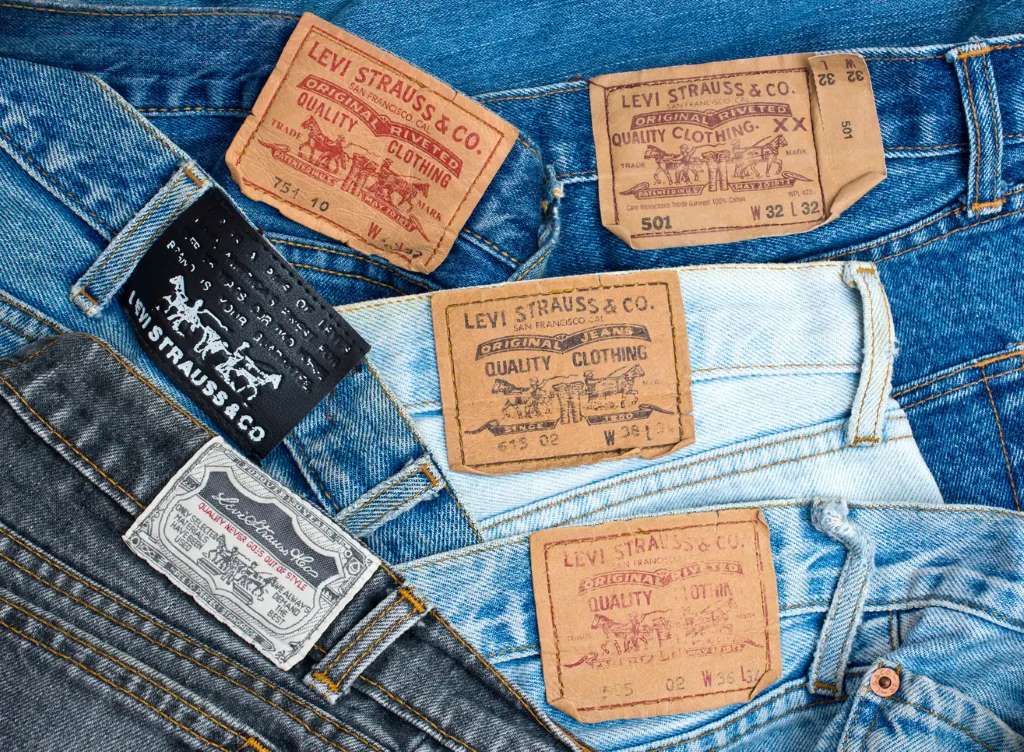
Levi Strauss & Co. (Levi's) is experiencing a positive shift in its business strategy, with a strong focus on direct-to-consumer (DTC) sales leading to a 7 per cent increase in after-hours trading and an 11 per cent rise in pre-market trading on Thursday. This success is attributed to a significant rise in DTC sales across all segments, with nearly half (48 per cent) now coming directly through Levi's online marketplace and brick-and-mortar stores.
Shifting Gears: DTC over wholesale
CEO Michelle Gass emphasizes the importance of leveraging the DTC channel, potentially moving away from a heavy reliance on traditional wholesale partners like Macy's and Kohl's. This strategic move allows Levi's to build a stronger brand connection with consumers and potentially capture a larger share of the profits.
Growing demand for baggy denim
DTC sales data also reveals a clear trend towards baggie styles. Women are increasingly purchasing denim skirts, jumpsuits, low-rise and bootcut jeans, indicating a move away from skinny jeans. Men are following suit with a rise in loose-fitting jeans. Interestingly, Gass remained coy about a potential sales boost linked to Beyonce's recent song ‘Levii's Jeans’. However, the trend does indicate a broader move towards comfort and relaxed silhouettes in fashion.
Meanwhile, Levi's surpassed Wall Street's expectations with revenue of $1.56 billion, exceeding analyst forecasts. However, the company reported a loss of $10.6 million in the first quarter, partly due to the discontinuation of the Denizen brand and workforce reductions. Despite a first-quarter loss due to brand divestment and workforce reduction, Levi's anticipates full-year profits to rise, adjusting its EPS outlook to $1.17-$1.27 (up from $1.15-$1.25).
Global expansion plans
Despite the workforce reduction, Levi's continues to invest in its global presence. Plans include opening new stores in Asia and a flagship store in Paris ahead of the 2024 Summer Olympics. This expansion reflects confidence in the brand's international appeal alongside its booming DTC channels.
While Levi's is experiencing positive momentum, some challenges remain. One major issue is inflation waning consumer spending due to inflation could dampen sales growth. Also, fast fashion brands and other denim players pose a constant threat. However, the company's strong brand heritage, focus on DTC growth, and adaptation to changing consumer preferences position Levi's for continued success.
Key Takeaways
• Levi's is experiencing strong growth in D2C sales, with almost half coming from their own channels.
• Consumer preferences are shifting towards baggier denim styles.
• The company incurred a loss in Q1 2024 due to brand exit and workforce reduction.
• Despite inflation concerns, Levi's maintains a positive profit outlook for the year.
• Global expansion plans include new stores in Asia and a flagship store in Paris.











