


FW
India:Vijaypat Singhania out of Raymond
Vijaypat Singhania has been stripped of his position as chairman emeritus on the board of directors at Raymond.
Singhania believes that this is due to manoeuvring by his son Gautam Singhania as part of an ongoing feud between the two.
Vijaypat Singhania received a letter from a Raymond director asking him to cease using the title of chairman-emeritus of the family-run Raymond Group. This followed a series of letters that Singhania wrote to the company secretary and then to the board of directors claiming that he was not being sufficiently updated about board meetings.
After receiving directions to cease using the title chairman-emeritus, Vijaypat Singhania stated that he would not comply unless he was shown proof that he was fired from the board. In response, Raymond’s director secretarial and company secretary Thomas Fernandes replied that the company had indeed made the decision and it was based on the derogatory language used toward the board in Singhania’s letters.
Gautam Singhania says so far as the company’s functioning is concerned, he has nothing to do with his father’s not being the chairman emeritus anymore. He says it is a board decision.
Raymond is one of India’s premium fabric manufacturers. With over 90 years of craftsmanship, Raymond embodies the spirit of Made In India and Swadeshi.
An overview-TITAS 2018 an unparalleled event.
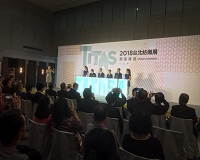 Organised by the Ministry of Economic Affairs’ Bureau of Foreign Trade and the Taiwan Textile Federation from October 16-18, 2018 in Taipei, the 22nd Edition TITAS 2018 “Taipei Innovative Textile Application Show” focused on smart textiles, sustainable environmental protection, and functional applications. It attracted participation from 12 countries entailing a total of 456 exhibitors in 1,003 booths.
Insightful seminars and presentations
The show offered a strong knowledge platform that included a slew of activities such as insightful seminars, product presentations besides presentations on new fibers & technologies. The topics for these seminar included ‘The Evolution Tendency Of Smart Textiles’, ‘Japanese Functional Finishing Mark’, ‘ISKO Responsible Innovation Approach’, ZDHC & Functional Testing Of Textile Products & latest trend of innovative textiles to name a few.
In addition, around 1,000 one-on-one business meetings were held between show exhibitors and over 100 invited representatives from international brands/ retailers. TTF in collaboration with the Taipei Sewing Machine Association (TSMA) presented the latest developments in smart manufacturing including automatic sewing machines & smart sewing systems and solutions.
Pavilion for smart textiles
A new pavilion for smart textiles was introduced at the show. Though the core DNA of TITAS has always been to promote innovative textiles, it was quite imperative for TITAS to introduce advance technologies such IOT & AI’s to the discerning segment within its core global business trade audience.
Attendance by local and international dignitaries
Many distinguished local and international luminaries from the industrial, government, academic, and research sectors attended the opening ceremony of the show. The participation included the trade bodies/ associations/ support service institutes viz. Industrial Technology Research Institute, Taiwan Textile Research Institute, Southern Taiwan Textile Research Alliance, Taiwan Technical Textile Association & other 15 textile related associations representing various segments of Taiwan’s textile chain.
While on the international participation side, the Federation of Indian Chambers Of Commerce & Industry (FICCI) led a group of 10 exhibitors. A visiting delegation organised by VITAS, Vietnam attended TITAS to seek further co-operation with Taiwan’s textile enterprises, Southern Taiwan Textile Research Alliance
Government support for the textile industry was indicated with the presence of Mei-Hua Wang, MOEA Deputy Minister who made a special appearance at the opening ceremony. Among other special guests who attended the show included Jang-Hwa Leu, Director General of Industrial Development Bureau, MOEA; Yung-Jan Chan, 2018 women’s Tennis Association world rankings number one player in women’s doubles alongwith her sister/ partner Hao-Ching Chan who was a gold medalist of women’s tennis competitions at the 2014 Asian games in Incheon; Douglas Hsu; Honorable Chairman, TTF and Cheng- Tien Chan, Chairman, TTF
On the whole TITAS 2018 indeed kicked off with larger scale and more innovative & upgraded coverage. As TTF Honorable Chairman Douglas Hsu very aptly mentioned that the sustainability & eco-friendly textiles are in big trend today and precisely this is the talking point today
Global spandex market to grow exponentially at over 8 per cent by 2023
"The global spandex market estimated at over 760 kilo ton in 2015, is likely to cross 1,550 kilo ton by 2023. It is likely to grow at a CAGR of over 8 per cent from 2016 to 2023. China dominated the Asia-Pacific market in 2015, accounting for 60 per cent of the total volume. Major growth driver for the spandex market will be the apparel and textile industry which uses spandex in manufacturing leggings, gloves, cycling jerseys and competitive swimwear et al. Spandex is also used to provide stretchability to garments used in active sports. Factors such as superior elasticity, regaining original shape, durability, lightweight, resistance to UV light boost its demand in the global market."
 The global spandex market estimated at over 760 kilo ton in 2015, is likely to cross 1,550 kilo ton by 2023. It is likely to grow at a CAGR of over 8 per cent from 2016 to 2023. China dominated the Asia-Pacific market in 2015, accounting for 60 per cent of the total volume.
Apparels, textiles, automobiles drive market
Major growth driver for the spandex market will be the apparel and textile industry which uses spandex in manufacturing leggings, gloves, cycling jerseys and competitive swimwear et al. Spandex is also used to provide stretchability to garments used in active sports. Factors such as superior elasticity, regaining original shape, durability, lightweight, resistance to UV light boost its demand in the global market.
The other big consumer is the automobile industry. With global automobile sales on the rise demand for spandex is expected to touch new highs.
Raw materials for spandex production
Polytetramethylene ether glycol (PTEG) and MDI derived from petrochemical feedstock are the raw materials required for spandex production. PTEG accounted for more than 70 per cent spandex production in 2012. However, stringent government norms, to curb carbon footprints, are likely to hinder its future growth. Alternatively, renewable sources with stable raw material supply are likely to provide more growth opportunities.
Bio-based spandex for garment applications
Invista, under Lycra, has introduced bio based spandex for apparels. Bio spandex contains approximately 70 per cent of the sustainable feedstock made out of renewable butanediol from dextrose which is derived from corn. The company markets this as a specialty product and sells it at a premium rate. Invista uses bio-based 1.4-butanediol as raw material from Genometica’s developed technology which has successfully developed fermentation route for the chemical using E. coli to metabolise sugar.1,4-butanediol is then synthesised to THF which is further used for PTEF production.
The global spandex market share is moderately consolidated and comprises of companies such as BASF, DuPont, Invista, Indorama and Mitsubishi Chemical. Other major companies include Zhejiang Huafo, Dow Chemical, Yantai Bailu Chemical Fiber Co and Swan Fiber Co.
Asia-Pacific dominates the world spandex market
Asia-Pacific was the dominant market for spandex production and is likely to witness highest gains by 2023. China accounted for more than 50 per cent of the global share in 2014 and is the major manufacturer. North America is also likely to witness moderate growth owing to increasing demand for sportswear in the US. Europe is likely to witness below average growth rates over the forecast period. Latin America is likely to grow at significant rates owing to growth in sportswear and apparel industry.
Around 20 Vietnamese businesses showcase products at 6th IISF
More than 20 Vietnamese businesses are showcasing their products at the sixth India International Silk Fair (IISF), which opened in New Delhi on October 16. The Vietnamese firms in attendance include Việt Nam National Textile and Garment Group (Vinatex), the Investment and Trade Promotion Centre and business representatives from Hà Nội, Tuyên Quang and Lạng Sơn provinces.
The three-day event is an opportunity for Vietnamese garment, textile and interior decoration firms to seek partners, expand their markets and learn about new techniques. The fair gathers 120 leading Indian silk producers and 250 foreign businesses from across the world.
The fair showcases silk garments, fabrics, accessories and carpets, and is expected to feature business meetings, a fashion show and workshops. The organising board expects to welcome about 10,000 visitors during the event.
The Việt Nam Customs statistics show that in the first eight months of 2018, garment and textile trade between Việt Nam and India reached US$799 million, up 35 per cent from the same period last year. Việt Nam’s imports of Indian cotton were valued at $343.8 million, up 46 per cent against the previous year, while the country’s exports of garment and textile products hit $203 million, up 20 per cent.
AAFA members set up war rooms to review sourcing strategies
As revealed by Rick Helfenbein, CEO & President, the American Apparel & Footwear Association (AAFA), many textile and apparel brands are planning to diversify their supply chains, to mitigate the impact of the ongoing trade tariffs by both China and US. In fact, many members of the association have set up 'war rooms' to review sourcing strategies and ensure that the trade war does not have a catastrophic impact.
AAFA, on its part will focus on supporting the growth and success of the apparel and footwear industry. This will include educating legislators in Washington on the needs of the industry and pain points the industry experiences through the course of the next year. At the same time, the association will provide opportunities for industry professionals to collaborate and learn by producing events around the world.
Founded in August 2000, AAFA represents more than 1,000 brands, retailers, and manufacturers. The association provides expertise in supply chain management, trade policy, and brand protection, to its members.
Cotton production in Mexico to increase by 2% in 2018/19
According to a report of the Foreign Agricultural Service of the USA for Mexico, the production of cotton in 2018/19 in Mexico is likely to increase by 2 percent than the previous marketing year, due to continued favorable prices for cotton than for other crops, such as sorghum and corn. Cotton is the only commercially grown GE crop in Mexico. Farmers have indicated that the use of GE cotton has resulted in better pest control and pest management.
The area under cotton plantation increased substantially in 2017/18 from the previous season 2016/17. This is attributed to favorable weather conditions, adequate irrigation, continued use of genetically engineered (GE) seeds, and a return to cotton planting as a result of favorable prices, after a year of crop rotations.
The country’s cotton imports for 2018/19 total are forecast at 925,000 bales due to the expected large crop production. The expansion in production is expected to encourage yarn and textile manufactures to source their needs from the local cotton industry. Production, however, in Mexico now consists of nearly 80 percent of total domestic use.
Cambodia garment workers union fear EU trade threat
The European Union’s decision to ramp up trade pressure on Cambodia has alarmed unions in its garment industry. Cambodia's biggest export market, the EU, warned this month that the Southeast Asian nation would lose special access to the world's largest trading bloc, in a punitive response to its move away from democracy.
The repercussions could devastate garment exports that account for about 40 percent of Cambodia's gross domestic product and industries such as sugar.
Cambodia's factories supply global brands, such as Gap Inc., Swedish fashion brand Hennes & Mauritz AB, and sportswear brands Nike, Puma and Adidas, among others. According to the EU data, the country, under its "Everything but Arms" (EBA) scheme exported goods worth 5 billion euros ($5.8 billion or 649 billion yen) last year.
However, the Garment Manufacturers Association of Cambodia, which represents 600 factories, remains optimistic about the situation as the threat of tariffs is still months away and would be the subject of a six-month EU review,
Bangladesh garment manufacturers to tie up with Sri Lankan counterparts
Bangladeshi garment manufacturers plan to tie up with their Sri Lankan counterparts to add more value to the garment supply chain and reduce the lead time by at least 10 days. Under this agreement, the Bangladeshi garment manufacturers will send the basic items to different garment factories in Sri Lanka for finer washing, remaking and adding more value as Bangladesh has abundance of work orders now.
After remaking and finishing of the goods, Sri Lanka will ship them off with the 'Made in Bangladesh' label to different European markets from their deep sea port. This will cut the lead time by at least 10 days due to proximity of the Sri Lankan deep sea port to Europe.
Any kind of garment products can be sent from Bangladesh to Sri Lanka to be re-exported.However, Bangladeshi garment makers will primarily send the items that the local manufacturers are particularly not strong at. For instance, Sri Lanka has an edge in innerwear, so if Bangladesh gets a lot of work orders for them, they would be sent to Sri Lanka for further value addition.
Currently, Sri Lankan's market share in global apparel trade is 1.2 percent and Bangladesh's stake is 6.5 percent. The country exports nearly $5 billion worth of garment items in a year while Bangladesh's export last year hit $30.61 billion.
Gap to innovate store formats as per consumer’s preferences
America’s leading casual wear brand Gap plans to innovate store formats and merchandise line development as per the preferences of Indian consumers. The brand currently has 15 standalone stores and 21 shop-in-shop stores across Tier II and Tier III cities.
Out of these, 13 are family format stores that offer adult, babyGap and GapKids products, while 2 are adults-only stores. The brand has GapKids/babyGap shop-in-shops in Ahmedabad, Chandigarh, and few upcoming locations and will soon launch its first kids’ shop-in-shop in Kolkata.
The brand plans to expand into family formats, adult only formats and exclusive GapKids/babyGap formats in the next few months. Its objective is to provide a holistic, and globally consistent shopping experience. It has experimented with newer fixture designs to bring out the brand’s presence for shop in shops. These structural improvements include enhanced signages, dual tone walls with a balance of wood panels and white, contrasted by blue colored wall.
IISF to generate US$ 20 million business
Union Minister of Textiles, Smriti Zubin Irani, inaugurated the 6th India International Silk Fair (IISF) at Pragati Maidan in New Delhi on Oct 17, 2018. The exhibition features 108 exhibitors from all over the country including 10 from North East and 9 from J&K. Around 147 buyers Vietnam, Sri Lanka, Australia, Kuwait and Egypt are attending the event.
The 3-days exhibition, organised by Indian Silk Export Promotion Council, is expected to generate business of over US$ 20 million for the SMEs engaged in producing silk and silk blended garments, fabrics, accessories and floor covering.
The Indian Silk Export Promotion Council is also organising B2B meeting of participants with buyers and a Fashion Show for the participants.











