


FW
With CPTPP on the anvil, FDI pours into Vietnam
French group Scavi is investing heavily in Vietnam with the country joining the CPTPP. Scavi is one of the world’s top enterprises in lingerie, swimwear, and sportswear segment. North America and Japan are the group’s key export markets, accounting for 40 per cent of its total revenue.
Vietnam’s textile and garment industry will not be the only sector to benefit when Vietnam officially joins the CPTPP. Aquaculture, timber manufacturing, logistics, realty, and agriculture are also looking at bright prospects, as more FDI will reach these sectors.
Another giant in the textile and garment space, Hyosung Corporation, is also in the process of expansion in Vietnam. Similarly Korea-based Hi Knit has also been granted an investment license. With a total registered capital of $40 million, the company produces textiles as well as nonwoven fabrics for export and domestic foreign-invested companies.
Japanese firm Yuwa has officially launched its second factory in Vietnam. Its first factory was built with $4 million in 2009 and produces molded electronic plastic components. In addition, Yuwa is also scheduled to build a research and development centre in Vietnam to increase production.
More such Japanese investment is expected. Although individual investments will be of average magnitude, as the majority of these enterprises work in the supporting industry and mainly apply advanced technology, they can produce millions of products annually.
Fall in Indian cotton output likely
India’s cotton output is likely to decline by 11 per cent this year.
There has been crop damage in major producing states such as Maharashtra and Gujarat. Almost half the country's cotton comes from these two states.
The deficient and erratic southwest monsoon this season followed by a long dry spell this winter season has impacted the standing crop. While the first cycle of cotton picking is over, the second and third cycles are likely to get impacted badly due to spoilt flower buds.
In case November rainfall is normal, cotton flowers can recover some lost yield in the third cycle, and curtail the decline in cotton output substantially this year.
Meanwhile, the benchmark variety of cotton, Shankar 6, has been trading at around Rs 13,000 a bale for quite some time now.
Total cotton output in Gujarat would stand at 8.8 million bales this year, down from 10.5 million bales the previous year. Output in Maharashtra is estimated at eight million bales this year versus 8.3 million bales last year, while that in Andhra Pradesh is forecast to decline to 1.6 million bales from 1.85 million bales.
Rising demand and lower output may trigger a sharp price rise this year which may dent textile mills’ profit margins in coming quarters.
European parliament recommends continuation of Transition Accord
The European Parliament has passed a resolution urging the Bangladesh government to allow the work of the Transition Accord to continue beyond November 2018. The resolution also calls for a marked improvement in worker rights for garment workers – notably in the area of collective bargaining – in order for Bangladesh to continue to be eligible for trade sweeteners.
The Accord expired in October 2018 and was succeeded by a Transition Accord to apply for three years. The European resolution urges the Bangladesh government to adopt legislative changes to the Bangladesh Labour Act and its implementing rules to bring them into line with the ILO’s international labor standards, and to allow full freedom of association. It also urges Bangladesh to take necessary steps to effectively address all acts of anti-union discrimination, including acts of violence and intimidation.
Hong Kong, Australia to sign FTA and investment agreements
China's Hong Kong Special Administrative Region (SAR) and Australia have concluded the negotiations on a free trade agreement (FTA) and an investment agreement. The arrangement would take the two economies' trade and investment relationship to a "new height. Hong Kong will launch FTA negotiations to achieve zero tariffs for Hong Kong products to the Australian market and to secure Australia's best FTA commitments for Hong Kong services. The two agreements encompass trade in goods, trade in services, investment and other related areas, providing with legal certainty and better access to the Australian market.
The deal will be a major windfall for Aussie businesses and service suppliers and good news for its farmers, and in particular its seafood industry, beef and pork producers and winemakers. According to Hong Kong SAR's Trade and Industry Department, bilateral trade in goods between Hong Kong and Australia amounted to $6.92 billion in 2017, up 3.7 percent from 2016. Over the past 12 months, the Hong Kong SAR government has signed three FTAs with 12 economies including the 10 member states of the Association of Southeast Asian Nations (ASEAN), Georgia and Macao SAR.
Bangladesh apparel exports up 20 per cent in October
Bangladesh’s apparel exports grew 20 per cent from July to October 2018. Earnings from knitwear exports grew 17.8 per cent in this period. Exports in this segment crossed the strategic target by nearly 17 per cent. Earnings from woven garment exports grew 22.6 per cent in this period. Exports crossed the strategic export target by over six per cent.
On the whole, apparel exports was over 84 per cent of Bangladesh’s export volume in October. Export performance for October 2018 was a huge 30.5 per cent leap on a year-to-year basis. Export items in October were winter garments in majority. In November too there are lots of orders for winter garments. Growth is coming from two factors: a rise in export of Bangladesh’s apparel items due to winter and buyers seeking out a China plus sourcing strategy due to ongoing trade war. Buyers are gradually moving away from China. The void this is creating is huge. But Bangladesh which is next to China still doesn’t have the capacity to fill that void.
In the year ending June, Bangladesh’s garment exports were up 8.8 per cent. The country increased its share of global clothing exports to 6.3 per cent in 2016 from four per cent in 2010.
CCI plans two cotton purchasing centers in AP
The Andhra Pradesh government and Cotton Corporation of India (CCI) have jointly planned to set up two cotton purchasing centers (CPC) in the district soon. Cotton crop is being cultivated in the district in Bhamini, Sitampeta, Sarubujjili, Palakonda, Santhakaviti, Ranastalam, Rajam, Regidi and Vangara mandals in an extent of 30,000 acres. Due to lack of proper purchasing centers, middlemen are exploiting cotton farmers every year. Previously only one centre had been arranged every year in December last week by that time middlemen used to procure cotton from farmers at cheaper price and in turn they sold the same produce for high price.
As against government fixed price of Rs 4,100 per quintal middlemen paid Rs 3,100 as a result, farmers lost Rs 1,000 per quintal cotton. Joint Collector KVN Chakradhara Babu has directed officials to organize two purchasing centers at Rajam and Sitampeta by November-end for early procurement of cotton from farmers.
Contrasting results for Italian textile machinery sector
According to a survey by ACIMIT, textile machinery orders index for July to September 2018, remained stable. The value of index stood at 108.3 basis points (2015 basis= 100). However ACIMIT acknowledged that its manufacturers experienced a slowdown for the first nine months of the year. In China, particularly, its main export destination, trade tensions with the United States halted investment plans for many manufacturers.
Orders received by Italian machinery manufacturers however indicate contrasting trends. The index in Italy, stood at an absolute value of 121.9 basis points, i.e. a 30 per cent increase compared to the period from July to September 2017. On the other hand, in terms of foreign markets, the index declined by 2 per cent, with an absolute value of 107.4 basis points.
Pakistan should develop its apparel sector to solve myriad issues
"Due to a massive crisis in its balance of payments (BoP), Pakistan is facing immense pressure on its Forex reserves. The country’s dollar reserves have fallen to $8,408 million, sufficient only to cover its import bill for few months. To buttress these depleting reserves, the country’s finance minister plans to knock on IMF’s doors for the 13th time. The country will seek structural adjustment package bailout package for $11 billion from the international organisation; however, this bailout package is likely to come with some strings attached. Pakistan will continue facing BoP crisis as long as its imports exceed its exports. To get out of this conundrum, the country needs to increase exports from $24.7 billion in the last financial year"
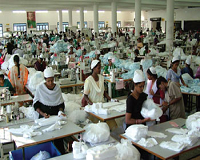 Due to a massive crisis in its balance of payments (BoP), Pakistan is facing immense pressure on its Forex reserves. The country’s dollar reserves have fallen to $8,408 million, sufficient only to cover its import bill for few months. To buttress these depleting reserves, the country’s finance minister plans to knock on IMF’s doors for the 13th time. The country will seek structural adjustment package bailout package for $11 billion from the international organisation; however, this bailout package is likely to come with some strings attached.
Need to focus on short-term growth
Pakistan will continue facing BoP crisis as long as its imports exceed its exports. To get out of this conundrum, the country needs to increase exports from $24.7 billion in the last financial year. For this, Pakistan needs to focus on achieving short term growth rather than a broad-based growth. Pakistan will have to focus on its competitive advantage, which at present, are textiles. Thus, its next step towards growth should be moving towards the apparel industry.
Attracting more FDI in apparel sector
The apparel industry in Pakistan, unlike some high-end manufacturing industries, does not require a technology transfer. The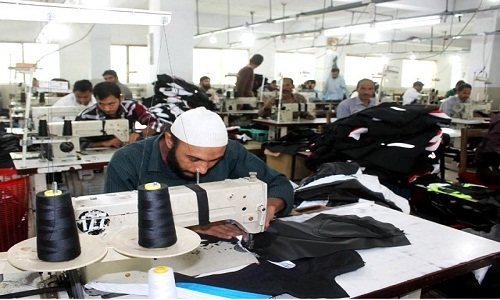 industry can also absorb the uneducated and unskilled labor force, which is abundant in Pakistan. Also, it takes just a few weeks to train people in skilled tasks such as operating sewing machines, and only a few days for tasks such as pressing the product, folding and packaging. Thus, numerous jobs can be generated for the unemployed in the country.
The state should make credit available for entrepreneurs wishing to develop apparel exports. It can also attract FDI by inviting more foreign clothing brands to set up their facilities here. However, the minimum wage in Bangladesh garment industry is around $95, lesser than Pakistan’s minimum wage of $150. Hence, Pakistan can subsidise electricity to this developing sector for a limited time period to offset Bangladesh’s cheaper labor costs.
Creating conducive growth environment
The recent trade war between the US and China has also opened a window of opportunity for Pakistan’s manufacturing sector. China exports apparel worth $27 billion to the US, and in light of trade restrictions, Chinese investors can be encouraged to establish manufacturing units in Pakistan to circumvent US duties and also to utilise the cheaper labor here. Thus the sector offers immense opportunities, but to exploit these, the government needs to create conducive conditions for growth. Currently, most of the investments in the country are made in the real estate sector; these need to be diverted to the export sector.
Focusing on the apparel industry will help Pakistan solve its myriad issues including unemployment, stagnant growth and a trade deficit. This should therefore be the government’s number one economic priority at present.
US women’s apparel prices fall in October
Women’s apparel prices in the US fell 1.7 per cent in October after rising 1.6 per cent in September. Pushing the decline was the women’s outerwear category, where prices declined 6.4 per cent. But all women’s apparel categories saw price decline in October, potentially owing to the sector’s more competitive nature and buying habits.
Prices of dresses were down 4.3 per cent, suits and separates prices fell 0.5 per cent and the underwear, nightwear, sportswear and accessories group dipped 0.1 per cent. Girls’ apparel prices were up 1.1 per cent month over month. Men’s wear pricing power proved much stronger, with prices rising 1.5 per cent. The suits, sport coats and outerwear group posted a price gain of 3.9 per cent, as prices for pants and shorts rose 2.3 per cent. Smaller increases of 0.9 per cent for furnishings and 0.6 per cent for shirts and sweaters rounded out the men’s story for the month.
Boys’ apparel prices were up 0.9 per cent, while infants’ and toddlers’ apparel prices rose 0.8 per cent. The critical fourth-quarter holiday selling has kicked in and promotions have begun. A tariff war with China is on but retailers in the US are continuing to import merchandise in order to meet consumer demand.
Portugal to star at Pitti Uomo in Italy
Menswear show Pitti Uomo will be held in Italy from January 8 to 11, 2019. Portugal has been selected to be guest nation. Eight Portuguese labels will present their autumn/winter 2019-20 collections. They are a cross-section of Portugal’s fashion landscape, between emerging labels, artisanal brands and established names. Hugo Costa was founded in 2010. The label’s distinctive trait is the architectural construction of its menswear, with designs hovering between minimalism and street culture.
Nycole is another menswear label from Portugal. Its fresh style blends classic men’s clothes with sportswear. Caiagua is an emerging label created exactly a year ago, whose specialty is functional, design-driven outerwear with cutting-edge research on details and colors.
Ecolã is Portugal’s oldest certified family-owned artisanal workshop. Ecolã is famous for its burel felt, made from the highly resistant fleece of local sheep and used to produce rugs, garments and accessories. Portugal is well-known as a go-to European manufacturer of quality apparel and accessories, and in the last few years its design creativity has also blossomed. The country is becoming increasingly dynamic as a venue for fashion and creativity. Apart from Portugal, Pitti Uomo will also have a special focus on South Korean, Japanese and Scandinavian fashion labels.











