


FW
Buyer-Seller Meet to promote India-Scandinavia trade relations
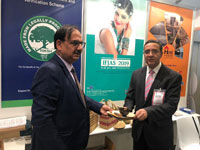 The Export Promotion Council for Handicrafts (EPCH) with the support of Embassy of India in Denmark and office of Development Commissioner (Handicrafts) organised a Buyer-Seller Meet from November 19-20, 2018 in Copenhagen, Denmark. The council is the nodal agency for the promotion and development of handicrafts exports from India to various destinations of the world.
Matching Indian companies with their Scandinavian counterparts
The Buyer-Seller-Meet is a B2B exhibition for order booking for future sourcing of foreign buyers in Denmark. It was inaugurated Ajit Gupte, Ambassador of India in Denmark alongwith and OP Prahladka, Chairman, EPCH and Rakesh Kumar, Executive Director, PCH. It is being attended by 26 Indian exporters who are displaying a wide range of Indian handicrafts, home furnishings, floorings & textiles, Indian houseware & decoratives, fashion accessories shawls, scarves, bags, fashion garments and Christmas décor from PAN India basis.
The objective of this Buyer-Seller Meet is to match Indian companies with the Scandinavian companies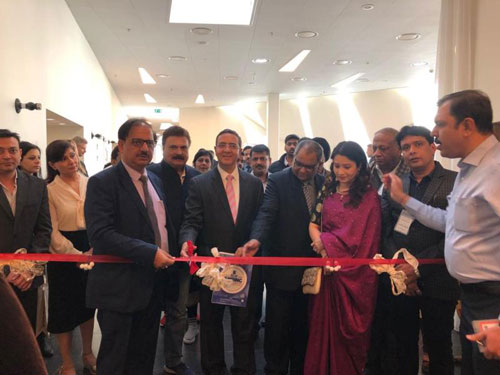 interested in sourcing Indian handicrafts, home furnishings, floorings & textiles, houseware & decoratives, fashion accessories shawls, scarves, bags, fashion garments and Christmas décor, gifts, lifestyle products for the Scandinavian market thereby creating a ‘Brand Image” of Indian handicrafts amongst Scandinavian buyers.
Potential market for Indian handicrafts
The main exports markets for Indian handicrafts are USA followed by EU, Middle East and Far East. However, Scandinavian countries are emerging as a new potential destination for exports of handicrafts. Indian craftsmanship, ethnic designs and colors are unique and have no comparison with products from other countries. The range produced in India is very large and wide and the quality and price structure varies from high-end market to middle end market.
The Scandinavian countries are the potential markets for the Indian handicrafts. The exports of handicrafts from India are at US$ million 3573.49 in 2017-2018. The exports of India handicrafts to Denmark was of US$ 26.50 million during the 2016-17 which increased to USD 28.94 million during 2017-18 registering a growth of 9.19 per cent.
Rakesh Kumar, Executive Director-EPCH hoped that with the overwhelming response and buyers turn out at Buyer-seller-meet will further lead to a growth in Indo-Danish Trade relations in the year ahead.
Melbourne’s International Sourcing Expo opens today with strong Indian participation
"The 9th edition of the International Sourcing Expo, co-located with the 3rd edition of the Footwear and Leather Show will be held from November 20-22, 2018 at the Melbourne Convention & Exhibition Centre. The three day event will be Australia’s premier international sourcing show for apparel, textiles, footwear and leather products. The trade-only event will occupy 16,500 gross sq. mt. space showcasing the full spectrum of product and service offerings from off-the-shelf clothing to made-to-order pieces, fabric and functional textiles. It will attract over 700 textile, apparel and footwear manufacturers and agents from 18 countries."
 The 9th edition of the International Sourcing Expo, co-located with the 3rd edition of the Footwear and Leather Show will be held from November 20-22, 2018 at the Melbourne Convention & Exhibition Centre. The three day event will be Australia’s premier international sourcing show for apparel, textiles, footwear and leather products. The trade-only event will occupy 16,500 gross sq. mt. space showcasing the full spectrum of product and service offerings from off-the-shelf clothing to made-to-order pieces, fabric and functional textiles. It will attract over 700 textile, apparel and footwear manufacturers and agents from 18 countries.
Indian involvement
Indian participation across both the International Sourcing Expo and Footwear and Leather Show continues to be by far the largest among all attending nations with 130 companies attending. Led by key export organisations, these Indian contingents of suppliers will attract sourcing managers from Australia’s large fashion retailers, niche fashion brands, online outlets and designers.
Apparel Export Promotion Council, Wool and Woolen Export Promotion Council, and Handloom Export Promotion Council will add to the Indian participation with their dedicated pavilions that represent suppliers, and their industry, at the International Sourcing Expo. The Council of Leather Exports will lead their industry contingent at the Footwear and Leather Show with 30 suppliers joining the pavilion. They will hold the largest pavilion at Footwear and Leather Show Australia for the third consecutive year.
A comprehensive learning program
The three-day Global Sourcing Seminar Program led by industry experts will provide a comprehensive program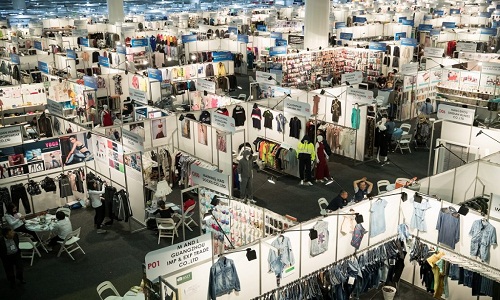 of learning for both exhibitors and visitors. From WGSN’S international denim trends, insights into the main Asian fashion supply industries, the Modern Slavery Act, ethical sourcing advice, help for fashion start-ups, international fashion and footwear insights and more, the seminar series will cater to various needs of industry professionals.
The two-day seminar program, on its first day will detail the potential and prospects of the local sector, both on the domestic and export front, investment opportunities and FDI incentives offered by the Indian government. Mukhtarul Amin, Chairman, Council Leather Exports India, will deliver an expert view of the Indian leather and footwear sector.
The second day of the seminar program will include an exhibitor-focussed seminar presented by senior retail consultant Sarah Gale to provide a comprehensive overview of the Australian market, and seasonality within different regions.
Global Runway, a major attraction
To be held exclusive for the first time as a part of the show, the Global Runway will draw significant attention and showcase collections by both emerging and established Australian and international designers. These runway shows will be held by Australian Fashion Council and designers from Indonesia and China.
Global Business Matching to fast-track buyer/seller experience
The 3rd edition of Australia’s only dedicated Footwear and Leather Show and the 9th edition of International Sourcing Expo Australia will introduce an online business matching program to fast-track buyer/seller experience. The program uses a powerful recommendation engine to match buyers and sellers. Exhibitors can connect with relevant buyers and attendees for private networking opportunities and meetings at their stand or in a business matching lounge.
US refuses to back off on trade dispute
The US has refused to back down from its ongoing trade dispute with China. Instead it has warned of doubling existing tariffs on Chinese imports and says it will take decisive action to address its imbalance with China. The country has imposed tariffs on $250 billion worth of Chinese imports this year to force concessions on a list of demands that would change the terms of trade between the two countries.
The current tariff rate is set at 10 per cent but is due to increase to 25 per cent on January 1, if a deal is not struck in the meantime. China has responded with a subtle warning the US risks closing itself off from the world and has been joined by a number of other Asia-Pacific leaders in urging free trade.
China is willing to expand imports from the US if the US is willing to meet it half way in trade negotiations. For China boosting imports is an established strategy and China doesn’t want to escalate trade tensions with the US. The country has offered to boost purchases of US goods by about $25 billion this year ahead of a mid-June deadline for imposing tariffs on Chinese imports.
Rise in KG Denim net sales
During the period ended September 30, 2018, KG Denim’s net sales were Rs 183.60 crores as compared to Rs 162.23 crores during the period ended September 30, 2017. Net profit was Rs 6.41 crores for the period ended September 30, 2018, as against a net loss of Rs 0.47 crores for the period ended September 30, 2017.
EPS for the period ended September 30, 2018, was Rs 2.50 as compared to Rs 0.18 for the period ended September 30, 2017. Net sales during the six month period ended September 30, 2018, were Rs 345.20 crores as compared to Rs 310.64 crores during the six month period ended September 30, 2017.
Net profit was Rs 6.89 crores for the six month period ended September 30, 2018, as against Rs 0.44 crores for the six month period ended September 30, 2017. EPS was Rs 2.68 for the six month period ended September 30, 2018, as compared to Rs 0.17 for the six month period ended September 30, 2017.
KG Denim is a denim and apparel fabric manufacturer. The company’s product divisions include denim, apparel fabric and home textiles. Its denim products include authentic ring denims, selvedge denim, organic/bio denims, tencel denim, printed denim and coated denim. The apparel fabric products include stretch twills, jean twills, and stretch, with or without Lycra.
India: Tirupur hopes for FTA with Russia
Knitwear industrialists in Tirupur feel a free trade agreement (FTA) with Russia will help them. Russia imported knitwear garments worth Rs 241 crores and woven garments worth Rs 295 crores from India in 2017-18. Russia has a similar treaty with Bangladesh that allows for duty-free imports of readymade garments.
India and Russia plan to strengthen economic cooperation in the coming decades. The areas under focus include Indian pharmaceutical plants in Russia, long-term leasing of agricultural land in Russia’s Far East, export of automobile components from India and entry of new Indian textile players in Russia.
The list also includes heavy engineering under the Make in India initiative, investments by leading Indian IT firms in Russian tech parks, entering the infrastructure market in Russia, collaboration in mining and metallurgy sector, and joint collaboration in the Arctic sector.
Indian pharmaceutical companies are looking at the possibility of setting up plants in Russia. Agriculture and food processing sector is one of the emerging areas of cooperation. There is considerable demand for import of agricultural products, mainly fresh vegetables and fruits from India. One of the reasons for the inability of Indian exporters to cater to this demand is the logistics. One solution proposed could be direct long-term contracts between major supermarket chains in Russia and major exporters from India.
India’s apparel exports increases 54 per cent in October
Apparel exports increased by 54 per cent in rupee terms in October compared to the same month last year; in dollar terms it increased by 36 per cent for the same period. Total textile and apparel exports grew by 38 per cent in rupee terms and 22 per cent in dollar terms for the same period. A big reason for this increase was the drop in exports last year due to the impact of GST introduction along with rupee depreciation.
According to Sanjay K Jain, Chairman of Confederation of Indian Textile Industry (CITI), the IIP data for textiles and clothing saw a year-on-year growth during September this year from a year earlier. Textile manufacturing increased 5.4 per cent in September 2018 year-on-year whereas manufacturing of wearing apparel increased by 20.9 per cent for the same period.
C&A Foundation’s cotton program helps Indian farmers
C&A Foundation provides interest-free loans to smallholder and marginal cotton farmers in India to help them buy and install drip irrigation units. These efforts have resulted in higher earnings and an increased quality of life for thousands of cotton farmers. The affordability of drip irrigation for small landholders has resulted in a 31 per cent higher net income from cotton cultivation compared to non-drip farmers. Farmers previously dependent on rain-fed cotton to make a living have increased their gross earnings after joining the program. India is the world’s largest producer of cotton.
The program provides far more benefits beyond just an increase in income, with farmers seeing environmental and agronomic impacts thanks to drip irrigation. Water saving is also an achievement of this program as farmers involved in this initiative have reported using just 1,191 liters of water per kilogram of cotton compared to the 5,923 liters consumed by non-program farmers.
Uniformity in production, better yield of seed cotton and increased fertiliser cost efficiency as well as reduced weeding and lower labor costs are some of the other benefits of the program. C&A Foundation is the charitable arm of global fashion retailer C&A. The foundation has launched a global initiative aimed at helping brands, retailers and manufacturers find more innovative and sustainable ways of producing fashion.
Levi’s opens largest-ever flagship store in New York
Levi’s opened a 16,902-sq-ft, multi-level store at the “crossroads of the world”. The store replaces the previous Times Square Levi’s store, which occupied a corner space a couple of blocks north of the new locale. The flagship was designed for a seamless and highly personalised shopping experience. It houses mobile points-of-sale and associate-assisted ordering. Large dressing rooms are enhanced with convenient call buttons, comfortable seating and a bright atmosphere. And sustainable design elements can be found across the store, including hangers made from 100 per cent recycled jeans.
On the ground level, shoppers will find limited-edition New York City-centric pieces, including Levi’s Premium jeans with Statue of Liberty motifs and repeated ‘NYC’ patterns. The prints are achieved using the company’s new laser finishing process, F.L.X. Technology.
The ground floor also houses the Levi’s Tailor Shop. The shop offers consumers the most comprehensive customisation options to date with four on-site tailors and direct-to-garment (DTG) printing capabilities. Through iPads, consumers can access a broad scope of customisable options, including preloaded photos, images, logos and text designed by local New York artists. On-site tailors are also on hand to add patches, paneling, chain stitching and more to jeans, jackets, tees and totes.
Pakistan withholds MFN status for India
Pakistan has no immediate plans to grant the Most Favored Nation (MFN) status to India. The country maintains a list of 1,209 items which are not permitted to be imported from India. As per a World Trade Organisation rule, every member of WTO is required to accord this status to other member countries.
India has already granted this status to all WTO members, including Pakistan. Under the MFN status, a WTO member country is obliged to treat other trading nations in a non-discriminatory manner, especially with regard to customs duty and other levies, but Pakistan is yet to transition fully to MFN status for India. Pakistan allows only 137 products to be exported from India through the Wagah border land route.
Bilateral trade between the two countries stood at $2.28 billion in 2016-17. India mainly exports cotton, dyes, chemicals, vegetables and iron and steel to Pakistan while it imports fruits, cement, leather, chemicals and spices. India-Pakistan relations have nosedived in recent years with no bilateral talks taking place. Ties between the two countries had been strained after terror attacks by Pakistan-based groups in 2016.
Pakistan is working out free trade agreements with different countries, especially China, and hopes to complete the second FTA with China by June 2019.
Myanmar wage hike may not benefit workers
Garment workers in Myanmar are unlikely to benefit from recent increase in minimum wages. Reason: factories have upped production targets, meaning workers will have to work harder or longer hours. Taking into account inflation rates, increasing costs of living and cut production bonuses, workers may earn absolutely nothing more than before the minimum wage was introduced.
Several garment brands and retailers source products from Myanmar. They have been asked to take into account the revised minimum wage rate in their cost calculations, enabling suppliers to pay workers at least the new legal minimum wage.
Risks to growth emanate mainly from ongoing ethnic tensions. Uncertainties in the global environment related to trade and energy prices could continue to weigh in on investor sentiment. Exchange rate pressure and weather conditions that might lead to supply-side disruptions will continue to be key sources of inflation uncertainty.
Vulnerabilities associated with poor asset quality and thin capital buffer could increase further. With the advantages accruing from preferential trade agreements and low labor costs, Myanmar can utilize the time window to address the key constraints in improving both the environment for domestic manufacturing as well as the efficiency of trade logistics. Myanmar’s economy grew by 6.8 per cent in 2017-18, up 5.9 per cent from the previous year.











