


FW
2020 Winter Texworld USA and Apparel Sourcing USA to be held from Jan 19
The next Texworld and Apparel Sourcing winter edition will take place in New York from January 19 to 21, 2020. This is one of the largest fabric sourcing events for the North American market. It will examine innovations in fabrics, technology tools, and trends for spring/summer 2021. A discussion will bring leaders together in an open forum who will share insights on the latest trends, technology, and tools in the textile and apparel industry. A curated area will concentrate on the innovation of processes and advancements of today’s revolutionary fabrics. The program is designed to offer insightful and informative sessions for every role and level of experience across all segments of the industry.
An open panel discussion on the technology tools needed to compete in today’s fashion industry will explain insights into blockchain technology, circular tracing, and the newest software to reduce lead times and waste. Attendees can see, feel and learn about the newest innovations in bio-synthetics, smart textiles, and circular design solutions. Visitors will also learn about how established fibers and fabrics are evolving to keep up with circular and sustainable design needs. A presentation will share upcoming trends for spring/summer 2021. Cutting-edge companies will present the newest innovations and offer a wide range of products.
Conscious fashion choices likely in 2020: Pinterest
In 2020, consumers are more likely to make environmentally friendly fashion purchases, says a Pinterest study. In particular, secondhand wedding dresses have attracted the curiosity of internet users around the world with searches that increased by 41 per cent between August 2018 and July 2019 in comparison to the same period a year earlier.
A center of attention in recent years, the trend for conscious consumption will continue in 2020 in the sectors of decoration, DIY and lifestyle, Fashion will continue to see consumers showing an increased interest in recycled materials as well as secondhand and environmentally friendly clothes. Pinterest highlights three main trends: thrifted wedding dresses (searches up by 41 per cent), art and creations made from ocean waste (up 39 per cent), and secondhand clothing (up 38 per cent). Enthusiastically embraced by major ready-to-wear brands and retailers, the vogue for gender-neutral fashion has also caught the attention of consumers, who are looking for gender-neutral hair styles, unisex children’s clothing and androgynous wedding wear.
Internet users are particularly interested in scrunchies, which made a major comeback this year, hair clips, Y2K outfits featuring army pants, hip chains and logos, grunge fashion and streetwear. This is a trend that has also had an impact in the worlds of television and music.
Global cashmere market grows at three per cent
Worldwide market for cashmere clothing is expected to grow at 3.8 per cent over the next five years. The United States holds a 19 per cent share of the global cashmere clothing industry. The Asian region is a major manufacturing base with low labor and material cost. Most reputed brands have plants or cooperative manufacturers in the region. China is the world’s largest supplier of raw materials, accounting for about 70 per cent cashmere in the world. China is also the largest consuming market. Although China is the largest cashmere garment manufacturer, its own brand market share is very low. Most companies exist as OEM.
Cashmere is a fiber obtained from cashmere goats and other types of goat. The fiber is finer and softer than sheep’s wool. Recent years have seen the global cashmere knitwear market outgrowing the luxury apparel market, with dressed-down, comfort-led trends like athleisure becoming the main driver of demand. At one time it was a highly expensive commodity. These days affordable, casual cashmere products have become popular. Brands such as H&M and Uniqlo retail pure cashmere knitwear products. Other brands are developing blends of cashmere and sport-friendly materials like spandex.
Bemberg2020 at Pitti Uomo Bemberg persuades the new era of Italian sartorial style
Pitti Uomo happening from January 7th to 10th in Florence Italy presents an 8-pieces tailoring collection commissioned to and developed with students of the renowned Scuola Triennale di Alta Sartoria Maschile dell’Accademia Nazionale dei Sartori in Rome as well as with prominent lining manufacturers as Brunello S.p.A., Gianni Crespi Foderami S.p.A., Tessitura Marco Pastorelli S.p.A. and Manifattura Pezzetti Srl.
The Japanese brand of regenerated cellulose fibers has assigned students at the Accademia Nazionale dei Sartori excellences. The designers of future created 8 contemporary clothing teaming up with prominent lining manufacturers that offered premium jacquard, striped and dotted materials in vivid colors that follow the seasonal trends. Yarn dyed options made unique by impactful contemporary designs that create interesting contrasts with the tailoring proposals.
Recognized as a leader in high quality linings, the academy is oldest in Italy which includes Bemberg as part of the shared stories of a tailoring heritage, from materials, craftsman tailors, accessories and brands that exemplify the world of sartorial art and excellence.
Bemberg products are made from a cotton linter bioutility material, a natural derived source, and a truly unique one in the smart fiber arena that doesn’t deplete forest resources.
The company by leading materials manufacturer Asahi Kasei is the sole maker of one-of-a-kind, matchless, high-tech natural fibers with a unique touch and feel as well as unique performances such as moisture control and is antistatic.
The participation at Pitti is the first of a global tour pointing to some of the most cutting edge design innovations on planet Fashion.
Sustainable cotton farming grows in India with new schemes
"Since the cotton producing regions have unique soil and agro-climatic conditions, the cotton produced by them are of different varieties and staple groups. The different varieties of cotton produced in India include medium staple, medium long staple and long staple. The country has largest area under Bt Cotton cultivation"
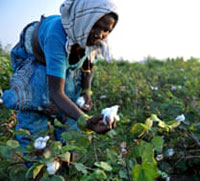 In 2018-19, India produced around 21 per cent of the world’s cotton production. Most of the cotton is produced in nine major cotton growing states that include three diverse agro-ecological zones. Of this, the Northern zone comprises of Punjab, Haryana and Rajasthan. The Central zone includes: Gujarat, Maharashtra and Madhya Pradesh while the Southern zone has Telangana, Andhra Pradesh and Karnataka.
A plethora of cotton variety
Since the cotton producing regions have unique soil and agro-climatic conditions, the cotton produced by them are of different varieties and staple groups. The different varieties of cotton produced in India include medium staple, medium long staple and long staple. The country has largest area under Bt Cotton cultivation. During the 2018-19 cotton seasons, the area under cotton cultivation was around 88 per cent of the total cultivable land available.
India has around 6.83 million tonne of cotton stock which includes domestic production, carryover stocks and imports. The total domestic consumption of cotton is 5.29 million metric tonne while exports are estimated to be worth around 0.85 million metric tonne.
Bangladesh, China among top importers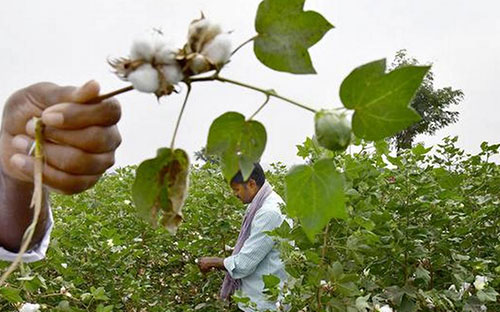
India mainly exports cotton to Bangladesh, China, Pakistan, Vietnam, Indonesia, Turkey, Taiwan and Thailand. During 2017-18, the country exported 1.15 million tonne of cotton which constituted about 15 per cent of total cotton produced in India.
Since 1994, cotton has also been a freely importable commodity in India. The country imported 0.27 million tonne of cotton during 2017-18 mainly from USA, Australia, Mali, Egypt, Cote D' Ivoire, Tanzania etc. These imports constituted less than 10 per cent of the total cotton consumption in India.
Sustainability schemes
The government of India is undertaking several measures to improve the quality and productivity of cotton and promote of sustainable cotton farming in the country. Due to these progressive steps taken by the government, the quality of Indian cotton has improved. Cotton yield too has improved from around 300 kg/hectare in the year 2002-03 up to 488 Kg/hectare currently.
The government is encouraging the cultivation of colored cotton in India. Many Indian scientists have noted that the desired parameter of colored cotton can be brought to the levels of white cotton to the satisfaction of the textile industry.
Contract farming is being encouraged and state-of-art technology to make the country self-sufficient in ELS cotton. The government is also kick-starting the process of bringing about a tangible improvement in production of ELS varieties of cotton. In addition to the above, India is also focusing on improvement of quality, demonstration of best practices for reducing the contamination of cotton, developing new varieties of cotton, increasing the production of Organic cotton and its’ certification in India.
Currently, India has the largest area under organic cotton cultivation in the world. The country ensures the genuineness and quality of organic production system, through National Programme for Organic Production by the Agricultural and Processed Foods Products Export Development Authority (APEDA). This national programme involves the accreditation programme for Certification Bodies, standards for organic production, promotion of organic farming, etc
India processes cotton by using double roller gin which preserves the inherent qualities of fiber, besides protecting the fiber length, providing undamaged clean seed and making Indian cotton better for spinning. Special attributes of roller ginning in India enables production of cotton fiber length up to 32.5 mm which is most suitable for spinning industry in production of higher counts of yarns.
Schemes for boosting quality and technology
The government is introducing mandatory bale testing and quality labeling/bale tagging system which would ensure traceability of cotton bales with essential details like year of manufacture, lot number, bale number, weight and various quality parameters. It has also introduced developmental schemes covering the entire textile value chain such as Technology Upgradation Fund Scheme, Powerloom Development schemes, Schemes of Integrated Textile Parks and Integrated Processing Development Scheme for increased consumption of cotton and other fibers.
“We need to build a better infrastructure and bigger clusters to compete with other countries.”
India’s share in global textile exports has declined while that of other countries like Bangladesh and Vietnam is increasing. HK Magu, Chairman, AEPC expounds on the reasons for this decline in exports and strategies for their revival.
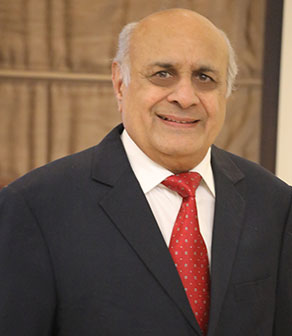 Due to the ongoing US-China trade war, the Indian apparel industry expected a lot of orders to be diverted to India. “However, buyers didn’t really flock to us due to the low scale of operations of our exporters,” says HKL Magu, Chairman, AEPC. “Most Indian exporters are either small or medium scale operators. Only a few of them can cater to big orders. Also, our exporters cannot ensure a speedy delivery as they have to wait for ROCTL and MEIS clearances,” he adds.
High GST rates, fund shortage affecting Indian exports
Another issue that hampers the growth of Indian exporters is high rate of GST. As Magu notes, “We pay GST at the rates of five percent, 12 percent and 15 percent. However, we get only a five percent benefit. The government blocks around 3-4 percent of this amount preventing us from giving better prices to our buyers. This makes it becomes difficult for us to retain these buyers,” adds Magu.
The apparel business has been declining in the last couple of months. “Clusters like Tirupur and Noida are closing down due to shortage of funds. Some banks have agreed to finance the export community through the GST input. However, they charge a heavy interest on this loan, which adds to the buyers’ costs,” adds Magu.
Indian exporters don’t get GST refunds for embedded costs like fuel. “But they have been assured that no further tax will be added on their exports. This benefit will be particularly given to the person who shows his GST inputs,” notes Magu.
FTA eliminates duty differences
AEPC does more of value addition. “Around 73 percent of our exports are 50 HS code items. To export technical textiles, we need infrastructure and finance,” he says further adding that “though India is working on a FTA with the EU, there are obstacles like duty free imports of wines and automobiles.”
According to Magu, FTAs are important as a buyer purchasing his goods from Bangladesh doesn’t have to pay duty whereas while purchasing from India, he has to pay a 10 per cent duty. This duty difference has enabled Bangladesh to double its exports in the last two or three years. “We need to build a better infrastructure and bigger clusters to compete with these countries,” adds Magu.
Imports from Bangladesh may hit the domestic industry in India but they will not affect its export industry. “Duty free exports from ASEAN or Bangladesh will certainly hit the domestic industry,” says Magu. Big chain stores in India also buy from Bangladesh affecting its manufacturing sector. To prevent this, the government should allow only products made in Bangladesh to be imported to India. It should not allow fabric imports from China.
Reforms needed for export growth
Across the world, polyester or viscose is more in demand. “Therefore, we should also start producing manmade fibers. We should set up weaving centers to enable our exporters to get a better price for their exports,” adds Magu.
In terms of exports, South is ahead of the north. Exports from Tirupur range from 25 percent to 28 percent, while those from NCR are just 21 percent. However, NCR is known for its value addition while Tirupur produces basic clothes .
“We should set up apparel parks near metro cities or ports. That will save our transportation costs,” says Magu. The need to spend on real estate can be eliminated by setting up plug and play facilities. “We should also reduce our electricity and transaction costs, which will enable us to produce and export more,” he sums up.
PVH Corp’s emission targets gets Science Based Target Initiative approval
PVH Corp, owner of iconic brands, including Calvin Klein, Tommy Hilfiger, Van Heusen, Speedo and IZOD, has received approval of its absolute greenhouse gas (GHG) emission reduction targets by the Science Based Target initiative, furthering its commitment to a zero-carbon economy. PVH’s targets are in line with the most ambitious level of decarbonisation, 1.5 degrees Celsius, set out by the Paris Agreement, a United Nations-led agreement among nations to limit the earth’s rising temperature to fight climate change.
PVH established GHG emission reduction targets as a part of the Forward Fashion Corporate Responsibility strategy launched earlier this year. The strategy set out the ambition for business operations to generate zero waste, zero carbon emissions and zero hazardous chemicals, and to produce circular products among other social and environmental commitments. To continue reaching these targets, PVH pursues energy efficiencies and renewable energy deployment in line with its commitment to RE100, a global corporate leadership initiative moving businesses toward 100 percent renewable electricity.
MEIS withdrawal scheme creates negative impact on export units
In a letter issued to the union finance ministry A Sakthivel, Vice-Chairman, Apparel Export Promotion Council (AEPC) stressed that many exporters were not able to meet their working capital issues and are either forced to downsize or close their businesses. This relates to the decision of the Union government to scrap the merchandise export incentive scheme (MEIS) under which incentives of about Rs 500 crore was due for the units. The council has highlighted the government’s that this action would lead to many export units being forced to close down and subsequently spark an unemployment crisis.
APEC has pointed out that the Centre has yet to implement rebate of state and central taxes and levies (RoSCTL), launched in March, which is affecting the exporters. MEIS is one of the supportive schemes for the apparel industry to offset infrastructural inefficiencies and associated costs. It was suspended by the central government on August 1. As per industry sources, more than Rs 500 crore are outstanding in the MEIS for the apparel exporters in Tirupur alone.
Loss of EU benefits may hurt Cambodia’s apparel exports
Cambodia’s potential loss of preferential trade access to the European Union (EU) could weaken the country’s economic growth and undermine the price competitiveness of the country’s garment exports. Cambodia’s economy depends heavily on its garment and textile industry, and the EU is its largest export market. Loss of trade benefits would be a big blow to the sector. If the EU decides to suspend Cambodia’s EBA eligibility, apparel imports from Cambodia would be subject to the World Trade Organization’s most-favored-nation (MFN) tariff rate, which averages around 12 per cent.
Cambodia’s garment industry has many strengths. Garment production is well-established, and despite rising wages it has relatively competitive labor costs. Yet ongoing tensions and the government’s refusal to address the country’s human rights issues will only add to the sector’s weaknesses. Supporting industries, such as textile manufacturing, are still in their infancy, the sector is dependent on Chinese investment and the infrastructure is poor.
The European Commission has given Cambodia a one-month deadline to respond to its findings over alleged human rights violations in the country. It will then decide in February whether to temporarily withdraw the duty-free Everything But Arms (EBA) trade benefit. Based on Cambodia’s strength as an apparel supplier to the US without any trade benefits, there’s a chance the loss of EU benefits might not make a meaningful difference. In the first ten months of the year, US imports from Cambodia rose 10.84 per cent.
Tranoi to launch new trade show at Shanghai Fashion Week
Trade show organiser Tranoi plans to launch its own space during the Shanghai Fashion Week. Tranoï strengthens its presence in the Asian market. The trade show organiser began testing the Chinese market last year with its participation in the OntimeShow fair. It will launch its own trade show next year with its local partner DFO during Shanghai Fashion Week.
The event will be called Nova by DFO & Tranöi, and will be held between March 27 and 30, 2020. The trade show organiser expects more than one hundred international companies to attend and will have fashion shows and spaces for emerging designers to present their work.
Tranoï is one of the leading tradeshows in France and takes place every year during Paris Fashion Week. DFO on the other hand, is a fashion management and market development group for China and operates with more than sixty international clothing brands.











