


FW
'We plan to increase RTW exports to Europe and America in the next two years’
"After a successful four decades experience in the home furnishing segment, Medusa Source ventured into the fashion apparel business. The company supplies garments to some of the top brands of North America, Europe, Latin America, Middle East, Asia Pacific and Australia. It follows the best modern supply side practices with added refinements based on its experience in the segment. Medusa constantly innovates to reduce costs that help in making the clients more competitive in the market. Sonal Jindal and Chetan Mathur, Managing Partners of the company elaborate on their operations and future plans."
 After a successful four decades experience in the home furnishing segment, Medusa Source ventured into the fashion apparel business. The company supplies garments to some of the top brands of North America, Europe, Latin America, Middle East, Asia Pacific and Australia. It follows the best modern supply side practices with added refinements based on its experience in the segment. Medusa constantly innovates to reduce costs that help in making the clients more competitive in the market. Sonal Jindal and Chetan Mathur, Managing Partners of the company elaborate on their operations and future plans.
Highlight your company’s operations and achievements over the years.
A supply chain management company, Medusa Source provides product-sourcing solutions to brands, retailers, labels and wholesalers worldwide. Our work includes identifying and evaluating factories, design and development assistance, production follow-ups, stringent quality control, logistics and shipping consolidations. We have a wide network comprising 150 suppliers and manufacturers across India, Nepal and Sri Lanka.
What is the vision behind the company?
We have been involved with product sourcing for over four decades. However, our method of functioning has transformed over years as we have adopted new methods of doing business to suit client’s interests.
What has been your experience so far?
A production-oriented business faces new challenges every day. However, these challenges teach a manufacturer to deal with people in changing demographics, different working conditions, and different cultures. So far, our journey has been extremely rewarding and we plan to elevate our business to new highs in future.
Which services and solutions do you provide to your partner brands?
We are involved in complete supply chain management cycle. From identifying the right vendor, factory audits and compliance checks, assisting product development, order follow-ups, quality control to shipping consolidations, we provide complete sourcing solutions.
Who are the people responsible for growth and journey of your company?
Our Managing Partners, Sonal and Chetan navigate the ship. They are ably supported by a young and enterprising team of designers, merchandisers, quality controllers, audit and compliance managers, IT, admin & HR. Each member of the team is committed to his or her job responsibilities and understands the importance of delivering quality and efficiency. Some team members have been with us for over 20 years, and have contributed immensely to the company’s growth. They are trained to handle delicate situations especially ground level production issues and response time to the clients, etc.
What are the new opportunities in this segment?
India is seen as a major production hub for value-added garments and accessories. However, we are capable of delivering much more than this. With adequate access to raw materials, and investments in machinery and technology, our manufacturers can produce high quality and fashionable products at similar or better quality levels than Western countries.
What challenges do you face as a supply chain management company? Fluctuating currencies, rising labor and material costs, increasing competition, lack of skilled labor, political changes, complicated and high tax structure, traceability and accountability in the production cycle and lack of infrastructure are some of the challenged we currently face.
Which is the most scalable segment for you? Who are your competitors?
Amongst all categories that we currently handle, Ready-to-Wear (RTW) garment is the most scalable product segment. Our competitors are large sourcing and supply chain management companies. However, we consider them more as peers rather than competitors and look up to them to achieve the same level of technological advancements that they have achieved. We are also investing in IT-driven tools to make our processes more sustainable, improve our performance levels and be a leader in the industry.
What is your take on the global and domestic apparel and fashion market?
The emergence of e-commerce companies and penetration of fast fashion product lines have changed the whole ball game for both global and domestic apparel and fashion makers. Changing trends, looks, themes and fashion are giving established brands a run for their money. Consumers can buys outfits similar to those offered by high-end luxury brands at a fraction of price. This has pushed manufacturers and sellers to focus on price-driven product lines rather than only quality driven.
What are your future plans?
We plan to increase RTW exports to the European and American markets in the next two years.
Ecommerce technologies changing shopping experiences across India
 The world's sixth-largest economy, India also has the world’s youngest population. According to India Brand Equity Foundation, this will boost consumer expenditure in the country to $3.6 trillion by next year as emerging new technologies is changing the overall shopping experiences.
As Prasad Shejale, Founder and CEO, Logicserve Digital says, personalization, ultra-convenience, social commerce-marketing products via inspirational blogs, celebrity engagement posts, etc, and smart mirrors equipped with AI and VR will be the four leading trends to rule the industry in 2020.
Unified and API-driven commerce, visual search to rule
The traditional retail industry will observe massive changes in coming years as stores will function more like websites, while websites will function more like stores. Other trends to rule the industry are: unified API-driven commerce architecture, the direct-to-consumer approach and visual search.
Shorter lead times will be another trend to gain importance as customers will emphasise on same day delivery of products. Kalpataru Retail is trying to keep pace with this drastic change by studying the changing trends in-depth and strategising accordingly. The company advises marketers to ensure that these trends are on-par with the technologies available in the market.
Disruptive strategies to help maintain market relevancy
On the other hand, Makani Creative advises retailers to create disruptive strategies that will help them stay relevant in this e-commerce driven age. The company says, listing of Big Bazaar on Amazon India will open new avenues for retail marketers, and provide shoppers more agility and efficiency from the retailers. This partnership will also provide retail stores new horizons across the country and enhance the overall buying experience for the shoppers.
As change is the only constant, retailers need to adapt to changing trends by innovating their retail experiences. Only then can they expect to thrive in a competitive market.
Athleisure continues to see a surge in demand
Consumers are continuing to show strong interest in athleisure. Searches for active wear are up 59 per cent. Demand for leggings was consistently high whole of last year and has seen an additional 15 per cent rise since the first week of January. Following the shape wear renaissance, leggings and workout bottoms that sculpt have become a favorite among the fashion set.
Searches including key terms like shaping, lift and sculpting are up 392 per cent collectively over the last three months and waist-contouring/sculpting leggings have all significantly increased in page views heading into this year. Also strong are super-high-waisted leggings with searches up 65 per cent and at an all-time high.
There’s growing interest in one-piece workout-wear. Demand for leotards and unitards rose 83 per cent last year and surged another 21 per cent in 2020. Sports unitards are having a moment with brands such as Adidas benefiting, while plain black is the favorite color. Eco-conscious active wear is in demand. Words like sustainable and recycled are increasingly being used in searches for sneakers. Also, search for specific sustainable materials commonly used in active wear have risen as well.
US swimwear show Curve in February
Curve will be held in the Los Angeles area from February 23 to 24, 2020. This is a lingerie, swimwear and loungewear trade show focusing on the autumn/winter 2020–2021 season as well as the spring/summer 2020 season. About 50 vendors will exhibit. The show will be organized around a salon-showroom experience, which will feature an open-booth format, show activations, as well as free food and beverages. Workshops on intimates and swimwear also will be held. There will be seminars on social media, merchandising, bra fitting, as well as employee relations and operating a business. Curve also will produce networking events as well as matchmaking events between vendors and buyers. The show taps into the epicenter of celebrity-driven fashion trends, a substantial and growing segment of the US market. Stylists, influencers and entertainment media will have a front-row seat to the intimates and swimwear trends that will be seen on celebrities throughout the coming year.
Curve is owned by Eurovet, a French trade show producer that runs trade shows. Eurovet is the global industry leader in bringing together brands, buyers, mills, suppliers, distributors, the media and all facets of the intimate apparel, swimwear and performance wear industries for its signature Curve and Interfilière events. The company is exploring the possibility of a show in Canada.
Sri Lankan footwear show in February
A footwear and leather fair will be held in Sri Lanka, February 7 to 9, 2020. The aim is to promote the country’s leather goods to international businesses, including the Indian market. The trade show intends to present the country as an ideal sourcing destination due to its strategic location, skilled workforce, well developed infrastructure, and ethical compliance record. The trade show will feature a wide range of product categories including footwear, leather accessories, travel goods, components and accessories, machinery, raw materials, and other related services. The show will exhibit only finished goods made in Sri Lanka but international businesses can showcase raw materials, machinery, and components. Along with stalls to showcase products and brands, the event will also feature a designer award ceremony, fashion show, and best stall competition.
The industry hopes to attract large-scale orders by reducing lead times with locally-sourced fabrics instead of importing fabrics. Although Sri Lanka has faster shipping times to the US and EU markets, due to its strategic location, apparel exporters are unable to capitalise on this as the country has to import fabrics from overseas, which contributes to a significant increase of lead time. With locally-sourced fabrics, exporters can target much bigger orders and will also be saving a lot of foreign exchange spent on fabrics as the local value addition increases.
Japan edition of Denimsandjeans show in March
Denimsandjeans will be held in Japan from March 4 to 5, 2020. This is the first edition of the show in Japan. The list includes almost all major denim suppliers from Japan and other countries including Italy, China, Turkey, Indonesia, Pakistan, India and Bangladesh. Eleven denim companies from Japan including Kurabo, Kuroki, Collect-Japan Blue, Nihon Menpu, Showa and Sinhohara Textile will participate. Eight companies from China including Advance Denim, Foison, Lucky Textile and Foshan Huafeng will be participating.
China is also one of the biggest denim exporters to Japan. Garment vendors from Bangladesh including Noize Jeans will exhibit their new collection for spring-summer 2021. Pioneer Denim, one of the fastest growing fabric manufacturers from Bangladesh, is also going to bring its innovation and new sustainable developments at Japan show. Next to China, Bangladesh is the second biggest jeans exporter to Japan. Last year, Bangladesh's share in the total jeans imports of Japan was about 18 per cent, and it has been increasing every year. Big denim giants from Pakistan will present their collections.
Apart from fabrics and garments, the show will have chemical manufacturers, accessories suppliers, washing laundries, fiber producers and technology providers. A special indigo museum by Arvind and a small museum of 100 year old vintage garments by Elleti will be set up at the show.
Japan’s Fast Retailing operating profit drops
In the first quarter Fast Retailing’s operating profit dropped. The owner of the Uniqlo chain was hurt by the Hong Kong protests in the quarter and also by a consumer boycott that affected sales and tipped it into losses in the important South Korean market from September to November. But on the upside, the US business improved while smaller and younger-focused GU brand saw operating profit rising 44 per cent.
New stores in Australia and India also boosted the group’s sales. Asia, and more specifically China, is hugely important to the growth of the Japanese company. And its Uniqlo brand has a major presence there with its product mix appealing both to consumers on a budget and more affluent shoppers looking both for well designed basics and its collaborations, such as the recent one with Marimekko.
Same store December sales for Uniqlo in Japan, including online, were down 5.3 per cent year-on-year, while total sales, again including online, decreased by 5.5 per cent. This was caused by persistently high temperatures from the middle of the month onwards that resulted in sluggish sales of cold weather clothing.
The year to August is now expected to see operating profit down five per cent.
Germany to host cellulose fiber conference in Feburary
Cologne in Germany will host the first International Conference on Cellulose Fibres conference on cellulose fibers, February 11 to 12, 2020. This will bring together the world’s most important producers and players. With 30 presentations, the program covers a wide range of topics such as markets and politics, sustainability and circularity, new production technologies, alternative raw materials and applications in the fields of textiles, hygiene products, biocomposites and food. The focus is also on applications in which plastics can be replaced by cellulose fibers. Leading companies will present their latest technological developments, new properties and applications. Life cycle assessments and concepts for the extraction of cellulose fibers from alternative raw material sources will also be presented, whereby the fibers can be reintegrated into the circular economy to be used again. The industry’s market leaders will be joined by various start-ups and leading research institutes.
Sustainability will be highlighted by two sessions and a panel discussion, in which users, certifiers and environmental groups will participate. An additional thematic focus is the biodegradability of cellulose fibers. This topic is of particular importance because microfibers inevitably enter the wastewater during the washing of textiles. Additionally, various disposable plastic products that can be partially substituted by cellulose fibers will be banned from 2021. There will be scientific presentations on these topics.
Jacket Required dedicated third show to sustainable brands
Jacket Required, the UK’s only contemporary menswear and street wear trade show taking place at the Old Truman Brewery, East London on the January 22nd to 23rd 2020, places sustainability at the center of its new direction dedicating a third of the show to sustainable brands. The re-edited layout will feature three showrooms with Showroom a brimming with pioneers in sustainable fashion including RÆBURN, Thalassophy, Bjanko Milano, Daisy King Club, Dedicated Brand, Komodo, United Change Makers (UCM), TOMS, Dashel, and Ucon Acrobatics.
Alongside an ‘exclusive to the UK’ installation RÆBURN will present its AW20 collections. AW20 sees RÆBURN collaborate with award-winning Icelandic photographer Ragnar Axelsson (“Rax”). For over 40 years Rax has been photographing the people, animals and landscape of the most remote regions of the Arctic, including Iceland, Siberia and Greenland. In hauntingly beautiful images, he captures the elemental, human experience of nature at the edge of the liveable world, making visible the extraordinary relationships between the people of the Arctic and their extreme environment — relationships now being altered in profound and complex ways by the unprecedented changes in climate.
RÆBURN has used original full colour images captured by Rax throughout the collection, printed onto 100% RÆCYCLED cotton-feel polyesters and silk habotai. CARCASS is a new, radical extension of the designer’s RÆMADE concept, adopting an approach normally associated with hunter-gatherers: every last scrap of the original garment is used in its entirety, adding nothing new but branded labels and thread.
Jacket Required also launches new label by its Sustainable Ambassador Phil Wildbore. United Change Makers offers a capsule collection; styles that last from season to season and become a timeless piece in your wardrobe.
Taking place in East London’s Old Truman Brewery on January 22nd and 23rd January, Jacket Required is a premium show offering buyers an inspiring, carefully edited international line-up of contemporary menswear, streetwear, breakthrough talent, footwear, accessories and lifestyle products.
Turkey’s cotton production gets government’s policy boost
"An important link between Europe and Asia, Turkey is a significant exporter of cotton and cotton products to the European Union. The country's textile exporters are known for their fast order response time and higher quality products. Nearly 36,000 companies operate in the sector. The EU remains the leading market for Turkish textiles and garment exporters due to its geographical proximity, short response time and good quality products."
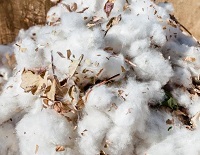 An important link between Europe and Asia, Turkey is a significant exporter of cotton and cotton products to the European Union. The country's textile exporters are known for their fast order response time and higher quality products. Nearly 36,000 companies operate in the sector. The EU remains the leading market for Turkish textiles and garment exporters due to its geographical proximity, short response time and good quality products.
The three major cotton growing areas in Turkey include the Aegean, Çukurova and GAP regions. The country also produces small amounts of cotton around Antalya. The cotton grown in the Aegean region is recognised as one of the best in terms of quality and is also referred to by textile producers. Though this cotton has more staple length than the cotton grown in either Çukurova or the GAP (1 1/8") region, its quality has improved significantly due to improved seed quality.
Excessive rains, untimely fumigation affects cotton yield
Both the total area under cotton plantation and production for MY 2018–19 declined to 525,000 hectare and 806,000 metric tonne respectively in 2018. Yields were affected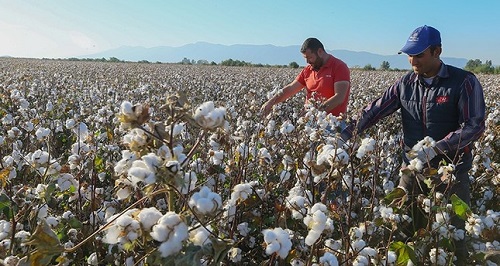 due to excessive rains, which necessitated replanting, cool weather during the season and untimely fumigation with stimulated pest attacks in cotton-growing regions.
Heavy rains during the picking season affected yield in the Southeastern Anatolia (GAP) region. In addition, increase in prices of fertilisers and other chemical is likely to force farmers to reduce their usage of these inputs in the coming season. It may further affect the yields in the region.
In MY 2019-20, the total area under cotton plantation area and production in the country is expected to further reduce to 540,000 hectare and 893,000 metric tonne respectively. However, cotton growers in the GAP region had no alternative to planting cotton this season as the field conditions in the country are not suitable for planting any other crop.
Government policies to boost production
To boost cotton production, the Turkish government has introduced a number of policies including:
• GAP (Guneydoğu Anadolu Projesi/Southeastern Anatolian Project) Initiative: Through this initiative, the government has invested $25 billion over the past three decades in dam construction, irrigation channels and other infrastructure initiatives. It has also provided technical and financial assistance to farmers to build modern drip irrigation systems to prevent ecological problems and waste of water resources.
• The government has carried out studies on the shift from open canal irrigation systems to closed systems and is trying to implement and develop sustainable farming practices as a part of the Better Cotton Initiative.
• The Turkish government had promoted cotton production by giving a bonus for five years in a row until MY 2017-18 and retained it for MY 2018–19.
• Cotton import faces zero import tax in the country. Turkish importers do not need to pay the 3 percent import tax if they are exporting the materials produced from the imported cotton. But US cotton is subjected to a 3 per cent anti-dumping duty (since April 2016).
• Turkey has issued a new taxation directive on imported cotton yarn in order to support imports from countries such as Turkmenistan, India and Pakistan, which are the major cotton yarn suppliers to the nation.
• Turkish importers of cotton yarn do not require to pay tax if they export the product made with the same imported cotton yarn. Turkey is a major consumer of cotton and faces impediments in domestic cotton production. Hence, Turkey will continue to import cotton for years to come.











