


FW
Inditex resumes work at reduced capacity
Employees at global fashion giant Inditex's 10 logistics centers in Spain – from where it sends garments to its stores worldwide – returned to work recently but only to less than half their normal levels of activity. Meanwhile, just three of Inditex's 13 Spanish factories are back at work, making medical supplies like scrubs to help fight Spain's Coronavirus crisis, with no garments being made for now for brands like Zara and Bershka.
Spain recently loosened the terms of a strict lockdown, brought into force to halt the spread of one of the deadliest outbreaks of the virus worldwide, allowing nonessential workers to return to their jobs after a two-week hiatus. Staff at the Inditex logistics centers returned to work but at reduced schedules – either working half days or just two or three shifts a week – to reduce contact between employees, a union representative and a worker said.
Rather than entering the facilities all at once, shift workers had staggered entries and exits and wore masks and gloves while maintaining 2-meter distances from colleagues. Just 15 per cent of normal activity was maintained at one of Inditex's 13 Spanish sewing factories, one worker said, focused on maintenance of machines rather than production of clothes.
DPIIT seeks permission for operation MSMEs during lockdown extension
Department for Promotion of Industry and Internal Trade (DPIIT has sent a letter to home secretary proposing that if the on-going lockdown is extended beyond April 15, those companies and MSMEs with export commitments be allowed to operate with minimal manpower and necessary movement of material.
It also suggested that 16 sectors, which includes telecom equipment, gems & jewellery, steel and ferrous alloy, automotive units, defence manufacturing and all units in Special Economic Zones (SEZs) and Export Oriented Units (EOUs), be allowed to operate adhering to safety, sanitisation and distancing norms.
FIEO had earlier warned that with cancellation of over 50 per cent of export orders in the last few weeks due to coronavirus disruptions worldwide there was a chance that there could be 15 million job losses in export units. India’s goods exports declined 1.5 per cent to $292.91 billion in April-February 2020 compared to last year. Exports increased marginally in February 2020, but are expected to fall in March 2020 because of the breakdown in production, supply and payments.
COVID-19 magnifies risks of forced labor and modern slavery
The COVID-19 pandemic will magnify systemic inequality that results in forced labor and modern slavery, the World Economic Forum (WEF) warned. More than 40 million people are estimated to be trapped in conditions of modern slavery, including 24.9 million in forced labor and 15.4 million in forced marriage, according to the International Labour Organization (ILO), a United Nations agency. One in four of them are children. Women and girls, who account for 99 percent of victims in the commercial sex industry and 58 percent in other sectors, are also “disproportionately affected” by forced labor.
With the Coronavirus crisis worsening living situations for months to come, those same people are now at even greater risk, the WEF said. Not only do they lack access to adequate healthcare, but their already restricted movements are further hamstrung by border closures and travel disruptions. Worse, they’re susceptible to stigmatization and discrimination by nativist rhetoric and politics.
Even migrant workers who wish to return home are unlikely to be able to do so safely for a long time. While countries such as Australia have proposed extensions for seasonal worker visas, such overtures are few and far between. Demand for labor—forced or otherwise—is also expected to ebb as the infection tightens its grip on markets, placing those already at high risk of exploitation even deeper in harm’s way
At the same time, risk of enslavement will surge, the WEF said. As the economic fallout from the pandemic continues to batter livelihoods, there will be an increased supply of workers vulnerable to exploitation due to poverty. The ILO estimates that COVID-19 could gut 25 million jobs and send global economies into a freefall if governments do not take adequate action.
KPMG recommends a comprehensive financial support package for the industry
A recent report by KPMG asks the Indian government should consider announcing a comprehensive financial support package along the lines announced in Germany and the US, international consultant
For medium to long term, KPMG suggests that government to provide an adhoc reimbursement/ concession of 5-10 per cent against the recently approved Remission of Duties or Taxes on Export Product (RoDTEP) scheme to compensate for the hitherto unreimbursed levies and taxes to the exporters.
From a manufacturing perspective, employment would be impacted owing to limited demand in both domestic and international market, and the textile and apparel sector production is expected to decline by 10-12 per cent in the April-June quarter, the report titled 'Potential impact of Covid-19 on the Indian economy' said.
Cotton fibre prices are expected to take a hit, states the report. While prices of imported man-made fibre (MMF) used for high value products is expected to rise by 25-30 per cent over the next two quarters (April to September 2020). Fabric production is expected to decrease owing to decline in exports and stagnation in apparel/home textiles production. Apparel production is expected to contract by 18-20 per cent, as per industry sources, owing to decline in global demand. Home textiles industry has had limited impact of the Covid-19 induced global downfall
Creativity, innovations to help brands face the COVID-19 storm: McKinsey study
 Spurring the biggest economic contraction since World War II, COVID-19 has hit every sector from finance to hospitality. Its discretionary nature makes the sector particularly vulnerable, say McKinsey & Company and Business of Fashion in a Coronavirus update to the ‘State of Fashion 2020’ report. The average market capitalization across apparel, fashion and luxury players witnessed a bigger drop from January through March 24th than the one experienced by overall stock market. The report reveals, revenues for the apparel and footwear sector are expected to contract between 27 and 30 per cent year on year in 2020.
Loss of jobs and financial hardships
Future outlook for the luxury sector is worse with contractions in the sector pegged between 35 and 39 per cent. If brick-and-mortar stores remain closed for two more months, almost 80 per cent of publicly listed Western brands are likely go bankrupt in the next 12 to 18 months
Humanitarian repercussions will also reverberate across fashion as millions across the value chain will either lose jobs or face financial hardships. Already, factories across Bangladesh, India, Pakistan and Myanmar are in crisis with workers taking to strikes and protests for pay as owners dealing with cancelled orders. It’s a conundrum even that governments in these sourcing countries are ill equipped to face.
Brands to reinvent value chains 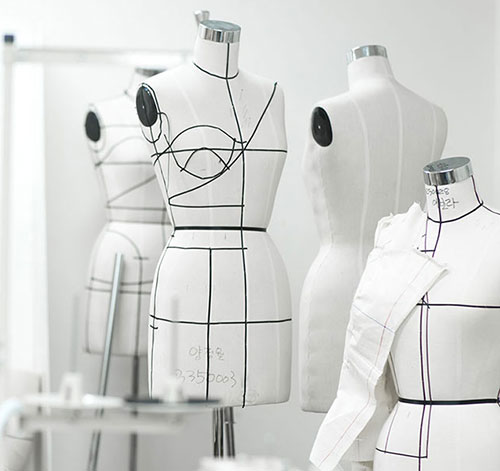
The report says, quarantine of consumption could heighten expectations for purpose-driven, sustainable action. To meet these expectations, fashion players will have to adapt their operating models. They should adopt a recovery position based on impact severity to help prepare for the deployment of a recovery action plan. This will involve reassessing their geographical footprint, store network and growth opportunities.
Brands will also have to reinvent their value chain besides reviewing production regularly, considering a recalibration of fashion’s cadence, and strengthening regional integrated supply chains. They should also double-down on recovery and resiliency measures for this. Only then can they begin to decipher what their “new normal” actually looks like.”
The survey reveals over 65 per cent consumers in the US and Europe plan to decrease their spending on apparel. This will compel retailers to offer steep discounts to clear inventory overflowing in warehouses, as well as leftover spring goods, and make up for lost time with closed stores.
Creative and innovative thinking to boost sales
Fashion companies will be forced to consider innovative ways to shrink stock and accelerate nascent sustainability trends. Some other ways they can increase sales is by personalization, customer experience and a re-evaluation of the company’s fashion calendar, such as moving monthly drops into later seasons. They will also have to scale up and strengthen their digital capabilities.
Mckinsey says, the only way forward for fashion companies will be innovation with creative, critical thinking extended across all points along the supply chain. Brands will have to rethink their fashion cycles leading them to skip a season and forcing store merchandise to fall in line with the current season. As more brands and retailers embrace 3D sampling and virtual production, go-to-market processes will revamp their operations with more companies embracing nearshoring and leveraging new manufacturing processes for capsule collections.
Sustainability to be the way forward
Sustainability will become the new way to value businesses as consumers will retreat from over-consumption and irresponsible business practices. Companies will have to introduce new tools and strategies across the value chain to future-proof their business models. They will have to harness innovations in order to make radical and enduring changes to their organisations.
COVID-19 boosts Britain’s textile industry
The disruption in trade with China has made British retailers reconsider the wisdom of having long supply chains, and turn back to British manufacturers. Suddenly, security of supply — and not cost — is paramount. Textile companies in Leicester are getting a boost from COVID-19, the disease caused by the new coronavirus. Alkesh Kapadia of Barcode Design, a local fashion manufacturer, said that he’d received a flood of orders from worried customers.
Manufacturers having their own supply chain have been hard hit by the Coronavirus. Italy, for example, is a major supplier of yarn. Kate Hills of Make It British, a manufacturing advocacy group, said that British clothing retailers and brands are now focused on sourcing their fabrics domestically. One of the biggest economic casualties of the crisis could be the international supply chain which will help Britain’s textile manufacturers.
Low demand hampers China manufacturing
Though manufacturing in China, the original epicentre of Covid-19 pandemic, has largely recovered but now shutdown in the rest of the world are threatening the supply of key parts and demand, EU Chamber of Commerce warned. Some overseas orders have been scrapped as the pandemic ravages the economies of China's trading partners, with many privately-owned exporters firing workers and warning about factory closures in the near future.
Even European companies manufacturing in China for Chinese customers are not insulated, as these customers may depend on exports to Japan, the United States or Europe. While manufacturing has been coming back, companies are vulnerable to supply chain issues potentially stopping the arrival of key parts
China's travel restrictions — which currently stop all foreigners, including those holding residence visas, from entering the country — also creates major problems for chamber members.
Alchemie Technology: launches new digital precision coating technology
Alchemie Technology is set to announce accelerated launch of Novara, a breakthrough new high-throughput digital precision coating technology for technical textiles. Alchemie is actively partnering with manufacturers worldwide to build production lines to address acute personal protective equipment needs and medical textile shortages.
Alchemie’s Novara technology delivers high-precision, 2D-patterned one or two-sided functional coatings to technical textiles, enabling truly unique, multi-functional textiles to be manufactured. Novara combines the throughput of conventional coating technologies with the precision of digital to unlock new product design opportunities and radically reduce the cost of technical textiles. The technology enables functional coatings to be applied with unparalleled precision, all controlled with real-time digital data.
The Novara digital precision coating technology can be delivered as a stand-alone machine or as a module for current production lines, enabling convenient implementation and rapid delivery of manufacturing capacity.
TEXPROCIL appeals for relief package for the exporters
 TEXPROCIL has urged the Government to provide interest free working capital term loans to the exporters to cover the cost of salaries and wages.
Exporters are facing huge problems as their buyers are delaying payments against export bills for shipments already made. On the other hand, most of the exporters have entered into forward contracts with the banks and now they are unable to surrender the committed amounts on foreign exchange under these contracts due to delay in receiving the payments.
As a result, exporters have to face huge losses as they are forced to either cancel or roll over the forward contracts which involves penalty and other charges. Texprocil suggested that banks should not charge penalty for the cancellation or roll over of forward contracts entered with them by the exporters.
For the spinning sector, Texprocil requested to include Cotton Yarn under the MEIS and the RoSCTL scheme since these schemes now stands valid as the validity of the Foreign Trade Policy has been extended till March 31, 2021. It also urged to include fabrics under the ROSCTL scheme.
To address the liquidity problems being faced by the exporters, the council urged the Government to release all pending claims under the TUF scheme and the erstwhile ROSL scheme for Made ups and Garments , automatic enhancement of bank limits for the exporters by 25% and the extension of the Interest Equalization Scheme beyond March 31, 2020 and to cover Cotton Yarn under this scheme
APLF 2020 rescheduled to 2021 due to COVID-19 Outbreak
Organisers of the Asia Pacific Leather Fair (APLF) rescheduled the next edition of APLF - Leather, Materials+ and Fashion Access to March 30- April 1, 2021.
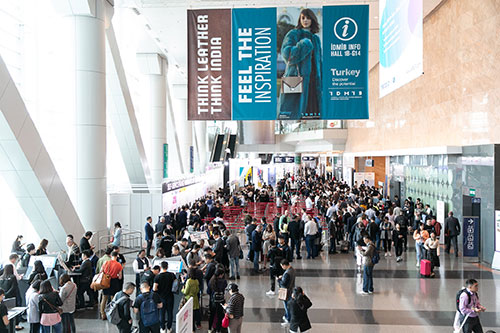
The events always take place in March annually but has been rescheduled in light of the initial COVID-19 virus outbreak then largely affecting mainly Asia. The decision to hold the next edition as usual in March 2021 is in direct response to the recent and escalating pandemic now felt globally and in direct response to our industry partners, associations, and most importantly our customers.
“This was a difficult decision for the entire team including our staff, partners, and for the industry to make; however we believe it is the correct course of action that will help sustain the leather and fashion industries in the long run,” said Perrine Ardouin, Event Director of APLF. “The recent unprecedented developments of COVID-19 affecting our community and friends has moved from what was considered just an Asia epidemic at the beginning of this year to what is now a global pandemic. We want to ensure that when APLF returns it is under the best conditions for all participants. In the meanwhile, we will create digital solutions to keep the connection and conversation between buyers and sellers strong, “ he added.
ACLE is the definite leather exhibition in China. It is also the gathering place of the Chinese tanning, footwear, leathergoods, furniture sectors as well as key players in the automotive industry. The exhibition will provide the whole industry with a platform to resume the business and inject confidence through the various conferences and meetings.
To support the industry on maintaining their businesses and staying connected with the community during this difficult period, APLF has various digital products in place, such as the APLF.com marketplace, webinars and InTouch, a new virtual business matching event.
As of now, APLF has planned a series of webinars focusing on educational, industrial and trend topics. The new InTouch initiative is a series of virtual sourcing events during which suppliers will present their products live to buyers around the world. Starting from 16th April, each InTouch event is specially curated to suit different sourcing requirements of the buyers. Exhibitors will present their collections and answer buyers’ questions, and afterwards they will meet each other in a one-on-one business matching meeting.











