


FW
Plus size clothing widens into mainstream fashion markets
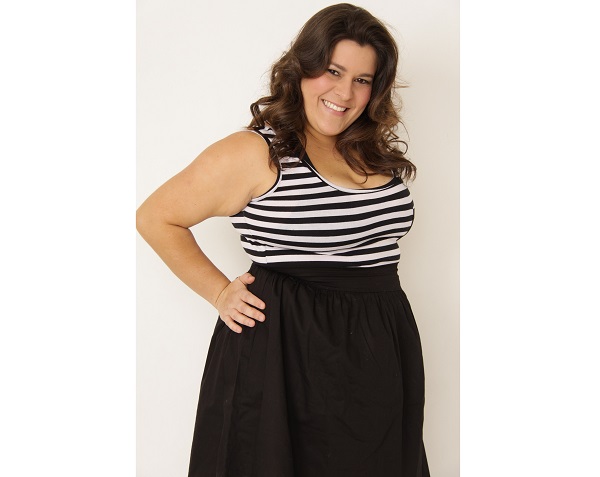
With body positivity and size inclusivity now a mainstream fashion trend, plus-size fashion garments are now emerging as a big growth opportunity for brands and retailers. The old order changes yielding place to new as gone are old stereotypes of body-shaming if women did not conform to certain beauty standards have now long gone with people ready to accept and support all shapes and sizes of beauty.
Big is also beautiful and more socially accepted
The self-acceptance and social acceptance of women with bigger and curvier bodies has brought about a major change in fashion with many brands now adding the pus size segment to their portfolio as well as all-new brands dedicated to bigger and taller men and women jumping into the plus-size bandwagon. The global plus size segment is no longer a niche segment or with a limited appeal and once valued at $480,991.8 million in 2019, it is projected to reach $696,712.1 million by 2027, according to a recent report by Dublin-based Research and Markets.
Market is increasing globally at a compound annual growth rate of 5.9 per cent from 2021 to 2027, as the Covid years of being home and post-Covid years of wining and dining excesses are taking a toll on both men and women. The US is currently the leading country in plus size segment with its largely obese population while South East Asian countries such as Japan, Vietnam, Singapore and still others have the least number.
Globally, many brands such as Walmart has launched a new plus-size brand named Terra and Sky in 2018 and other high-street brands such as River Island, Marks & Spencer, and New Look are offering an all-new wide range of plus-size items to suit demand. In India many specialized brands such as FabAlley Curve, Alto Moda By Pantaloons, Gia By Westside, PlusS.and ASOS Curve as well as an added segment of plus size clothes by premium brands are now rapidly increasing. Strong fashion marketing and promotional efforts on the covers of Indian and foreign magazine editions of Vogue, Cosmopolitan, Elle, and Glamour, have increased women’s body acceptance, which has been increased by curvy celebrity endorsements and a positive public impression of plus-size men and women
India’s pus size segment growing bigger
The rising trend is seen in the Indian fashion clothing industry too as the plus size segment of those who wear sizes from the UK 14-28 and beyond is rapidly becoming half of the total consumers in India, according to Statista, a German market, and consumer data company. The 16-59 age group of women fall mainly in the obese category and sizes 1X to 6X and extended sizes 7X and above are being included as an extended portfolio for most retailers.
A recent report on plus-size apparel in India indicated the casual wear segment is most popular with a CAGR of 4.8 per cent in the plus-size segment and it is the male category and not the female that will be leading this segment. Moreover, mid-price brand segment has emerged most profitable in post-Covid years. From 2022 to 2032, the Asia-Pacific region is forecast to grow at the highest rate due to a larger number of obese people.
Plus-size fashion is a latent growth market and global consumers are increasingly buying clothes that are not made for models but for real women. And real women don’t want to wear sack-like clothing but instead wear clothes that fit well and flatter their curves and specific body types. One size doesn’t fit all and big is beautiful is the new concept that brands need to incorporate more into each and every seasonal collection to keep them flying above the rest in the current turbulent economy.
Italy to hold first Milano Digital Fashion Week
Milan will hold its first digital fashion week from July 14-17. It will showcase spring-summer 2021 men’s collection’s together with women’s and men’s pre-collections for next spring. Organised by the Camera Nazionale della Moda Italiana, it will be called Milano Digital Fashion Week.
Established brands will be part of the event, including the Ermenegildo Zegna Group, which, as reported, will present its spring-summer 2021 collection in July in a new ‘phygital’ format, as artistic director Alessandro Sartori said showing in September would be too late to be able to deliver the clothes in December or January. In addition, to support young brands, clearly a pressing issue at this moment, the Camera will be funding the production of digital content for emerging labels.
As reported at the end of March, in light of the coronavirus pandemic, the Camera said the spring 2021 men’s shows and presentations slated for June 19 to 23 would run in September during Milan Fashion Week women’s, which is expected to start on Sept. 22 and end on Sept. 28.
Camera continues to work with the New York, Paris and London fashion bodies and that the latter succeeded in keeping the shows’ original dates, while a late restart of production here prevented Italian brands from also presenting in June. As reported, the Fédération Haute Couture et de la Mode has canceled Paris Fashion Week Men’s and the Paris Couture scheduled for late June and early July, respectively, and the Council of Fashion Designers of America said New York Fashion Week resort 2021 would be canceled, and New York Fashion Week: Men’s, originally slated for June, was postponed.
Italy to hold first Milano Digital Fashion Week
Milan will hold its first digital fashion week from July 14-17. It will showcase spring-summer 2021 men’s collection’s together with women’s and men’s pre-collections for next spring. Organised by the Camera Nazionale della Moda Italiana, it will be called Milano Digital Fashion Week.
Established brands will be part of the event, including the Ermenegildo Zegna Group, which, as reported, will present its spring-summer 2021 collection in July in a new ‘phygital’ format, as artistic director Alessandro Sartori said showing in September would be too late to be able to deliver the clothes in December or January. In addition, to support young brands, clearly a pressing issue at this moment, the Camera will be funding the production of digital content for emerging labels.
As reported at the end of March, in light of the coronavirus pandemic, the Camera said the spring 2021 men’s shows and presentations slated for June 19 to 23 would run in September during Milan Fashion Week women’s, which is expected to start on Sept. 22 and end on Sept. 28.
Camera continues to work with the New York, Paris and London fashion bodies and that the latter succeeded in keeping the shows’ original dates, while a late restart of production here prevented Italian brands from also presenting in June. As reported, the Fédération Haute Couture et de la Mode has canceled Paris Fashion Week Men’s and the Paris Couture scheduled for late June and early July, respectively, and the Council of Fashion Designers of America said New York Fashion Week resort 2021 would be canceled, and New York Fashion Week: Men’s, originally slated for June, was postponed.
Sports displeased with CMA for blocking of Footasylum acquisition JD
JD Sports Fashion has reacted angrily after the Competition and Markets Authority (CMA) decided to prohibit its acquisition of Footasylum. Given that the company has already taken control of its smaller peer, it means it now has to sell the Footasylum business.
The company disagrees with the conclusion reached by the CMA, which materially fails to take proper account of the dynamic and rapidly evolving competitive landscape in which we operate, as well as the long-lasting — and likely permanent — impact that Covid-19 has had on the industry, which may never return to its pre-merger state, to the particular detriment of smaller retailers like Footasylum.
According to JD’s executive chairman Peter Cowgill, CMA’s thinking continues to rely on an inaccurate and outdated analysis of the UK sports retail competitive landscape, and is underpinned by outdated and flawed customer surveys. He believes that the CMA has failed to properly understand trends and has completely dismissed any evidence which goes against their pre-judged and erroneous interpretation of the market.
It thinks the CMA's decision becomes even more difficult to comprehend in the context of Covid-19 and the seismic impact it has had on the current UK retail environment; not to mention the enduring challenges that will exist beyond the current lockdown as a result of social distancing and weakened consumer confidence.
Primark appoints Savills to find inventory space
Primark has appointed Savills to help it find space to store large amounts of stock from abroad that currently can’t be sold. Property Week reveals that company is looking for up to 400,000 sq ft of warehouse space in the Midlands on a short-term lease as it has to find a temporary home for £1.5 billion worth of stock from overseas.
The owners of warehouse space are currently seeing a mini boom as large numbers of retailers find they have nowhere to store the stock that would normally have been sold by now. The fact that goods ordered before the lockdown are still arriving in the UK piles on further pressure.
It’s unclear how long many retailers looking for extra space will have to store the stock as some of what’s going into storage will be unsaleable immediately after the lockdown ends, even with heavy discounts. The likelihood is that some will be repurposed for the spring/summer 2021 season.
The latest move from Primark comes after the company had already reportedly rented up to 40 per cent more warehouse space in reaction to unsold stock during the coronavirus crisis. Primark is a rarity in modern fashion retail in that it doesn't sell its goods online, so all of the inventory it had accepted for the spring/summer season has been sitting in stores both in the UK and across Europe. Last month, it wrote-down the value of its clothing stock by £284 million and said it was losing sales of around £650 million a month.
Going local will be the buzzword as the pandemic curbs travel, consumption
 Lockdowns due to the COVID 19 health crisis have exposed cracks in the system. Post the pandemic, efforts to rein in global sourcing and marketing strategies will accelerate as the pandemic will unleash lasting curbs on travel, large gatherings and roving consumption. As Professor Bruno-Roland Bernard, at Institut Français de la Mode in Paris quoted in a WWD feature explains, globalisation has transformed fashion by disrupting both the supply chain and the global distribution channels. Besides, it has highlighted a number of practices that are progressively being rejected by new generations of customers.
In the same feature, consultant Maximiliano Nicolelli of Milan-based Hydra Advisory notes there will be a tendency towards more locally based activities as a consequence to support local economies, luxury going back to its roots and Europe flair, and brands marketing products in a more relevant local manner.
Fashion houses to reinvent fashion chains, focus on sustainability
Once the crisis ebbs, fashion houses are expected to reinvent their supply chains as the intensity of global trade is increasingly perceived as socially and environmentally damaging. As Bernard says, production for European fashion and luxury players will migrate to the Mediterranean regions like North Africa, Turkey and East Africa. And small family-owned fashion houses will consolidate their operations.
Bernard goes on to say, the industry could see some bottlenecks, putting already established players at a disadvantage. Nicolelli cautions there could be other downsides to localised productions like an increase in production costs or decline in manufacturing competencies.
American designers who rely on European manufacturers will be at a particular disadvantage as production in the US can be more expensive and lacks variety. Therefore, Bernand views local sourcing and production is the best way to improve a brand’s environmental footprint.
Claudia D’Arpizio, Partner at Bain & Co believes, the importance of sustainability will grow with a particular focus on the end of a product’s life cycle. Proximity to suppliers will also gain importance to manage the journey of a product. Besides recycling and resale, a network of new jobs will be created that would allow people to dismount their products and repurpose their components.
Integrating local elements in campaigns
Although some national brands might get a boost, content creation and messaging may shift, views Bernand, recommending global fashion and retail brands to build in many more local layers into their communication and campaigns.
The mother of all brand expressions – the fashion show will continue to be held by well-backed powerhouses as they are efficient to maintain and rejuvenate the brand equity, accompanied by localized interpretations. However, smaller fashion houses will go for multiple less-spectacular local shows.
Interest in local traditions to grow
Nicolleli feels, COVID-19 outbreak has accelerated people’s awareness of globalization and the interconnectivity between nationalities and countries. More customers will now support local businesses, reinforcing a sense of community. Some governments may restrict international commerce by applying higher tariffs or providing additional incentives in order to localize production. This will clearly support local factories and suppliers fostering local employment. On the other hand, it may also create supply-chain challenges and potentially have a pricing impact on final consumers.
According to D’Arpizio, the crisis has refocused the need to help local communities first and will further propel interest in local traditions and craftsmanship, particularly in China, where Gen Z especially is interested in local designers. Matt Farrell, Managing Director at Trophaeum Asset Management, predicts a trend of patriotic shopping among the wealthy.
Travel and movement interruptions
The crisis may interrupt travel and freedom to move for 12 to 18 months, believes D’Arpizio. This will reinforce local consumption in the near term. However, having a large network of stores across the world may prove problematic in as e-commerce will accelerate and more luxury firms will harmonize prices, thereby blunting the value of global shopping expeditions.
Savvy operators may leverage the crisis to renegotiate rents, or choose to operate in locations that are likely to be subdued tourist purchasing in the future. Store operators may have to focus on local customers thus reducing their need for specific type of associates and to make changes in their sales strategies, assortments and other key processes.
COVID-19 to test fashion companies’ resilience, sustainability initiatives
 In their new report titled, ‘Weaving a Better Future: Rebuilding a More Sustainable Fashion Industry After COVID-19,’ Boston Consulting Group (BCG) and technology company Higg Co lay out a framework for a phased rebuilding of the fashion industry that elevates the role of social and environmental commitments within forward-looking business resiliency strategies.
The report proposes four actions to actively prepare for a changing industry:
Protecting critical assets: The report advises fashion companies to safeguard workers, employees, capital, value chain partnerships, channels and the trust and support of their customers. They should also unnecessary complexity and costs, in order to prepare for reinvestment.
Partnership with suppliers: The report recommends leaders to engage in a constructive partnership across the value chain in order to find shared solutions for protecting worker livelihood and sustaining trust.
Making sustainability central: Leaders should make sustainability central to post-pandemic decision-making. They should explore digitalization, innovative business models and end-to-end solutions – with transparency playing a central role – in order to assess and demonstrate positive environmental and social impact to stakeholders.
The 12-page report notes the unprecedented challenges that have arisen from the crisis, including its impact on the fashion and luxury industries. From March to April, sales decreased by 60 to 70 per cent in the global fashion and luxury industry – with foot traffic in retail and recreation stores declining by 44 per cent in the US, 52 per cent in Germany, 78 per cent in India and 59 per cent in Brazil.
A survey of over 500 manufacturing facilities across all main production regions conducted by the SAC and Higg Co in April reveals, 86 per cent of all facilities have been impacted by cancelled or suspended orders. As a result, 40 per cent of companies now struggle with paying employees, leading to layoffs and factory closures.
However, the survey also states that there are numerous possibilities to integrate sustainability efforts into core business strategy. Those who maintain commitments to supply chain partners, proactively keep an open dialogue and collaborate on solutions will benefit from deeper trust from consumers and value chain partners alike.
“The global crisis demonstrated the critical need for supply chain data to enable decision making and avoid fallout later,” says Jason Kibbey, CEO of Higg Co. According to him, fashion needs to be digitized to accelerate sustainability and transparency, just as it has accelerated all other dimensions of business.
The report also suggests, although the future remains unknown, retailers and brands, who are integrating their sustainability efforts more deeply into their business, are poised to come out strongly. The post-COVID environment will judge companies on how they acted during the crisis and how they prioritize sustainability and transparency once the storm has passed.
L Brands cancels deal with Sycamore Partners
L Brands Inc has cancelled a deal that would have given private equity firm Sycamore Partners control of beleaguered lingerie chain Victoria’s Secret. Now, L Brands will operate its Bath & Body Works as a standalone public company, while attempting to turn around the lingerie brand as a separate entity. Sycamore Partners and L Brands also agreed to settle all pending litigation.
The agreement brings an abrupt end to one of the highest profile deals this year in the retail world and charts an uncertain path for a storied American brand. Victoria’s Secret had been a pioneer in mass-market lingerie, but the business has declined in recent years amid controversy and changing consumer tastes.
The February deal, in which Sycamore was poised to take a 55 per cent stake in Victoria’s Secret for about $525 million, was thrown into jeopardy in late April when Sycamore sued to terminate the transaction, arguing that Columbus, Ohio-based L Brands violated the terms of the agreement by failing to pay rent and furloughing thousands of workers amid the coronavirus pandemic. L Brands counter-sued to enforce the terms of the agreement.
Turkey’s TGSD requests brands to retain orders, make payments
Turkish Clothing Manufacturers Association Board (TGSD) has called out US brands and retailers for a rash of order cancellations, production suspensions, payment extensions and even demands to halt in-process orders. According to the trade group, some companies have requested to defer payment on orders that have already been delivered to distribution centers and stores.
TGSD has also received hundreds of messages from manufacturers and suppliers drawing attention to these issues and detailing the circumstances that their organizations are facing.
According to the board, factories are facing a massive buildup of inventory, with many large-volume orders cancelled. If brands do not step up to help their suppliers finance the minimum liabilities, their workers will suffer. While Turkish suppliers acknowledge the challenging retail landscape, as well as brands’ desire to preserve liquidity during this trying time, TGSD requested that the country’s American and European partners seek constructive solutions.
TGSD also advised that fashion businesses to preserve their long-term strategic partnerships, as the pandemic will end in due time.
Tirupur Exporters Associates welcomes resumption of operations
Tirupur Exporters’ Association has heaved a sigh of relief as the district administration allowed units in the city to resume operations, though by strictly adhering to the safety guidelines.
The association had written to Central and state governments seeking reopening of the textile hub, so that they can send samples to clients in the US and Europe and retain export orders for spring-summer collection. Else, they could have lost the orders to countries like China, Bangladesh and Pakistan, where factories were functional. The relaxation has brought relief to the sector.
In the first phase, at least 600-700 export units will resume operations with at least 25 per cent of the workforce. TEA president has assured that the units will follow all sanitation measures and also main social distancing.











