


FW
Bangladesh fashion industry in a fix as retailers refuse to pay
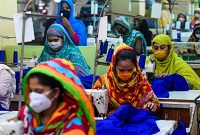 Recent estimates by McKinsey indicates, around one third of global fashion players operating in Bangladesh are not likely to survive the Coronavirus pandemic whose impact is hitting places where companies and employees cannot always access government-funded emergency support.
To survive, instead of placing orders as they normally do, retailers across Bangladesh are trying to unpick existing contracts. Peacocks has refused to pay for over 43,000 pairs of jeans that Denim Expert’s employees in Chittagong have already sourced, sewn or shipped. Similarly, Arcadia has refused to pay the company for its orders worth $2.5 million.
Billions lost due to lack of payments
Till now, Bangladesh has lost out on over $3billion worth of payments for T-shirts, shoes and designer dresses already produced or sourced since the outbreak of COVID-19,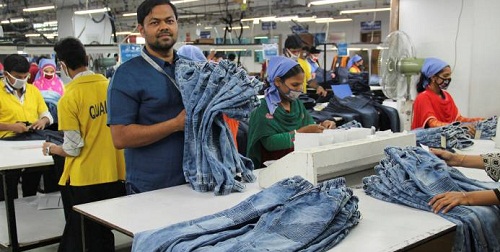 reveals BGMEA. Over half of the workforce has been laid off. In April, the government granted 65 per cent workers wages in the form of loans that they are expected to repay. Some companies like the Baird Group have taken longer than usual to pay its suppliers as its flow of money has slowed down. In recent decades, Bangladesh, Vietnam and Sri Lanka have become global production hubs for much of the rich world’s clothing, accessories and footwear.
Their success has been accentuated by fashion retailers encouraging more frequent consumption of fast fashion — to drive revenue, believes Patsy Perry, Senior Lecturer in fashion business at the University of Manchester. These retailers have always had the upper hand in their relationships with Asian manufacturers, with demands for retroactive discounts.
Despite this torrid experience of bricks-and-mortar retailers in recent times, the global fashion industry is one of the ‘rare economic success stories’ of the past decade, views McKinsey. However, behind this success is a story of extreme consolidation. In 2019, 97 per cent profits in the industry were generated by just 20 companies, including Inditex and Nike.
Slow response by retailers
H&M is one of the first global retailers to promise to support manufacturers and workers. However, some retailers have been accused of acting too slowly. A case in point is the UK high street retailer Primark which promised to pay its workers affected by cancelled orders in April. However, wages account for only about 15 per cent of the £256m worth orders that Primark cancelled with Bangladeshi manufacturers, says BGMEA.
Some argue many of them are simply not in a position to pay suppliers. He revealed his clients are already trying to shorten the time it takes for an ordered shirt to arrive in shops, boosting their flexibility in the face of demand shocks. This is in tune with those who have urged retailers to return production closer to home but, says Carry Somers, Designer and Founder of industry campaign group Fashion Revolution. However, Paul Lister, Head of Ethical Trade at Primark, does not expect the pandemic to have an impact on where the retailer manufactures its clothes in the future. Unless retailers pay for clothes already in production, they will have no business to save.
Asda accused of suspending orders
Asda a British supermarket retailer has been accused of cancelling or suspending garment orders without full payment.
The retailer has been targeted in a petition by anti-fast fashion activist group Remake, alongside Gap, C&A and Primark.
The petition says the retailers named have not yet promised to pay suppliers for all orders that were cancelled or paused as a result of coronavirus which has left millions of garment workers in Bangladesh jobless with no severance or access to healthcare.
According to Remake, Asda is refusing to accept a percentage of George orders and is imposing "enormous discounts" from 40-70 per cent on suppliers for a proportion of orders that have not yet been completed.
This is particularly disturbing when noting that Asda and Walmart have both been able to remain open during Covid-19 because of their food sales and are both presumably making a significant profit, said the group.
EWM Group responds to BGMEA, BKMEA’s threat
The Edinburgh Woollen Mill (EWM) Group has responded to BGMEA and BKMEA’s threats to place an embargo on business and to potentially blacklist Peacocks, Jaeger, Bonmarché, and other brands owned by EWM, unless they pay their outstanding dues to their suppliers in Bangladesh. EWM is the parent company of Peacocks, Jaeger, Austin Reed, Jacques Vert, Country Casuals, Windsmoor, Baumler of Germany, Bonmarché, and Ponden Home.
The company said it had already paid for majority of future stock when the COVID-19 crisis hit but is now talking to manufacturers about the remainder. The company has looked at literally every option on the table and worked hand-in-hand with all its suppliers to find solutions. However, it also needs to recognise that these are difficult and complicated issues.
According to the BGMEA, EWM has so far cancelled orders worth $8.22 million (£6.76 million) across five factories. It is understood that EWM has reached agreements with suppliers on more than half of this total, with about $2-3 million yet to be settled.
The association alleged that certain buyers have been taking advantage of the coronavirus situation by demanding unreasonable discounts. It asked EWM owner Philip Day to settle dues by May 29, or otherwise face an embargo on doing business in Bangladesh.
Beximco ships 6.5 million PPE gowns to Hanes
Beximco Pharmaceuticals, Bangladesh’s only US FDA Certified company has shipped 6.5 million PPE gowns to US brand Hanes for ultimate delivery to Federal Emergency Management Agency (FEMA). The gowns were made in just two months by the company which unleashed its world-class manufacturing, technical and design talent to switch over and start making personal protection equipment and help increase the supply of PPE which is urgently needed in Bangladesh and worldwide. The Beximco-Hanes partnership will help the two nations to combat the COVID 19 pandemic
Beximco Textile Division is one of South Asia’s largest, fastest, agile/flexible, most innovative, and sustainable vertical textile and fashion apparel manufacturing operations employing 40,000 people, shipping around 400,000 garments daily to gold standard companies like Target, USA, Zara, Michael Kors, PVH, Tommy Hilfiger, Calvin Klein, Amazon, C&A and Yellow
VISTA’s webinar explores opportunities for India’s textile and apparel sector
Voice of Industry Specialists in Textile and Apparel (VISTA) organized a webinar on ‘Unlocking Opportunities for Apparel & Textile Sector’ recently. Key speakers included: Gaurav Bhargav, Founder and CEO, LPH Apparel Inc; Vivek Bhatnagar, Founder and CEO, Fusion Group; Anupama Singal, Co-founder, Slicer; Manish Bharati, Business Head, Bhartiya International and Abhaya Gupta, CEO, Nanya Inc
The webinar raised many interested questions as to why India has not created its own index like Higgs Index so far, why is sustainability in Indian apparel industry buyer-driven and why are buyers not bothered with the certificates. The webinar urged Indian apparel manufacturers to focus on UN’s SDG. It was also highlighted that Mexico has a lot of opportunities for Indian companies, but India should ship goods for Mexico through US only. Notably, resort wear is a huge business in Mexico. Besides, it was also emphasized that India should focus on Russia, Romania and Poland.
Quoting a survey, Bharti highlighted that people in Europe are buying luxury products online and are very happy with this experience. Hence, he emphasized that digitalization is a must for all. Gupta was of the view that small buying agents and buying agencies can be the change-makers now, and they now need to bring new clients to India. A lot of small vendors need the help of buying agents and these agents have to lead the way.
Footwear retailer Clarks to slash 900 jobs
As a part of a major shake-up to revitalize the business post-Coronavirus, UK footwear manufacturer and retailer Clarks plans to slash around 900 jobs. The company recently made 160 redundancies globally and over the next 18 months, it will make another 700 or so employees redundant.
However, Clarks’ total reduction of 900 corporate roles in its global workforce will be partially balanced by the creation of around 200 new jobs. The retailer is actively supporting staff to find alternative employment within or outside of Clarks.
The announcement is part of Clarks’ ‘Made To Last’ turnaround strategy, which was first launched at the end of last year and is aimed at ensuring the heritage British retailer has a sustainable future.
The strategy includes a focus on sustainability, product innovation, design and quality, and digital enhancement to help customers properly interact with the Clarks brand, and select and buy shoes in convenient ways.
UP aims to become major textile manufacturing and export hub
The UP government is looking to replicate the success of Vietnam and Bangladesh in becoming major textile manufacturing and exporting hubs. With the state starting the process of skills mapping of incoming workers, more than 12,000 workers have so far, in the first phase of enlisting, been found to be trained in garment making and tailoring.
The state government has also decided to involve the district level employment exchanges in the process of providing jobs to these workers by sharing their skills database. It recently set up a Migration Commission for the welfare of migrants. The government has named the panel as Kaamgar/Shramik (Sevayojan evam Rozgar) Kalyan Aayog.
The Commission will also take steps for insurance cover to the migrants. Besides, the government is planning to leverage the central stimulus package to provide housing facilities to the migrants.
Under the comprehensive Rs 20 trillion economic stimulus package to overcome the covid-19 challenges, the Centre has announced a scheme to help the migrant labourers in getting residential accommodations. The central government will provide affordable rental housing to the migrants and urban poor under the flagship Pradhan Mantri Awas Yojana (PMAY) scheme.
International Apparel Federation predicts global apparel sales decline by 50%
The International Apparel Federation, by 2020, apparel sales are expected to decline by 50 per cent, compared to 27-30 per cent of revenue, and more than 80 per cent companies are facing financial problems such as bankruptcy. Apparel retailers are trying to get their feet back on e-commerce or other strategies. Already in many countries, brands are reopening stores. On the other hand, 65 per cent of consumers are reducing their spending on apparel.
Retailers and brands are going forward with their strategies and manufacturers also getting new orders. But apparel manufacturers are the most sufferers because they are facing a significant crunch in liquidity.
To save theirs worker, the Pakistan government issued a concessional loan to partly cover 3-month salaries provided no layoffs moratorium on payment of principal. To prevent bankruptcies Pakistan took the resumption of work under strict SOP’s (standard operating procedure) with partial capacity utilization and extra overheads but without the help of brands’ receivables of payments, it will get tough.
At the end of the pandemic, the Re-Set of the supply chain will occur. Fast fashion will go to slow fashion, change in order rhythm, e-commerce will go rapidly but will take more time to replace shops, re-consideration of sourcing strategy and buyer-supplier relation will be rebalanced. Manufacturers around the globe are taking a new initiative to rise back again.
Similarly, Bangladesh RMG companies reopened their factories and are receiving new orders. Bangladesh garments sector is following SOPs to maintain health security for workers. Regular temperature checking, proper sanitization, and social distancing are being established in factories.
Almost 85 per cent of Surat businesses yet to get help
Around 85 per cent of Surat business sectors, which fall in The Federation of Surat Textile Trading Association (FOSTTA) ‘zones, are yet to get help in spite of lockdown relaxations across Gujarat. Just 15 percent of the business sectors that are not in control zones have the organization’s gesture to continue activities.
FOSTTA had presented a notice a couple of days prior to locale gatherer Dhaval Patel mentioning authorization to open shops. On May 19, the authority held a gathering with Surat civil chief Banchhanidhi Pani and FOSTTA individuals in which it was chosen to keep the business sectors in the control zones shut.
The authorities recommended modalities to open 20 percent of business sectors in the control zones to open with limitations. Over a lakh of vagrant laborers who were working with the material, businesses have left Surat to their home states.
On May 19, around 20 force loom production lines at Anjani Industries began activities with restricted specialists. Around 30 force loom processing plants began in the Sachin GIDC region and 10 in the Diamond Nagar modern home at Laskana. All these are in non-regulation zones, as per media reports from the state.
USTR releases negotiating objectives of the proposed US-Kenya FTA
The office of the US Trade Representative (USTR) recently released the specific negotiating objectives of the proposed US-Kenya Free Trade Agreement. The proposed free trade agreement (FTA) intends to build on the objectives of the African Growth and Opportunity Act (AGOA) and serve as an enduring foundation to expand US-Africa trade and investment across the continent.
USTR will secure duty-free access for US textile and apparel products and seek to improve competitive opportunities for exports of US textile and apparel products while taking into account U.S. import sensitivities. The proposed agreement will also establish origin procedures that streamline the certification and verification of rules of origin and that promote strong enforcement, including with respect to textiles. The same/very similar language is used in the proposed US-Japan Free Trade Agreement and US-EU trade negotiation.
Of the total $667million US merchandise imports from Kenya in 2019, nearly 70 per cent were apparel items, making the sector the single largest stakeholder of the proposed FTA. While still being a relatively minor supplier, Kenya’s apparel exports to the US reached a record high of $453million in 2019, which was an increase of 132 per cent from ten years ago. For many US fashion companies, Kenya is also its single largest apparel-sourcing base in Sub-Saharan Africa (SSA), accounting for one-third of the region’s total apparel exports to the US in 2019.
However, how to design the textile and apparel chapter in the proposed US-Kenya FTA is not easy. A preliminary content analysis of the 133 public comments submitted to the US International Trade Commission (USITC) as of May 2020 shows that various stakeholders have proposed competing views on several complicated issues, ranging from the rules of origin to the tariff elimination schedule.











