


FW
UKFT urges TAP grants for eligible brands
The UK Fashion & Textile Association (UKFT) has urged the UK government to provide Tradeshow Access Program (TAP) grants to eligible brands to attend virtual tradeshows. Additionally, UKFT has also ensured that the grants will be made available to companies which have exhausted their access to the TAP scheme.
UKFT believes in current challenging times, companies should get an opportunity to test out the virtual tradeshow route as these platforms have great functionality. These shows enable buyers and sellers to meet online. Traditional platforms work best for buyers and sellers who know each other already but virtual tradeshows attract new buyers by creating a curated edit of brands and products to the platforms, according to a UKFT press release.
The first virtual tradeshow releases are expected to be Playtime (running on Playologie.com for children’s wear; Pitti Uomo (running on Pitti Connect) for menswear, accessories and footwear; Pitti Bimbo (running on Pitti Connect) for children’s wear, accessories and footwear; Cabana Miami Swim (running on Joor) for swim, beachwear, cruise and resort; Premium and Seek Berlin (running on Joor) for menswear, women’s wear, casual wear, accessories, jwellery, footwear; Project NYC and MRket NYC pending decisions from the organisers (running on Nuorder.com) for menswear, women’s wear, children’s wear, accessories, footwear, resort.
UKFT recommends that companies hold off on making a decision on whether to use the virtual platforms until they receive confirmation that they are eligible for a grant. Once accepted for a grant, UKFT will refer these companies to the correct people to apply for the right part of the platform.
Timberland launches workwear collection from recycled materials
Outdoor brand Timberland has launched a workwear collection made out of recycled materials. The brand has incorporated ReBOTL technology to use recycled plastic bottles to make an innovative material for the entire collection. Calling the material as RPET (Recycled Polyethylene Terephthalate), the brand has currently used more than 445 metric tons of plastic waste that includes plastic bottles for this collection.
Each piece of the collection is made up of at least 40 per cent of RPET, while the bags are made up of 62 per cent of the material. Timberland claims that they are working on incorporating more of the material in the future collections. Consisting of outerwear, sneakers and accessories, the collection revolves around workwear that inclines more towards a casual approach. Inspired by summer, colors like mustard, navy and aqua green make up the majority of the collection. The lining of the jackets is made up of RPET along with the linings of the sneakers and bags.
The collection also consists of a pair of rugged worker pants that match the jackets with patches. The sneakers in this collection are chunkier side and have an olive-colored exterior with a white mid-sole and a black bottom sole with ridges. Other shoe styles like oxfords and hikers are also present in the collection.
Tevero launches anti-viral masks
Tevero has launched a new range of masks, gloves and fashion fabrics under the collection ‘Virus Shield’. The collection uses the technology of a reputed Swiss textile innovation leader, HeiQ. This textile technology has been proven in an independent laboratory to be effective against the virus that causes COVID-19.
Under laboratory settings, the technology reduces the viral activity of the SARS-CoV-2 virus by 99.99 per cent in 30 minutes on the treated fabric submitted by them. The technology is safe and non-toxic. Fabrics treated with this technology have been previously tested according to ISO-18184 with different enveloped viruses.
Tevero's masks are composed of two layers of soft-knitted cotton for excellent comfort and breathability. They have applied anti-viral treatment on both layers, increasing protection for the wearer. Sandwiched between the two layers is a filter composed of meltblown fabric that offers more than 99.5 per cent bacterial filtration efficiency.
Indonesia’s trade ministry lifts ban on PPE exports
The Trade Ministry has lifted an export ban on personal protective equipment (PPE) amid oversupply in national production as it seeks to restore exports hard hit by the COVID-19 economic crisis.
According to the Ministerial Regulation No. 57/2020, issued by Trade Minister Agus Suparmanto, manufacturers can now export surgical masks, N-95 masks, coveralls, surgical gowns and raw material to make face masks. They can apply for the export permit via the government’s export-import online licensing system Indonesia National Single Window (INSW). They will then be required to provide documents such as a business permit, six-month export plan and statement to prove that they have stocks to meet domestic demand, in order to be granted export approval.
This trade ministry regulation aims to spur national economic growth, particularly for manufacturing, and improve India’s export performance amid the COVID-19 pandemic. The country’s exports fell by 28.95 per cent year-on-year (yoy) in May to $10.53 billion, the lowest level since July 2016, due to reduced shipments of coal, coffee, palm oil, as well as oil and gas.
National Council of Textile Organizations elects new chairman
US-based the National Council of Textile Organizations (NCTO) has elected David Roberts, CEO of Cap Yarns, its new chairman to succeed Leib Oehmig, CEO of Glen Raven Inc. It also elected David Poston, president of Palmetto Synthetics as its new vice-chairman. Palmetto Synthetics is a specialty man-made fiber producer that has provided specialty thermoplastic fibers to companies across the globe.
With the support of its newly elected officers, NCTO will continue to work on behalf of its members to shape policies that will help our industry persevere and thrive. Through a dedicated association staff and a committed group of industry leaders, it will ensure that together it continues to have a seat at the table in Washington.
Monsoon Accessorize ropes in experts to help reopen stores
Monsoon Accessorize has appointed retail property specialist Harper Dennis Hobbs to help it to reopen over 100 stores in the UK. The real estate giant is helping the company to secure new leases with landlords and reopen stores as quickly as possible.
As the Monsoon Accessorize was recently bought out of administration by its founder Peter Simon and plans to soon close a large number of its stores, it is working on an accelerated program of delivery, besides negotiating with multiple landlords to secure leases secured and reopen stores. With restrictions for the UK high street lifting, the company is determined to have stores trading in time for summer.”
According to the company’s COO Nick Stowe, engaging with Harper Dennis Hobbs will help the company to accelerate its conversations. The company aims to secure these leases as quickly as possible to get its retail business working again.
With orders picking-up Tirupur, Noida export units opt for local laborers
As export orders are trickling in from the US, Europe and West Asia, apparel and knitwear exporting units in Tirupur and Noida are turning to local laborers in the absence of migrant workers who have returned to their native places. While knitwear units in Tirupur have managed to get laborers from the Southern districts of Tamil Nadu to run operations, apparel units in Noida have got about 65,000 workers from Uttar Pradesh. There are 12 million workers engaged in garment manufacturing across Maharashtra, Gujarat, Karnataka, Tamil Nadu, Delhi-National Capital Region and Punjab, among others. Migrant workers constitute about half the workforce.
There are 3,000 garment manufacturing units in the Noida cluster, which generates exports of Rs 20,000 crore annually and also sells garments worth Rs 5,000 crore in the domestic market, he said.
Units in Tirupur, the biggest knitwear cluster in the country, have procured laborers from southern districts of Tamil Nadu to run their operations for the time being. Nearly 40 per cent of the workforce in the state comprises migrant workers. Of these 10 percent have stayed back while others have left, Tirupur exporters will need more manpower from September onwards when garments for the winter season will have to be shipped to the US and Europe.
India’s Cotton Corp to export cotton stock to Bangladesh
The state-run Cotton Corp of India is planning to export cotton stocks procured in 2018-20 (Oct-Sep) marketing years to Bangladesh. However, the export quantum will be decided as per mutual agreement. India has a logistical advantage in exporting to Bangladesh as shipments take the least time. Bangladesh's annual cotton consumption is 8.5 million-9.0 million bales of which the country imports around 2.5 million bales every year from India.
Cotton Corp is the government's nodal agency for procurement under the minimum support price scheme. The agency has so far procured around 10.0 million bales in 2019-20 (Oct-Sep) season. In 2018-19 season it managed to buy only 900,000 bales as spot prices of the fiber were more than its support prices for most of the season.
Exports of around 3.8 million bales have already been shipped in the current season, which started on Oct 1, and another 1.2 million bales will be exported over the next three-four months.
Global textile industry orders could revive by Q4 2020: ITMF study
 To interpret the impact of COVID-19 on the global textile value chain, ITMF recently conducted its fourth Corona Survey amongst 600 members across the world. The study indicated the textile sector orders will revive in Q4 2020.
Textile orders decline by 40 per cent
The survey showed, textile orders across the world have plummeted over 40 per cent from March 1, 2020 when the pandemic began to June 8, 2020. The decline in orders is universal across all sectors. Orders for fiber producers have declined by 42 per cent while their turnovers have declined by 33 per cent.
Similarly, orders for spinners have declined 44 per cent while their turnovers have declined by 33 per cent. And orders for weaver and knitters declined 46 per cent while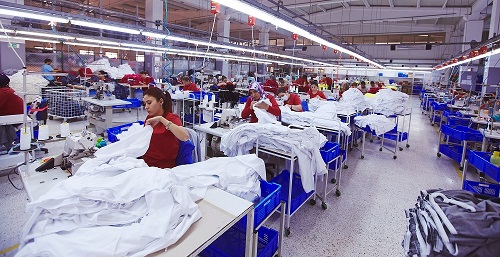 turnovers dropped 33 per cent. Garment producers noted 37 per cent dip in orders while their turnover has fallen 31 per cent.
In future too, textile companies expect orders to fall by 32 per cent. Out of this, 22 per cent companies in South East Asia expect orders to drop while 36 per cent in Asia expect the same.
Sector to revive by Q4 2020
However, there is a silver lining and a sense of optimism among stakeholders. Asked when they expect businesses to reach pre-crisis levels again, around 23 per cent respondents said they expect orders to revive by the first quarter of 2021 while 21 per cent expect a revival by the second quarter of 2021. A third set comprising 14 per cent of respondents expect revival to come by the third quarter of the year, while 20 per cent expect it to come as early as the fourth quarter of fourth quarter of 2020.
Retailers manage unsold inventory with ‘pack and hold’, charity
 Apparel retailers across the world are worried as COVID-19 has not just battered their sales but also raised a bigger concern of dealing with mounting unsold inventory. As retailers begin to reopen stores, they plan to either sell their inventory right away or ‘pack and hold’ it for the next season.
The option of ‘pack and hold’ was first explored by Gap, who in its first-quarter earnings, revealed plans to ‘pack and hold’ its transitional fall merchandise till Summer 2021. This also included the brand’s undelivered merchandise to shops across Gap’s namesake brand as well as Banana Republic, Old Navy and Athleta.
Like Gap, UK’s largest department store Marks & Spencer and children’s wear retailer Carter have also announced plans to pack and hold their unsold inventories. While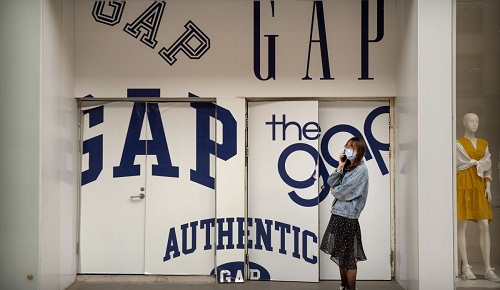 Gap aims to store approximately $252 million worth of unsold seasonal stock in secured storage facilities until spring 2021, Carter plans to pack away as much as $110 million of unshipped spring LQ and summer product and holding it until next year.
An unreliable option
However, the decision to pack and hold may benefit only if shoppers come back to stores later, which hinges entirely on speculation. According to a recent data from Refinitiv, only 34 per cent shoppers expect to visit shopping malls when they reopen while another 35 per cent plan to go only after the introduction of a COVID-19 vaccine.
Hence, UK-based luxury department store Harrods plans to immediately offload its pileup by launching a temporary concept store within a two-story, 80,000 sq. ft. space in Westfield London. The store will sell discounted stock leftover from the spring season as a part of its annual end-of-season summer sale. The pop-up has been designed to support higher levels of social distancing.
Taking the charity route to inventory management
Adopting more charitable steps to offload inventory, Gap-owned Old Navy is donating $30 million worth of clothing to families affected by the pandemic. Another of the its brand Banana Republic is collaborating with Delivering Good to donate $20 million worth of new clothes to those who have recently filed for unemployment during the crisis.
Similarly, Guess has partnered with Good360 to donate 45,000 pieces of activewear and outerwear to consumers in need while Ralph Lauren has donated 1.5 million clothing items to frontline workers and families in need. Donating apparels is the most obvious way to get rid get of unsold clothes. It helps apparel companies take this route to offload their excess stock and also build brand equity.
No excess inventory for footwear retailers
Even though they reported some sales decline, footwear retailers haven’t been impacted much with excess inventory. The first quarter inventory of ShoeCarnival increased merely 4.2 per cent, while that of Genesco, the parent company of Journeys, Schuh and Johnston & Murphy, increased only 6 per cent year on year in its first quarter, despite shutting nearly 1,500 stores in mid-March. The consumer’s appetite for footwear has been stronger as it is a much easier purchase than apparel.











