


FW
APR reaches numerous sustainability milestones
In less than two years, Indonesian viscose rayon producer Asia Pacific Rayon (APR), has achieved numerous milestones in promoting sustainability. Earlier this year, the company inaugurated Indonesia’s largest viscose rayon facility to date in Riau, Sumatra.The 240,000-ton capacity mill seeks to strengthen the national textile and textile product industry as part of the government’s “Making Industry 4.0” vision. Aside from bolstering the textile sector.
APR has also launched initiatives for clean manufacturing, sustainable sourcing, and supporting local communities and employees. It recently also launched an inaugural sustainability report which details the accomplishments of the said efforts.
APR’s inaugural sustainability report reveals the company’s plans to reduce air emissions from its viscose-making process. The company plans to recover over 90 percent of carbon disulfide from their production. In 2019, the average recovery rate was 89.2 percent, just a few steps closer to the target.
The report also outlines how APR has been actively helping fight the global pandemic. Along with its parent entity APRIL, the company has provided 15,000 personal protective equipment gowns, 150,000 surgical masks, and gloves to Riau’s Covid-19 taskforce.
Luxury sector banks on pre-Christmas rush to boost business
 Compensating for dismal performance in the second quarter, the global luxury sector surpassed expectations in the third quarter with notable performances from LVMH and Hermes. As per Business of Fashion, the fashion luxury sector was abuzz with activities this month with Tiffany reviving deal with LVMH by reducing price by 2.6 per cent. The Ferragamo family also initiated a discussion to sell approximately 20 per cent in its holding vehicle. World’s second-most influential fashion blogger of 2020, Chiara Ferragni, announced plans to list her lifestyle brand while Haircare manufacturer Pool Service acquired Penzeri Diffusion, the owner of the Urban Tribe brand. Mandarin Capital also acquired a 74 per cent stake in Nuova Fapam.
Luxury embraces sustainability
Another change that occurred during this month was a shift towards sustainable luxury. Sephora launched a premium refillable lipstick called Valdé, and earmarked one percent of its revenues for social initiatives promoting equality. Similarly, Safilo announced its plans to produce sunglasses with recycled plastic from the Great Pacific Garbage Patch in collaboration with the Ocean Cleanup Project; Kering set up a temporary shop for used Gucci items in collaboration with The RealReal to Moncler reiterated its commitment to carbon-neutrality by 2021; Estée Lauder’s Origins brand collaborated with its packaging suppliers to launch an advanced recycling tube package in 2021 and Kering teamed up with Adidas, Lululemon and Stella McCartney to pledge using fungi-based leather in their manufacturing process from 2021 onwards.
Lockdown fears offset initial gains
As per the Savigny Luxury Index (“SLI”), growth in October remained flat with lockdown fears offsetting initial gains. Tapestry’s shares soared 42 per cent due to better-than-expected quarterly results, especially in mainland China. The company also appointed Joanne Crevoiserat as its CEO. Boosted by a series of broker upgrades, luxury firm, Capri Holdings maintained its growth momentum in October just like Tiffany which surged 13 per cent on account of its historical deal with LVMH.
Beleaguered shoe and leather brand Tod’s announced disappointing first-half results and lost 27 per cent share value. It also didn’t experience post-lockdown recovery comparable to other regions. Increased possibility of a no-deal Brexit caused Burberry’s share price to tumble by 13 per cent.
Keeping its fingers crossed, the luxury sector eagerly awaits the upcoming Christmas sector. With shops and businesses shutting down to control the second wave COVID-19, the sector relies on a quick recovery to cash in on the pre-Christmas rush.
Its advantage India as the world looks away from China for sourcing yarns
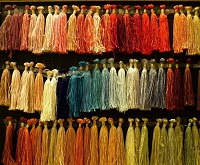 The ban on import of Chinese textiles by the US might prove to be a blessing for the Indian textile industry, spurring not just its cotton but also silk exports.
Focus on Indian cotton
China caters to around 30 per cent of cotton consumed globally. A ban on Chinese cotton globally may shift world’s focus to Indian cotton, spurring yarn exports to Bangladesh and Vietnam, said well known textile expert Rajesh Bheda to the Indian Express recently. Likewise, nearly 80 per cent of the silk threads India uses are imported from China. However, the country also has a good homegrown industry that can produce varieties of silk like broacade silk, etc explains designer Hemang Agrawal. Experts opine that limiting or controlling Chinese textiles and apparel imports would will be good for the Indian textile industry as China has been dumping various products at cheap rates thereby undercutting Indian textile and apparel makers.
Schemes to boost silk exports
India is world’s second largest producer of raw silk says Indian Silk Export Promotion Council (ISEPC) and is also the largest consumer of pure silk. Over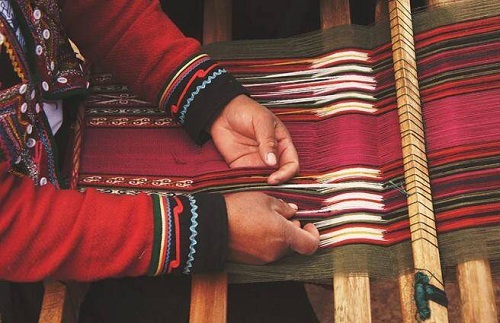 the last five years, the council has gradually increased its production of Indian silk yarns thereby reducing dependence on Chinese silk imports, explains Sanjeev Kumar, Senior Director, ISEPC. Sharma says several top Indian apparel exporters have seen a spurt in orders are and are in talks with global buyers looking to increase sourcing from India. Meanwhile the Textile Ministry has launched restructured scheme called ‘Silk Samagra’ to improve the quality of domestic silk production, adds Kumar.
Promoting handlooms and handicrafts
Despite its humungous size, the Indian textile industry continued to struggle in the global market. Textile Ministry stats show, from March 2018 to April 2019, India’s textile exports recorded 5 per cent decline. Its share in the global $150 billion MMF market is also minuscule at 0.7 per cent. In the top-10 technical textile lines too, India has a tiny 0.6 per cent share of the total global market which is worth $100 billion, said Ravi Kapoor, Textile Secretary at the annual general meeting of the Confederation of Indian Textile Industry (CITI).
To make Indian textiles globally competitive, the government aims to launch a new National Textile Policy focusing exclusively on manmade fiber products. Meanwhile, Laila Tyabji, Founder, Dastkar, a Delhi-based NGO, urges the industry to promote handlooms and handcrafted products as one its biggest strengths.
ITF launches #IndiaforSure on social media platforms
The Indian Texpreneurs Federation (ITF) has launched hashtag #IndiaforSure on leading professional social media platforms like LinkedIn, Twitter, Facebook and Instagram. #IndiaforSure is a platform for textile entrepreneurs across the value chain to share what they have achieved through their exceptional leadership and focus on their areas of SURE.
SURE stands for Stable, Sustainable, Reliable and Ethical. ITF had launched ‘India for SURE’ initiative on World Environment Day earlier this year to move forward towards a collective blueprint for sustainability. The work is currently in progress, according to ITF, which represents around 500 textile manufacturing companies covering the entire value chain of Tamil Nadu textile industry including integrated, standalone spinning, weaving, processing, home textiles and apparel companies.
The endeavour of #IndiaforSure platform is to showcase the stories of change, that provides an opportunity of cross learning for everyone in the industry The initiative is also aligned towards Government of India’s initiatives such as Aatma Nirbhar Bharat to establish India as a most preferred destination for sourcing manufactured goods like fashion products.
Bangladesh seeks duty waivers for 12 years post LDC graduation
Bangladesh recently sought from the United Nations export duty waivers on its products for 10 to 12 years past its graduation from a least developed country (LDC) to a developing one in 2024.
The reason is the country's economy, exports, supply chains and employment have been severely damaged as a result of the COVID-19 pandemic.
The three prerequisites set by the UN Committee for Development Policy (UNCDP) to graduate from the LDC status are are gross national income, human assets index and economic vulnerability index. The UNCDP will assess the country's graduation requirements again next year.
The European Union (EU) had already announced that it will continue the zero-duty benefit for Bangladesh after the graduation for three more years as a grace period for preparations. But the Bangladesh commerce ministry sent a letter to the EU last month requesting continuation of the generalized system of preferences (GSP) under its Everything but Arms (EBA) initiative for 10 more years following the graduation.
APRIL announces sustainability targets for 2030
Leading global producer of sustainable fiber and bio-based products, Asia Pacific Resources International (APRIL), has announced a slate of progressive targets to 2030 that will have a positive impact on climate, nature and people while transforming its business.
Supporting the achievement of the Sustainable Development Goals in Indonesia, APRIL2030 targets a drastic reduction of carbon emissions to achieve net zero emissions from land use and a 25 per cent cut in product carbon emissions. The company also commits to net zero loss of protected areas and measurable gains in biodiversity and ecosystem benefits in the conservation and restoration areas under its active management.
APRIL2030 will drive vital inclusive progress in Indonesia’s developing economy through transformative initiatives in livelihoods, education, healthcare and championing equal opportunity for women. The company also commits to embracing circularity in its business and the use of recycled textiles as an alternative fiber source.
INDA’s Virtual Hygienix™ 2020 attracts 240 visitors
Over 240 professionals from 18 countries throughout the supply chain participated in the sixth edition of INDA’s Hygienix™, the premier event for absorbent hygiene and personal care markets, on November 17-19 in a virtual format to comply with pandemic guidelines.
The event included sessions on topics such as: The Absorbent Hygiene Industry under COVID-19; U.S. Economic Forecast and Industry Statistics; Packaging and Labeling Challenges; Innovative Developments and Intellectual Property; Smart Diapers; and Principles of Sustainability and Elderly Care. Virtual Hygienix™ included presentations from 24 industry experts along with 6+ hours of virtual live personal engagement.
Participants developed business relationships during networking opportunities that included: engaging conversations on selected topics, live Q&A sessions with each presenter, and open conversations during coffee talks, afternoon tea, and cocktail hour sessions.
Colin Hanna, Director of Research, and Pricie Hanna, Managing Partner, Price Hanna Consultants – presented challenges, resiliency, and recalibration of sourcing and risk management strategies at multi-levels in the absorbent hygiene product supply chain.
Lindsey Piegza, Ph.D., Chief Economist, Stifel Financial Corporation, presented an outlook on the U.S. economy from a pre- and post-election perspective, including comments on a potential stimulus package and the impact of recent vaccine developments on the economic outlook.
Bryan Haynes, Ph D, Senior Technical Director – Global Nonwovens, Kimberly-Clark Corporation presented on the future of sustainable plastic alternatives and the impact of the European Union Single Use Plastics Directive on some of these alternatives, as well as Kimberly-Clark Corporation’s sustainability 2030 strategies.
Highlight of the event was the announcement of INDA’s prestigious Hygienix Innovation Award™ to Male Drip Protection from Dermasteel – an innovative male leak protection product, with a patent-pending, proprietary design that is discreet, form-fitting, and tailored to the male anatomy.
The next Hygienix™ is scheduled for November 15-18, at the Westin Kierland hotel in Scottsdale, Arizona.
Hugo Boss launches new collection in support of Cotton made in Africa
Hugo Boss has launched a sustainable collection in support of Cotton made in Africa. Created by Hugo Boss in conjunction with brand ambassador Liam Payne, this exclusive collection helps protect the environment and improve living conditions in Africa by using cotton verified through Cotton made in Africa.
The Cotton made in Africa initiative is committed to promoting sustainable cotton cultivation in Africa and to supporting around 900,000 smallholder farmers. Eschewing all genetic engineering and artificial irrigation, it advocates for equal rights and works to protect the rights of children. Since 2019, HUGO BOSS has supported the initiative by incorporating the verified cotton, which is socially and ecologically sustainable, into some of its collections. This represents an important contribution to improving the cotton growing industry in Africa.
Cotton made in Africa's approach is based on the principle of help people help themselves. For every item bearing the Cotton made in Africa logo, companies pay a licensing fee to the initiative, which uses the money to fund training programs for smallholder farmers. With its focus on eco-friendly and highly efficient cultivation methods, this training serves to protect the environment while improving the farmers' harvests.
HKRITA hosts webinar on sustainability
Hong Kong Research Institute of Textiles and Apparel (HKRITA) hosted a webinar entitled ‘The Future of Fashion: Reimagine, Regenerate and Close the Loop,’ with seasoned global executives of HKRITA’s leading partners, including Monki, Shahi Exports, Gap Inc and H&M, sharing visionary views and insights into key industry trends in driving sustainability amid these new normal times and beyond. The webinar was attended by over 250 participants, including industry practitioners, senior executives and leaders.
Established in 2006, HKRITA is funded by the Innovation and Technology Commission of the HKSAR Government and is hosted by The Hong Kong Polytechnic University. HKRITA contributes to the competitiveness of the textile and apparel industry by providing one-stop services in applied research, technology transfer and commercialisation. HKRITA also plays a vital and expanding role in driving sustainable improvements in the industry and thus bringing benefits to society as a whole.
Edwin Keh, Chief Executive Officer, HKRITA, said these uncertain times have accelerated the shift to greener and more sustainable supply chains, where it is crucial for brands to communicate and demonstrate a social purpose to customers. It is a critical time for the textile and fashion industry to emerge stronger and gain resilience by adopting the new 3Rs approach – reimagine, repurpose and reinvent – and working towards carbon neutral goals to redefine the future of the textile and fashion industry.
US textile, apparel sectors to face negative impact of COVID-19: Creditsafe
As per a new report by the global intelligence firm Creditsafe, the US manufacturing industry including the apparel and textile sector may face severe negative impacts of COVID-19. The industry may lose $400 billion in revenue in 2020 due to the pandemic, the report says. It warns manufacturers, also including industrial machinery equipment, printing and publishing, and fabricated metal products, of significant decreases in their revenue and facing difficult decisions on navigating through these difficult times.
The US manufacturing industries represent over half a million businesses across the country, with more than 17 per cent expected to experience a severe downturn and financial crisis from the economic impact of the coronavirus. According to the National Council of Textile Organizations, the US textile industry supply chain, from textile fibers to apparel and other sewn products, employed 585,240 workers last year. Of the 31,735 manufacturers of clothing and other textile products reviewed by the report, 5.8 percent of them are likely to face severe risk.
They may face factors such as mandatory closures, changes in buyer behavior and disruptions to the supply chain are all contributing to the overall risk that the manufacturing industry is facing. These could then cause ripples through a loss of employment, decreases in revenue and delays in production, Creditsafe noted.
The pandemic has caused the US, and specifically manufacturers, to look to a more localized supply chain and bring several types of critical manufacturing sectors back on shore. The Creditsafe report cites the April Thomas Industrial Survey that shows 64 per cent of manufacturers planning to bring production and sourcing back to North America, with 25 per cent increasing their use of automation.











