


FW
Mango’s online sales to reach €1 billion in 2021
Spanish fashion brand Mango expects its online sales to reach €800 million this year and €1 billion in 2021.
The brand’s online turnover increased by 5 percent till October. This increase waspartly due to the almost three million new online customers the firm has added this year, 900,000 of whom were added during the months of lockdown, when turnover grew by more than 50 percent.
The company had total sales of €2.374 billion in 2019. Of this, 24 percent were generated through e-commerce. Mango is considered one of the first companies in the fashion retail sector to launch e-commerce.
During these months, Mango has implemented various initiatives to meet the online shopper demand, transferring more than 200,000 garments from the brick-and-mortar channel to the online one. Mango also extended its return policy to 60 days and increased its digital marketing spend by over 30 percent so far this year.
BCI launches digital series on cotton sustainability
The Better Cotton Initiative (BCI) has launched a new Cotton Sustainability Digital Series for 2021 that will include an online conference on global cotton sustainability.
The month-long series will bring together the entire cotton sector to shape a more sustainable future for cotton. It will industry leaders and experts and explore the entire cotton value chain. Sessions will focus on topics including climate action, innovation today and social sustainability, according to BCI.
Lucy Shea, group CEO of Futerra, will speak on the topic ‘What will 2030 look like and how do we respond as brands, manufacturers, NGOs and citizens?’ on January 19, 2021. The discussion will explore the sustainability trends that are shaping the world around us and the fashion and textiles sector. In particular, participants can look at how companies who embed sustainability have proven to be more resilient in 2020 and are building back better, becoming the businesses that our future needs. The next ten years will see the disruption of almost every industry, driven by our fast-changing world and the shifting desires of consumers, especially Gen Z. The episode is sponsored by Supima cottons.
Brick and mortar fashion sales yet to recover from COVID-19
Though retail sales have stabilized to reach previous year’s levels, fashion sales at brick and mortar stores have not yet recovered from pandemic losses. As per Sourcing Journal, retail and food services sales in October rose by a seasonally adjusted 0.3 percent in October compared with September and marked a 5.7 percent rise from a year ago, according to the Census Bureau’s latest monthly reading Tuesday.
Retail and food service sales remained flat in the first 10 months of 2020. Unemployment rate shot from 4.4 percent in March to 14.7 percent in April and has yet to recover, currently standing at 6.9 percent. Fashion retailers saw their sales fall harder. Sales at apparel and accessories specialty stores declined 4.2 percent from September and by 12.6 percent from a year ago.
Sales at department stores dropped by 4.6 per cent from September and were off 11.9 percent from a year earlier. Jack Kleinhenz, Chief, National Retail Federation, believes early holiday shopping appears to have supported October’s increase in sales. He revealed that the biggest and strongest retailers have managed to reestablish themselves enough to look to better times next year.
Kohl’s Corp eked out a third-quarter profit and was planning to bring back its dividend in the first half, while Walmart earnings topped expectations with apparel performing well for the mass merchant.
Successful transition call for better balanced and collaborative supply chain relations: IAF
At its digital pre-event for the 36th IAF World Fashion Convention held on November 10 and 11, International Apparel Federation (IAF) said, successful transition can be achieved only through better balanced, less adversarial and more collaborative relations in the supply chain
The pre-event aimed to start a global, industry wide and in-depth conversation on the Convention’s theme: ‘Transition in the Global Fashion System’. The digital pre-event consisted of four separate online sessions with a range of partners, including Dutch association Modint, London College of Fashion, ITMF and Motif, supported by companies such as AFM (includes Decathlon, Pimkie, Auchan, etc), Hugo Boss, Lenzing, Alvanon, QIMAone, Triple Tree Solutions, the Amsterdam Fashion Institute, Chainge Capital and Pt Pan Brothers. It also included six movie clips recorded by prominent IAF members giving their vision on the theme of transition from a diverse range of industry perspectives including buying relations, technology, standardization and education.
Production facilities by OAR registered members double in three years
Number of production facilities registered by members of the Dutch Agreement on Sustainable Garments and Textile (AGT) on the Open Apparel Registry (OAR) global database has more than doubled from 2016 to 2019. During these years, the number of unique production locations increased from 2,800 to nearly 6,000, which AGT says demonstrates its signatories ongoing efforts to increase supply chain transparency.
All AGT companies contribute to the AGT aggregated list on OAR which includes a total of around 45,000 production locations on its full worldwide list. The OAR is a transparent source of information for companies, NGO’s and trade unions who can consult the database for research into environmental or social issues which affect workers.
Total 12 AGT companies have also signed the Transparency Pledge, up from two in 2016, in which they commit to disclose the locations of all production locations, what types of garments are manufactured there, and how many people work at these sites.
The Dutch Agreement on Sustainable Clothing and Textiles brings together companies, trade associations, unions, NGOs and the government with the aim of promoting international corporate social responsibility in the clothing and textile chain.
Apparel workers to form public health councils to ensure allegiance to safety rules
According to a new program approved by the Los Angeles county board of supervisors, workers from certain sectors, including apparel, will form public health councils to ensure employers follow pandemic safety rules. The board has also sought an ordinance to protect workers from retaliation as safety issues are rarely expressed due to fear of being fired.
Launched with an annual budget of around $5 million, the program aims to expand the enforcement of health orders in the United States and address the pandemic’s toll on essential workers, according to US media reports. The motion will pair councils in the food and apparel manufacturing, warehousing and storage, and restaurant sectors with third-party organizations that will educate workers on health orders and help them report violations.
Third-party organizations like non-profits and unions will be certified by the county to train councils on coronavirus health protocols. The program has been applauded by labor groups who have sought its broader application across Industries.
Gartex Texprocess to be launched as a hybrid event
In conjunction with MEX Exhibition, Messe Frankfurt Trade Fairs India will hold Gartex Texprocess India as a hybrid event. The event will scheduled alongside Messe Frankfurt’s Screen Print India fair and bring the entire textile value chain together through their new co-located and hybrid formats.
The New Delhi edition of the co-located fair is rescheduled from August 6 to 8 August 2021 at Pragati Maidan with a new hybrid format. Both Mumbai and Delhi editions will allow fair goers to explore a wide range of features like targeted business matchmaking, real-time video calling, scheduling meetings in advance, live knowledge sessions through the digital platform alongside the traditional physical event.
The exhibition will focus on innovations in garmenting and apparel machinery, Screen Print India will track technological advances in digital textile and screen-printing technologies. Prominent highlights of the show include Denim Show, Embroidery Zone, Garmenting & Apparel Machinery Zone, Digitex Show, India Laundry Show and Fabrics & Trims Show. Together, the platform will also host a series of insightful sessions aiming to keep the industry abreast with the latest developments in textile, garment machinery and screen printing.
AEPC urges government for a pre-FTA preferential trade deal with UK
AEPC has urged the Indian government to strike a pre-FTA preferential trade deal to remove tariff disadvantages that are faced by Indian apparels in the UK. The council believes, tariffs hamper India’s prospects in the UK market. India’s apparel exports to the UK declined by 0.8 per cent to $ 1,606 million in 2019 from $1,619 million in 2018, cutting the UK’s share in India’s exports to 9.7 per cent from 10.3 per cent.
India has been facing a tariff disadvantage of 9.6 per cent as against countries like Bangladesh due to the EU’s Generalized Scheme of Preferences (GSP), which the UK plans to continue offering to the 47 least developed countries (LDCs). This disadvantage will continue after the implementation of Brexit in January 2021 A Sakthivel, Chairman, AEPC has therefore requested the government to remove this tariff disadvantage through a pre-FTA preferential trade deal.
Apparel dominates Brand Finance’s 2021 luxury brands list with 62% value
 In 2021, 62 per cent of the total value generated by the world’s top 50 valuable luxury and premium brands was from apparel brands reveals 2021 Luxury and Premium 50 report by Brand Finance. The report states, 30 apparel brands dominated the ranking. However, the value of these brands declined due to COVID-19. Total value of the world’s top 59 most valuable and premium brands declined 5 per cent year-on-year, from $227.1 billion in 2020 to $219.5 billion in 2021.
Gucci wins despite a drop in brand value
Italian fashion value Gucci emerged second in the list dominated by German auto giant Porsche, who topped with a brand value of $34.3 billion. Gucci’s brand value however, declined by 12 per cent this year. With a 118 per cent growth in brand value, French ready-to-wear and leather luxury goods brand Celine emerged as the fastest growing brand, while American luxury design house Coach recorded the biggest decline of 31 per cent in brand value in its apparel segment. The value of this segment declined to $47 billion.
Tapestry bucks downturn with strong e-commerce growth
Along with brand value, sales and profits also took a hit this year. However, Coach’s parent company, Tapestry recorded triple-digit e-commerce growth besides a strong rebound across the Chinese market. The report also brands’ relative strength based on factors such as marketing investment, customer familiarity, staff satisfaction, and corporate reputation. Automaker Ferrari tops this list with 2 per cent growth to $9.2 billion. It emerges as the world’s second strongest brand in the list. Rolex follows as the second strongest luxury and premium brand in the world. The brand’s value increased by one per cent to $7.9 billion in 2021 due to the watch market’s strong resilience to the pandemic turmoil
Towards responsible apparel production
Alex Haigh, Valuation Director, Brand Finance believes, the pandemic can help transform the industry by accelerating e-commerce use and making apparel production socially and environmentally responsible.
Taking steps in this direction, German automaker Porsche has introduced the brand’s ‘Strategy 2025.’ Through this strategy, the automobile brand aims to launch more sustainable offerings like Taycan which sold 20,000 units last year. The auto giant also aims to maintain the traditional aspects that the brand is known for.
Hospitality suffers as consumers ‘work from home’
The rise in work from home culture led to a complete standstill in the hospitality industry. However, two hotels Shangri-La and Intercontinental managed to buck the trend. Ranked on the 29th position, Shangri-La emerged as the highest-ranked hotel brand. Home to several five-star luxury properties across Middle East, Asia, North America and Europe, the hotel recorded an impressive growth across mainland China as domestic leisure travel supported demand. On the other hand, the Intercontinental Hotel was ranked 35th in the list.
Curbing overconsumption can help China tackle fashion waste
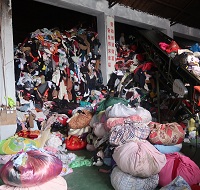 One of the world’s biggest fashion markets-China throws away 26 million tons of clothes every year. Less than 1 per cent of these discarded clothes are reused or recycled, which contributes to 10 per cent of global carbon emissions, says a report by the Ellen MacArthur Foundation.
Exporting used clothes to poorer countries
As per a Bloomsberg Quint report, one of the reasons, China does not recycle used clothes is because the country has legally banned recycling due to health and safety reasons. China has appointed state-approved organizations to assemble used clothes and segregate them according to their condition. These are then exported to other countries.
China’s exported around 6.4 per cent of the world’s total used clothing in 2015, reveals data from the UK-based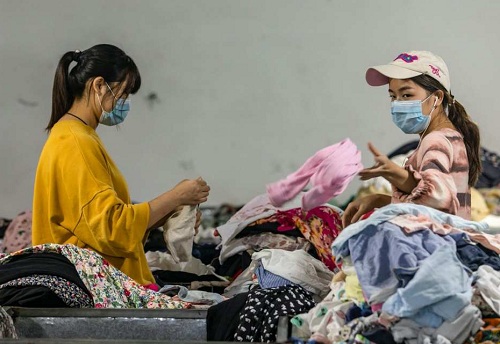 Textile Recycling Association. Majority of these were exported to Africa. Many are sold on e-commerce sites like Alipay. Hangzhou-based e-commerce seller Baijingyu or White Wales collects about 70 per cent of used clothes and sells them at overseas second-hand clothing markets. Another 15 per cent are used in construction, agriculture, or gardening, or sent to waste-to-energy incinerators. Their main markets are Southeast Asia and Africa.
Some clothes are exported to Europe and the US before being re-exported to Africa. Earlier, China used to import used clothing. But it banned imports of 24 kinds of solid waste, including used textiles in 2017. Now, it sends more clothing for re-use and recycling which has led to a spurt in small startups in the country. One such start-up is the Re-Clothing Bank in Beijing makes patchwork jackets, bags and carpets out of used clothes.
Designing for durability
Yet, China throws away a vast majority of discarded apparels into waste bins, compounding environment issues. China has one of the biggest waste bins in Jiangcungou, Shaanxi province, which collects almost four times the amount of predicted daily waste.
It also cuts and adds discarded garments to trash-to-energy incinerators to make them more efficient. However, this is not an environmentally sustainable solution, says Allan Wheeler, General Delegate-Textile Division, Bureau of International Recycling. He advises designers to design their clothes for durability and consumers to curb their consumption patterns.











