


FW
Second COVID-19 wave calls for external regulations to fix supply chain issues
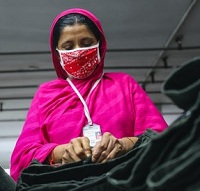 The European fashion industry is again being held at ransom by another wave of COVID-19 that is threatening brands with fresh order cancellations Though less frequent than they were in March, cancellations are coming faster as brand partners are choosing to act early, says Hilmond Hui, Vice President, PFGHL-a Hong Kong based fashion group. And as per a Business of Fashion report, brands cancelled worth billions of dollars during the first wave of the pandemic. Their actions were corroborated by localized outbreaks forcing garment factories to shut operations. As a Centre for Global Workers’ Rights (CGWR) and Workers Rights Consortium report indicates, around 3.5 million garment workers either lost their jobs during the period or had to take pay cuts.
An existential crisis for manufacturers
The second wave threatens to deepen the crisis by further exposing the fragility of the garment supply chains,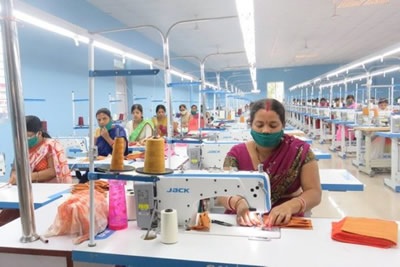 believes Professor Mark Anner, Director, School of Labour and Employment Relations, Penn State University and Director, CGWR. It has turned the industry’s pre-existent triggers into an existential crisis for many manufacturers.
For instance, it has extended suppliers’ payment time from 60 days on an average to 77 days after shipments, indicates CGWR and Worker Rights Consortium research. Manufacturers are forced to wait for as long 120 days to receive payments or have to pay out of their own pockets for the fabrics required to produce orders. This increases the chances of many supplier factories going out of business.
Manufacturers face liquidity crisis
With brands cancelling pre-confirmed orders, the pandemic has aggravated liquidity crisis in the industry, forcing many retailers to go bankrupt. And to avoid being stuck with unsold inventories, brands are placing orders at the last minute leaving suppliers with fewer orders and faster turnaround speeds for less money and uncertain payment terms.
Suppliers are not in a position to negotiate as their prime objective is to pay their workers, point out manufacturers. By October this year, 56 per cent suppliers had produced orders below their production costs, notes a CGWR and Worker Rights Consortium’s survey. Brands that had assured of compensating for finished orders are refusing to commit to large orders. If this situation continues, 57 per cent manufacturers may go bankrupt, the survey predicts.
Hence, brands need to ensure their workers are paid, emphasizes Christie Miedema, Campaign and Outreach Coordinator, Clean Clothes Campaign. Though major fashion companies have committed to protect their workers, many manufacturers are yet to receive payments owned by brands. They believe, only external regulations can help fix the problem.
India’ yarn exports increase mere 1 per cent in October
India’s yarn exports increased a meager 1 per cent to $289 million in October 2020 from the corresponding period last year. Bangladesh was the largest importer of spun yarns with 11 per cent increase in value of imports, followed by China. These two markets accounted for about 35 per cent of total yarn shipment during the month. Export of cotton yarns however, declined to $238 million. Yarns were shipped to 78 countries at an average price of $2.72 a kg. Bangladesh was the top cotton yarn market, followed by China, Peru, Portugal and Vietnam.
Export of 100 per cent man-made fibers reached 7.49 million kg. These mainly included export of 3.23 million kg of polyester yarn, 2.07 million kg of viscose yarn and 1.76 million kg of acrylic yarn. The export of polyester yarn was worth $6.6 million. The US was the largest market followed by Brazil and Turkey. Export of viscose spun yarns reached $6.39 million. These were exported at an average unit price of $3.08 a kg. Bangladesh was the largest importer of viscose yarn, followed by Turkey and Iran.
Blended spun yarns worth $33 million were exported in October, including 10.2 million kg of PC yarns and 2.3 million kg of PV yarns. Peru was the largest importers of PC yarn from India followed by Peru while Turkey was the largest importer of PV yarns from India followed distantly by Brazil. Overall, the export of basic textiles comprising fibers, spun and filament yarns increased by 22 per cent YoY to $575 million. It accounted for about 2.3 per cent of total merchandise exported from India during the month.
J Crew to reshuffle current leadership
Troubled retailer J Crew Group plans to replace its present CEO Jan Singer with Libby Wadle, CEO, once again unifying the leadership of the group under one CEO. Leadership reshuffle may add to the current instability at the company, which only emerged from Chapter 11 restructuring in September. The brand’s turnaround is now more challenging given the ongoing disruption in apparel spending, as the pandemic continues to radically alter US consumers’ shopping habits.
J Crew has been struggling since 2015 when its sales began to slide Saddled with debt, it became hooked on discounts and lost the trust of consumers, who once came to it for quality basics. Successive executives have struggled to reset the brand for the current, fragmented, digital retail era.
It now falls to Wadle to find a way forward. After years saddled with debt, the company’s recent restructuring leaves her with more breathing room than her predecessors, but she is inheriting a far more challenging retail environment.
Prior to her most recent position overseeing Madewell, Wadle was the president of the J Crew brand and has held multiple senior roles since she joined the group in 2004.
Hyosung launches eco-friendly stretch fibers
Hyosung has launched a new range of eco-friendly stretch fibers. The first of these is the creora® bio-based spandex that replaces petroleum with corn. Besides eliminating fossil fuels from the process, the corn pulls carbon dioxide from the air as it grows. When paired with cotton, creora bio-based spandex enables brands to tell a plant-based sustainability narrative.
Hyosung has also launched the creora regen spandex made with 100 per cent reclaimed waste. The spandex has been made from fully recycled inputs rather than just including them as a portion of the raw materials. It can be used in categories such as swimwear or activewear.
Another of Hyosung’s launch includes creora eco-soft spandex. This material can be heat set at a temperature that is about 20 degrees Celsius lower than conventional processes. In addition to the energy savings, the spandex allows for a softer handfeel.
The company has also launched Creora Black, a dope dyed spandex yarn in black, allowing mills to reduce their water usage by pairing it with a black dope dyed Tencel or polyester.
Its last invention Hyosung 3D Max is 100 percent spandex in its core that removes the polyester and allows mills to put less of the stretch component into the denim. Besides, solving for quality issues, the spandex also offers budgetary benefits.
US household expenditure posts more than expected rise in October: Report
Latest Commerce Department report shows more than expected rise in US household expenditure in October while incomes declined. Purchases by US consumers increased 0.5 per cent in October compared to prior month. However, personal incomes dropped 0.7 per cent owing to a decline in government supplemental jobless benefits.
The personal savings rate declined to 13.6 per cent, though it remains elevated compared with pre-virus levels. The latest report also reflected a decrease in Lost Wages Supplemental Payments, a Federal Emergency Management Agency program that provides wage assistance to individuals impacted by the pandemic.
The report showed wages and salaries rose 0.7 per cent in October, reflecting stronger-than-expected hiring in the month. While the Federal Reserve will seek inflation that averages 2 per cent over time, current gauges of consumer prices are well below that 2 percent target and decelerated for the first time in six months.
Manufacturers seek reduction in raw material costs for MMF garments
Garment manufacturers in India believe, to compete in the fast-growing global MMF garments market, India needs to reduce the cost of raw materials. At a webinar on ‘Increase in Exports of MMF Garments’ by AEPC, Reliance Industries and Alcis Sports, A Sakthivel, Chairman, AEPC urged manufacturers to increase the capacity of MMF garments and also price them accordingly.
RD Udeshi, President (Polyester Chain), Reliance Industries, explained Indian MMF exports have remained constant over the last decade as its downstream processing capacity is inadequate. Ravish Nanda, Co-founder, Alcis Sports opined, India does not have the required R&D centers for MMF garments. Moreover, the anti-dumping duty (ADD) on viscose staple fiber needs to be scrapped.
The antidumping duty on VSF has stirred large-scale import of viscose spun yarn by the country, he added. Post withdrawal of ADD on PTA, there has been increase in production of polyester spun yarn (PSY) in India and imports have fallen, benefiting weavers, knitters, dyers and other players in the PSF value chain.
Cotton production to decline by 4 lakh bales
The Cotton Association of India predicets, India’s cotton production will decline by 4 lakh bales to 356 lakh bales during the 2020-21 season, reports Textile Beacon. Total supply till end of the 2020-21 season is estimated to be 477.50 lakh bales, including opening stock of 107.50 lakh bales, crop at 356 lakh bales and imports at 14 lakh bales. Domestic consumption is estimated to be 330 lakh bales, while cotton export will of about 60 lakh bales.
In October this year, India’s cotton exports surged by four times in volume to 6.84 lakh bales worth $170 million or Rs 1,238 crore. Bangladesh was the largest market for Indian cotton export during October, followed by China and Vietnam.
Export price realization for cotton averaged Rs 106 a kg or US cents 66.50 per pound during October. This was below Cotlook A index, the global spot price benchmark also compared with domestic spot price for benchmark Gujarat Shankar-6. During the month, Cotlook averaged $75.51 per pound and Shankar-6 at US cents 68.33 per pound, making Indian cotton more competitive in global market.
Bangladesh was the largest importer of Indian cotton with imports at an average prices of US cents 68.56 per pound in October 2020 as against US cents 75.97 per pound a year ago.
India-US FTA can lay down trade rules for the 21st century
 When 15 countries including the 10 ASEAN nations signing the Regional Comprehensive Economic Partnership (RCEP) deal on November 15 this year, India decided against participating as it perceived the deal could block India’s exports and spur imports, mainly from China. The China-backed deal would have accelerated China’s exports to India with duty free entry facilities. Additionally, its Rules of Origin failed to address the value addition norms and India’s widening trade deficit with China. The deal also did not cover the IT sector, which prevented India from being a part of it.
FTA with the US could stimulate exports
India has FTAs with many of RCEP members. However, it does not benefit from any of these. In fact, post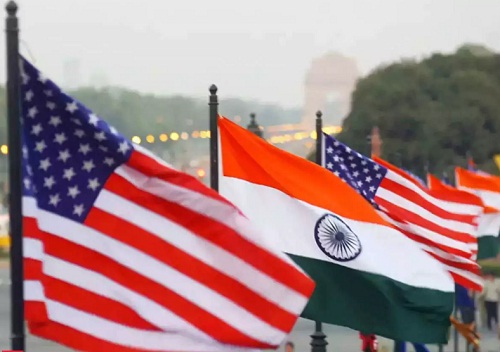 signing these FTAs, India’s imports from these countries have doubled which triggered its vehement opposition to the RCEP. However, India can explore FTA with the US which would increase its exports to $660 billion by 2024-25. At the US-India Strategic Partnership Forum, Piyush Goyal, Minister of Commerce urged both countries to introduce new trade packages, after closing the pending gaps.
Even though US’s withdrawal of GSP benefits and high tariffs on steel and aluminum during the Trump regime threatened bilateral trade relations, India’s exports to the US continued to rise in 2019-20. The country mainly exported readymade garments, marine products and diamonds to the US. The US was also the biggest importer of IT services from India hence a FTA between the two countries would benefit both of them immensely, predicts studies by the World Bank and Peterson Institutes.
Help resolve trade disputes and boost investments
Studies urge India to initiate FTA with the US. This would help both countries resolve trade disputes and facilitate exports against stiff competition from member countries. India accounts for 40 per cent of US’s total textile imports, followed by Vietnam which is the second biggest exporter of readymade garments to the US. An FTA with the US could help India counter competition from Vietnam.
An FTA with the US could also spur trade related investments in India besides helping it to reduce trade deficit with other countries. Even though President-elect Joe Biden does not plan to rejoin the Trans-Pacific Partnership, he actively promoted its campaign during the presidency of Barrack Obama. In fact, during the election campaign he urged members to join the agreement, and lay adown trade rules for the 21st century.
VSF exports decline by 4% from January-September 2020
VSF export of India totaled 54,000 tonneduring January-September this year and the import volume was 33,000 tonne for the same period, respectively down by 4 per cent and 3 per cent from the comparable 2019 level. The minor decline reflects that the import and export starts to further recover and we also maintain the expectation of rising apparent consumption of VSF around 30,000 tonne from India in 2020.
Rayon yarn import of India in Jan-Sep totals 47.2,000 tonne, up 46 per cent y-o-y, but export volume decreases by 18 per cent to 19.8000 tonne. The import of rayon single yarn increased by 41.4 per cent to 45.2,000 tonne and export amounted to 10.8000 tonne. The percentage of single yarn in imports improved further, which is 95per cent, 97.5 per cent and 98 per cent respectively from July to September. Rayon yarn apparent consumption growth of India can be 35000 tonne in 2020 and that of single yarn could be over 40,000 tonne, offsetting the expanding gap between blended yarn import and export.
Oxam report accuses Australian brands of sustaining systemic inequality
A new research from Oxam has accused some of biggest Australian fast fashion brands of sustaining systemic inequality by purchasing clothing from factories where workers are paid poorly and forced to work long hours.
Oxfam found that of the major retailers in Australia, H&M was deemed to be the most equitable with its suppliers while Mosaic Brands – owner of Katies, Rivers and Crossroad – was deemed to be the worst.
The report, titled Shopping for a Bargain ranked 10 fashion retailers in Australia including Best&Less, Big W, Cotton On, H&M, Inditex (Zara), The Just Group, Kmart, Myer, Mosaic Brands and Target.
It found that retailers were accused of aggressively negotiating prices, providing short lead times and making last-minute changes to orders that directly impacted factory workers' lives.
All of the above retailers source their clothing from Bangladesh, who Oxfam approach to grade the retailers on how fair they were with their pricing, as well as their willingness to negotiate.Ranking in a four-star system, the Bangladeshi factories scored H&M the highest with 3 out of 4, followed by Big W, Kmart and Target who all scored 2.5 out of 4.











