


FW
Required: An urgent resizing of Indian sizing charts
 In January this year, the Kerala government introduced a ‘fat tax,’ on certain food types not suitable for consumption. The tax aims to curb consumption of unhealthy foods in India. In fashion, especially couture, the tax refers to the practice of charging extra for clothes in bigger sizes.
Fat tax helps designers, who have to forgo their profit margins to provide larger sizes, connect with customers who have to pay extra to clothe themselves suitably. Designer aggregator stores in India like Fuel, Pernia’s Pop Up Shop, and Aza usually stock extra-large pieces for three months without guarantying sale, which makes it difficult for designers to send them multiple pieces in a variety of sizes. Luxury women’s wear brand Papa Don’t Preach doesn’t make plus-sized clothing if not demanded by a customer at its store. The brand does not stock more than two to three pieces of a particular design at any given time, since it’s made to measure.
Additional raw material costs hinder production of plus sizes
One reason designers shy away from producing large size clothes in India is because they require more raw materials which increases their production costs. Shubhika Sharma, Founder and Creative Director of Papa don’t Preach, believes this cost needs to be borne by designers as the actual additional costs aren’t that steep. However, in India luxury designers try to control their production costs by using cheaper raw materials, says local fashion watchdog Diet Sabya.
As a lot of the embroidery work being done today on garments is machine-based and the fabrics are procured from China at throwaway prices, designers’ justification for charging extra for more fabric, embroidery, etc does not stand, points out Neelakshi Singh, Professor, National Institute of Fashion Technology and Pearl Academy. Sharma adds, designers do not make a loss making an XL size for a paying customer. Though the cost of embroidery does increase marginally it can be accommodated in the original price. Sharma advises designers to learn from growing sustainable fashion movement and apply it to plus-size production.
Resizing can help write off fat tax
For emerging designers, staying in business, means catering to the average, the middle — the S through L sizes. However, these sizes don’t generally fit Indian bodies, points out Sharma. For them, tops and bottoms have different sizes and an L size garment made for Indian body type won’t fit any other customer. This is because in India, plus size individuals actually belong to the mid-sizes that are more affordable for customers and more profitable for designers. Hence, if the current measurements are resized according to Indian bodies, it could help to write off fat tax completely.
Such an initiative has been introduced by the National Institute of Fashion Technology (NIFT) in partnership with the Indian Ministry of Textiles. Together, these two bodies are carrying out a National Sizing Survey that will measure 25,000 men and women across six major cities in the country, in the age group 15-65 years. The survey aims to make the ready-to-wear fashion industry more aware of Indian sizes. Though some industry leaders including Vishakha Bhaskar, Co-founder, Angrakha are skeptical of these efforts, it’s not too late for the Indian fashion industry to revolutionize the concept of plus size in India.
Vietnam could gain if Bangladesh fails to tap duty-free knitwear exports to China
 National perspective plans ‘Vision 2021’ and ‘Vision 2041’ were launched by Bangladesh to transform itself from least developed countries (LDCs) to a middle-income country, and become a developed nation by 2041. ‘Vision 2041’ aims to amplify Bangladesh’s bilateral trade strategies to uprgrade its industrial eco-system and make substantial investments in infrastructure, says a Textile Today report. Primarily, the vision aims to establish a strong trade relationship with leading Asian economic giants like China to make ‘Export Policy 2018-2021’ a reality.
Bangladesh-China close ties spur infrastructure investments
Bangladesh seems to have succeeded in establishing a close relationship with China. This can be gauged from the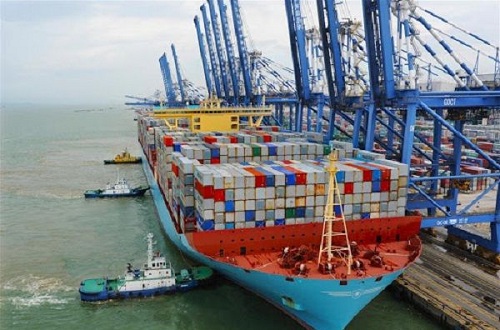 credit lines offered by China for key infrastructure projects in Bangladesh and investment inflows in power and energy, textiles, weaving, leather, footwear, construction, light engineering, and stock exchange.
This elevated strategic partnership is a result of recent visits by the Chinese President Xi Jinping in October 2016 to Bangladesh and Prime Minister Sheikh Hasina’s visit to China in July 2019. With strengthened bilateral relationship, China has granted duty-free access to 97 per cent Bangladeshi products from July 1, 2020. The Tariff Commission of the State Council of China has also implemented zero-tariffs on 8,256 products originating from Bangladesh. Additionally, China’s duty -free coverage has freshly included 5,161 numbers of products. This resulted in the trade between Bangladesh and China in FY 2019-20 increasing to $ 12.14 billion through the export to China were only $ 600.11 million.
Growth opportunities in China’s RMG market
Over the last 10 years, from CY 2010-2019, China’s RMG market has increased by 368 per cent while its RMG imports have hovered around 0.50 per cent. The annual average imports of its knitwear and woven garments, which had fallen in in 2009 due to the world financial crises, bounced back by 29.23 per cent in CY 2010 and by 45.09 per cent in CY 2011. Since CY 2012 the imports of HS Code 61 & 62 had been following cyclical growth and fall.
Unfortunately, Bangladesh could not explore the growth opportunities in knitwear market as Vietnam is nearer to China than Bangladesh. Also, as a member state of ASEAN, Vietnam enjoys duty free facilities given by China, since ASEAN-China Free Trade Area (ACFTA) January 1, 2010.
Duty free advantage helps Vietnam outstep Bangladesh
The share of Vietnam’s knitwear exports to China has been continuously increasing as the country had been able to grab market share of other smaller exporting countries. However, exports by rest of the World are forecasted to increase in CY 2020 and CY 2021. Over the last three years, Bangladesh’s exports of top 10 knitwear products have increased. These include knitted T-shirts, singlets, jerseys, trousers, shirts, whose exports have grown by double-digit CAGR, indicating the high potential of Bangladesh in export of these items.
However, Bangladesh’s knitwear exports to China are expected to decline by CY 2021 if the country fails to explore the Chinese duty free facility up to the optimal level.
IPTTC to improve Pakistan textile processing and enrich skills
The Italy-Pakistan Textile Technology Center (IPTTC) established at National Textile University Faisalabad (NTUF) would improve Pakistan’s textile processing and enrich required skills.
During the inauguration ceremony held at NTU, Jauhar Saleem, Pakistan’s ambassador to Italy said that technological advancement in textiles would help Pakistan stay competitive in the European Union (EU) market, where it exports textile products worth over $5 billion.
Italian Ambassador to Pakistan Andrease Ferrarese said that the tech centre would also help in creating jobs and improving the working conditions in the Pakistani textile sector, adding that Italy would act as a strategic alliance for Pakistan to promote its trade and development agenda.
He said that the centre has been equipped with state of the art Italian textile machinery that would help to improve textile processing, especially the finishing and final look of products.
Italy has provided machinery for the textile sector under an an MoU was signed between Trade Development Authority of Pakistan (TDAP) and the Italian Trade Agency (ITA) in 2018.
US secondhand clothing market to grow to $80 billion in 2029
According to a new report, the US secondhand clothing market is projected to more than triple in value to $80 billion in 2029.
Even more transformative is secondhand clothing’s potential to dramatically alter the prominence of fast fashion—a business model characterized by cheap and disposable clothing that emerged in the early 2000s, epitomized by brands like H&M and Zara. Fast fashion grew exponentially over the next two decades, significantly altering the fashion landscape by producing more clothing, distributing it faster and encouraging consumers to buy in excess with low prices.
While fast fashion is expected to continue to grow 20 per cent in the next 10 years, secondhand fashion is poised to grow 185 per cent.
The secondhand clothing market is composed of two major categories, thrift stores and resale platforms. But it’s the latter that has largely fueled the recent boom. Secondhand clothing has long been perceived as worn out and tainted, mainly sought by bargain or treasure hunters. However, this perception has changed, and now many consumers consider secondhand clothing to be of identical or even superior quality to unworn clothing. A trend of “fashion flipping”—or buying secondhand clothes and reselling them—has also emerged, particularly among young consumers.
Japan’s apparel sales decline by 23.5% in September
Japan's apparel retail sales have declined by 23.5 per cent year-on-year in September. After a slight recovery in August, EU’s apparel retail sales moved down in September, down 12.6 per cent compared with that in same period of last year.
According to Eurostat retail data, EU retail sales fell 1.7 month-on-month but up 2.1% year-on-year in September. Among them, the retail sales of textile, clothing and footwear decreased by 6.3% month-on-month and 12.6% year-on-year.
According to the statistics of Japan's trade ministry, Japan's commodity retail sales fell by 0.1 per cent month-on-month in September, 8.7 per cent lower than that in same period of last year. Among them, the retail sales of textile and apparel decreased by 2.4 per cent month-on-month and 23.5 per cent year-on-year.
Kelheim Fibers partners with ETP
Viscose speciality fibers manufacturer Kelheim Fibers has partnered with the European Technology Platform for the Future of Textiles and Clothing (ETP) in two strategic programs.
The Bavarian firm has signed up to the Bio-Based Fibers and the Circular Economy programs, the aims of which are to bring key players from industry and science together to develop a long-term strategy to actively shape the sustainable realignment of the European textile industry.
According to Kelheim, its membership of the two three-year ETP programs are in recognition of the fundamental changes inside the textile supply chain, particularly against the backdrop of the increasingly important sustainability debate.
Kelheim’s sustainability criteria also includes the full life cycle of its products: when a textile, after its use, can become the raw material for new fibres and new products, that is a huge advantage in terms of sustainability. We want the best possible result – bio-based fibres and circular economy are the way to get there.”
The European Technology Platform for the Future of Textiles and Clothing (ETP) is the largest European network for the promotion of textile research and innovation. It brings together over 200 members from industry, research, higher education, clusters, associations and textile-related sectors.
Kelheim Fibers GmbH is the world’s leading producer of viscose specialty fibers and a key supplier of viscose fibers for the tampon industry. About 90,000 tons of viscose fibers are produced every year at Kelheim in South Germany with applications ranging from fashion, hygiene and medical products to nonwovens and specialty papers.
Bangladesh apparel manufacturers urge for increase in waste percentage during garment production
Local apparel manufacturers in Bangladesh have urged the bond authorities to increase the amount of waste permitted while producing garments to 30 per cent from items imported duty free under bonded warehouse benefit.
Currently, manufacturers are allowed to waste 7 to 9 per cent of the required materials while making export-oriented garment items. It is 7 per cent during the dyeing process and 9 per cent in case of processed knitted fabrics.
However, the percentage of waste in making export-oriented garment items has risen as most local manufacturers are entering the high-end market.
A portion of fabrics is wasted for various reasons during manufacturing. For instance, incidents of wasting fabrics and yarn take place when these materials are cut or processed. Scraps are also produced while sewing fabrics. The process of making fancy or high-value added garment items generate more waste compared to the production of basic apparel products.
This is because, in many cases, garment manufacturers and exporters cannot maintain the commerce ministry's fixed 7 per cent and 9 per cent waste allowances in making fancy and high-end garment items.
As a result, the bond office and customs offices sometimes cause delays in releasing goods from ports because of a mismatch in the amount of fabrics imported and its consumption for making finished apparel goods for export under bond licenses.
Bangladesh receives $256.5 million from Green Climate Fund
Bangladesh has received $256.5 million from the global Green Climate Fund to promote private sector investment through large scale adoption of energy-efficient technologies in the textile and garment sectors.
The Idcol, as the direct access entity (DAE) of the GCF, received the approval of the funding proposal for the program titled ‘Promoting private sector investment through large scale adoption of energy-saving technologies and equipment for Textile and Readymade Garment sectors of Bangladesh.’
It is the largest approved funding proposal for any DAE of the GCF accredited globally, Under the program, Idcol will get $250 million concessional loan for a tenure of 20 years with a grace period of five years for financing energy-efficient equipment.
Another $6.5 million will come as technical assistance (grant) to develop enabling environment by covering areas such as capacity building, awareness, support in loan disbursal and monitoring and evaluation of the programme parameters. Out of $250 million loan, $100 million will be utilized to finance textile sector energy efficiency projects, while $150 million will be channeled to four local financial institutions for financing energy efficiency projects in the RMG sector.
The total program size will be $423.50 million, including co-financing from Idcol, local financiers and the project sponsors.
Nudie Jeans partners Sag Salim to support cotton farmers in Turkey
Nudie Jeans has partnered Supply Network Intelligence Program ¬– Sag Salim to support the cotton farmers in Turkey, reports Sportswear International. Sag Salim is a grievance-program that allows cotton farmers and cotton pickers in the Izmir-Aegean region in Turkey to hand in complaints. These complaints are handled by a third party, consulting firm Precision Solutions Group (PSG) in collaboration with local organizations.
This system enables the brand to create transparency in its supply chain. Through this program, Nudie Jeans plans to gain insights into the risks of non-compliance on the cotton fields. Sag Salim has initially been started in May 2020 by Australian denim brand Outland Denim together with PSG and Turkish denim mill Bossa. Nudie Jeans joined this program in November as part of cotton also comes from Turkey.
Nudie Jeans is considered one of the pioneers of sustainable jeans production. Founded in 2001, the Swedish denim brand launched its first production guide with information about its supply chain in 2013.
To further improve in terms of sustainability Nudie has teamed up with several partner organizations like STICA, RISE, Fair Wear Foundation, and Textile Exchange.
Walmart posts bigger than expected increase in sales in Q3
In its third quarter ending October 31, Walmart posted a bigger-than-expected increase in same-store sales and beat expectations for profit amid a surge in its online business with higher spending on electronics, sporting goods and groceries. The retailer’s sales at US stores rose 6.4 per cent, excluding fuel. Analysts had estimated these sales to increase by 4.16 per cent. Walmart’s sales from its US market grew by 79 per cent with strong results across all channels which helped boost same-store sales and profit margins.
The surge in demand for essentials seen at the peak of the coronavirus lockdowns has carried into the second half of the year, with consumers relying on its same-day delivery options and store pick-up services to buy everything from groceries to sneakers.
The COVID-19 pandemic has also forced retailers like Walmart to drastically rethink their business strategies for key holiday seasons. Walmart incurred about $600 million in additional COVID-19 expenses that included higher wages for warehouse workers and bonuses for store employees, as well as spending more on cleaning facilities. It’s operating income jumped by 22.5 per cent to $5.79 billion in the third quarter, while Walmart reported adjusted earnings per share of $1.34 that topped expectations for $1.18. Total revenue rose by 5.2 per cent to $134.71 billion, beating estimates for $132.23 billion.
In September, Walmart launched its subscription service Walmart Plus, touted as a rival to Amazon.com's Prime subscription, which includes perks like free shipping and streaming services.











