


FW
EURATEX urges for immediate suspension of retaliatory tariffs
EURATEX, and 71 US and European associations representing a wide range of industries have sent a letter to President Biden and European Commission President Ursula von der Leyen urging for immediate suspension of tariffs on sectors unrelated to the ongoing Trans-Atlantic Trade disputes.
The coalition stated suspending tariffs will alleviate economic harms and help re-establish a cooperative Trans-Atlantic trading relationship. The pandemic and necessary closures of non-essential businesses continue to affect global economy, including sectors which support millions of jobs on both sides of the Atlantic. The ongoing EU-U1S trade disputes and additional tariffs, which continue to plague Trans-Atlantic trade, have made a bad situation worse.
The groups feel immediate suspension of these tariffs is a necessary and fundamental action, which will provide an economic stimulus at a time when it is needed most.
They concluded that the industries support a constructive and flourishing trade and economic relationship between the US and EU. Tariff removal will provide positive momentum to reset important bilateral relationship and cooperative efforts to address global economic challenges. In addition, a shared commitment to avoid new additional tariffs will create the necessary certainty and stability needed to grow the Trans-Atlantic economy.
Biden’s ‘Made in America’ strategy helps push apparel industry
President Joe Biden, is now pushing a message in favor of American manufacturing. He would issue an executive order to prioritize American manufacturing in US government contracts and Federal grants. The new executive order would raise the bar for products considered ‘Made in the US’ for government contracts, and install a new overseer, the director of ‘Made-in-America’ at the Office of Management and Budget, says a statement by the White House.
The US currently spends some $600 billion annually on government contracts, the office noted. The money spent on goods and services are a powerful tool to support American workers and manufacturers. The president’s executive order establishes the goals and standards necessary to use Federal purchasing, and other forms of Federal assistance with domestic preference requirements, as a way to proactively invest in American industry so it can continue to lead in the global marketplace.
The move was hailed by organizations including the textile industry lobbying group the National Council of Textile Organizations, which said it expected the measures would support domestic manufacturing.
The executive order also pointed at loopholes in the current ‘Buy American’ scheme for government spending, including what the office referred to as “unnecessary waivers” of requirements under the scheme. It would also seek to increase transparency about permitted waivers by having them posted online by the General Services Administration.
The NCTO, meanwhile, has been pushing for more domestic production of personal protective equipment during the pandemic, a sentiment echoed by the American Apparel & Footwear Association. Recently, the AAFA indicated that it supported the Biden administration’s move, and also highlighted its member companies’ role in the production of military uniforms.
AAFA wants legislation to hold online marketplaces accountable for counterfeit sales
The American Apparel & Footwear Association submitted comments to the U.S. Patent and Trademark Office (USPTO) regarding secondary trademark infringement liability in the e-commerce setting. Given the staggering and simultaneous growth in the share of sales by e-commerce, online sales of fake products are a major contributor to the observed growth in total counterfeit sales. These comments call for legislation to hold online platforms liable for counterfeit goods sold on their sites.
The foundation of the trademark system predates e-commerce and is not equipped to address the online counterfeiting issues experienced today. While brick-and-mortar stores are generally liable for the products they sell, the same cannot be said about large online third-party marketplaces. Current law does not adequately incentivize third-party marketplaces to take the steps necessary to keep counterfeits off their platforms. Further, this lack of liability results in limited efforts by online platforms to proactively monitor for counterfeits, moving the cost and burden to its members. This landscape makes it difficult for AAFA member brands to pursue trademark infringement claims against these online platforms who facilitate the sale of fake product.
The proliferation of counterfeits is becoming a crisis due to the expansion of online third-party marketplaces. This is why AAFA strongly believes that it is necessary to pursue changes to the application of the secondary infringement standards to online platforms.
AATCC calls for award and leadership nominations
AATCC is now accepting nominations for recognition of excellence in the textile industry through March 31, 2021. Nomination forms for all awards are available online. Anyone may nominate a deserving colleague or themselves for the awards.
Established in honor of Louis Atwell Olney, founder and first president of AATCC, the Olney Medal recognizes outstanding achievement in textile or polymer chemistry or other fields of chemistry of major importance to textile science.
Similarly the Chapin Award is for senior individual (professional) members who have dedicated 20 or more years of continuous service to the Association. The Millson Award is for invention awarded every three years for inventors who impacted the textile, fiber, polymer, and medical industries. Nominees need not be AATCC members. Group and posthumous nominations are also welcome.
The Technical Committee on Research (TCR) Service Award recognizes up to two Senior Individual (Professional) members, with at least five years of continuous membership in AATCC, who have contributed outstanding technical service to the Association through activity in a research committee.
The Future Leaders Award is for young professionals in the fields of textiles, apparel, and related material sciences eligible for recognition as the future leaders of the Association. Lastly the Education Award recognizes those members who have contributed extensively to the educational activities of AATCC. Likewise the Faculty Advisor Award nominates AATCC Student Chapter Faculty Advisors who actively work to ensure their AATCC student chapters are active and growing.
AATCC is full of creators, volunteers, and researchers, and applauds their contributions to the textile industry. AATCC recognizes achievements in science, service, and more every year.
Peugeot launches Global Licensing Program in the fashion category
Licensing Matters Global (LMG), a London-based, leading global licensing agency, has announced a long-term partnership with Paris-based Peugeot Frères Industrie, a Peugeot Family Group subsidiary in charge of the continued expansion of the Peugeot brand in various sectors outside of the automotive industry. Under the agreement, LMG will help extend the iconic Peugeot brand into new categories via strategic licensing and retail efforts.
Gifted with 210 years of entrepreneurial spirit, Peugeot constantly enriches its expertise to create objects and experiences that facilitate everyday life. The brand believes LMG is the right partner to tailor a program that will instil the Peugeot DNA in new product verticals.
The partnership begins in January 2021. LMG are currently seeking partner licensees in selected product categories such as Toys, Garden Power Tools, Camping Equipment, Major Electric Appliances, Sports Equipment, Travel Accessories and Fashion, among others.
Asian labels shine at Paris menswear week’s opening
In a fully digital menswear season featuring 68 brands, videos by Asian designers stood out for their energy, ideas, and no-holds-barred fashion audacity. Barely halfway through the six-day Paris menswear fashion week featuring Fall-Winter 2021 collections, a gang of a dozen Asian creators grabbed attention for their upfront style, novel ideas and excellent castings.
Few schools of designers appear to have profited from the lockdown to rethink their DNA as smartly as these creators. For instance, Kidill, a Japanese label whose video recalled the Transavangardia of '80s Italy, even as it referenced UK goth punk and street graffiti. Kidill’s designer Hiroaki Sueyasu is also a gifted tailor so his absurdist, angry black-and-white face prints ended up looking bold and brilliant.
Similarly, Sankuanz, China’s hippest designer, who managed to stage a stealth video underneath and inside the Eiffel Tower in the middle of the night. And respect for Kolor by Junichi Abe, the Comme des Garçon alumnus who always commands lots of attention. It turned out to be an actual co-ed show set in a dreamy wood, where the cast appeared in Abe’s latest version of amalgamated fashion, a composite collection where garments intermingled.
One can also include Sulvam, with its fishtail smocks; cut-out sweaters; retro soul-singer leather clubbing jackets and chainmail-print pajamas by designer Teppei Fujita.
Plaudits for the train journey video to a rocky seashore from Taakk, the subtlest of the new generation Japanese fashion designers. Soft yet quirky materials; marvelous green moiré velvet jackets; perfectly styled modernist M-65 jackets and orchid-blotch print sweatshirts.
Pandemic slows down global T-shirt market, will touch 29 bn units by 2030: Study
 The global T-shirt market which had maintained positive growth trajectory for two years since 2016 fell for the first time in 2019 by -3.5 per cent and reached $88.5 billion, reveals a IndeBox study ‘World - T-Shirts - Market Analysis, Forecast, Size, Trends and Insights’. The study indicates overall, consumption saw a relatively flat trend. “The most prominent rate of growth was recorded in 2018 with an increase of 5.2 per cent against the previous year.” In this year consumption reached its peak level of $91.7 bilion, and then dipped in 2019.
Consumption highest in China, India ranks third
Based on volume, the countries with the highest T-shirt consumption in 2019 were: China (4.4 billion units), the US (2.9 billion units) and India (1.8 billion units). The top three account for 36 per cent of global T-shirt consumption. Japan, Pakistan, Indonesia, the UK, Nigeria, Bangladesh, Germany, Mexico, Ethiopia and Turkey followed them, together accounting for 22 per cent.
In fact, based on value, China led the pack with $12.9 billion, followed by the US ($6 billion) and India raked third. However, the countries with the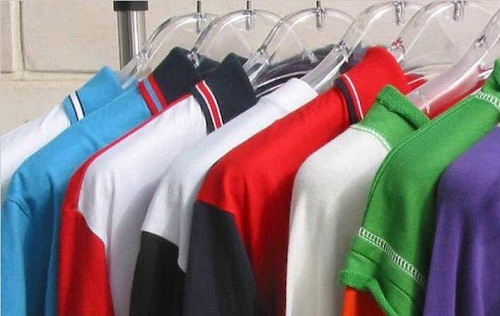 highest levels of T-shirt per capita consumption in 2019 were the UK (9 units per person), the US (9 units per person) and Germany (6 units per person).
Growth drivers change as per region
The study clearly indicates in the apparel daily use category, T-shirts is one of the main goods. Sports and outdoor activity also generates demand. Consumption pattern changes as per fashion trends and social life.
In the US, T-shirt market is driven by fitness trend. The need for athletic comfort becomes an important factor in the buying process. Also, with the pandemic, the ongoing trend of using activewear as everyday attire will continue and T-shirts that feature a blend of fashion and functionality will sell well. This is the reason why, top sportswear brands continue to launch new and appealing products.
Similarly in the EU market there are some clear trends. New variations and styles, and eco-fashion are being introduced. T-shirt consumption across Europe is expected to grow due to the rising fashion consciousness about T-shirt, and increasing purchasing power of the young population.
Meanwhile the market in Asia is expected to remain strong with an increase in the number of consumers. Lifestyle changes, higher disposable income and demand for trendy fashion is giving a huge boost to Asia’s T-shirt market. Another major growth booster is rapid urbanization followed by rising popularity of Western lifestyles. Also, Asia happens to be a global centre for T-shirt production, thus easy availability of the product.
Pandemic’s affects on T-shirt category
Much like all other sectors, COVID-19 impacted the global T-shirts market with production facing headwinds due to lockdowns. And when China started easing and opening production units there were order cancellations which resulted in a stockpile of merchandise. This may have led to overstocking of warehouses, putting pressure on prices. Therefore, when demand grows back, recovery of production may be delayed until the stocks are sold, putting pressure on T-shirts category as a whole.
As per IndexBox estimates, in 2020, global consumption of T-shirts declined somewhat against 2019. In the medium term, as the global economy recovers market is expected to grow gradually, driven by rising population, recovering incomes, and the replacement of outworn ones, together with the consumer intention to get something new after a period of limitations. Overall, market will grow over the next decade, at an estimated CAGR of +1.1 per cent from 2019 to 2030. With this the volume of T-shirts market will be around 29 billion units by 2030.
US move to join back Paris Agreement augurs well for global apparel industry
 One of the most important announcements made by President Biden on his first day in office was that the US will rejoin Paris Agreement. This indeed is a positive step for global environment and US is taking the lead. For the fashion industry, this is a clear message to focus more on their sustainability goals.
Rejoining Paris Agreement a positive step
For the US rejoining the Paris Agreement is a move in the right direction as one of the biggest greenhouse emitter in the world. For the US it’s important to lead from the front and set an example as their participation is important to make any progress in reducing global emissions. However, at the moment the Democrats have a thin majority in US Senate and as exemplified from former President Trump’s impeachment move, passing any legislation will be a challenge.
As per a WWD report, the process of rejoining Paris Agreement takes almost a month. However, at the moment “undoing previous environmental rollbacks and rewriting law to realize the bold pledge of making the country carbon-neutral by 2050 is more daunting.”
Experts believe this time round there will be more focus on industries that emit the most including the fashion industry. And as the WWD report suggests “Look for the new Environmental Protection Agency administrator, Michael Regan, to push broad sustainability policies across the U.S. economy. For fashion, this will likely highlight the need to reuse clothing, streamlining supply chains to reduce the carbon footprint.” However, the fact is legislations can only work up to a point and there needs to be broad realization about the need to cut emission across industries done through public communications.
As Ariele Elia, Assistant Director, Fashion Law Institute at Fordham Law School believes when the administration signs back stakeholders in the fashion industry will realize “at some point there will be some accountability, so they need to start considering (sustainability), and considering it beyond just a marketing plan — but from the scientific perspective.” Meanwhile, rejoining the Agreement will mean some responsibility from fashion companies as they will not be able to sideline the topic any more.
The WWD reports also highlights, earlier expert marketing efforts steered the blame toward consumers for overconsumption and wastefulness, “where the reality is, the volume of clothing being produced shows no sign of slowing” In fact, Boston Consulting Group and McKinsey & Co reports have suggested earlier recycling efforts lack enforcement or proper infrastructure.
Elia feels taxing on the amount of waste emitted could be a way to pin responsibility on fashion companies. She also believes, the Federal Trade Commission, could play an important role in educating consumers on sustainable fashion. Moreover, other moves by the Biden administration like revitalizing the African Growth and Opportunity Act Forum, or the US-Africa Leaders Summit initiated by Obama, because of what it means for the used clothing sector also need to be watched. However, as she sums up on “the need to ‘bridge’ policy, science and fashion business.”
Levi’s to ramp up wholesale strategy in US and EU
Despite having announcing larger focus on direct-to-consumer business, Levi’s is simultaneously ramping its wholesale initiatives in the US and throughout Europe in 2021. The denim giant’s past reports indicate that the US wholesale business accounts for 30 per cent revenue, and will always be important to the company. Executives mapped out a wholesale strategy with a three-pronged approach, mainly tackling the whitespace, owning the brand expression and taking charge of the customer relationship.
By zeroing in on these areas, the brand hopes to control how they show up in the marketplace, differentiate its assortment, deliver a head-to-toe look, and find new distribution opportunities and more.
New avenues of distribution are a top priority for brands this year, as so many spent 2020 treading water as a result of the pandemic. In October, the company announced plans to expand into 500 Target stores throughout 2021. It also attributed the success of its value line, Denizen, to Asian wholesale partners. Customers such as Amazon Japan and value store Mac House, for example, helped the collection compete with Uniqlo, its biggest rival in the region. In 2021, Levi’s will continue to strengthen these partnerships.
But it’s not just giant wholesalers that are targets for strategic partnerships. Levi’s is also working with smaller customers, and ensuring that the proper technology is in place for smooth service.
With all of these strategies in place, the brand set an aggressive target of 20 per cent of total revenue in the U.S. to come from its value business. Last year, Levi’s made several key updates to its product marketing within Walmart stores, and saw an immediate uptick in sales.
Kering among top 10 most sustainable companies in the world
Announced virtually during the World Economic Forum, Kering ranked 7th out of 8,080 companies around the world and once again topped its own sector in the Corporate Knights’ 2021 annual Global 100 ranking. For the fourth year in a row, Kering ranked first in the clothing and accessory eetail category.
The Corporate Knights’ Global 100 Index is considered a benchmark for corporate sustainability every year. The Global 100 companies represent the top 1 per cent in the world on sustainability performance. In 2021, 8,080 companies were analyzed against industry peers to determine the index’s ranking.
To maintain its leadership position in the clothing and accessory retail category among 143 companies, Kering was assessed against 24 quantitative key performance indicators (KPIs) covering resource management, employee management, financial management, clean revenue and investment and supplier performance.
In particular, Kering ranked highest for ‘Environmental Performance’, ‘Clean Revenue’ and ‘Clean Investment’ within its industry. Further recognition was awarded under ‘Sustainability Pay Link’ whereby Kering scored 100% for best practices related to executive remuneration linked to driving sustainability performance.











