


FW
Interest in ITMA 2023 high despite COVID-19: Chairman
Interest in the upcoming edition of ITMA 2023 remains high despite the ongoing COVID-19 pandemic, says Charles Beauduin Chairman, ITMA. As per a Knitting Industry report the event will be held at Fiera Milano Rho, Milan, from June 8 to14, 2023. Its stand applications will open on March 3, 2021. Ernesto Maurer, President, Cematex says, exhibitors will explore additional avenues to promote their latest machinery and solutions through the new digital platform.
ITMA 2023 will feature 20 chapters. It will include a new chapter on machinery for textile reinforcement structures for composites, auxiliary machinery and accessories. The machines to be include in this chapter are machines for the production and treatment of special fibres, such as carbon, glass and aramid fibers, filament winding machines, fiber spreading machines, tape laying machines, fiber placement lines, coating and impregnation machines for prepreg production, other machines for the production of reinforcement structures, special testing equipment for textile reinforcement structures and auxiliary machinery and accessories for machines for textile reinforcement structures
The chapter on software and automation for design, data monitoring, processing and integrated production has been expanded to include digital platforms for textile and clothing production, procurement of textile materials and B2C platforms for retail. There is also a bigger range of solutions for automation of production processes and tracking and tracing of products.
BCI sourcing volumes increases by 13 per cent in 2020
Notwithstanding the significant impacts felt by retailers due to COVID-19, sourcing volumes of BCI retailer and brand members increased 13 per cent in 2020. Members sourced 1.7 million tonne of Better Cotton – a record for BCI and the industry.
BCI’s demand-driven funding model translates the cotton sourced by retailers and brand members into increased investment in training for cotton farmers on more sustainable practices, as set out in the Better Cotton Principles and Criteria. Supplier and manufacturer members also form a critical link between demand and supply of Better Cotton and are committed to sourcing increased volumes year on year. In 2020, spinners sourced an incredible 2.7 million tonne of Better Cotton, ensuring there was ample supply in the global market.
Better Cotton Initiative (BCI) engages and brings together the entire cotton sector, from farmers, ginners and spinners to civil society organizations and major global retailers and brands, to establish more sustainable cotton as the norm.
Spinnova-Suzano JV to build first commercial production facility in Finland
Material innovation company Spinnova and the world’s largest wood pulp producer Suzano have teamed up to build the first commercial scale Spinnova production facility in Finland. The total investment in the project, including all needed infrastructure such as real estate, is estimated to be around €50 million.
As per Innovation in Textiles, the new, industrial scale production unit will be located in Jyväskylä, Finland. Its production will be managed and operated by a new joint venture company owned 50/50 by Spinnova and its partner and investor, Suzano.
Suzano is a world leader in the production of eucalyptus pulp and has expanded its operations to create sustainable and innovative solutions derived from trees to the challenges faced by society. In the joint venture, Spinnova will be the exclusive technology provider, while Suzano will ensure the supply of sustainably produced micro-fibrillated cellulose obtained from eucalyptus planted by Suzano in Brazil.
The fiber produced will be sold under the Spinnova trademark. To date, Spinnova materials have been developed in collaboration with leading fashion brands such as Danish clothing company Bestseller, Finnish fashion house Marimekko, and Norwegian outdoor brand Bergans. Today, the H&M Group announces it has joined the group of brands in a partnership with Spinnova.
Flexible labor laws, innovations can help India regain lost position in global textile, clothing market
 As per Comtrade figures, till 2017 India was the world’s second largest exporter of textiles and clothing after China. However, since 2019, India’s rank dropped to 5th position with the country experiencing negative 1 per cent CAGR in the past five calendar years.
Lack of total garment package solutions
One of the reasons for this is the largely fragmented nature of the Indian clothing industry, and low-scale, says Astute Consulting. As per their report, India’s archaic labor laws prevents factory owners from laying off workers during slack business period. The small size of factories also makes it difficult for owners to invest in technology and product up gradations.
Another challenge the industry faces is the lack of access to global markets. Currently, India does not have preferential trade agreements with other nations, preventing exporters from accessing key markets. Also, like other nations, India does not offer total garment package solutions to leading International brands and retailers. Its textile mills ship fabrics to other garment conversion countries like Bangladesh, Vietnam, that have flexible labor laws and bigger manufacturing facilities.
To regain lost glory, India needs to introduce flexible labor laws besides encouraging entrepreneurs to set up large scale units employing 30,000 to 50,000 workers under one roof. This will boost productivity and reduce per unit cost of manufacturing. It will also help the country allocate higher investments in product development equipment.
Vertical integration of facilities
India also needs to set up integrated vertical setups ranging from fiber, yarn and fabrics to garments at a single location. Fabric mills here need to be either vertically integrated into garment manufacturing setup or backward integrated into fabric and yarn manufacturing. However, this requires huge capital investment.
The US and EU are the largest markets for Indian textiles and clothes. Both countries have free trade and preferential trade agreements with India’s competitors, negatively impacting its exports.
Expedite FTAs with EU
Indian companies also face trade barriers unlike other countries like Bangladesh, Vietnam, Sri Lanka and Pakistan who benefit with a 10 per cent discount on landed price of products due to GSP+ status with EU. Recently, even Vietnam and Korea have entered into FTAs with the EU to improve market access. Therefore, India needs to expedite an FTA with the Union. This will not only benefit its apparel, made-ups and textile industry but also neutralize some of the price disadvantages that it faces today.
Focus on product innovation and sustainability
Another important initiative Indian companies need to undertake is encourage their product development teams to make innovative products that also meet sustainability standards
Companies also need to set up manufacturing facilities equipped with latest state-of-art sampling machines. This will help them manufacture products in smaller batches, reducing their turnaround times. They need to use eco-friendly processing and finishing technologies both for fabrics and the garment washing. Their processes need to be re-engineered to save energy consumption, increase water recycling and improve effluent treatment. Also, they need to adopt new processes to use recycled raw materials, extracted from pre-and post-consumer wastes, like Polyester and Cotton.
India already has a vibrant domestic market and abundant labor force. Now, it only needs to address the above mentioned issues to regain its position in the global textile and clothing market.
Recycling initiatives to help Bangladesh save $100 bn worth discarded materials
 Bangladesh is set to be the global recycling hub as fast-fashion brands like H&M and Target have collaborated to launch a new recycling initiative in the country. Spearheaded by the Global Fashion Agenda, this initiative brings together all industry players who aim to make Bangladesh a global leader in apparel recycling. It’s an excellent place for mass-recycling as a huge exodus of fast fashion items comes out of its factories daily. Factories are filled with clothes discarded either due to production errors or because they are unused.
Initiatives to reduce carbon footprint, climate change effects
As per Global Fashion Agenda, discarded fabrics and finishes are piling up in many Bangladesh factories. The new project aims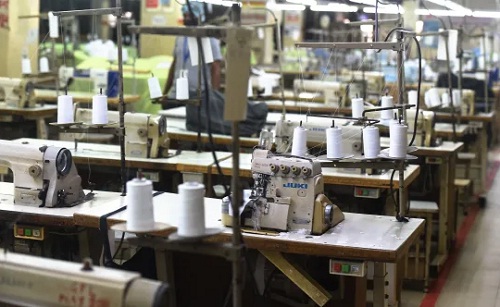 to recycle discarded items into new clothes. It aims to not only reduce the industry’s carbon footprint but also protect Bangladesh from the disastrous effects of climate change. The project earmarks 13 tech companies, including Lenzing and Renewcell who usually partner individual brands on small projects. Involving themselves in a project of such a huge scale will help them expand their reach. These companies will be integrated into Bangladeshi manufacturing facilities by the Global Fashion Agenda to help factory owners use them into their operations. The recycled materials produced by these factories would be incorporated in the upcoming collections of brands, already under pressure to use sustainable materials and production techniques.
Change consumption patterns and shop for durability
Besides curbing pollution and carbon emissions, the project will also provide cheap recycled fabrics to fashion companies. It will help save over $100 billion worth of clothing materials discarded every year, estimates nonprofit sustainability organization Ellen MacArthur Foundation. However, recycling alone will not save our planet, warn sustainability experts. Consumers need to change their consumption patterns and buy durable clothes. Fast fashion companies also need to stop churning out billions of clothes every year while designers need to design clothes that last.
US appreciates Cambodia’s handling of labor issues
The US embassy has appreciated the efforts by Cambodia’s Ministry of Labour and Vocational Training in handling complicated labor issues which have arisen in the wake of recent economic disruptions. In particular, the ministry has overseen worker protections and improvements in working conditions.
Labor minister Ith Sam Heng hosted US Ambassador Patrick Murphy on February 23 to discuss cooperating on the implementation of trade integration policies and international labour standards.
In a Facebook post following the meeting, Sam Heng said Murphy had praised the ministry’s efforts to enact measures for the protection of factory workers affected by lay-offs.
Murphy lauded the provision of benefits and cash support payments made to suspended factory workers, settlements reached in cases of firms owing employee seniority payments and interventions on behalf of uncompensated workers in instances of factory closures or management absconding.
Sam Heng thanked the US for recognizing the Kingdom’s progress in ensuring labourers rights of freedom of association and achieving working conditions in line with international standards, which have been key stipulations by the US for continued provision of trade preferences.
He noted that the ministries of Labor and Commerce have been pushing for the expansion of the Better Factories Cambodia project to include travel goods and bags, following favorable evaluations of working conditions in the garment and footwear sector.
L Brands records positive Q4 results
Victoria’s Secret’s parent company, L Brands recorded positive fourth-quarter and full-year results, with continued momentum in the Bath & Body Works brand and new revival signs within the lingerie business.
As per Women’s Wear Daily, the company’s revenues for the three-month period ending January 30 were $4.8 billion, up from $4.7 billion a year earlier. Bath & Body Works had most of the gains with $2.7 billion in sales, up from $2.2 billion a year earlier. Victoria’s Secret sales were more than $2 billion for the quarter, but down from $2.4 billion a year earlier. Total company sales for the full year were $11.8 billion, down from $12.9 billion in 2019.
Meanwhile, fourth-quarter comparable sales, which includes the brick-and-mortar and direct businesses, were up 22 percent at Bath & Body Works, but down 3 percent at Victoria’s Secret. Yet the innerwear brand’s comparable sales losses were still an improvement over the same time last year, when comparable sales fell 10 percent. For the full year, comparable sales rose 45 percent at Bath & Body Works, but just 1 percent at Victoria’s Secret.
Fourth-quarter in-store comparable sales rose 9 percent at Bath & Body Works, but fell 18 percent at the Victoria’s Secret business, which includes the Lingerie, Beauty and Pink divisions. For the year, Bath & Body Works’ store comparable sales were up 26 percent, while Victoria’s Secret’s fell 15 percent.
Even so, L Brands logged $860 million in profits during the fourth quarter, compared with a loss of $192 million a year earlier. For the full year, the company made $844 million in profits, compared with a loss of $366 million in 2019.
Sales in Victoria’s Secret’s digital channel also grew during the quarter, 33 percent, year-over-year, to $831 million, with strength in the Pink and Beauty divisions, in addition to the sleepwear, loungewear, bras and underwear categories.
VF Corp amongst world’s most ethical companies in 2021
Global leader in defining and advancing the standards of ethical business practices has recognized VF Corporation as one of 2021 World’s Most Ethical Companies. VF has been recognized for the past five years and is the only honoree in the apparel industry to be named this year. In 2021, 135 honorees were recognized spanning 22 countries and 47 industries.
Steve Rendle, Chairman, President and CEO, VF Corporation said, this recognition demonstrates the deep commitment of its associates around the world to lead with integrity and transparency. It will continue to focus on managing its global operations with the highest ethical standards.”
Timothy Erblich, CEO, Ethisphere said, the World’s Most Ethical Companies honorees continue to demonstrate an unwavering commitment to the highest values and positively impacting the communities they serve.
Bangladesh denim exports decline 4 per cent in 2020: OTEXA
As per the US Office of Textiles and Apparel (OTEXA), Bangladesh denim exports to the US declined 4 per cent last year to $561 million. However, it was enough to increase Bangladesh’s market share by 5.7 per cent to about 20 per cent. Mexico’s share contracted 16.7 per cent from 21.5 per cent last year while that of China shrunk by 1.9 per cent from 18.6 per cent a year earlier. However, Vietnam’s share increased and it now stands at number three position, a notch above China.
In the last few years, Bangladesh witnessed a huge amount of investment in denim fabric manufacturing, which increased the country's production capacity to reduce import dependency for fabrics, said Sayeed Ahmad Chowdhury, Director, Square Denim.
There are 32 mills producing denim fabrics for the export-oriented denim manufacturers, according to the Bangladesh Textile Mills Association. In addition, the US-China trade conflict and the relocation of Chinese investment helped Bangladesh to grab more market share.
The US policy on banning procurement of cotton and even raw materials from China's Xinjiang region also proved as a blessing for Bangladesh, said Sharif Zahir, Managing Director, Ananta Denim Technology.
However, the prices of goods is a big concern for the exporters: the raw material prices have gone up but the buyers are not calibrating their prices, Zahir added.
To attract buyers' attention and present products to global consumers, manufacturers need to promote through exhibitions, added Mostafiz Uddin, founder of the Bangladesh Denim Expo.
The expos inform local manufacturers of the latest trends and also brought in technological know-how.
Denim fabrics trade show Bluezone launches interactive website
Denim fabrics trade show Bluezone has just launched Bluezone Living Page, an interactive website to offer a new source for sustainable news from the denim world and a new digital home for the denim community. Accessible through a new URL, the webpage will present more photos, videos and in-depth news on the denim industry. It will cover new product launches, latest denim trends, behind the scenes shots, material news and fashion collections.
The website will also uncover the personalities of market leaders from manufacturers to fabric buyers and textile futurists. Its new sections will include ‘Unmissable Community News’ and ‘Who Really Is’ series hosting denim heads such as Luca Braschi, CEO, Blue Alchemy or Barbara Gnutti, CEO, Effe-Bi, a denim-focused PR and media agency.
The “Hot Minutes With” section will feature interviews with industry insiders such as Stephanie Micci, Global Creative Director, Roxy, and Ronnie Reyes, Global Head-Design, Quiksilver. In the ‘Bluezone Speed Meeting’ section, denim manufacturers and mills will present their company values and collections through short video interviews.
The next physical edition of Bluezone is expected to be held in Munich from August 31 to September 1, 2021, and will be located next to Munich Fabric Start.











