


FW
Mutually-beneficial partnerships can help the US overcome supply chain inadequacies
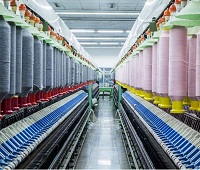 Hit hard by the pandemic, America’s apparel manufacturers are moving away from the Trump administration’s ‘America First’ Biden’s ‘Buy American’ policy. As per a McKinsey report, 71 per cent of America’s small businesses were negatively impacted by the pandemic and this once again brought into sharp focus the inadequacies in supply chains.
Carbon neutrality by 2050
The Biden administration aims to build tighter procurement and build supply chain resilience to make the country self-reliant in critical raw materials. As a per Innovation in Textiles report, it is currently focusing on addressing climate issues like rejoining the Paris climate accord and revoking permits for the Keystone XL pipeline scheduled to run from Canada to US along the West coast.
The administration also aims to achieve carbon neutrality by 2050 by accelerating its move to renewable energy, says John Kerry, Biden’s special envoy for climate. Gina McCarthy, the President’s domestic climate advisor said the government aims to use the Federal budget and its procurement opportunities to inform the market about technologies and products that need to be built in the country.
Eco-friendly partnerships
US textile and apparel manufacturers are also focusing on environmental and social impacts of domestic and imported goods. Manufacturers are embracing new sustainability initiatives as can be seen from industry conferences and trade shows such as the IFAI’s annual Expo. American suppliers are also focusing on eco-friendly partnerships such as opening Hohenstein, a top European service provider and manufacturer opening an US office. The country also sees digital innovation as essential for achieving a transparent supply chain.
Change in shipping rules
Making a cautious move, the Biden administration is building international partnerships without disturbing existing tariffs and other trade barriers. However, it needs to give attention to rising shipping costs which have increased by almost 300 per cent in the past 12 months, says the FBX Freightos Baltic Index. Special attention needs to be paid to the Jones Act that requires goods shipped within the country to be transported using vessels built, owned and operated by American citizens or permanent residents. Europe and other trade partners have been urging the US government to make changes in this Act and allow greater competition and lower costs. The government seems to be focusing on building domestic manufacturing capability, stronger environmental laws but retaining tariffs. It can also gain from building mutually beneficial partnerships.
Susie Mulder appointed Global Brand President for Timberland
VF Corporation has appointed of Susie Mulder as Global Brand President, Timberland. She will replace Scabbia Guerrini who has served as the Timberland’s brand’s interim brand president for the past 14 months.
Mulder will be responsible for driving the Timberland brand’s core strategies including product diversification across footwear and apparel, and a consumer-led, retail-centric, digital-first approach. She will build on the brand’s new eco-innovation franchises while also ensuring continued success within the Timberland PRO® business, all while serving on VF’s executive leadership team.
Prior to VF Corporation, Mulder was employed with clothing brand Nic+Zoe where she served as CEO since April 2012. During her tenure as the brand, Mulder supported the brand’s revenue growth through expansion into new points of distribution in the U.S. and internationally, and launched the brand’s direct-to-consumer efforts via e-commerce and its owned stores.
Skills gap in the industry at a crisis point: SDC survey
Global skills gap in the textile dyeing industry is now reaching a crisis point, as younger people fail to enter the profession, says a new survey by the Society of Dyers and Colorists (SDC). As Textile World, around 87 per cent respondents in the SDC survey highlighted growing concerns of the industry and ongoing workplace education to counter these issues.
One third global employers involved in dyeing and finishing reported being unable to recruit the required talent with a further 55 percent of participants claiming that there is a lack of transferable scientific knowledge within the industry. Almost 77 per cent agreed there was a skills crisis and 53 per cent believed this was already at crisis point. Reasons for this included negative perceptions that young people had of the industry alongside a lack of knowledge of the chemistry behind the processes, as well as poorly promoted opportunities in dyeing. Suggestions for increasing the international talent pool included introducing online learning globally, dedicated support from governments, and working together to promote apprenticeship roles.
Luxury brands increasingly embrace resale category
Luxury brands are increasingly embracing the resale. For instance, Kering, the luxury conglomerate that owns Gucci, Balenciaga, and Alexander McQueen, has announced a $216 million investment in a French secondhand marketplace called Vestiaire Collective. This partnership aims to accelerate Vestiaire’s growth in the resale sector.
For Kering, partnering resale platforms could generate more revenue for its brands. The retailer explored a version of this earlier in the year, before investment, in which Alexander McQueen partnered Vestiaire on a program called “Brand Approved.” The luxury label contacted best customers, offering store credit to return garments, accessories, and shoes from previous collections, which would then be sold on Vestiaire.
Resale companies, along with some fashion brands, believe secondhand market allows products to circulate in the economy for longer. A survey conducted by Vestiaire and BCG found that 32 per cent of respondents sold secondhand goods so that they could buy new products. Alexander McQueen’s partnership with Vestiaire is designed to encourage the brand’s customers to shop even more frequently.
Ralph Lauren launches new rental service
Ralph Lauren has launched a new clothing rental service called ‘The Lauren Look.’ As per Fox News, the new platform offers fashionatas the chance to rent an "ever-evolving" selection of women’s wear from Lauren Ralph Lauren brand for $125 a month. The chosen selections are shipped out to the shopper to rent, try or buy.
The service allows the brand to explore an entirely new model tapping into the growing focus on the sharing economy and revolutionizing how it looks at fashion consumption, said David Lauren, Chief Innovation and Branding Officer.
The sustainable service will also give back, as the clothes will be donated to the nonprofit Delivering Good for those in need once they've reached their rental cap. Like many luxury brands, Ralph Lauren has struggled during the coronavirus pandemic with continued store closures and diminished global demand, Reuters reports. The brand’s net revenue plunged to $1.43 billion in the third quarter ending December 26, 2020.
Ralph Lauren launches new rental service
Ralph Lauren has launched a new clothing rental service called ‘The Lauren Look.’ As per Fox News, the new platform offers fashionatas the chance to rent an "ever-evolving" selection of women’s wear from Lauren Ralph Lauren brand for $125 a month. The chosen selections are shipped out to the shopper to rent, try or buy.
The service allows the brand to explore an entirely new model tapping into the growing focus on the sharing economy and revolutionizing how it looks at fashion consumption, said David Lauren, Chief Innovation and Branding Officer.
The sustainable service will also give back, as the clothes will be donated to the nonprofit Delivering Good for those in need once they've reached their rental cap. Like many luxury brands, Ralph Lauren has struggled during the coronavirus pandemic with continued store closures and diminished global demand, Reuters reports. The brand’s net revenue plunged to $1.43 billion in the third quarter ending December 26, 2020.
Hanesbrands appoints Jane Newman as chief design officer for innerwear business
Jane Newman is the new chief design officer for global innerwear at Hanesbrands. Newman will lead design department in HanesBrands’ recently created global innerwear organization. She will be responsible for delivering products across the company’s innerwear brands, which include Hanes, Bonds, Maidenform, Bali, Playtex, Bras N Things, and Berlei. With three decades of experience in design and product development, Newman joined HanesBrands as head of design for Bonds brand in 2004.
Since then, she has held a range of other roles at the company, having most recently served as creative director at Hanes Australasia. In this position, she led the region’s design, product development, research and development, and quality assurance teams.
Newman holds a bachelor’s degree in design, fashion and textiles from the University of Technology in Sydney.
Surge in cotton prices, growing demand boost yarn prices in India
A surge in cotton prices along with growing demand from domestic and international market has led to a sharp rise in Indian cotton yarn prices. As per a SRTEPC report, prices of 30s combed yarn used by the hosiery sector have rised by 30-40 per cent by export merchants in Gujarat over the last few weeks. Dealers can buy at least two months of production from a number of spinning mills, says Anand Poppat, a Rajkot-based dealer of uncooked cotton, yarn and spinning waste.
The Trading Economics Website also indicates a gain of over 13 per cent as cotton prices rose almost 10 per cent in February .Global cotton prices are rising due to higher imports from China. The rise in Indian cotton prices has come despite the country carrying over record stocks of cotton from last season, says Ashwin Chandran, Chairman, Southern India Mills Association (SIMA).
As the textile sector started working at close to optimum capability, demand for yarn elevated since December 2020. This resulted in greater yarn production, however prices have elevated, primarily, as cotton prices gained. For instance, the 40s depend warp yarn topped Rs 300 a kg however has now dropped to Rs 275-285. Hosiery yarn prices are nonetheless decrease. Besides home demand, which has resulted in panic shopping, export shopping has additionally pushed up yarn prices.
Worldwide cotton market to reach $46.56 billion by 2021
As per a report ‘Global Cotton Market and Volume by Consumption, Production, Export, Import, Countries, Companies,’ Forecast by ResearchAndMarkets.com, the worldwide cotton market is expected to reach $46.56 billion by 2027, with a CAGR of 2.74 per cent from 2020 to 2027.
The report states, Cotton is a labor-intensive cash crop mass-produced across the globe. It majorly supports the global textile mills market and the global apparel manufacturing market. It is also a very political crop since its importance is in the world exchange of many evolving countries. It has many other uses, across many different industries like in woven fabrics, clothing, bed sheets and towels, home decor, cottonseed oil, pharmaceuticals, etc.
Asian countries dominate cotton production and they are also one of the biggest consumers of cotton. For years, China, Bangladesh and Vietnam have been major importers of cotton while exporters include the United States, Brazil and India.
C.L.A.S.S. launches Manifesto for Responsible Fashion
Italian hub supporting sustainable fashion, C.L.A.S.S. has launched its Manifesto for Responsible Fashion and kicked off a Call To Action of C.L.A.S.S. Icon 2021 contest. Launched in 2020, the annual competition rewards a visionary creative who is able to combine design, responsible innovation and communication, and capable of raising contemporary consumer awareness about the new values of sustainable fashion.
The contest was initiated by Giusy Bettoni, Founder, C.L.A.S.S., during the Smart Voices panel “C.L.A.S.S. Icon: Award and Manifesto for Responsible Fashion,” moderated by the journalist Diana de Marsanich, and featuring fashion designer Gilberto Calzolari, winner of the CLASS Icon Award 2020, and Federico Poletti, marketing and communication director of White Show.
From February 15 to April 15, candidates can enter the contest by sending an email with a description and objectives of their brand, the sustainability values they adopted and their strategy, together with a designer's profile, a photo-video story of their latest collection, and any previously won awards.
The competition sums up the values C.L.A.S.S. has been supporting since its inception in 2007. These include: importance of a company to behave ethically, follow transparent production standards, offer traceable and healthy products and guarantee respect for people and the environment while being committed to circular economy, safeguarding the oceans and lowering the use of water, energy and resources.











