FW
Benin’s cotton exports to surge by 74% during January-August 2021
South Africa’s largest cotton producer Benin’s exports are expected to surge 74.73 per cent during January-August 2021. As per reports, the South African country is likely to benefit from President Patrice Talon's re-election for the second term this month, and China's help to Beninese farmers in improving their farm productivity.
In 2019, Benin exported $144.39 million worth of cotton with monthly average of $12.03 million. Last year, its exports declined by 63.21 per cent year-on-year to $53.12 million as COVID-19 restriction hampered trade. The country is improving its bilateral trade relations with China which is supporting it to improve cotton productivity. Some agricultural operators in Benin have joined a one-month training session on Chinese expertise in farm machinery operation.
Transport ban adding to Bangladesh garment workers’ woes
The ban on public transport is forcing may garment workers in Bangladesh to either walk long distances or pay many times the normal fare to travel to work. As per Thomson Reuters reports, Bangladeshi authorities have failed to provide transport facilities to garment workers. Workers are also being forced to work in unhygienic factory conditions, allege Kalpona Akter, Founder, Bangladesh Centre for Worker Solidarity union.
However, most workers were pleased with their factories being exempted from the curbs after their earnings were hit by closures during Bangladesh’s previous lockdown. The garment sector was hit hard last year as clothing brands shut shops due to the pandemic and cancelled orders worth millions of dollars.
Although the industry has seen a recovery, the future is uncertain as European countries impose fresh curbs.
Pakistan exporters say yarn imports will not ensure sustainable supply of raw materials
Pakistan’s value-added sector has warned importing duty-free cotton yarn from India will not ensure a sustainable supply of key raw materials. The government recently waived customs duty on cotton yarn but refused to allow imports from India. This facility is available till June 2021. Javed Bilwani, Chairman, Pakistan Apparel Forum said, any import or export of consignments takes two to three months as most ports are facing severe congestions
Another exporter Aamir Aziz said, shipping lines have also increased their freight charges five to six times and even then take too much time to ship the goods. Recent data shows export growth is the result of at least two months before production and shipment and the impact of shortage of cotton yarn is likely to be felt in the next few months, he added
Yarn Expo fairs rescheduled
Following the Spring Edition of Yarn Expo at the National Exhibition and Convention Center (Shanghai), the next editions’ dates have now been revealed. Yarn Expo Autumn will take place at the same venue from August 25-27, 2021 and Yarn Expo Shenzhen will be held at the Shenzhen World Exhibition and Convention Center from November 03-05, 2021.
Attracting leading fibre and yarn suppliers as well as quality buyers with the fairs’ wide range of products, the three editions of Yarn Expo will cater to the recovering industry by offering a year-round meeting place for the sector to come together to recharge their businesses.
Last year, Yarn Expo Autumn was one of the first yarn and fibre trade fairs to take place as scheduled since the pandemic outbreak. Participants reflected on the effectiveness of a physical trade fair to facilitate business recovery.
PRGMEA welcome withdrawal of customs duty on yarn imports
Pakistan Readymade Garments Manufacturers and Exporters Association(PRGMEA) has welcomed the withdrawal of customs duty on import of cotton yarn by the Economic Coordination Committee (ECC) of the Cabinet in order to ensure smooth supply of it to the value-added industry.
Sohail Sheikh, Central Chairman, said that the government’s earlier decision of withdrawing five per cent regulatory duty in December 2020 on the import of cotton yarn and now removal of customs duty will greatly support the textile sector and contribute to the country’s economic stability.
The decision would provide some cushion to the apparel sector, which is suffering a huge shortage of industry raw material, observed Ijaz Khokhar, Chief Coordinator. He asked the government to extend this relaxation of customs duty on yarn import till the country is capable of meeting textile value-added industry’s demand of 10 million cotton bales.
PRGMEA also reiterated its demand to the Prime Minister to pass directives for the forensic audit of the yarn producers to break cartel of cotton mafia. They demanded serious steps to break the textile industry cartel, giving it a strong message that no cartelization would be allowed to manipulate prices in future and if they commit such crime they have to face the full brunt of la
RSWM hailed for highest export turnover in 2020
LNJ Bhilwara Group Company RSWM has been praised by the ministry of industries and Government of Rajasthan for achieving the highest export turnover in 2020. RSWM is listed on both Indian stock exchanges—the NSE and the BSE.
Riju Jhunjhunwala, Chairman and Managing Director, RSWM says, this achievement reaffirms the company’s commitment to the growth of its stakeholders, employees, the state of Rajasthan and Indian economy.
RSWM is one of the largest manufacturers and exporters of synthetic and blended spun yarns from India and exports to 78 countries. The company has 10 state-of-the-art manufacturing plants, 441,000 spindles, 10,000 (MT/annum) cotton fibre dyeing capacity, 4,000 (MT/annum) yarn dyeing capacity and denim manufacturing capacity of 25 million meters annually.
Field to Closet launches new initiative to promote cotton scrubs
An initiative from Field to Closet is making the concept of American grown and made, 100 percent cotton scrubs a reality.
To highlight the initiative, the kickoff event took place April 9 at the Georgia Museum of Agriculture in Tifton, Ga., and will culminate this summer with 15 hospitals in rural Georgia receiving medical scrubs at no cost. Ga. Gov. Brian Kemp attended the kickoff event.
Through innovative, collaborative partnerships, this project utilizes Georgia-grown cotton from Deltapine® seed to reshore American manufacturing by revitalizing an end-to-end U.S. supply chain. The initiative's foundation is rooted in agriculture and establishes a Farmer GiveBack program to address a fundamental issue in the garment industry, which typically sees the brand or end seller with the most significant profit.
The GiveBack program recognizes the rebirth of a robust cotton garment industry isn't possible without the grower; therefore, this initiative is designed to ensure the grower is included financially by sharing in the profit of the goods sold.
For the initial project, Field to Closet worked with America Knits in Swainsboro, Ga., to source Deltapine seed cotton grown in Georgia, which is spun into yarn at Parkdale Mills in Rabun Gap, Ga., and woven into fabric in Lilesville, N.C., at Hornwood, before arriving at America Knits for the final production of the scrubs. An additional benefit for the medical scrubs, this fabric is treated with PROTX2® AV. This antimicrobial technology inhibits the growth of bacteria and has been shown in lab tests to destroy viruses.
COVID-19 leads to the rise of discreet luxury fashion in China
 The pandemic has created immense opportunities for Chinese luxury fashion with European brands opening new stores, expanding digital operations and boosting e-commerce activities in the country. According to Maura Maggioni, CEO-Asia Pacific, Golden Goose, China houses the entire world’s purchasing capacity. A Jing Daily report says, for years, American companies looked at China as a land of opportunity. However now, Chinese consumers are moving away from American brands. This is evident from an AlixPartners survey which notes, 57 per cent consumers’ plan to reduce their expenditure on American products in future.
Quarantine fashion gains popularity
COVID-19 has also made quarantine fashion mainstream with retail segments like loungewear, athleisure and work from home clothes gaining more popularity. The pandemic has led to rise of new trends like Do-it-Yourself (DIY) beauty, skincare, and at-home wellness McKinsey & Company draws attention to the growing popularity of ‘above-the-mask treatments’ and eye-cosmetics. The Taobao Live sessions, that presented live makeup tutorials while wearing masks, have increased the monthly sales of eye shadow palettes.
Chinese consumers’ desire for sustainability, equality, peace, and justice too has increased. Around 60 per cent Gen Z consumers and millennials are trying to reduce the impact of their eating habits on the environment, says a survey by McKinsey & Company. Around 50 per cent are also opting for locally sourced products.
Discreet luxury on the rise
There is also a growing demand for understated and stylish luxury products in the country, says Martin Roll, Business and Brand Strategist. The pandemic has altered consumption patterns with consumers moving towards a more mature and discrete form of luxury. Luxury products are being looked at as future investments, making it necessary for brands to emphasize on their quality rather than volume.
Luxury heritage brands also need to create a strong resale strategy like Richemont which recently acquired Watchfinder or Burberry which partnered with The RealReal. Another golden opportunity for Chinese luxury brands is to expand their stores in Hainan and other duty-free channels.
Italian hosiery sector opt for eco-textiles, innovations to move ahead during pandemic
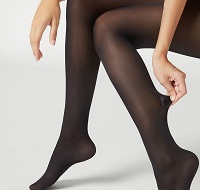 Driven by technological innovation and sustainability, the Italian hosiery sector is growing at a robust pace even in the midst of the global pandemic. As per a Knitting Industry report, pandemic has increased the sector’s sustainability awareness and its use of eco-textiles. Alessandro Gallesi, President, ADICI, the Hosiery and Intimate Wear District Association point out, 63 per cent young consumers opted for sustainable products in 2020, as per a PwC survey. Gallesi advises companies to consider this trend while creating products.
Investments in sustainability increase
Hosiery producers are investing a lot of money in low environmental impact technology and materials. They are including green materials in their fashion collections, says Massimo Bensi, President, CSC, and Owner Manager, Calze BC. The CSC Enterprise Services Centre has offered its laboratory and skills to companies to develop sustainable and environmentally respectful products, informs Davide Bonassi, Director.
A world class company specialising in the creation and distribution of manmade fibers, Fulgar has committed to make its entire production process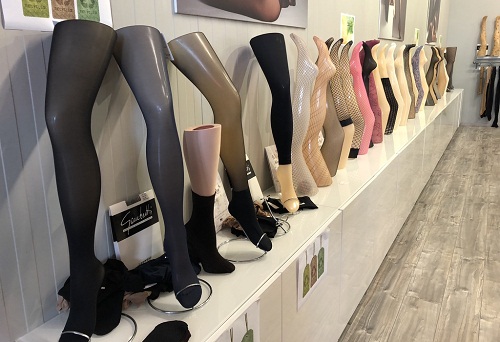 sustainable. Its eco-sustainable product portfolio includes EVO, a bio-based yarn made from castor oil, Q-NOVA, a fibre made from regenerated raw materials and AMNI SOUL ECO, a biodegradable polyamide.
Favored by national and international brands
Fulgar’s products are being used by many Italian and international hosiery brands. For instance Calzedonia has once again chose Nylon 6.6 green Q-Nova yarn by Fulgar. This 100 percent Made in Italy eco-sustainable polyamide 6.6 yarn is Global Recycled Standard (GRS 2015-005 certified by ICEA) and EU Ecolabel certified.
Similarly, Sarah Borghi, a luxury Italian-made hosiery brand has chosen the Amni Soul Eco biodegradable yarn by Fulgar for its new capsule collection known as the Green Collection. The new-generation sustainable yarns offer outstanding comfort and durability to the consumers. Sarah Borghi has also included other Fulgar products like EVO and Q-NOVA in its Green line.
Duelegs Bbf Group’s contemporary band Tightings uses Fulgar’s EVO yarn for its Celeste model and Fulgar’s Q-NOVA fibre for its Ambra model. These help the company combine looks, comfort and environmental awareness.
Maker of high-quality Made in Italy hosiery, Calzificio Schinell has also launched a range of eco-friendly tights using Q-NOVA recycled fibre by Fulgar while Donna BC has opted for Q-NOVA and EVO by Fulgar for products made with eco-friendly yarns. Fulgar has also launched its latest polyamide with antiviral and anti-microbial properties, reflecting its futuristic approach to sustainability.
Wrangler launches new sustainability platform
Wrangler®, a global icon in jeanswear and casual apparel, has launched a new sustainability platform- WeCare Wrangler™ As per Textile World, the platform unites the brand’s legacy of sustainability with measurable goals designed to bring consumers the apparel they know and love while reducing the brand’s environmental impacts.
Coinciding with the launch of the WeCare Wrangler platform, the brand has launched the new Retro® Green Jean assortment which improves on favorite Wrangler styles with a variety of natural fibers, recycled hardware and eco-friendly materials from the hem to the waistband and everything in-between.
The WeCare Wrangler platform is guided by three key focus areas: Planet, Product and People. From protecting the soil, to saving water, to reducing waste and energy use, Wrangler is dedicated to challenging itself to leave less of an impact on the planet. It is committed to doing right by all people with the products it makes.