


FW
Garmon Chemicals opens new laboratory in China
A new laboratory by Garmon Chemicals, Kemin Industries’ textile auxiliaries business and chemical solutions brand, was recently opened at the Garmon Studio located in Jiangmen in the Guangdong province of China.
As per Sourcing Journal, the lab broadens the opportunity for Garmon technicians to work with companies that previously faced language barriers or travel restrictions. It will also facilitate the development of local collections that better match domestic styles and trends, creating efficiency in clients’ sampling processes.
Additionally, the lab tees up new opportunities for technicians in China to sharpen their skills with the latest technologies. The lab is equipped with Garmon’s Smart Foam garment finishing system that reduces water consumption by up to 80 percent. The patent-pending technology uses foam as a carrier of chemicals.
To celebrate the opening of the fashion laboratory, Garmon Studio created a pair of jeans that draws inspiration from both cultures in honor of the 50th anniversary of official diplomatic relations between San Marino and China. Made with hemp and cotton fabric from the Chinese mill Advance Denim and Smart Foam technology, the left leg features San Marino’s towers that stand above the Adriatic Sea and the left features an ancient Chinese temple. A gold foil “50” on the jeans the represents poignant anniversary.
Hyve Group adds Retail Trust as Charity Partner
Hyve Group has added Retail Trust as its Charity Partner for spring and Autumn Fair for two years and Wellbeing Partner across all its retail shows in the UK comprising Spring Fair, Autumn Fair, Pure, Glee and Scoop, to provide dedicated support, awareness and fundraising for the retail sector.
The partnership will incorporate offsite volunteer days, team challenges, and onsite activity kicking off at Autumn Fair from September 05-08, 2021 at NEC Birmingham. The partnership also includes the launch of the Female Founders scheme that will offer free stands to 10 inspirational female founders.
During the 2-year Charity partnership, Hyve Group will take part in fundraising activities to raise awareness and funds for the Retail Trust. A dedicated Wellbeing section will launch on each of the event websites for Spring and Autumn Fair, Glee, Pure and Scoop. This will feature informative and supportive articles alongside videos that support the wellbeing of retailers and wholesalers alike.
Alongside this, the Retail Trust will also be supporting the Spring Fair Female Founders initiative. Launching at Autumn Fair 2021, Female Founders initiative is an exciting program created to champion and celebrate inspiring female entrepreneurs.
The initiative will support the growth of female founded retail businesses by offering six businesses a free stand at Spring Fair 2021, followed by 12 months of business mentoring with leading female entrepreneurs. The scheme will be announced and launched at Autumn Fair in September.
Formalwear marketplace Queenly raises $6.3 million in Andreessen Horowitz led funding round
Formalwear marketplace for pageant dresses, wedding gowns and quinceañera attire, Queenly nabbed $6.3 million in a funding round led by Andreessen Horowitz.
As per a Women’s Wear Dailly report, the two-year-old start-up managed to score another $2.26 million round in April. With the latest round, the total raised to date comes to $7.1 million.
Founders Trisha Bantigue and Kathy Zhou appealed to investors with a model that seemed hardened against the pandemic. The business partnered with independent boutiques — the main source of formal gowns for shoppers searching for unique finds — and directly with prom brands like Mac Duggal, Vienna Prom and others to build out what the company describes as both a marketplace and a search engine for formalwear.
The partners approached these boutiques to put their inventory online with Queenly. Their inventory, plus that of brand partners, gave the platform multiple sources and no supply chain to fret over, which wound up being an advantage, as delivery delays and other issues dogged other retailers.
Queenly also acts as a peer-to-peer, secondhand sales platform, allowing users to buy and sell. This effort expanded the company’s range of designers, from formalwear brands like David’s Bridal to BCBG or Calvin Klein. Today, there are 60,000-plus unique dresses listed on the platform, with a total inventory value of $15 million, turning the platform into a shopping destination.
It’s time for brands to ensure transparency in cotton supply chains
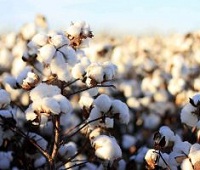 Growing allegations of forced labor in their cotton supply chains have made sourcing awareness a top priority for fashion brands. Brands across the world are pressurized to refute usage of Xinjiang cotton in their garments. One such instance is Japan-based casual wear brand Uniqlo whose US shipments were blocked recently over concerns of connections with forced labor in China’s Xinjiang province,
Remote farm locations increase labor exploitation risks
As per a 2021 Know The Chain Report, the cotton supply chain is particularly vulnerable to forced labor risks. Cotton farms are located in remote areas that make them inaccessible to labor inspectors. Workers employed in these farms are unable to report instances of exploitation as most of these workers are migrants who return to their villages after the harvesting season.
The US Customs and Border Protection (CBP) is investigating instances of forced labor across China notes a report by Textile Today. Authority has barred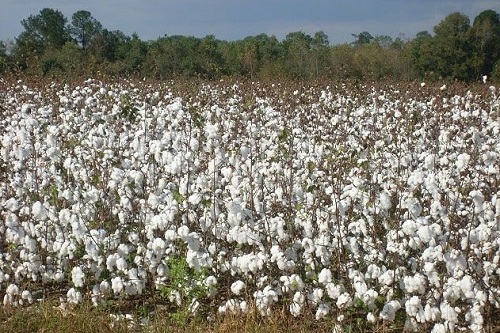 goods made by forced labor from entering the US market. In 2021, the authority prevented 1,255 shipments containing goods worth over $765 million from entering the US on forced labor allegations. These 623 shipments contained goods worth $84 million made by forced labor, though the number of goods sourced from Xinjiang remains uncertain.
Better Cotton Initiative (BCI) also made headlines recently as it addressed a 2020 accusation fostering forced labor in Xinjiang. The matter highlighted the urgent need for brands to be aware of their supply chains. They need to stop relying on certificates making claims of sustainable and fair trade practices, says Leonardo Bonnani, CEO, Sourcemap.
Increasing transparency with molecular taggants
Brands need to verify their products’ journey from source to shelf. They need to authenticate the origin of all their products right from raw materials to finished goods. For this, they need to make each participant of its supply chain from the raw material to the finished goods, responsible for ensuring the quality and integrity of its products.
Brands can use molecular taggants such as DNA-based tags to verify cotton and other materials including coffee and wine. These tags are permanent and not affected by climatic changes. These tags can also be used to verify the identity of inputs in a finished good, tracking authenticity from origin to retail. This will help brands to confirm to their social and ethical commitments.
Increased production reflects on VSF as imports drop
 Despite Viscose Staple Fiber (VSF) production being more expensive than the production of Viscose Filament Yarn (VFY), global VSF production increased from 342 million kg in 2015-16 to 578 million kg in 2019-20. As per a Textile Value Chain report, this led to a decline in VSF imports by major countries.
China leads in VSF imports drop
China’s VSF imports declined 33 per cent to 150,000 tons in 2020 from 226,000 tons in 2019. VSF imports by Germany too fell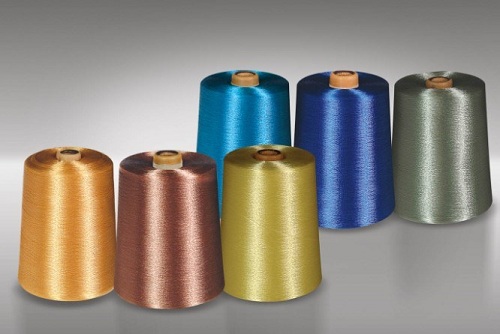 by 18 per cent from 55,000 tons in 2019 to 45,000 tons in 2020. Indonesia’s imports dropped from 53,000 tons in 2019 to 36,000 tons in 2020 similarly Vietnam’s imports fell by 10,000 tons to 57,000 tonne. India’s imports too fell from 63,000 tons in 2019 to 57,000 tons in 2020. On the other hand, VSF imports by the United States’ increased from 83,000 tons in 2019 to 103,000 tons in 2020. Bangladesh too recorded a rise in imports by 60.97 per cent to 99,000 tons up from 49,000 tons in 2019. Singapore’s imports increased to 98,000 tons in 2020. Global VSF exports up 8.11 per cent
In 2020, global VSF exports increased 8.11 per cent and China emerged the largest VSF exporter, with an annual growth rate of 4.06 per cent. China’s VSF exports increased from 360,000 tons in 2019 to 375,000 tons in 2020. World’s second largest VSF exporter in 2020 was Indonesia with 342,000 tons exports in 2020, a few thousand tons lower than 2019 figures.
Singapore’s VSF exports touched 112,000 tons in 2020, which outpaced Thailand’s exports by 1,000 tons. Thailand’s exports increased 12,000 tons from previous year while Germany’s exports increased 28.47 per cent, from 43,000 tons in 2019 to 55,000 tons in 2020. Sri Lanka too recorded a rise in exports from 2,000 tons in 2019 to 8,000 tons in 2020 while Malaysia’s exports increased 228.57 per cent in 2020.
Meanwhile, India’s VSF exports declined 12.17 per cent to 66,000 tons in 2020. Taiwan’s export decreased almost 51.34 per cent from 45,000 tons in 2019 to 21,000 tons in 2020. Japan’s exports decreased from 13,000 tons in 2019 to 9,000 tons in 2020. Spain’s exports fell from 9,000 tons to 4,000 tons in 2020.
Shipment sees a drop
Global VFY exports decreased to 96,000 tons in 2020 from 119,000 tons in 2019. Shipments by the largest exporter China decreased from 85,000 tons in 2019 to 71,000 tons. Czech Republic’s exports declined by 2,000 tons to reach 7,000 tons while. Exports by the world’s fourth largest exporter Poland too recorded a sharp drop. India’s exports dwindled from 9,219 tons in 2019 to 6,066 tons in 2020.
Intertextile Shanghai Home Textiles-Autumn to host over 800 exhibitors
The 27th edition of Asia’s leading international trade fair for home and contract textiles Intertextile Shanghai Home Textiles-Autumn Edition will host over 800 exhibitors from August 25-27, 2021.
This year the fair will be held concurrently with Intertextile Shanghai Apparel Fabrics, Yarn Expo Autumn, PH Value and CHIC at the National Exhibition and Convention Center.
To better cater to the needs of those who cannot travel to Shanghai, last year’s successful online buyer service returns again in 2021. Livestream presentations specific to product categories will be conducted each day of the fair, with online buyers able to communicate dynamically with the exhibitors, or follow up with them after the fair. An online matching program will also be offered again with buyers able to arrange virtual meetings with their desired exhibitors during and after the fair.
For those buyers able to attend the fair in-person, a VIP buyer program a free business matching service is offered.
FMCG sales register faster recovery in July 2021: Deloitte
According to the consumer tracker released by Deloitte, sales of FMCG companies, including those selling packaged foods, daily use items, electronics and apparel, have recovered faster in July 2021 than the year-ago period.
Deloitte has been tracking consumers’ mood across major global markets since the onset of the pandemic. In its latest report, it surveyed Indian respondents till June 30, covering the second COVID-19 wave.
According to the report, the pace of vaccination has uplifted the consumer sentiment as witnessed from a slight increase in discretionary spends after easing of restrictions in June.
Working from home has helped employees save significantly on transport and employers on rent, the report says. As restrictions ease, consumers plan to spend more on discretionary items such as clothing, footwear and electronics, it adds.
The present steadiness in sales leading to recovery can be attributed to pent-up demand from consumers. People are escaping to tourist destinations and malls to take the much-needed break from confinement. Adding to the demand recovery, the coming festive months will be very crucial for malls, opines Abhishek Bansal, Executive Director, Pacific Group, which operates malls in the national capital region.
IFC, Levi Strauss team up to provide finance to sustainable suppliers
World Bank’s International Finance Corporation (IFC) and American brand Levi Strauss & Co have joined hands to make lower interest rates available to suppliers that succeed in meeting the brand's climate commitments. The initiative is a part of IFC and Levi Strauss & Co’s (LS&Co) Partnership for Cleaner Textiles (PaCT) and IFC's Global Trade Supplier Finance (GTSF) program that offers working capital, such as trade financing, at lower rates to suppliers in compliance with environmental and social standards.
IFC and LS&Co launched their global PaCT partnership in 2019 to support participating suppliers and mills to identify and implement actions to improve water and energy efficiency and increase their use of renewable energy.
The program provides in-depth assistance to around 40 LS&Co suppliers across countries including Pakistan, Bangladesh, Sri Lanka, India, Mexico, Turkey, Egypt and Vietnam, while also providing ‘lighter touch’ support to other strategic suppliers that are developing action plans for reducing their carbon footprints.
UK retailer Next raises full year sales guidance
Supported by 18.6 per cent higher than expected sales for the 11 weeks leading upto July 17, UK multinational clothing, shoes and household goods retailer Next has raised its full-year sales guidance from 3 per cent to 6 per cent. As per reports, the company estimates its pre-tax profit for 2010 to be £ 750 million.
Rise in sales is attributed to the stagnated demand for adult clothing growing due to few purchases made by consumers in the last 18 months. Fewer vacations abroad also spurred domestic spending in the UK as consumer savings increased significantly compared to last year.
In the last 11 weeks, UK sales performance in all Next divisions has improved with the opening of stores. The performance in its Label division improved by 64 per cent while overseas online business surged by 61 per cent.
For the full year, Next projects surplus cash to reach £ 240 million. The company has also decided to reimburse the government for a £ 29 million bailout.
EcoVadis awards Lenzing platinum status in CSR rating
World’s largest provider of sustainability ratings, EcoVadis has awarded leading sustainable specialty fibers supplier, the Lenzing Group with Platinum status in CSR rating. The assessment comprehensively covers the four main CSR (Corporate Social Responsibility) practices; the environment, fair working conditions and human rights, as well as ethics and sustainable procurement.
In previous three years, Lenzing had received outstanding ratings in all categories, and was awarded Gold status in 2018, 2019 and 2020. The group’s ambitious climate targets form an essential part of its strategy and responsibility to future generations. In 2019, Lenzing became the world’s first fiber manufacturer to commit to reducing CO2 emissions per ton of product by 50 per cent by 2030, and even becoming climate-neutral by 2050. In its ratings, EcoVadis also highlighted the scientific validation of Lenzing’s climate targets by the Science Based Targets Initiative. In addition, Lenzing also focused on the group’s responsible procurement of raw materials – according to social and ecological aspects.
Since its inception in 2007, EcoVadis has become the world’s largest and most trusted provider of corporate sustainability ratings, creating a global network of more than 75,000 rated companies in 160 countries worldwide. It also provides information and tools that help to increase transparency within global supply chains. The methodological framework assesses companies’ policies, measures and activities, as well as their published reports, in relation to the environment, labour and human rights, ethics and sustainable procurement.











