


FW
Diversification can help Vietnam lift production amid latest COVID-19 outbreak
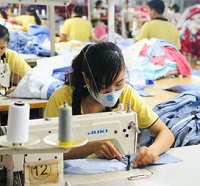 The outbreak of COVID-19’s Delta variant has paralyzed Vietnam’s garment industry. Though factories are allowed to operate they have to provide accommodation or transport for workers, leading to a sharp increase in expenses. This has disrupted manufacturing activities in Vietnam, as per a Business of Fashion report. Almost 62 per cent textile and apparel companies in the country have been compelled to suspend operations due to continued lockdowns and restrictions, as per the Vietnam Textile and Apparel Association.
This has also impacted operations of major brands in the country. For instance, Nike, which imported almost its products from Vietnam in 2020, is at the risk of running out sneakers made in Vietnam, says a Panjiva report, a division of S&P Global Market Intelligence.
American brands with operations being hit
The crisis has hit American brands the most as Vietnam accounted for roughly 40 per cent of US imports in the year till July 31, reveals Panjiva data. The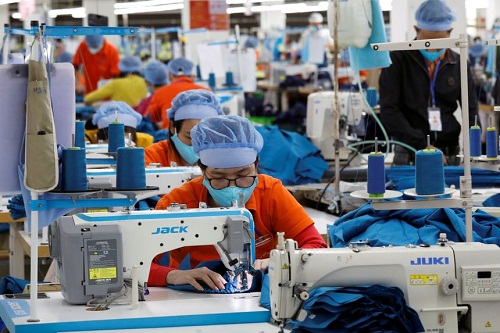 American Apparel and Footwear Association (AAFA) therefore urged President Biden to accelerate America’s supply of vaccines to Vietnam. Meanwhile, brands like On, Puma and Adidas plan to relocate their manufacturing facilities to safer countries and regions. This may increase their production costs in short-term. However, they will have to meet customer’s demand, says Winnie Leung, Professor, George Brown College, Toronto.
Inventory challenges lead to uncertainty
Puma expects Vietnam’s lockdown to be extended by another two weeks as cases continue to rise. The company also expects a delay of four to six weeks in restarting production, states Robert-Jan Bartunek, Senior Manager-Corporate Communications. Adidas also expects shutdowns to last until the end of third quarter, says Kasper Rorsted, CEO.
The latest outbreak further compounds Vietnam’s woes currently facing issues like port closures in China and shipping delays in the US. It also adds to future market uncertainty as rising freight rates are likely to make inventory acquisition a bigger challenge next year, according to investment bank Cowen.
Any Halliwell, Senior Director-Retail, Publicis Sapient, says, this may also disrupt global supply chains and reduces brands’ working capital. To survive, brands and retailers will have to diversify and adapt to the changing situation. Players with diversified manufacturing will fare better.
Armani puts up strong showing in 2021 with sales growth
Giorgio Armani is recovering from the impact of the COVID-19 pandemic. Sales of the Italian fashion group grew 34 per cent in the first half of 2021. At constant exchange rates, sales grew 38 per cent. Revenues in the directly operated retail channels, excluding wholesale and licenses, grew 59 per cent in the first half of 2021 compared to the same period in 2020. The US, China, and Europe helped boost performance.
The group expects much better profitability for 2021 barring a return to widespread retail closures in the second half of the year due to the pandemic. Last year, the decline was heavily concentrated in the first half, while the second half showed a clear recovery, despite the new waves of contagion and the intensification of the state of emergency in Europe that marked the last quarter of 2020.
In the 12 months ended December 31, the group’s net profit fell 27.4 per cent. Total revenues from Armani-branded products worldwide, including licensing revenues, in 2020 fell 21 per cent from the previous year. The goal is to return to pre-pandemic levels by 2022. In 2020, the Armani group’s earnings before interest, taxes, depreciation and amortization were down 1.8 per cent from 2019.
Crocs expects revenue to grow 60 per cent
Crocs expects full year revenue growth of between 60 to 65 per cent compared to 2020. During its third quarter, the shoemaker expects revenue growth between 60 and 70 per cent compared to last year’s third-quarter revenues. Crocs reported adjusted earnings per share of $2.23, which beat analyst expectations. The shoemaker also reported record revenue of $640.8 million.
Crocs’ sales boomed during the pandemic as consumers seek more comfortable footwear. Its stock has grown more than 90 per cent year-to-date. The shoemaker has also committed to transition to net-zero emissions by 2030 and has raised its full-year revenue guidance amid strong global demand despite supply chain disruptions caused by the Covid-19 pandemic.
Revenues in the second quarter grew 93 per cent. The company’s digital sales grew 25.4 per cent to represent 36.4 per cent of revenue, compared to 56.1 per cent a year ago. Croc’s sandals sales rose 57 per cent during the second quarter after going up 17 per cent in the first quarter. The company also saw digital sales grow 99 per cent compared to 2019. Direct-to-consumer sales grew 78.6 per cent compared to last year, and 86.4 per cent compared to 2019, representing 52 per cent of second-quarter revenues. Crocs has had an eight per cent increase in its average selling price during this quarter. This has been attributed to higher pricing and a favorable product mix.
US to buy more RMG from Bangladesh as it offers most competitive prices
Fashion brands and buyers in the United States are eager to increase sourcing from Bangladesh over the next two years. They find the prices of apparel and textile products in Bangladesh to be lower than global average prices. The ‘2021 Fashion Industry Benchmarking Study’ conducted by the United States Fashion Industry Association revealed the unit price of apparel products in Bangladesh was $2.5 in July-May of this year while the global average price was $2.6 in the period. ‘Consistent with the survey results from 2017 to 2020, respondents this year again say Bangladesh offers the most competitive price, followed by China, Vietnam, Indonesia, India, and Cambodia,’ the USFIA said.
Though China offers more competitive prices than Bangladesh, US buyers want to diversify their sourcing away from China and Vietnam to avoid placing all eggs in one basket and mitigate various sourcing risks. The US-China tariff war has exacerbated sourcing cost pressures and financial challenges facing US fashion companies during the pandemic. Because of the tariff war, US fashion companies have had to pay an average 23.4 per cent import duty rate for apparel imports from China in 2020, which was much higher than 16.5 per cent back in 2017.
Diversifying the export product structure and improving production flexibility and agility will be critical for Bangladesh to play a more significant role as an apparel sourcing base for US fashion companies in the post-Covid world. This emerging trend implies that competition among the thousands of Bangladeshi apparel suppliers will intensify. While competitive suppliers will benefit from more sourcing orders, smaller and less competitive ones could become more vulnerable. Bangladesh is believed to offer the most competitive price, followed by China, Vietnam, Indonesia, India, and Cambodia.
Virus hinders Vietnamese order intake
Vietnamese companies have not made headway with several orders due to Covid-19 related complications.
The stay-at-home mandate under the prime minister’s directive 16 has significantly affected firms’ operations. They expect a probable shift of orders to other countries. Textile-garment makers in the southern localities have had to suspend their operations due to the resurgence of the coronavirus, thus making it tough to commit to business partners and, consequently, creating concerns among business partners about the disruption of their supply chain.
Some international garment brands have also sought permission to make payments in two or three months or even six months. This is beyond the original financial plans of local textile and garment firms. If local textile makers accept the request, they would face obstacles in rotating capital, as the access to long-term loans offered by local banks is currently challenging and risky. If they refuse the request for late payments, these brands would seek new business partners in other countries.
Exports of the local textile-garment industry in the first half of this year improved 21.27 per cent compared to the same period last year and up 4.23 per cent against the 2019 figure. Of this, the number of textile-garment items shipped to the European Union rose 4.85 per cent versus last year’s figure.
Home textile orders flood Bangladesh
At least eight companies from Europe and the US, who used to buy home textiles from Pakistan and China, have started doing business with Bangladeshi exporters in the last six months. Some buyers do not get products as per their demand from Pakistan and China. Bangladeshi exporters have attracted them with quality products at a competing price and on-time delivery. The use of home textiles has seen an increase across the world as people are staying home for longer periods during the pandemic. According to Bangladesh Terry Towel and Linen Manufacturers and Exporters Association (BTTLMEA), the eight new buyers that have started business with Bangladesh in the last six months include the well-known Standard Textile in the United States.
Most factories in Bangladesh export medium and general quality home textile items. However, some companies export relatively high-priced home textile items. Towels account for 40 per cent of Bangladesh’s total exports and bedding around 50 per cent. Bedding includes bed sheets, pillows and cushion covers. The type of home textiles that Bangladesh exports, including towels, is made mainly of ten counts and 16 counts yarns. The share of Bangladesh in this sector in the world market is still about only one per cent. The country’s home textile sector is beset with rising raw material and fuel prices. Around 75 per cent of the cost of towels goes to yarn purchasing. As a result, many producers are incurring losses.
However, despite a rise in orders the home textile sector is faced with growing prices of raw materials and fuel that are hurting the industry. Continuously increasing yarn prices are bane as most buyers are not willing to share the extra cost and most producers are being forced to take orders at lower prices.
Pakistan’s textile exports rise by 23% in FY2021
As per the statistics released by the Pakistan Bureau of Statistics, Pakistan’s total textile exports increased by 23 per cent to $15.42 billion Y-o-Y in FY 2021.
Knitwear exports posted the highest growth of 37 per cent Y-o-Y basis to $3.83 in FY21 as against $ 2.80 billion in FY20. Among others, bed wear and readymade garment’s segments also recorded a substantial growth in exports by 29 per cent Y-o-Y and 19 per cent Y-o-Y respectively.
This exponential rise in textile exports during the FY21 can be attributed to a 73 per cent increase in exports to $1.67 billion during the final month of June’21 and a 57 per cent upsurge was seen compared to the previous month of May’21.
The country’s textiles export are expected to continue growing in FY22 as demand for Pakistan’s textiles is likely to stay strong as many countries have developed the likeness for the Pakistani textile products.
Over 700 visitors attend second edition of Texworld Evolution Paris
The second edition of Texworld Evolution Paris Showroom was attended by over 700 visitors from 34 countries. These visitors were able to discover over 7,000 products and textile samples from 150 international companies.
Around 75 per cent of these visitors were from France, Spain, Belgium, the Netherlands and Germany. Exhibits of the major global sourcing zones, was presented this year in two distinct locations: the 5 rue du Mail brought together the fabric trend forum for the autumn-winter 2022-2023 collections as well as a selection of finished garments; the Atelier Richelieu, on two levels, expressed the rich array of fabric, garment and accessory collections by exhibitors from some fifteen countries, with also an Apparel Sourcing trend section.
Manufacturers' representatives present in the Showroom were able to interact with the visitors including weavers from Korea, Turkey, Holland and Germany, and clothing, agents and finished product manufacturers from Poland, Vietnam, China, Bangladesh, Portugal and Madagascar.
Isko to join The Jeans Redesign Project
Denim manufacturer Isko plans to join The Jeans Redesign project launched by the Ellen MacArthur Foundation to encourage the denim industry to move towards a circular economy for fashion.
As per Innovation in Textiles, ISKO meets the participation requirements set by The Jeans Redesign guidelines and has made a commitment to use recycled materials for 85 per cent of its entire fabric production in future. This production will be independently verified by Textile Exchange audit bodies.
This achievement will be made possible using Isko’s R-Two technology which is created through a patented and proprietary yarn spinning technique that retains the unique properties and benefits found in the company’s statement fabrics.
The company recently signed a licensing agreement with research and development company HKRITA for its award-winning, revolutionary Green Machine – a one-of-a-kind technology that fully separates and recycles cotton and polyester blends at scale.
The agreement will enable Isko to improve and commercialise recycling technologies which will eventually enable the company to offer a 100% post-consumer recycling solution to all of its customers.
Guess highlights environmental and social goals in new report
The Los Angeles-based company Guess recently shared its progress on environmental, social and governance goals in a new report. Titled ‘Vision Guess,’ the report was written in accordance with the Global Reporting Initiative (GRI) and Sustainable Accounting Standard Board (SASB) standards. It highlights the brand’s future strategies.
As per Sourcing Journal, from fiscal year (FY) 2020-2021, Guess increased its environmentally preferred materials by more than 10 percent and exceeded its goal by reaching 12.25 percent environmentally preferred materials.
The Guess Responsible Sourcing Policy on cotton, which accounts for 60 percent of its product range, aims to increase procurement of preferred cotton sources like the Better Cotton Initiative (BCI) while working to improve traceability and keep prohibited cotton sources from entering the supply chain. The company, however, fell short of reaching its goal to source 20 percent of its cotton with BCI, instead sourcing 12.74 percent.
Denim continues to be a major focus in Guess’ sustainability efforts. In FY 2021, 21 percent of the brand’s denim followed the Smart Guess guidelines, which requires jeans to contain at least 20 percent certified sustainable materials and use production methods with reduced environmental impact. The company plans to increase that number to 75 percent by 2025, while continuing to raise the sustainability requirements.
In the meantime, the brand plans to release its first product made in accordance with Ellen MacArthur Foundation’s Jeans Redesign guidelines for circularity. The collection will complement other circular initiatives Guess has in place, including its growing take-back program called Resourced. The program calls for consumers to donate unwanted clothing and footwear, which will be sorted by the recycling solutions provider I:Collect.











