


FW
Only registered manufacturers can benefit from PLI, says ministry notification
The recent notification by textile ministry says, only registered manufacturing companies can avail the benefits of the recently approved Rs 10,683-crore production-linked incentive (PLI) scheme for the textiles sector. For this, the participating companies will have to undertake processing and operation activities in their own factory premises, it adds. The notification further says the turnover achieved from trading and outsourced job work will not be accounted for while calculating claims for availing the incentive.
The goods manufactured by the company registered under the scheme shall only be eligible for the incentives, while goods manufactured by other manufacturers or units of the same group company shall not be accounted for in the calculation of incremental turnover. Incentives under the scheme will be available for five years during 2025-26 to 2029-30 on incremental turnover achieved during 2024-25 to 2028-29 with a budgetary outlay of Rs 10,683 crore.
The scheme proposes to incentivize MMF (man-made fiber) apparel, MMF fabrics and 10 segments of technical textiles products.
Further, the notification says, only one company of a group will be allowed to be registered for PLI for Textiles and none of their other group companies will be eligible for participation in this scheme as a second participant.
EU delegation to assess withdrawal of GSP+ benefits to Sri Lanka
A European Union (EU) delegation in Sri Lanka aims to assess the possibility of withdrawing GSP + trade concessions granted to the island nation on allegations of human rights violations. As per an Economy Next report, the five-member EU delegation arrived in Sri Lanka to meet officials including President Gotabaya Rajapaksa and all key stakeholders to assess the progress of Sri Lanka’s pledges to comply with 27 international conventions in return for the Generalized Scheme of Preference Plus (GSP+) trade concession.
The European parliament had adopted a resolution to consider withdrawing the over $500 million worth trade concession in June. The European parliament’s key demand was for Sri Lanka to repeal the Prevention of Terrorism Act (PTA), arguing the legislation has been systematically used for arbitrary arrests and detention of Muslims and minority groups in Sri Lanka.
International rights groups have asked the EU to demand Sri Lanka to comply with its obligations to continue the trade concession. The EU is the second largest export destination for Sri Lankan products, and GSP+ has helped the country’s exporters to consolidate their position.
Around 7,000 Sri Lankan export items are covered under GSP+, of which around 60 per cent include apparel, 11 per cent include rubber products, 9 per cent are gems and jewellery, 3 per cent agriculture and around 17 per cent other products, including wood products, toys and tableware.
Sri Lanka’s economic crisis to delay payments of South India’s exporters
The onging economic crisis in Sri Lanka is likely to delay payments of South India’s’ textile and fabric exporters. The fall of Sri Lankan rupee by more than 10 per cent against the US dollar, has also raised concerns among Indian textile and fabric exporters.
Siddartha Rajgopal, Executive Director, Texprocil observes, export of cotton fabric to Sri Lanka which was witnessing an upward trend due to pent up demand has started slowing down from August, and the economic emergency has further disrupted trade, Rajagopal says, Sri Lanka is the second-largest market for Indian cotton textiles export after Bangladesh. Export of cotton fabric from India in the first seven months of 2021 increased 38.47 per cent to $179.29 million from the year-ago period, mainly due to pent up demand.
Praveen Khandelwal, General Secretary, Confederation of All India Traders (CAIT) adds, traders are facing payment problems due to the crisis. Around Rs 8,000 crore is stuck in Sri Lanka and there is no clarity when payments will become smooth,.
However, Raja Shanmugam, President, Tirupur Exporters Association believes, the crisis may prove to be a boon for exporters as buyers may look at India as a sourcing nation and place more orders.
India to achieve its export target of $1 trillion in coming years: Piyush Goyal
Piyush Goyal, Minister of Commerce and Industry says, India will achieve the target of $1 trillion exports, each for goods and services, in the next few years. From April-September 21, 2021, India’s export exceeded $185 billion and is expected to reach $400 billion by the end of this fiscal.
The government has decided to extend the existing foreign trade policy for six months till March 31 2022. It had earlier extended the FTP 2015-20 until September 30 this year due to the COVID-19 crisis. The policy provides guidelines for enhancing exports to push economic growth and create jobs. Under FTP, the government provides incentives under different schemes such as Duty Free Import Authorization (DFIA) and Export Promotion Capital Goods (EPCG).
Goyal also launched 'Ease of Logistics’ portal to bring exporters and logistics service providers on a single platform. The portal offers a value proposition to all stakeholders. It enables exporters to post details of container requirements directly to service providers, adds A Sakthivel, President, FIEO.
US’ cotton prices rise by 4% on demand speculation from China.
Cotton prices in the US have increased 4 per cent from last week on speculations of growing demand from top user China. US cotton certified stock levels continued to fall after peaking in late June, signaling good export demand, says John Robinson, Economist, AgriLife Extension, College Station. OA Cleveland, Economics Professor, Mississippi State University and Consultant says, more gains could be in store due to a squeeze in large outstanding short positions. The price surged 51 per cent in past year on two straight projected deficits.
Data from the US Commodity Futures Trading Commission show, sales from unfixed cotton call have increased 69 per cent from a low in March. Sellers may have to go long on futures to close their positions. Other buyers in Turkey and Pakistan are also looking to US supplies, Cleveland adds.
Heavy rains may threaten the quality of cotton across the Coastal Bend of Texas, and very wet conditions in the next 10 days will delay harvesting in West Texas, the biggest growing area, adds Donald Keeney, Senior Meteorologist, Maxar Technologies’ Growing regions around the Mississippi Delta will also be drenched this week.
Despite costs of making clothing and T-shirts rising, retailers will have a hard time passing expenses on to consumers due to curb in discretionary spending and lack in rise of wages, according to Plexus Cotton’s Egli.
Upcoming Chic Shanghai will help fashion industry fill demand-supply gap
 The pandemic has raised environmental concerns amongst Chinese consumers The recent McKinsey Global Institute report ‘Seven segments shaping China’s Consumption landscape’ highlights the growing trend of ‘eco shopping’ amongst Chinese consumers who are willing to pay extra for sustainable products. To explore growing eco-awareness, China’s designer brands are using ecological, recycled or waste materials in their new collections. Some of these collections will be showcased at the ‘Green Fashion Zone’ in upcoming Chic Shanghai exhibition.
To be held from October 9 to11with 487 fashion and lifestyle brands in the National Exhibition & Convention Center, the Chic Shanghai exhibition will showcase products in encompassing menswear, womeswear, kidswear, denim, shoes, bags, accessories and streetwear. In all, 76 designer brands will showcase in three halls spread over on 53,000 sq mt.
Sustainability the dominating theme
One prominent collection at the exhibition is the collection by designer Venus that combines various elements from streetwear, workwear and sportswear.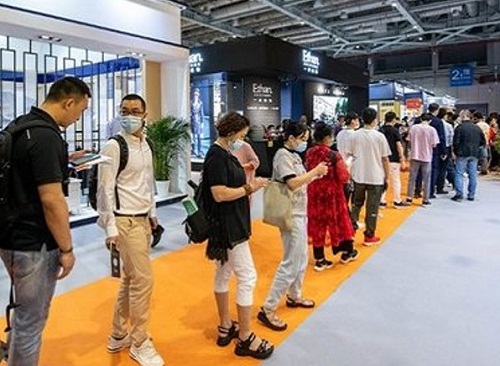 To be presented in the Impulses designer area, it features handcrafted innovative crochet techniques and fabrics. It will focus on the use of recycled elements such as leather, ribbons and barbed wire.
Sustainability will dominate all collections presented at Chic Shanghai. Kidswear brand Cofna will showcase a collection made from yarns created with recycled PET bottles while Jore Baudry’s womenswear line will focus on slow fashion. Menswear brand Kashiyama will highlight the recycling initiatives it has undertaken for the last 15 years.
Chic Digital to launch new programs
The Chic Digital zone will award companies meeting the criteria of sustainable production in cooperation with the media publisher China Fashion and WWD. It will expand its digital tools and social media networks by introducing new programs and services. One such program to be launched is the WeChat Mini Program that has integrates trade fair's e-catalog directly to coordinate the interests of the business partners. The functions of the mini-program are continuously being expanded with new developments and networking opportunities.
Finding the right partner
The fair will hold 36 matchmaking events enabling brands to find the right partner in Chinese fashion business on site. The Match-Making Zone will house brands including Folli Follie, Cocoon, Mo & Co, Eland, tanni, Versino, etc., online brands such as Elephant and Giraffe, Ayuko Studio, SunDayMerry, Artist Hui or Eggka. It will also feature e-commerce platforms such as Little Red Book, JD, Dou Yin (TicToc), Wang Yi Yan Xuan or Shein.
The share of e-commerce in China’s fashion business is expected to rise to 83.5 per cent by 2025, predicts Statista. The latest GlobalData report too states online fashion industry in China is projected to grow to $285,981.4 million through 2025. The report attributes the robust growth in e-commerce sales to COVID-19 pandemic. It estimates fashion sales in China to reach € 340,000 million. The Chic Shanghai exhibition hopes to tap this growth opportunity by building bridge between the fashion industry and the trade of supply and demand. It will offer participants an overview of current market developments and trends, says Chen Dapeng, President China National Garment Association and Chic.
Milan to host Emerging Talents show
Milan will host this year’s Emerging Talents trade show featuring three companies supported by Texbrasil and Fashion Label Brasil, carried out through partnerships between Apex Brasil (Brazilian Trade and Investments Promotion Agency), Abit (Brazilian Textile and Apparel Industry Association), and Abest (Brazilian Stylists Association), respectively.
Texbrasil brands Nay Sunswear Wear and VitorZerbinato, in addition to the Sylvie label, from Fashion Label Brasil, will exhibit their collections at the event.
Created in 2016, Emerging Talents Milan has already promoted 80 brands from 30 countries. The trade show includes a showroom, fashion shows, and business consultancy. In addition to promoting new designers, the event focuses on sustainability. It is a platform that brings people together and builds bridges between cultures, says Russ Ev, Creative Director
Fashion retail to grow by 23-25% till March 2022: Icra Ratings
One of the worst COVID-19 hit sectors, fashion retail may close the year with 23-25 cent revenue growth if there is no third wave, according to a report by Icra Ratings.
According to SakshiSuneja, , the sector head at the agency, with an improvement in the vaccination coverage, the fashion retail is expected to clip at 15-17 per cent from Q2 onwards, translating into annual revenue growth of 23-25 per cent in the year to March 2022.
This shall, however, remain lower by up to 20 per cent from the pre-pandemic sales, and thus the agency maintains its negative outlook on the segment and expects it to revert to pre-pandemic sales only by Q2 of FY23, she added.
Two other reasons for the optimism is the massive 55 per cent fall in rentals in Q1 of FY2022 and more adoption of online retailing to the tune of over 50 per cent jump in volume on-year.
However, the report warns that if there is a third wave, which virologists still do not rule out, it can potentially shave off up to 40 per cent of revenue. And even if the sector closes the year with a 25 per cent growth, it will still be 20 per cent lower than the pre-pandemic volumes. Therefore, the agency maintains its negative outlook on the sector and expects full recovery only from the second quarter of the next fiscal.
32nd GenNext winners to showcase collections at FDCI X Lakme Fashion Week
The winners of the 32nd batch of India’s most credible talent discovery program for upcoming designers – GenNext–will showcase their collections at the upcoming joint FDCI X Lakmé Fashion Week scheduled in October this year.
As per an Apparel Resources report, the applicants were required to submit a video montage of their ensembles to complement their presentation, post which shortlisted applicants presented their collections digitally to an expert jury comprising TarunTahiliani, PriyaTanna, AashtiBhartia, Director of Ogaan; SumatiMattu, Head of Innovations at Lakmé; GenNext Mentor Sabina Chopra and Head of RISE Fashion &Lifestyle,JaspreetChandok.
The ‘INIFID’s GenNext’ program has been recognized for identifying and providing young and talented designers an opportunity to enhance their skills and take centrestage in the fashion industry. So far, GenNext has established more than 200 plus designers in the country.
American Eagle Outfitters launches new premium denim label
US clothing company American Eagle Outfitters (AEO) has launched AE77, a new sustainably crafted premium denim label for men and women. As per a Spin Off report, the label offers timeless denim pieces and includes a repair and recycle concept. The collection leads with nine fits, advanced fits are made with vintage details and fabrics including selvedge denim.
AE77 also offers dresses and tops with feminine touches of lace, pintuck and ruffles as well as tops made of recycled cashmere, made in LA knits, Japanese flannel shirts, and vintage fleece. The label meets AEO’s highest water requirements, exceeding requirements for water recycling, water management, and wastewater. It uses sustainable techniques and machinery as well as green chemistry in jeans production to reduce or eliminate hazardous substances commonly used in the washing of denim. The fabrics are made from sustainable raw materials to all extents possible, including organic, recycled, or sustainably sourced through the Better Cotton Initiative.
The label will debut its first store in New York City’s SoHo neighborhood, with an e-commerce site to follow on October 15 and a second store by year end.











