FW
Calvin Klein rated as the most trustworthy brand
An iconic American brand, Calvin Klein has been rated as the most trustworthy fashion brand in the new Data Trust Index by Luxury Institute and DataLucent. The index measures the level of trust th
at digital consumers have in licensing their digital platform data and other personal data, to mass, premium and luxury brands in exchange for rewards and benefits.
French luxury market leader Louis Vuitton was ranked a very strong second. Banana Republic, a division of Gap Inc., was ranked third in a field of 24 well-known fashion brands (list at end of article). Six out of the top ten brands rated as being the most trustworthy with data were luxury brands. (In a similar study by the Luxury Institute and DataLucent, Macy’s topped a list of 12 large, multi-brand retailers in data trustworthiness.)
The survey was based on a nationally representative sample of 1,008 consumers ages 18-49, with a minimum income of $75,000 (total sample average income of $200,000), with 54 per cent male and 48 per cent female participation.
Around 83 per cent of all responders, including 89 per cent male and 78 per cent female said, they are willing to license their digital platform data, under their control, to brands they trust to use to serve their needs, and the needs of other consumers, in a personalized way.
India targets $100 billion textile and garment exports in 5 years
The government aims to achieve $100 billion worth of textiles and garment exports over the next five years. It has urged the industry to take advantage of a global market shift where China is pruning its market share in the labor-intensive segment.
In FY21, India’s textiles and allied product exports declined by 10 per cent to $30.4 billion due to the Covid crisis. In the first five months of this fiscal, exports jumped by 87 per cent on year to $16.6 billion, aided by strong economic recovery in key markets such as the US and the EU. Still, the target remains much too ambitious.
Earlier this month, the Cabinet approved a scheme to incentivize investments in setting up mega textile parks to build scale in the fragmented sector. It followed a Rs 10,683-crore production-linked incentive scheme for man-made fiber products and technical textiles. Export tax refund schemes like the RoDTEP and RoSCTL have also been launched in recent years to improve the country’s export competitiveness.
4th Supima Design Lab showcases cotton innovation
Held in Paris, the fourth edition of Supima Design Lab showcased innovations in cotton besides spotlighting emerging talent from its design competition.
As per a Women’s Wear Daily report, created using Supima Cotton, the designs were neatly arrayed in the gilded salons of the Hôtel de La Salle in the tony 7th arrondissement
In the adjoining room, Charles de Vilmorin took his position as one of this year’s leading designers — alongside Nix Lecourt Mansion, Mira Mikati, Tom Van Der Borght, Pierre Kaczmarek for his Georges Wendell label and Jordanluca’s Jordan Bowen and Luca Marchetto .
Marc Lewkowitz, President and CEO, Supima Cotton, describes the exhibition as an opportunity to visualize the potential of a material that can be traced down to the farm level — a sophisticated but costly process used by Kering — and put the finger on deeper issues like value reconsideration.
Changing body sizes drive Chinese lingerie market dynamics
 Chinese lingerie brands like Ubras, Candy La Vie and Sujiin are building their businesses in the domestic market by offering an inclusive size range.
Surpassing traditional Chinese lingerie-makers like Embry, Aimer or Cosmo Lady, these next-gen brands are ruling the estimated $64.49 billion market with their extended size offerings, product innovation and dynamic advertising.
China has always had people of diverse body sizes. As per a Women’s Wear Daily report, the country has 56 officially recognized ethnicities. There are also significant differences between northern Han and southern Han, the dominant ethnic group — which comprises women with larger busts.
Increasing obesity boosting market growth
According to research released from the medical journal The Lancet last November, China’s population is becoming increasingly overweight or obese. In 1985, an average 19-year-old female in China was 5 foot 2 inches tall, while males were 5 foot 5 inches. In 2019, those numbers grew to 5 foot 4 inches for women and 5 foot 8 inches for men, with the increase in men’s height clocking the largest gains in the world.
One of China’s top selling lingerie brands, Beijing-headquartered Ubras is an advocate for the one-size-fits-all bra idea in China. The brand offers a seamless collection of bras that are made from lightweight fabrics and do not have an underwire. These bras are suitable for all types of activities like sleeping, lounging, working out, traveling, being at the office, and pregnancy. The product also allies with the company’s digital-first model.
For all sizes and preferences
Similarly, Neiwai launched its Barely Zero collection featuring soft and highly stretchable bras that fit women up to D-plus cup. Another digital start-up Sujin offers bras that fit a DD cup and are available in all skin colors.
A startup dedicated to plus-size women, Candy La Vie is engaged in educating customers on the difference between large cup sizes and large band-size. Zhang Chengpu, Co-Founder and Creative Director, says, though the band sizes of Chinese women may be smaller, but many of them still require large cups as they have a large chest.
An influencer known for her curvy figure, Yang Tianzhen collaborated with Victoria’s Secret in May for campaign on body positivity. She also has her own plus-size clothing line, PlusMall that offers plus-size lingerie in bright colors.
Pakistan Textile: Competitive inputs, value addition can boost economic growth
 Recovering from the pandemic shocks, Pakistan’s textile exports are set to grow to $22 billion in FY22. Most of this growth will be driven by the introduction of supportive policies by the government and stabilization of the industry.
As per a Global Village Space report, Pakistan’s textile industry has yielded spectacular results in recent times. Boosted by increasing investments from industrialists, the industry is set to rise by 25 per cent annually from FY2022.
Market uncertainties, miniscule share to stall growth
However, the industry also faces certain challenges in the coming year. It is likely to be particularly troubled by the uncertainties in the cotton as well as currency markets. Also, the industry’s miniscule share of 1.7 percent in the global textile market may prove to be a cause of concern.
Another challenge the industry faces is the rise in cotton yarn prices. Globally, cotton prices have reached $1 per pound, sparking a debate over the need for a regulatory duty to be imposed on yarn exports. However, such regulatory duties can have adverse effects on the domestic market and hence, the government needs to abstain from such quotas.
The government needs to refrain from buying cotton at import substation from the local market and selling it at 10 percent below export parity price. It should also not subsidize the downstream industry as this puts farmers at a great disadvantage. A conducive environment has led to a 50 percent rise in cotton production in Pakistan this year. This is expected to surge the crop’s value to Rs 600 billion, thus giving farmers an additional benefit of Rs. 400 billion.
APTMA to set up new 100 textile units
APTMA and all textile industries have decided to pay international parity prices to domestic farmers to help them sustain themselves. APTMA has also set up the APTMA Cotton Foundation (ACF) to improve the cotton sector’s performance. The foundation aims to promote model farming techniques by creating cotton clusters and centers of excellence.
Pakistan fully utilizes its domestic cotton supply by exporting 84 per cent of the apparels made from cotton. The country’s synthetic fiber market is also booming with demand for athletic wear rising. However, it needs to upgrade its production techniques to compete in this market. It hopes, incoming investments will help in upgrading the industry’s technology and capture a higher share in the synthetic fiber market.
The current currency pressures in the industry can be attributed to the previous lack of investments. It is threatening to slow the growth pace of the large scale manufacturing sector in the Pakistan.
The textile sector accounts for 60 per cent of Pakistan’s total exports. The sector needs consistent support and investments to achieve economic growth. It aims to boost exports by setting up 100 new textile units with an investment of $5 billion.
Targeting $21 exports by FY2022-end
The industry can achieve its target of $21 billion textile exports by procuring energy at regionally competitive prices. For this, the government needs to introduce a long-term textile policy incorporating regionally competitive energy tariffs.
The government’s regionally competitive energy pricing policy has helped the industry expand its operations. However, to sustain this expansion, it needs to upgrade its current technologies.
Technology upgradation will not only help the industry diversify into other related sectors, but also enhance its position in the apparel value chain and redesign import duty suspension and refund programs for exporters. Pakistan’s textile sector can thus lead its economic growth by a consistent supply of competitive inputs and constant value addition.
British retailers aim for complete carbon neutrality by 2040
 Believing in the ability of brands and retailers to neutralize their carbon impact and leave a positive mark on the planet, last week, the British Retail Consortium (BRC) unveiled a series of ambitious targets for the next two decades. As per a Women’s Wear Daily report, the consortium aims to completely de-carbonize UK retail by 2040 by powering stores and warehouses with net-zero electricity by 2030.
To achieve its goal, the BRC aims to reduce carbon emissions from shops and logistics operations besides encouraging consumers to adopt a low-carbon lifestyle. The consortium’s action plan is being endorsed by around 60 British retailers including Burberry, Asos, All Saints, Marks & Spencer and Boots. Many of these fast-fashion retailers have been criticized for their wasteful practices and ignorance of workers’ well-being.
Rebuilding the industry with greener focus
By 2040, BRC aims to enable each of its UK customers to make purchases both in-stores as well as online, says Helen Dickinson, CEO. She believes,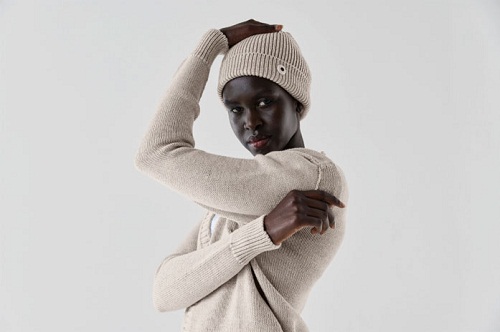 retailers can survive the pandemic-induced economic challenges by rebuilding the industry with a greener focus. Emerging UK brands can also build their businesses around carbon neutral supply chains as consumers are more likely to shop from sustainable and ethical brands, shows a recent survey by PwC.
Sustainable knitwear company, Sheep Inchas been able to achieve a carbon negative status by making biodiversity investments. The company dedicates 5 percent of its revenues to a number of carbon-insetting initiatives in farms impacted by over-use by fashion and agriculture industries. Each of the company’s garments comes with a tag that provides a full account of the item’s carbon impact.
Collaborating with like-minded suppliers
To achieve carbon neutrality, brands need to work with suppliers upholding similar values, says Edzardvan der Wyck, Co-Founder, Sheep, Inc. They need to adopt anew mind-set and weave it into their business’ margin structure, he adds. Sustainable label Dai, upholds the view. The specialist of wardrobe staples has been certified as a B Corporation having scored 97.4 points out of 200 available points.
Aiming for complete carbon neutrality by 2021, Dai has been offsetting carbon on 100 percent of its shipments for the past three years and aims to achieve a carbon negative status by this year-end.
Moda Spring Fair to offer the most diverse fashion buying destination
The four-day Moda Spring Fair will offer retailers the most diverse fashion buying destination in the UK. To be held from February 06-09,2022 in Birmingham, the fair will showcase a comprehensive and inspiring line-up of industry leading womenswear, jewellery, accessories, footwear, and sustainable brands from the UK and around the world.
A selection of confirmed footwear brands includes Superfit, Emu Australia and Emu kids, Xti and Xti Kids, Refresh, CAT footwear, Alpe, Fly London, Keddo, Blowfish Malibu, HOGL, Carmela, Mustang, Legero, Vionic, and Naturalista. The proposition for kids is also strong with a diverse offering across the show with kid’s giftware, toys, and apparel and within the dedicated kid’s footwear section Little Soles, visitors will see brands including Start-Rite, CAT kid’s footwear, Young Soles, and Petasil.
Within womenswear, Jayley, who had their best show ever in September, return for Spring. Other brands to look out for include LA RUSH, Saloos, Outdoor Leisurewear, Gill International, Jessica Graff, Sunco, Paradiso Couture, Beau Moda, Vijay Fashion, Goose Island, Perfection Clothing, Evylaure (accessories), Scream Pretty (jewellery), and Alice Collins. Louise Collins from Alice Collins says; “We have already confirmed Spring and Autumn Fair x Moda 2022 as they’re the only exhibitions which have fantastic footfall & where we meet existing stockists plus lots of new ones generating a massive increase in our sales. They have a great buzz and are a breath of fresh air! Makes absolute sense to combine Moda with Autumn& also Spring Fair. And we needed the 4 days!”
Visitors will discover new designs from returning brands NOMADS, Zelly and Earth Squared. The show also welcomes sustainable and recycled eyewear brand Waterhaul, and Pretty Pink Jewellery who use only raw materials ethically sourced from Brazilian cooperatives in the Amazon rainforest to create their jewellery.
A host of Turkish brands are returning including ready to wear and contemporary brand Hukka Design and Jus De Pommes, and footwear brands Charmia, Pandora Shoes, Rovigo & Divino Shoes.
The ever-popular Moda VIP Programme (previously known as the Moda Hosted Buyers Programme) continues for Spring Fair and demonstrates the show’s commitment to supporting its customers and help ensure it delivers a good return on investment.
Jiangsu (Shengze) Textile Expo to promote collision of textiles with fashion ideas
Opening on October 20, 2021, the 10th Jiangsu (Shengze) Textile Expowill promote the collision of the textile industry with fashion ideas and integrate popular fabrics into diversified designs.
As per China Textiles report, the three-day exhibition will include one industry conference, several fashion release shows, two fashion design competitions, four industry speech exchanges, five commercial communication activities, four trend live broadcasts and more than 10 MINI catwalks.
This expo will continue online and offline dual-track driving mode, and the "Cloud Exhibition" will be held at the same time. Exhibitors can publish product information through the "Dongfangyun APP", and the audience can also publish their demands online, making it easy to talk to exhibitors with clicks. With the development of the trend of e-commerce, "online celebrity Live Broadcasting" has become a new marketing model and quickly became popular. During the Textile Expo, the organizers will formulate the live broadcasting marketing strategy according to the needs of brands and the core of communication, and will broadcast live and bring goods to more than 40 exhibitors at the exhibition site.
Suryalakshmi Cotton Mills posts Rs 4 crore profit in Q2FY2021-22
For its second quarter ending September 30, 2021, Suryalakshmi Cotton Mills posted net profit of Rs. 4.2203 crore for the period ended September 30, 2021 as against net loss of Rs. 6.8221 crore for the period ended June 30, 2021.
As per Equity Bulls, the company reported total income of Rs. 185.4454 crore during the period ended September 30, 2021 as compared to Rs. 151.9475 crore during the period ended June 30, 2021.
The company has reported EPS of Rs. 2.53 for the period ended September 30, 2021 as compared to Rs. 4.09 for the period ended June 30, 2021.
On a year-on-year basis, Suryalakshmi Cotton Mills posted a net profit of Rs.4.2203 crore for the period ended September 30, 2021 as against net loss of Rs.0.0455 crores for the period ended September 30, 2020.
The company reported total income of Rs. 185.4454 crore during the period ended September 30, 2021 as compared to Rs.99.6357 crore during the period ended September 30, 2020.The company reported EPS of Rs.2.53 for the period ended September 30, 2021 as compared to Rs.0.03 for the period ended September 30, 2020.
DiloGroup to participate in Techtextil India Show 2021
DiloGroup plans to participate in the Techtextil India show 2021. The group will offer tailor-made production systems in the German pavilion and latest equipment ranging from fiber opening to the finished felt.
The group’s Hyperpunch HαV technology allows a more uniform stitch distribution in the preneedling process especially in combination with the new needle pattern 6000X. In a complete needling line this felt homogenization process can be improved further by using the new needle pattern 8000X which is a milestone in the needle pattern development process and results in endproduct surfaces with low markings over a wide range of advances/stroke.
The “3D-Lofter” which was first presented during ITMA 2019 in Barcelona offers a wider range of nonwovens applications by exploring the third dimension. A series of single web forming units which work according to the aerodynamic web forming principle deliver defined fibre masses in varied patterns on a base needlefelt. A stress oriented production of technical formed parts resulting in fibre savings or patterned Di-lour or Di-loop felts are two examples for this technology which explores new application areas for needlefelts.
The 3D-Lofter technology may also be used “inverted” for filling up bad spots in web mats and thus achieves a better homogeneity of e. g. spunlace, thermobond or airlay products. The DiloLine 4.0 concept offer I4.0 modules which not only support the user but also facilitate quality control and maintenance by a maximum data transparency in production and control of operation. The Dilo solutions “Smart Start” for a fully automatic start of the production line or “DI-LOWATT” for energy savings are accompanied by Siemens solutions which can be selected via App or Data Cloud “MindSphere”.
With more than 370 installations delivered to the nonwovens industry worldwide, DiloGroup has the necessary know-how and the complete equipment portfolio to engineer the perfect production line for any product specification. The efficiency of Dilo production lines is the result of long-term research work and experience.