FW
Rieter sees huge jump in orders
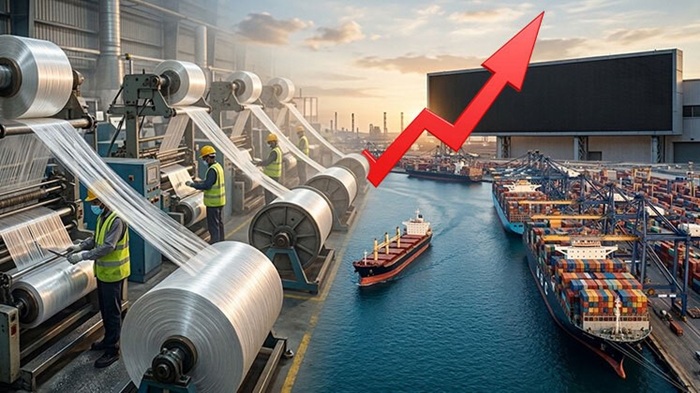
Characterized by rapid market recovery combined with a regional shift in demand, in Q3 Rieter has reported a 294 per cent year-on-year growth in order intake, over the same period of 2020.
A major reason for this regional shift in demand has been the growing costs in China. This is leading to increased investments outside the Chinese market. The orders came primarily from Turkey, Latin America, India, Pakistan and China.
Rieter is a Swiss supplier of systems for short-staple fiber spinning. Demand for new systems is expected to gradually return to normal in coming months. The machines and systems business achieved 447 per cent jump in order intake during the first nine months of 2021, attributed to the regional shift in demand. While the components business recorded a jump of 95 per cent after sales were up 123 per cent.
The realization of sales from order backlog continues to be associated with risks, in the light of bottlenecks in material deliveries and freight capacities as well as the ongoing pandemic in countries that are important for Rieter.
China’s garment industry profits rise
China's garment industry reported higher revenue and profit in the first eight months of 2021. From January to August, the combined operating revenue of 12,520 major garment companies was up 9.6 per cent year on year. Total profits of these companies rose 9.5 per cent from a year earlier while the combined output expanded 12.9 per cent year on year to 15.2 billion pieces.
The country's exports of garments and accessories increased 28.1 per cent year on year.
Brands lag in emission disclosure
Nearly 62 per cent of the 250 biggest brands publish their carbon footprint in their own facilities, says responsible fashion advocacy group Fashion Revolution. However, most carbon emissions occur at processing and raw material levels. Only 26 per cent of brands disclose emissions information at the processing and manufacturing level, and only 17 per cent do so at the raw material level. More than one third big brands have published their progress towards reducing the use of virgin plastics for packaging, but only 18 per cent did so for textiles deriving from virgin fossil fuels.
There has been slight progress with regard to supply-chain transparency. Almost 27 per cent major brands now disclose some of their processing facilities, compared to 24 per cent last year. Additionally, 11 per cent brands publish some of their raw material suppliers, up from seven per cent last year. According to the report, shoppers would like more transparency among fashion brands: They also believe ethical labor policies are important. Shoppers are interested in purchasing sustainable clothing but don’t know how or where to find sustainable clothes. More than a third say, if there were a store for sustainable clothes, they would do all their shopping there.
Fashion retail in crisis as costs and delivery issues continue to persist in 2021
 With profits hitting record-low levels in 2020, the fashion industry’s form was hit hard by the COVID-19 crisis in 2020. The pandemic continues to spell doom in 2021, with fashion retailers still experiencing delayed deliveries amid more online shopping. A recent report by equity analysts Michael Field and David Whiston studies the impact of these industry disruptions on fashion manufacturers and retailers across the world.
Published in the Morning Star, the reports cites China as being worst-hit by COVID-19 hit. China accounts for around 36.5 per cent of all fashion exports by a wide margin. The pandemic compelled manufacturers to shutdown factories and disrupting operations of retailer’s who relied on exports. The disruptions intensified as China reopened its economy around April 2020, when other countries announced fresh lockdowns. This destabilized China’s production and made its shipping schedules unreliable.
However, the disruption benefitted manufacturers located closer to home for companies like Inditex . The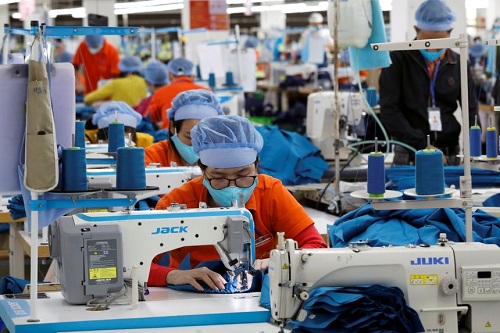 vulnerability of supply chains will compel retailers to diversify sourcing in future.
Demand collapse leads to 90% drop in sales
Demand for fashion collapsed in the initial months of 2020 as stores remained shut. This caused fashion sales to fall by almost 90 per cent in some regions. Many retailers had to cancel their orders, halting production of new clothes and accessories. This led to a rise in inventory levels for manufacturers who also had to pay for the costs of existing orders
As per a Centre for Global Workers Rights report, around 72 per cent retailers refused to pay for their raw material costs while 91 per cent didn’t pay for production costs.
Online retail surges as stores remained closed
Online shopping surged during the lockdown period. The percentage of online sales of UK clothing giant Next in its overall sales jumped from 45 per cent in 2019 to more than 70 per cent in 2020. However, the rate of returns for goods purchased online also increased to 35 per cent during the year, shows a survey from GXO.
A few players managed to beat this trend and grow their online sales significantly. These companies closed their brick-and-mortar stores and focused on the new cutting-edge e-commerce technology. An example is Nike, which closed a few of its stores in Vietnam to focus on online operations.
Few retailers beat forecasts
The pandemic has raised costs and other consumer related concerns for fashion retailers. However, a few retailers have been able to beat analysts’ forecasts. For instance, activewear and basic apparel wear company Hanesbrands 5.8 per cent sales growth to $1.79 billion in the third quarter (Q3) of FY21 ended on October 2, 2021, over the same period of previous fiscal. The company’s net income for the three-month period expanded to $151.7 million (Q3 FY20: $103.3 million). All this despite the lockdown and disruptions
Increase in Chinese dye prices affects Tirupur garment units
Garment makers in Tirupur are reeling under severe losses because of increase in the prices of dye and chemicals. Prices of dyes, chemicals and wetting agents used for coloring fabrics have increased over 30 per cent in the last few months.
Tirupur is the knitwear capital of India. Almost all dyes and chemicals are imported from China by traders based in Gujarat and Maharashtra and distributed throughout the country. However, due to extreme power shortage in China, chemical production has reduced by over 25 per cent. Besides, the economic crisis triggered by the Covid-19 induced lockdown and China's climate change policy disrupted the supply chain and has spiraled on importers from India.
Dyeing is an important process in the garment and textile manufacturing process. The cost of dyeing and other chemicals increased over the last five months leaving exporters’ resources stretched. Since the contract between garment units and exporters is pre -determined, exporters cannot revise the price when input cost increases. Whenever exporters send a quotation to the buyer or importer, they mention the current price and cost. It takes around two weeks for a deal to be finalized. If there is a rise in pricing in the meantime, they cannot renegotiate or bargain with the customers and must bear the loss. Small units are affected the most by the fluctuating prices.’’
Crocs Q3 revenue up 73 per cent
US-based footwear maker Crocs’ revenue for the third quarter rose 73 per cent compared to the same period in previous year. Crocs experienced strong revenue growth in all geographies during the quarter but saw particularly impressive progress in the Americas, where revenues were up 94.5 per cent on a constant currency basis year over year.
In Europe, the Middle East and Africa sales rose 43.8 per cent in constant currencies while in the Asia-Pacific region they increased 21.2 per cent. Direct-to-consumer sales at the company rose 60.4 per cent while wholesale revenues increased 88.2 per cent. Digital sales increased 68.9 per cent and represented 36.8 per cent of Crocs’ total revenues during the quarter, compared to 37.7 per cent in the third quarter of 2020 and 32.2 per cent in the third quarter of 2019.
For Crocs the third quarter was exceptional, underscored by an industry-leading operating margin of 32 per cent. Despite the temporary disruptions, it expects 2022 revenues to grow over 20 per cent from 2021 fueled by the strength of its brand and consumer demand globally. Crocs also increased its full-year financial outlook. It now expects to report revenue growth of between 62 per cent and 65 per cent in fiscal 2021.
Bangladesh RMG makers want cash incentives for imported raw materials
Garment makers in Bangladesh have demanded cash incentives for exporting garments made with imported yarn. At present, only garment exporters who purchase raw materials from local textile mills get incentives. They also want incentives to be calculated directly on export price, rationalization of depreciation or wastage rate of raw materials in garment manufacturing, and elimination of harassment in the process of paying VAT and customs duty. Calculating incentives directly on export prices is expected to reduce the chances of all irregularities committed by the exporters.
Garment manufacturers came up with these demands as discussions are going on to increase the price of yarn in local market in view of the increase in the price of cotton, raw material for yarn, in the international market. Garment manufacturers have also sought permission to import yarn through land ports outside Benapole as part of removing the existing barriers in importing yarn from the neighboring countries. They want capacity building at the land ports and proper facilities for testing the imported goods be ensured before allowing import of yarn through land ports outside Benapole. Besides, readymade garments makers have demanded that the government allow partial shipment of goods against a letter of credit.
Lenzing Group launches Tencel branded lyocell fibers
Austria’s largest viscose producer, Lenzing Group has launched matte TencelTM branded lyocell fibers to increase its sustainable offerings. The new fiber type was created especially to scatter light and completely eliminate shine in denim applications, making indigo-dyed denim fabrics more flexible.
Tricia Carey, Director-Global Business Development Denim and Americas, Lenzing AG’ states, as a fiber manufacturing leader, they work closely with clients and mill partners to achieve their product specifications. They heeded their partners’ demands for less gleaming denim fabrics. Lenzing is at the forefront of the battle for comprehensive sustainability by employing botanic raw materials and biodegradable cellulosic fibers.
The use of matte Tencel Lyocell fibers increases denim design possibilities while reducing the environmental impact of the resultant fabric and garment, integrating function and beauty. Lenzing is fully responsible for its production processes, which include the use of fibre biometric identification to provide physical identity for every TENCEL branded fibre. The new matte TENCEL Lyocell fibers are entirely traceable thanks to this innovation, ensuring both consumers and brands that the raw materials used are supplied sustainably. In the long run, informed decision-making by all parties will contribute to the denim industry’s overall sustainability.
Hermes International’s Q3 revenues rise by 31.5%
A remarkable performance in the Greater China market, helped Hermes International increase its third quarter revenues by 31.5 percent year-on-year.
As per a Women’s Wear Daily report, the French luxury firm’s revenues in the three months to September 30 increased by 40.3 per cent to €2.37 billion compared with 2019, considered a more reliable benchmark due to the disruption caused by the coronavirus pandemic last year.
This represented an increase of 31.2 percent versus 2020, beating a consensus of analyst estimates, which had called for a 23.8 percent rise in like-for-like sales. The better-than-expected growth rates confirmed Hermès as one of the top-performing luxury brands this year.
The group said that despite a high comparison base in the fourth quarter, it is approaching the end of the year with confidence.
However, it cautioned that that its second-half operating profit margin could be much lower than the 40.7 percent recorded in the first six months of the year, due to foreign exchange headwinds, higher employee costs and a lower contribution from leather goods, as per a Barclays report.
The group’s activity in the third quarter increased by 23.4 percent at constant exchange rates in Asia thanks to the strong performance in Greater China and other countries in the region, despite new restrictions in Australia, Thailand and Malaysia.
Its sales in the Americas jumped by 48.4 percent , while France recorded a 46.7 percent increase. Sales in the rest of Europe increased by 36.4 percent.
Canali teams up with Li Gong for a capsule collection
Luxury men’s wear brand Canali has decided to team with one of the country’s most interesting emerging brands Li Gong to develop a capsule collection: 8ON8. To be called Canali Travel With 8ON8, the capsule will be sold at the brand’s store in China and in some of its boutiques across the globe, as well as at a selection of international multibrand shops. With prices in line with Canali’s collections, the capsule will retail from $300 for basketball hats to $3,300 for coats.
As per a Women’s Wear Daily report, the capsule includes 11 styles combining Canali’s sartorial expertise with Gong’s colorful, retro futuristic aesthetic, ranging from T-shirts, puffers and hoodies to relaxed suits, silk pajamas and impeccable coats with a young, edgy vibe. The offering is completed by loafers with transparent soles, colorful sneakers, as well as baseball caps, small fabric pouches with drawstrings and printed leather luggage pieces.
Canali believes, delivering capsules with external designers enables the brand to experiment with its aesthetic and heritage with a point of view that is meaningful for specific markets. This capsule created a lot of interest in international retailers because it offers a fresh stylistic image, but at the same time is backed by the credibility of a trusted historic company, he adds. id.
The Italian men’s brand debuted in China two decades ago and operates a retail network of 21 stores in the country.