


FW
Crocs to buy Italian footwear brand Heydude
Crocs plans to buy privately owned Italian footwear label Heydude. The rubber clogs maker looks to cash in on the pandemic-led surge in demand for casual shoes. Consumers stuck at home during the lockdowns last year ditched dress shoes for more comfortable footwear, benefiting companies such as Crocs. Demand has remained firm this year.
Heydude brings about 43 per cent of its sales from online channels and is known for its lightweight casual shoes. In comparison, Crocs brings in 37 per cent of its sales through its e-commerce division. Heydude has remained insulated from production constraints caused by factory closures in Vietnam, as it predominantly makes its footwear in China. However, the brand has been affected by global freight issues and has seen significant delays and elevated costs in terms of getting its products to the United States.
Crocs which expects its 2021 revenue to grow 65 per cent from last year has launched the All-Terrain Clog and the Classic Slide in a joint collaboration with Pleasures, a street wear brand which draws inspiration from street style, punk and grunge. The latest joint collection unveils two innovative designs that deliver a sleek futuristic feel with all the comfort Crocs is known to provide, while still keeping the trendy, punk and grungy look that dominates Pleasures’ designs.
Bangladesh garment exports on the rise
Bangladesh’s garment exports to the US and the EU increased between July and October of the current fiscal year compared to the corresponding period of the last fiscal year. Bangladesh has two main export destinations for garment and its products -- the US, which accounts for 24 per cent of the shipments, and the European Union (EU), which accounts for 64 per cent.
The country’s garment shipments have continued to attain impressive recovery, largely driven by volume, as the price hike rate has been very low, with normalcy restoration in the global supply chain from the pandemic's severe fallout. A new study by the Centre for Policy Dialogue (CPD reveals the volume-driven export growth has had important consequences for bottom tier entrepreneurs and their falling profit margins. The rise in productivity is not being realised through higher prices, although it is helping Bangladesh's apparels remain competitive. In the US market, the 23.8 per cent growth in export earnings was mostly driven by volume, which rose by 19.8 per cent, whereas in contrast the rise in price per dozen was a mere 3.3 per cent. Export earnings from the EU rose 8.9 per cent against the backdrop of a rise in volume of 7.9 per cent as against the rise in price by an insignificant 0.9 per cent.
Luxury brands take to sustainability, digitization for long-term growth
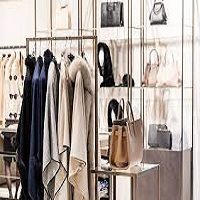 The luxury market surprisingly proved resilient to this period of great anxiety caused by the pandemic. Deloitte's latest Global Powers of Luxury Goods report shows, over 50 per cent of top 100 companies made profits during this period with 13 posting double-digit net profit margins even as the FY2020 revenues of the top 100 companies declining to $252 billion from $281 billion in the previous year.
An annual publication featuring the world's top 100 largest luxury goods companies and the trends shaping the market, the Global Powers of Luxury Goods ranking is based on consolidated luxury goods sales in FY2020. Although the brands listed in the ranking have built their reputation on the basis of the quality of their products, they are shifting to more sustainable practices in order to respond to the growing urgency to act on climate change.
Many of these companies are incorporating sustainability into design and production of their goods. For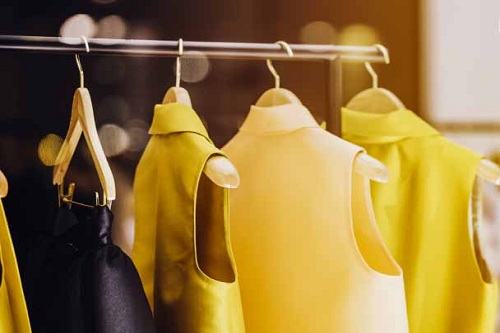 instance, Salvatore Ferragamo, Paul Smith and Hugo Boss among others are using food waste to produce sustainable materials.
Digital solutions and products
Brands are also adopting digitalization as a part of their long-term strategies. They are refining or developing new digital solutions and creating new products like the non-fungible token (NFT), which represents ownership of a digital (cryptographic) item or asset created through blockchain technology
Louis Vuitton has designed a customized travel case for its world championship cup trophy along with other assets. For this, the company has partnered Riot Games the creators of League of Legends. The brand has also launched a real capsule collection inspired by the video game. Gucci has partnered with auction house Christie's on a four-minute NFT video called ‘Aria’ as a part of its Fall 2021 collection. These creative expansions into the digital world are providing an opportunity for luxury brands to market their products to the next generation of clients known as the Gen Alpha.
Strong sensibility to sustainable lifestyles
Born in the digitalized and globalized 21st century, Gen Alpha clients comprise over two billion consumers across the world. Most are digitally literate and use gamification in daily lives. These customers are also keen social media users and reliant on the influencers' opinions. They are expected to develop a strong sensibility towards a sustainable lifestyle. To engage these digital natives, luxury companies will continue to grow their e-commerce businesses. They will form more partnerships with e-commerce players and social media providers while embracing the changing preferences and habits of their target markets.
Weavers across Bangladesh hit by rising yarn prices
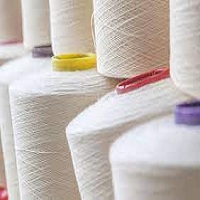 Amid rising raw material prices in the international market and increasing transportation, weavers across Bangladesh are worried over a steep rise in yarn prices over the past three months.
As per a Business Standard report, many weaving mills across the country have cut down production to tide over escalating raw material costs. A further rise in yarn prices may force them to shut down completely, says Md Nannu Ali Khan, Secretary, Chawla Textile Industry Owners' Association. Almost 70 per cent of the country's weaving mills capacity now remains unused as yarn prices have increased over 50 per cent in three months. Besides, 90 per cent of the operational factories are running only one shift a day, he adds. Abnormal price rise is also pushing around eight lakh weavers in Sirajganj, Pabna, Tangail, and Kushtia away from their age-old profession. Many weaving mills have already stopped production due to mounting losses.
Production reduced or stopped completely
The main weaving centers across Bangladesh are Mabhabdee and Baburhat in Narsingdi, and Araihazar in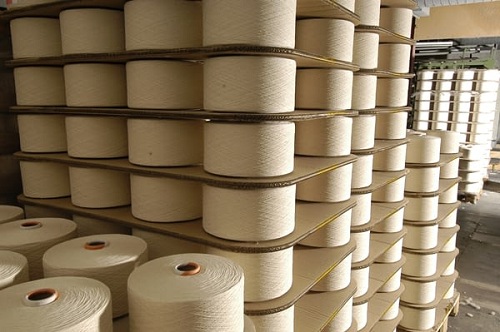 Narayanganj. The Chawla area of Narsingdi houses 300 weaving mills employing 24,000 direct workers. Many have either reduced or shut down production due to a rise in yarn prices. Md Noyon Mia, Owner, Sanzita Textile is using only half of the factory's capacity that too only on the night shift. Around 90 per cent weaving mills in this area now remain closed during the day and operate at 60 per cent capacity during night.
Md Nannu Ali Khan, another industrialist of the area, has two factories with 100 power looms. One is completely out of operation now while the other is open at 50 per cent capacity. Local spinning mill owners have increased yarn prices at an unusual rate, complain weaving mill owners. This hike is much higher than the rate of cotton price hike in international market. However, spinning mill owners’ claim, yarn prices have increased due to a rise in cotton prices in the international market. To resolve the crisis, BTMA has formed a standing committee led by Khorshed Alam, Former Director.
Clothing factories set up in Keraniganj and areas by River Buriganga in Dhaka cater to nearly 70 per cent of garment demand across Bangladesh. These factories are in dire straits with at least 50 per cent traders in the area losing their capital. Some factories have completely shut down due to yarn prices.
Handloom workers hit hard as sales decline to half
Unemployment has forced some workers in spinning yarns to switch professions. This has caused a crisis amongst artisans. The closing of markets for a long time has made it impossible for weavers to sell saris worth lakhs of taka, says Fazlur Rahman Talukder, President, Sirajganj Handloom and Powerloom Owners' Association. Retailers says, they find it difficult to convince customer that yarn prices have increased. This is resulting in a decline in sales to less than half of normal.
Turkey a growing market for Indonesian fiber and yarn
Turkey is one of the important export destinations for Indonesian synthetic fiber and yarn products, says Secretary General of the Indonesian Fiber and Filament Yarn Producers Association (APSyFI) Redma Gita Wiraswasta. Fiber products such as staple fibers of viscose rayon and single yarn are a few textile products offered by Indonesia in a counter-trade agreement with Turkey, one of Indonesia's main trading partners. Fiber and yarn producers in Indonesia have expressed interest in trying out a counter-trade scheme in trading these products. Trade returns are considered as an alternative for market penetration in the midst of trade barriers that are applied in the destination country.
Turkey accounts for 10 per cent of Indonesian fiber and filament yarn exports. Trade compensation is an alternative considering that several Indonesian fiber products are subject to anti-dumping duties in that country. Meanwhile Indonesia believes the Regional Comprehensive Economic Partnership (RCEP) will open up opportunities to increase exports of footwear. The country’s shoe exports to RCEP countries reached 29 per cent of total exports in 2020 followed by the United States at around 27 per cent. RCEP participating countries are the second largest footwear export destination for Indonesia after the European Union. RCEP countries have become an important market, especially China, which showed a large increase in imports in the period 2019 and 2020.
Bluezone shifted to May
Denim trade fair Bluezone which to be held in Germany, January 2022, stands cancelled, says Munich Fabric Start Exhibitions. Reason: rapidly increasing infections of Omicron variant across Europe. Instead, Bluezone will be reimagined as a standalone event dedicated to denim innovation. The new format will take place May 3 to 4, 2022, alongside Keyhouse, a segment dedicated to textile technology. This opportunity arises from the unique seasonal rhythm of the denim and innovation segment. This puts Bluezone just two weeks before Denim PV that takes place in Berlin from May 17 to 18, 2022.
September 2019 edition of Bluezone hosted more than 100 international exhibitors presenting their newest developments for fall /winter 2020-21 while increasingly focusing on transparency, environmentally friendly production and conscious consumption.
Over 20 Bluezone exhibitors joined forces with designers to create an innovative vision of denim. Naveena Denim presented Zevolution, a denim made of environmentally friendly fibers instead of cotton, and Retrotech, a modern vintage cotton with a stretch mixture. Bossa launched its new Eversoft fabric selection with new finishing technologies that deliver extreme comfort and supersoft touch. Tejidos Royo presented its foam indigo dyeing technology that cuts water consumption by 100 per cent, chemical use by 89 per cent and energy consumption by 65 per cent.
Bangladesh apparel exports to EU up 16 per cent
During July to October 2021 Bangladesh’s apparel exports to the European Union were up 16 per cent. Bangladesh’s apparel exports to Germany grew 13 per cent in this period, says BGMEA. Exports to the United Kingdom grew by 16 per cent while exports to Spain grew by 25 per cent. Apparel exports to France grew by eight per cent. Apart from these markets, Poland, the Netherlands, Italy, Belgium, Denmark and Sweden also remained positive in their imports from Bangladesh during July to October ’21. In fact Europe is Bangladesh’s main export market for readymade garments.
Year, 2021 was a comeback year for the readymade garment export industry of Bangladesh and the European market remains as one of the top export destinations of the country despite Covid being still a danger in EU countries. Europe has once again become the epicenter of the pandemic, with many European Union nations recording the highest Covid cases in recent days. Among Bangladesh’s exports to the EU, the top four export destinations, Germany, UK, Spain and France, account for 67 per cent of Bangladesh’s total readymade garment export value to the EU markets, while the rest is shared by the rest of 24 countries.
Lee Jeans to offer a line for children in EMEA market
Lee Jeans will introduce a children’s collection in the EMEA (Europe, the Middle East and Africa) market in July. The initial fall/winter 2022 collection, which will be produced under license by Brand Machine Group (BMG), will offer boys and girls up to 16 years the complete Lee look. The collection will include the heritage brand’s signature denim styles, tops and accessories. The aim is to introduce Lee to the next generation of brand enthusiasts. The line will go to Lee stockists and children’s wear specialist retailers. It will also be available at Lee-owned and Lee-operated stores. BMG will work across the EMEA region. The focused territories will be UK, Germany, Scandinavia, Benelux (Belgium, the Netherlands and Luxembourg) and the Middle East. BMG is a UK-based licensing specialist and will be sourcing sustainable materials for the children’s collection.
The collection is another example of Kontoor Brands’ expansion strategy. Kontoor is Lee’s parent company. Children’s styles were a part of Lee’s collaboration with H&M earlier this year. Made from post-consumer recycled cotton and organic cotton and featuring non-leather back patches made from cork and jacron paper, the denim collection demonstrated the brand’s increasing focus on responsible production. Garments were made with water-saving dyeing processes and low-impact, third party-verified washing methods.
Bangalore to host Apparel Sourcing Fair in March
Apparel Sourcing Fair will be held in Bangalore, March 4 to 6, 2022. It is expected to feature over 500 garment and fashion businesses. The trade show will link garment manufacturers with distributors, retailers, and wholesalers, among others. It will also be creating networking opportunities to enable businesses to expand their distribution networks and gain orders, the trade show will facilitate trend forecasting for the coming season and disseminate information on upcoming industry trends.
The trade show expects to draw industry crowd of over 50,000 visitors over the course of the three-days. The Fabrics and Accessories trade show will run alongside the Apparel Sourcing Fair at the same venue. The sister event will feature product categories including apparel fabrics, fabric trimmings, fabric embellishments, fabric services, men’s wear, women’s wear and children’s wear, embroidery threads, sequins and beads, tassels, and more. The trade shows will run with Covid preventive measures in place.
Bangalore Fashion Week was held on December 16 and 17, 2021. It focused on India’s crafts and craftspeople and featured artisan-designers. Short video app Chingari partnered with Bangalore Fashion Week to hold a contest to find models to walk the runway. Chingari invited its video creators to create their own videos on the app showcasing different outfits and their runway walk using music from the Chingari library.
London Textile Fair shifted from January to March 2022
London Textile Fair will be held March 22 to 23, 2022. The original dates for the event was January 11 and 12 but I now postponed as Covid cases continue to rise across the UK amid the spread of the Omicron variant. The situation in the UK is very uncertain due to the strong surge of the new Coronavirus variant. UK recently imposed new restrictions, which include the advice of working from home whenever possible. Further and more stringent restrictions are expected before the end of year.
London Textile Fair is the UK's premier platform for fashion fabrics, clothing accessories, print studios and vintage garments. It provides manufacturers and their agents with the opportunity to showcase their products to the most influential British buyers and designers. For the January 2019 show there were more than 500 exhibitors, up from 472 last season. Mostly from Europe the comprised textile manufacturers from Turkey, Italy, Portugal and the UK; buyers from several big-name brands and retailers attended, including River Island, Karen Millen, Oasis, Ted Baker, Jaeger, John Lewis, Boden, Mr Porter and Gieves & Hawkes. Demand for sustainable fabrics was one of the biggest trends at the show. Interest in sustainable alternatives was at an all-time high. There was a surge in interest for recycled fabrics and for BCI cotton.











