FW
Year 2022 will be one of the best years for luxury fashion, say analysts
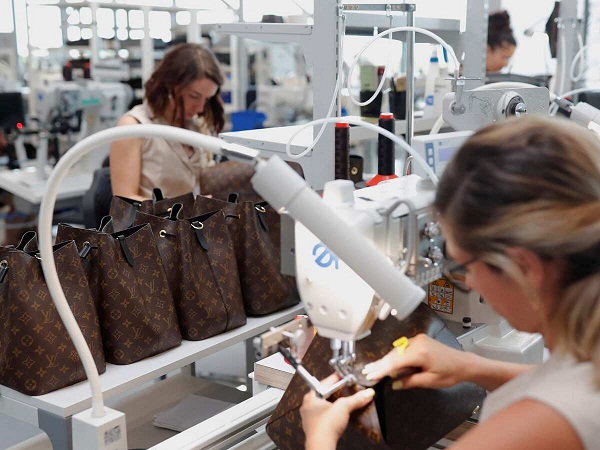
Pandemic-led supply chain disruptions have caused product shortages across the fashion industry. Luxury fashion; especially, has been a key sufferer of this, says the annual report, ‘The State of Fashion,’ by Business of Fashion and McKinsey. Supply chain disruptions have affected around one in eight businesses across the world. Raw material and component shortages, transportation hurdles, unavailability of staff and rising shipments costs have had a negative impact on around 85 per cent of fashion businesses.
Disruptions to curb overproduction
The industry is likely to face more disruptions in future’ especially at the retail level. However, analysts believe, this will compel it to focus on customers’ needs rather than on trends. Brands too will also focus on products that confirm to their ethics and philosophy, says couturier Amit Agarwal.
Priyanka Modi, Co-Founder and Creative Director, AMPM, views, small and medium-sized businesses continue to face minimum order quantity issues as mills or large vendors demand high MOQs or prices for smaller quantity of products. This aggravates their supply chain issues. Couture-based brands suffer more as they face acute labor shortage, opines Payal Singhal, Designer based in Mumbai. It limits their production, especially of embroidered products. This inevitably adds to the prices for end consumer, she adds
Rental fashion to grow in importance
In 2022, fashion prices are expected to continue rising, encouraging buyers to limit purchases and focus on high-value products. It will also encourage consumers to opt for renting fashion rather than buying it. The pandemic has shifted consumers’ focus from popular to niche and unique products, notes Aggarwal. It has made hashtags such as #vocalforlocal and #handmadeinindia a regular part of the digital landscape. However, customers need to be cautious while buying such products as they could be fake items or cheap replicas of original products, adds Singhal.
Industry to be more organized
One of the positive outcomes of the pandemic has been the discipline it has brought within the industry, says Modi. The industry has become aware of the hazards of over production and also learnt to manage inventories efficiently, she adds. Her own label has also grown as a complete solution for a women’s ready-to-wear wardrobe, she adds.
Aiming to redefine bridal couture, Aggarwal has opened a flagship store in Colaba, Mumbai while Singhal has opened her second store in Mumbai besides acquiring a space in Delhi’s multi-brand store Aza. The pandemic is forcing these brands to reinvent themselves to match consumers’ changing demands. These factors are making 2022, one of the best years for the fashion industry.
International Conference on Cellulose Fibers 2022 to be held in hybrid format
The International Conference on Cellulose Fibers 2022 will be hosted in a hybrid format from February 02-03, 2022 in Germany. The exhibition will focus on physical attendance under strict 2G+ Corona regulations:
More than 160 participants from 24 countries have already registered for the conference. Online participants will enjoy the advanced quality of a special “Zoom Conference” software, which allows chatting with your fellow online participants as well as with sponsors
The conference’s advisory board has nominated six highly interesting products, ranging from cellulose made of orange- and wood pulp to a novel technology for cellulose fibre production. The presentations, the election of the winner by the conference audience (online voting) and the award ceremony will all take place on the first day of the conference.
Huntsman Textile Effects showcases performance apparels solutions at Columbaitex 2022
On January 25 to 27, 2022, Huntsman Textile Effects showcased complete suite of solutions for performance apparel, technical textiles and casual wear at the Colombiatex de las Américas 2022. The company also introduced latest addition to the third generation of its revolutionary Avitera Rose Se polyreactive dye range at the three-day international exhibition.
The Avitera Rose Se dye delivers brilliant bluish-red shades while reducing the water and energy required for production by up to 50 per cent and increasing mill output by up to 25 per cent or more. It also significantly outperforms the best available dyeing technologies for cellulosic fibres and blends in terms of value by reducing recipe costs, minimising processing costs and eliminating reprocessing, Huntsman said in a press release.
Another water-saving innovation introduced by Huntsman is Eruioibe E3-Save. This is an all-in-one textile auxiliary for polyester processing that allows pre-scouring, dyeing and reduction clearing to be combined in a single bath and eliminates the need for anti-foaming products. This shortens processing time and saves water and energy.
Huntsman Textile Effects also presented an end-to-end solution for achieving full whites and consistent shades on rPET with right-first-time quality. This eco-friendly rPET processing solution includes pre-treatment chemicals, fluorescent whitening agents, state-of-the-art washfast dyes, and finishing solutions for high-performance protection and comfort.
The company partnered Sciessent, Huntsman Textile Effects to bring revolutionary antimicrobial and odour-control solutions to Colombiatex. These solutions enable mills to produce garments that smell fresh for longer and need less frequent washing. The partners also presented Sciessent’s Agion Active X2, next-generation odour-control solution that combines advanced antimicrobial and odour-absorbing technologies to both capture and fight odour-causing bacteria, and Lava X2, a standalone odour adsorption product and key component of Agion Active X2 that attracts, absorbs and degrades odours for long-lasting odour protection.
India: NAEC seeks government intervention on rising cotton yarn, fabric prices
Staring rising cotton yarn and fabric prices are impacting exporters, Lalit Thukral, President, The Noida Apparel Export Cluster (NAEC), has sought immediate government intervention. As per an Apparel Resources report, Thukral has sought removal of 10 per cent cotton import duty and development of a mechanism to regulate the prices of cotton and other raw materials to support the sector.
Cotton prices have grown almost 80 per cent in the last few months, informs Thukral. This has made it difficult for exporters to absorb the hike in fabric prices and remain competitive, adds Vimal Shah, President, Garment Exporters Association of Rajasthan (GEAR). High raw material price is one of the main reasons that garment exporters are losing orders and facing tough competition in the global export market. At the same time, they are also losing the confidence of the importers and the buying houses.
This creates more challenges for small- and medium-level exporters as they also face capital and liquidity crunch. There are many more challenges for them due to COVID-related disruptions.
Eraldo Poletto to be Diesel’s new CEO for North America
OTB Group-owned Diesel has appointed Eraldo Poletto new CEO for North America. He will report to Massimo Piombini, Global CEO, Diesel and lead the Italian firm’s development in a key market with great growth potential for the brand. As per a Sourcing Journal report, Poletto will help drive the brand’s growth in the US and Canada markets. He was earlier CEO and president of Stuart Weitzman brand since 2018.
Prior to this, he served as the managing director of several Italian companies, including Salvatore Ferragamo and Furla, where he played a significant role in the brands’ development on a global scale. Poletto also worked at Retail Brand Alliance Inc. for 15 years, where he was involved in the international growth of the Brooks Brothers brand.
Poletto’s luxury pedigree also has the potential to become an asset as Diesel creative director Glenn Martens works to elevate the brand’s collections with sustainable denim, higher-priced footwear and its first-ever runway show at Milan Fashion Week in February.
Chinese fashion retailer Shein plans to launch an IPO in New York this year
As per a Business Today report, the IPO would be the first major equity deal by a Chinese company in the United States since regulators in the world's second-largest economy stepped in to tighten oversight of such listings in July. Founded by Chinese entrepreneur Chris Xu in 2008, Shein first started preparing for a US IPO about two years ago, but shelved the plan partly due to unpredictable markets amid rising US-China tensions.
The e-commerce company ships to 150 countries and territories from its many global warehouses. In 2021, its revenues jumped to around 100 billion yuan due to the pandemic-induced shift to online consumption. Valued at around $50 billion in early 2021, its valuation is estimated to have doubled in the past year,
The company, whose investors include Sequoia Capital China, IDG Capital and Tiger Global, was valued at $15 billion in its last funding round in August 2020, according to CB Insights data.
According to Coresight Research, Shein’s estimated sales in 2020 jumped 250 per cent over the preceding year to $10 billion, with over 2,000 items added on its website weekly.
Scheme to trial dry processing technologies launched
Sportswear giant Adidas, luxury fashion brand Kering, US clothing giant PVH Corp, Arvind Limited and Welspun India have partnered with the Fashion for Good initiative to launch a new scheme that focuses on trialing "dry processing" technologies to reduce the environmental impact of pre-treatment and coloration of cotton, polyester, blends, denim and wool.
Known as the D(R)YE Factory of the Future, the scheme has the potential to reduce emissions by up to 89 percent and cut water consumption by between 83 percent and 95 percent,. It currently trains the plasma and laser treatments, spray dyeing, foam dyeing and supercritical CO2 technologies.
The eight innovators picked to take part are: Alchemie Technologies, Deven Supercriticals, eCO2Dye, GRINP, Indigo Mill Designs, imogo, MTIX and Stony Creek Colors. They are expected to collaborate with each other and work closely with the scheme's partners. The technologies would be tested in combination with one another to unlock their full decarbonization potential. A report will be published in late 2022 that shares the results from the evaluations, as well as next steps for the wider implementation of dry processing technologies and techniques,.
Profits of large and mid-scale spinners to reach all-time high in FY2022: ICRA

Good days lie ahead for large and mid-scale spinning companies with their profits expected to reach all-time high in FY2022. Revenues of these companies are expected to grow in double digits while operating margins are expected to enhance by 400-600 bps as per an ICRA report. Strong demand and realizations boosted the operating profits of Indian cotton spinners in the last four quarters. Even as cotton fiber prices increased, domestic demand recovery and a strong export growth also supported volumes.
Companies with low-cost cotton stock boomed
Jayanta Roy, Senior Vice President & Group Head, Corporate Sector Ratings, ICRA, says, companies having huge stocks of low-cost cotton from the last seasons recorded more profits in H1 FY2022. Their profit margins also surged on the inclusion of all cotton yarn exports under Remission of Duties and Taxes on Exported Products (RoDTEP) scheme from January 2021 onwards, and price competitiveness of domestic spinners in international markets.
Cotton yarn prices continued to rise in the current fiscal, touching all-time high in recent months. They averaged 36 per cent higher than FY2021 in the first nine months of FY2022. This led to average spot margins for the first nine months of FY2022 reaching decadal highs.
Exports to reach all-time high in FY2022
Despite the effects of pandemic, cotton yarn exports surged by 47 per cent year on year in H1 FY2022 as exports to Bangladesh increased by 130 per cent year on year. Exports are expected to reach all-high time high in FY2022, predicts ICRA.
Nidhi Marwaha, Vice President & Sector Head, Corporate Sector Ratings, ICRA, opines, most of this growth will be driven by concerns raised by large buying regions, including the US and EU on Xinjiang cotton and healthy growth in Bangladesh’s apparel exports. Competitive Indian cotton and cotton yarn prices in the international markets will help drive up demand. Exports to Bangladesh, which overtook China as the largest importer of Indian cotton in FY2022, are expected to sustain for the next 9-12 months at least, says ICRA.
Healthy volumes to maintain price-competitiveness
In FY2023, domestic spinners are expected to sustain healthy volumes as prices will remain competitive and buyers’ preferences will shift from Xinjiang cotton. However, unsustainable realizations are expected to impact yarn prices, affecting demand. This would limit the industry’s performance in FY2023 to moderate levels with turnover correcting 10-15 per cent. The operating margins of the sector are also expected to decline during the year though remaining 100-200 bps higher than the past three-year average.
In terms of scale and profitability, spinners’ performance is expected to surge past pre-COVID levels, encouraging ICRA to accord a positive outlook to the sector, says Marwaha.
Improvement in capitalization and coverage metrics expected
ICRA expected, capex activity in the cotton spinning segment has surged on improved capacity utilization and greater financial flexibility. Mid-scale and large players have announced investments in de-bottlenecking, as well as margin-accretive/ efficiency improvement projects such as machinery upgradation and renewable power capacity additions. However, as debt-funded capex is expected to surge, spinners’ capitalization and coverage metrics are expected to improve from the past few years as revenues and profits are also expected to surge.
Australia’s growing textile waste demands urgent action from companies, policymakers
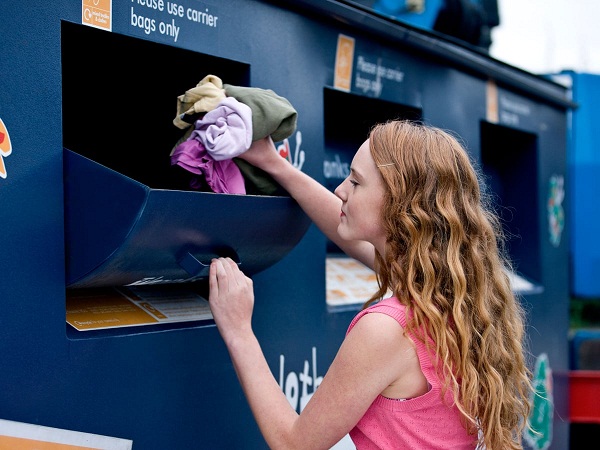
The second highest consumer of textiles per person in the world, Australia discards around 23 kg textiles into landfills every year. A large part of this waste comprises non-renewable, synthetic materials that cannot be recycled. This waste is not regulated at the federal levels and requires a shift to a circular waste economy to manage. The circular economy model focuses on creating recyclable and re-usable products and materials and keeping them in the economy for a longer period. One of the key themes as per recent McKinsey & Co report, ‘The State of Fashion ’for 2022 is: circular textiles.
As per this theme, Australian fashion industry can reduce its environmental impact by adopting the closed-loop recycling system to produce virgin raw materials and reduce textile waste. For effective use, companies need to embed these technologies into the design of their products.
Government initiatives to tackle waste problem
At the Industry Clothing Textiles Waste Roundtable and Exhibition held in May 2021, Sussan Lay, Australia’s Environment Minister initiated important discussions on the need to reduce clothing waste, the impacts of fast fashion and the necessity for nation-wide co-ordinated action. The discussions concluded that Australia needs to adopt a circular economy approach to the textile waste problem to accomplish sustainability in the relevant industries. This would also help the country drive the launch of innovative and efficient solutions to prevent the mass dumping of products in the landfills besides creating new jobs in the sustainable resources field.
In November 2021, the Australian Fashion Council was awarded $1 million through the National Product Stewardship Investment Fund to establish the country’s first National Production Stewardship Scheme for clothing textiles. The scheme aims to provide "a roadmap to 2030 for clothing circularity in Australia in line with National Waste Policy Action Plan targets". The scheme includes the commission of three reports on data and material flow, analysis of global initiatives, policies and technologies for promoting circularity in textiles and recommendations to achieve the National Waste Policy Action Plan targets by 203O. The money will be used to fund the commission of three reports by March 2023.
The National Product Stewardship Investment Fund has also granted aid to the Australasian Circular Textile Association for the Circular Threads project to develop a business case and design a product stewardship scheme to collect, reuse and recycle uniforms and workwear.
Innovative solutions from companies
Innovative solutions are being offered by several companies in Australia to tackle its textile waste problem. For instance, a clean technology company, BlockTex has created a process to recover polyester and cellulose from textiles and clothing in collaboration with researchers from Queensland University of Technology. Known as S.O.F.T (‘Seperation of fiber technolgy’), this process generates polyester and cellulose materials all industries including textiles, packaging and building products.
BlockTexx is also setting up a textile recycling plant in Logan, Queensland, to recycle 4000 tons of textile waste in its first year by the S.O.F.T technology. BlockTexx estimates it will be able to offset about 120,000 tons of CO2 emissions.
Another organization Worn Up i aims to make new products from up-cycled non-wearable uniforms and production offcuts. The organization has launched Textile Rescue Program to work with schools, corporates, local governments and sporting associations to keep uniforms out of landfill and help suppliers identify sustainability challenges in their uniform supply chains. Their stewardship and certification program, Responsible Textile Disposal Tick, holds organizations accountable for their waste and ensure they dispose of it responsibly.
Severe repercussions in absence of urgent action
The problem of textile waste in Australia needs to be addressed urgently if it aims to transit to a net zero economy. Several fashion and textile companies in the country are collaborating with the government to tackle this program.
In 2022, most consumers will engage in a wardrobe reboot, says The State of Fashion 2022 report by McKinsey & Co. Some of them may also engage in revenge shopping . This may further compound the waste problem in Australia unless some urgent action is taken against it.
Global synthetic leather market to reach $50.34 billion by 2028: Study
As per a new study by the Polaris Market Research report, the global synthetic leather market is expected to reach $50.34 billion by 2028.
The adoption of synthetic leather is expected to increase during the forecast period owing to wide applications in industries such as automotive, apparel, and furnishing. Rising disposable income of consumers and improving lifestyles have increased the demand for footwear, clothing, and accessories.
Increasing urbanization and growing demand from the automotive sector have further supported the market growth. However, the COVID-19 outbreak has restricted the growth of the market due to operational challenges, disruption of the supply chain, reduced demand, and workforce impairment.
The different types of the product include bio-based, polyurethane, polyvinyl chloride, and others. The demand for the polyurethane segment is expected to be high during the forecast period. Polyurethane material offers the same texture as real leather while being lighter, cheaper, and durable. The rising ethical concerns regarding animal cruelty, growing environmental awareness, and the introduction of stringent regulations support the growth of this segment.
The automotive segment is expected to grow at a significant rate during the forecast period.