FW
Bangladesh to import 9 million bales of cotton this year
The sudden rise in demand for yarn and fabrics is expected to boost Bangladesh’s cotton imports to 9 million bales for the first time this year, says Mohammad Ali Khokon, president of Bangladesh Textile Mills Association (BTMA). Bangladesh imported 8.5 million bales of cotton in 2021 for over $3 billion. The country is expected to witness an import surge due to a rise in exports of Bangladesh-made garment items as global economies reopened.
From July to December last year, Bangladesh’s garment exports grew 28.02 per cent year-on-year to $19.90 billion. Of the total, earnings from knitwear exports surged 30.91 per cent year-on-year to $11.16 billion. Earnings from woven exports surged 24.50 per cent to $8.73 billion. Garment exports are expected to continue growing till June this year as exporters booked huge volume of work orders, says Faruque Hassan, President, Bangladesh Garment Manufacturers and Exporters Association (BGMEA)
Exporters expect a rush in cotton imports in March and April this year and a chaos in the port because of container congestion, adds Khokon. Currently local spinners meet 90 per cent demand for the raw materials for the knitwear sector but only 40 per cent of the woven sector. As a result, around 6 billion out of total 10 billion meters of fabrics are imported to meet the demands of the local woven garment sector, adds Khokon.
Lenzing releases Sustainability Report 2021
The world’s leading supplier of wood-based specialty fibers, Lenzing released its Sustainability Report 2021 on the occasion of “Earth Month”. Bearing the title ‘Linear to Circular,’ the report emphasizes the company’s focus on carefully balancing its needs with those of nature in the spirit of the circular economy. The report has been prepared in accordance with the standards of the Global Reporting Initiative (GRI) and the Austrian Sustainability and Diversity Improvement Act (NaDiVeG) and audited by KPMG Austria GmbH Wirtschaftsprüfungs- und Steuerberatungsgesellschaft.
With the implementation of the two key projects in Brazil and Thailand, as well as with the investments at the existing Asian sites in China and Indonesia amounting to EUR 200 mn, Lenzing continues to march purposefully towards Group-wide climate neutrality. In 2019, Lenzing became the first fiber manufacturer to set a target to reduce its carbon emissions by 50 percent by 2030 and to be net-zero by 2050. This carbon reduction target has been verified and approved by the Science Based Targets Initiative.
The partnership with Swedish pulp producer Södra marks a further milestone in Lenzing’s efforts to realize its ambitious climate and sustainability goals. These two global market leaders, which have been proactively promoting the circular economy in the fashion industry for many years, are joining forces to give the issue a further boost and to make a decisive contribution to resolving the global textile waste problem. An expansion of capacities for pulp recovery from waste textiles is also planned. The goal is to be able to recycle 25,000 tonnes of used textiles per year by 2025.
WTiN postpones GDTC to October
World Textile Information Network (WTiN), the UK-based information provider to the global textile & apparel industry, has postponed its first hybrid Global Digital Textile Conference (GDTC) to October this year.
To be held in Como, Italy and online, the event will offer delegates networking opportunities and enable knowledge sharing between stakeholders in the textile inkjet printing ecosystem. It will also provide understanding of the development of the production landscape up to 2030 and support the common goals within the industry.
The inaugural GDTC will now take place on 5-6 October 2022 and will continue to provide an in-person and virtual platform for delegates across the full digital textile ecosystem.
The GDTC will welcome the full digital textile ecosystem: printer OEMs; paper and ink manufacturers; software solution providers; textile printers and service providers; and brands.
The extensive programwill focus on sustainability within production processes, the impact of government policy across the textile industry, reshoring and its strategic agenda for textile innovation. It will also address the design aspects of digital textile printing and how the industry can better understand the needs of fashion and sportswear brands.
The GDTC is hosted by WTiN, with partners ACIMIT and SMI, and event partners Epson, Kornit Digital, JK Group and MS Printing Solutions, and event sponsors Cibitex and Konica Minolta.
Kornit Digital mixes design and sustainability at Kornit Fashion Week Tel Aviv 2022
Worldwide market leader in sustainable, on-demand digital fashion and textile production, Kornit Digital is presenting a convergence of design, technology, and sustainable fashion at Kornit Fashion Week Tel Aviv 2022 from April 03-06, 2022. The transformative event unveiled vibrant runway collections together with game-changing industry-first product and technology introductions that bring digital production to the mainstream.
The four-day event is being attended by some of the top designers, retailers, brands, fulfillers, and ecommerce players, in addition to global investors and press – and will include exclusive VIP experiences demonstrating the confluence of the design, technology, and fashion worlds. Together, these three elements are central to Kornit’s 4.0 strategy, bringing sustainable, on-demand fashion to the mainstream with end-to-end workflow solutions.
Kornit Fashion Week features an immersive runway showcase produced by worldwide fashion icon, producer, director, and entrepreneur MottyReif. The week follows successful Kornit events in 2021 across Los Angeles, New York, Milan, and Tel Aviv – displaying the creative freedom associated with sustainable, on-demand fashion fulfillment.
Attendees are experiencing runway events showcasing designer creativity across a broad array of collections. These fascinating collections were created in just a few weeks, unlike typical fashion and textile production processes that take over six months.
The event marks the most diverse and inclusive array of designers, models, and garments digitally printed on an unmatched number of materials. Collections highlight the liberation from inefficient, costly, and wasteful production processes, as well as long lead times and supply chain constraints. The power of on-demand production also drives creation of the most imaginative collections.
Woolmark Company launches first online course on sustainability
The Woolmark Company has launched the first online education course dedicated to sustainability on the Woolmark Learning Centre, providing open access to extensive knowledge on wool, sustainable development and circular design. Developed by industry experts, the self-paced Sustainability and Wool course is designed for designers, brands, manufacturers, tertiary students and tutors to support the industry’s move towards less impactful product and business models with wool.
The freely available course provides an introduction into the concepts, frameworks and strategies to support sustainable and restorative business in the textile industry. With a focus on the wool fibre and wool industry, the course provides learners with the theory and practical examples of circular design, regenerative agriculture and manufacturing processes with reduced environmental impacts within the wool supply chain.
Throughout the course learners will explore opportunities and solutions for creating products with a more positive legacy, and how designers and businesses can support consumers to reduce their environmental and social impacts. Industry leaders including Livia Firth, Clare Press, Charles Ross, Leanne Kemp, Dr Stephen Wiedemann and Dr Charles Massy provide exclusive insights into the challenges and opportunities of sustainability in the textile and fashion industry throughout the course.
By completing this course, learners will gain an understanding of sustainability grounded in science and be introduced to the knowledge and tools that will help build resilient businesses during this dynamic, complex time. Once learners complete the course, they will be awarded an independent certification from Credly to include on their digital CVs.
Tiruppur export sector to revive with Rs 33,000 revenues: President, TEA
Raja A Shanmugham, President, Tiruppur Exporters Association (TEA) says, the Tiruppur export sector is expected to revive this year with revenues from exports rising to Rs 33.000 crore and from domestic market to Rs 32,000 crore. Tiruppur apparel industry has been facing acute crisis due to rising cotton prices and the ongoing Ukraine-Russia war. The market is also being dominated by external factors like the resurgence of COVID-19 cases.
However, exporters expect fortunes to revive soon through government support and monitoring of raw cotton prices. They have chalked out a plan for survival by confirming orders in a no-profit situation. This will help sell stocked materials and also enable buyers purchase at affordable rates, adds Shanmugham. Tiruppur Exporters’ Association was set up in 1990 under the leadership of A. Sakthivel and strived for the development of exports and also Tiruppur. TEA has always been very quick in taking up the issues and stand in forefront to get them addressed.
Brazil’s cotton production to decline on rising input costs: Abrapa
Despite investments in quality and incentives to use cotton, Brazil’s cotton production is likely to decline next year due to increased input costs, says Brazilian Association of Cotton Producers (Abrapa). Brazil’s cotton cultivation may decrease in 2022-23 due to demand stagnation amid economic slowdown induced by Russia-Ukraine war, says Julio Busato, President, Abrapa.
Although cotton prices on the New York cotton exchange recently reached their highest levels in over 10 years, production costs have also grown almost 40 per cent halting early deals, he adds. If cultivation costs continue to increase, farmers should opt for more feasible crops like corn and soybeans, Busato adds.
As per official figures, the world’s second largest cotton exporter, Brazil produced three million tons of cotton in the 2019-20 season. Harvest decreased in the following cycle to 2.35 million tons due to the pandemic. However, production is returning to its historic highs in the current 2021/22 season.
Shein to hold $100 billion funding round
Chinese fast fashion e-commerce startup Shein aims to hold a funding round at a valuation of about $100 billion. The online retailer is negotiating with potential investors to raise about $1 billion in funds. A combination of supply-chain savvy, data-driven clothing design, and tax loopholes in the US and China have made Shien a force to reckon with. Last year, the e-commerce company overtook Amazon in downloads of shopping apps in US stores.
With operations in Guangzhou, Singapore and Los Angeles, Shein offers over 600,000 items to customers in over 150 countries. The startup’s backers include Tiger Global Management, IDG, and Sequoia. Starting operations in 2008, Shein offers wedding dresses and other women’s fashion items. It is the largest pure-play online fashion company globally, as measured by retail value of self-branded products sold in 2019, according to Euromonitor International.
Shein designs and sell apparel, other fashion goods and accessories primarily under its flagship Shein’ brand. In 2019, it sold fashion products with a total GMV of approximately $2,700 million in 40 million orders to 200 countries across Asia, the Americas, Europe and the rest of the world.
Operational shifts help fashion brands ease supply chain woes
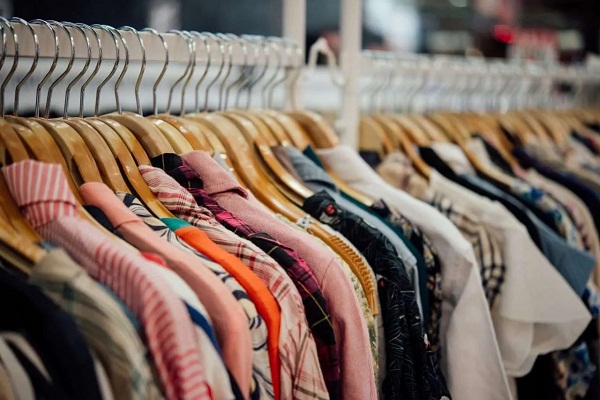
Barely had the apparel and footwear industry recovered from the pandemic, it was hit by the Ukraine crisis which fuelled production costs and aggravated supply chain issues, weakened consumer spending.
Reshuffle retail space and focus on D2C
Fashion players are making changes and transforming their mode of operations to cope with the new crisis. They are focusing on e-commerce channels and increasing their share of online sales to 30 per cent of global apparel and footwear sales in 2021. However, to strengthen their association with new customers in the digital and physical space, stakeholders need to go beyond conventional sale methods. They need to focus on direct-to-consumer (D2C) strategies besides reinventing their stores.
Investments in virtual space rise
Brands from luxury to high streets are investing in virtual garments and fashion NFTs. They are looking at new digital products as a lockdown-proof way to boost revenues. For example, Nike launched its own virtual Nikeland world within the online game Roblox. The digital space allows customers to buy Nike products for their avatars. Nike has also acquired digital sneaker-maker RTFKT to launch a new virtual sneaker collection. Mass-adoption of virtual avatars is leading to the launch of D2A or Direct-to-Avatar offering collections and accessories for digital doubles and in-game avatars
The dress codes of professionals are also becoming more casual. Customers are not only increasing focus on health and wellness but also seeking new access to parks, nature and wildlife. They are increasing visits to local tourist destinations. All these aspirations are benefitting value driven brands that are stepping up sustainability efforts.
Nearshoring gains traction
Pandemic has prompted the fashion industry to change its social and environmental practices. It exposed the complexity and opaqueness of supply chains burdened with excess inventories and exploitation of workers in Asia. The Ukraine conflict has further added to industry’s woes by worsening inflation rates. Increasing shipping and raw material costs are compelling brands to review their pricing and production strategies.
In these challenging times, nearshoring is gaining popularity amongst brands. Brands like Uniqlo, are exploring production on demand, similar to the Amazon Made For You B2C service. The trend helps limit complexity and dependence. Italian brand Benetton plans to move its production centers closer home. The fashion house has already moved 10 per cent of its output from Bangladesh, Vietnam, China and India to Serbia, Croatia, Turkey, Tunisia and Egypt. It aims to reduce production in Asia to 50 per cent by 2022-end. German fast-fashion player C&A also aims to increase local production to 400,000 pairs of jeans per year in 2022, and 800,000 pairs in the future.
Meanwhile, brands also seek to reduce their dependence on China with the country’s share in global textile and leather products production declining to 33 per cent by 2030.
Bangladesh to move to EBA scheme for exports to EU: EEAS
Gunner Weigand, Managing Director, European External Action Service (EEAS) says, Bangladesh may soon move from the GSP Plus Scheme to Everything But Arms (EBA) scheme to export Bangladeshi products to the EU. Bangladesh’s current duty-free facility under EBA scheme of the European Union market is set to end in in 2026, as per a Daily Star report. Bangladesh can then be entitled to GSP Plus, provided it meets certain conditions.
Ambassador Jeroen Cooreman, Director General (Bilateral Affairs), Belgian Public Federal Service Foreign Affairs, adds. Belgium follows positive economic development in Bangladesh with keen interest. Meryarne Kitir, Minister of Development Corporation, Belgium will visit Bangladesh this month to mark the 50 years of their establishment of diplomatic relations this year. The two sides will expand cooperation in trade, investment, health and pharmaceuticals, knowledge transfer through academic arrangements, climate change, and many other potential areas of mutual interest in the coming days.
Mahbub Hassan Saleh, Bangladesh Ambassador to Belgium and Head of Mission to EU adds, the five decades-long partnership between Bangladesh and EU has moved to a robust trade partnership with half of Bangladesh’s RMG exports destined to the EU. The partnership continues to grow in areas like trade and investment, education and research, development cooperation, climate change, Rohingya crisis, etc. he adds.