FW
US’ sanctions invoke widespread protests in Ethiopia
US’ announcement to impose on sanctions on Ethiopia and its opponents from the Tigrav People’s Liberation Front have led to widespread protests in Addis Ababa
As per Business of Fashion, both the parties have been fighting a war in Tigray since last November, which prompted the US to take wide-ranging action, according to an African Business report.
Within the Tigray region, the already-troubled Mekelle Industrial Park has remained shuttered throughout the war, with suppliers for brands including H&M and Calzedonia halting operations for fear of workers’ safety. However, the conflict has not caused any major impact on Ethiopia’s garment industry as the majority of manufacturing parks are based outside Tigray.
The US sanctionswon’t necessarily impact the ability of global fashion brands to manufacture in Ethiopia. However, the ongoing unrest, coupled with a second delay in holding parliamentary elections, is likely to drive global investors out of the country.
BRC warns of multiple store closures due to lack of government support
British Retail Consortium (BRC) has warned that the British retail sector may have to face multiple store closures if the government fails to extend a moratorium on aggressive debt enforcement.
BRC said two thirds of British retailers have been told by landlords they will be subject to legal measures to recover unpaid rent from July 1 when the moratorium ends.
Many UK retailers deemed "non-essential" had to close their stores during multiple COVID-19 lockdowns over the last 15 months, accruing total rent debt of 2.9 billion pounds ($4.1 billion), the BRC said
Around 80 per cent of tenants said some landlords have given them less than a year to pay back rent arrears. Without government intervention, the end of the moratorium could see thousands of shops close, said Helen Dickenson, CEO, BRC. She urged the government to allow the rent arrears built up during the pandemic to be ringfenced and the moratorium on repayment of these debts to be extended to the end of the year.
Remove additional duties and turnover tax on yarn, urge Pakistan traders
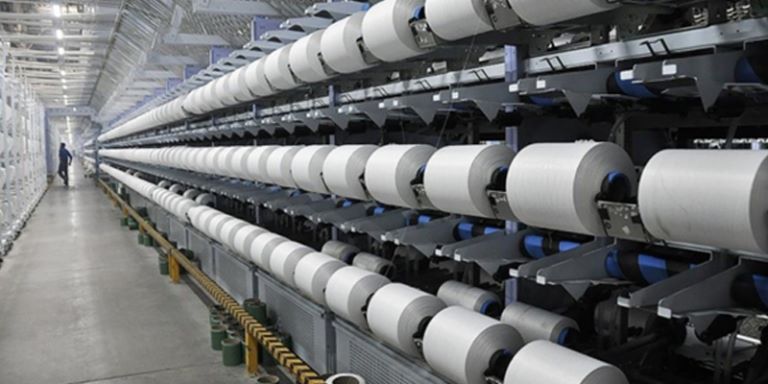
Yarn traders in Pakistan have urged Prime Minister Imran Khan to remove additional customs duty and regulatory duty on synthetic yarn and turnover tax on yarn traders to maintain competitiveness of the textile industry in international markets. Pakistan Yarn Merchants Association (PYMA) officials say such measures would normalize trade and industrial activities and give a boost to exports.
Hanif Lakhany, Vice President, Pakistan Chambers of Commerce and Industry (FPCCI) added, soaring yarn prices in local markets are increasing production cost of textile sector significantly. He urged the government to withdraw the 1.5 per cent turnover tax imposed on yarn traders and restore the previous tax rate of 0.1 per cent to help the financially stressed yarn traders to get back on feet.
Farhan Ashrafi, Vice Chairman, PYMA requested the Prime Minister to play an effective role in saving the textile industry and similar small and medium enterprises (SMEs) from total collapse. He urged the government to issue immediate directives for abolishing the additional customs duty and regulatory duty on synthetic yarn.
Second COVID-19-led lockdowns to have no impact on yarn prices: RSWM
Riju Jhunjhunwala, Chairman and Managing Director, RSWM, one of the largest manufacturers and exporters of synthetic and blended spun yarns says, yarn prices are expected to remain stable during the second COVID-19 wave induced lockdowns this year. Jhunjhunwala says, export volumes are pretty much at the levels witnessed previously. Though domestic demand has fallen substantially, factories are running at 85 per cent capacity as manufacturers have diverted some of the domestic capacity to exports markets.
Clothing mills are already in a production mode. Hence, it will be easier for manufacturers to ramp up their capacities this time, adds Jhunjhunwala. The diverting of orders from China by big companies in the US and other global markets will create a huge demand for Indian products, he adds.
Jhunjhunwala expects demand for casualwear to grow while demand for formal wear is expected to dip globally. RSWM is also trying to change its product mix to cater to new demand by expanding denim capacity from 20 lakh meters a month to 27 lakh meters, he informs.
New report accuses Tamil Nadu spinning mills of encouraging forced labor
In a report titled ‘Spinning Around Workers’ Rights, the Centre for Research on Multinational Corporations (SOMO) and Arisa, an independent human rights organization, have accused Tamil Nadu spinning mills of encouraging forced labor in factories. The report surveyed 725 workers, including 284 women, in 29 spinning mills between October 2019 and January 2020. It also conducted additional research into sourcing relations and trade flows, using trade databases and publicly available supplier base information. Around 15 of workers were interviewed in October last year to understand the impact of COVID-19.
The report used 11 indicators developed by the International Labor Organization (ILO) to assess the working and living conditions of workers in these spinning mills. It found majority of workers had been given wrong information about their prospective jobs during the interview process. They were also receiving reduced pay cheques against what was confirmed during recruitment. The report claims to help enable structural improvements to employment, working, and living conditions for workers in the Indian textile and garment industry.
However, Siddhartha Rajagopal, Executive Director, Texprocil and K Selvaraju, Secretary General, SIMA, accuse the report of generalizing incidents. They plan to conduct awareness camps on the new labor codes, take up a third party audit at the mills on labor compliance and educate the mills on labor compliances.
Global RMG market to grow at 8.8 per cent CAGR by 2027
A new report published by Allied Market Research estimates the global readymade garments market will grow at a CAGR of 8.8 per cent to reach $1,268.3 billion by 2027. Titled ‘Readymade Garment Market by Product Type, Application, Fabric Type, Age Group, Sales Channel, and Region: Global Opportunity Analysis and Industry Forecast’, the report estimates the outer clothing segment will grow at a CAGR of 8.8 per cent during the forecast period. China and the US are expected to lead this growth.
Formal wear is estimated to grow at a CAGR of 9.1 per cent. However, the others segment is expected to witness higher growth rate during the forecast. The woven segment is estimated to register a CAGR of 9.1 per cent during the forecast period. However, the non-woven segment is expected to witness a high growth rate of 8.6 per cent during the forecast period.
The adult segment is estimated to grow at a CAGR of 9.1 per cent while the kids segment is expected to grow at 9.4 per cent during the forecast period. Among sales channel, the supermarket/hypermarket segment is estimated to exhibit a CAGR of 9 per cent during the forecast period. However, e-commerce segment is expected to witness higher growth rate. Region wise, Asia-Pacific is estimated to grow at a CAGR of 10.1 per cent while the LAMEA region is expected to witness high growth rate during the forecast period.
Garware Technical Fibers Q4 net profits rises
The consolidated net profit of Garware Technical Fibers jumped by 49.1 per cent to Rs 53.2 crore in the fourth quarter ended March 31, 2021. The company’s net sales during Q4 increased 32.8 per cent to Rs 335.4 crore, compared to Rs 252.6 crore in the year-ago period. Garware’s consolidated net profit for the financial year 2020-21 grew 12.7 per cent to Rs 158.4 crore as compared with Rs 140.5 crore in the previous financial year. Net sales in FY 2020-21 increased 8.5 per cent to Rs 1,034.6 crore, compared with Rs 953.1 crore in FY 2019-20.
Vayu Garware, Chairman and Managing Director says, international business demand for the firm's solutions helped the company meet customer expectations despite the initial challenges in the first quarter of FY21.
UK brands, retailers hail CMA’s draft guidance on ‘green claims’
UK fashion brands and retailers have hailed the Competition and Market Authority’s (CMA) draft guidance about ‘green claims.’ As reported by Drapers Online, CMA released a draft of six principles earlier this year for businesses including fashion brands to follow while making environmental claims. It entails, brands need to be truthful, accurate, clear and unambiguous, while making such claims. They must not omit or hide important information, must only make fair and meaningful comparisons, must consider the full life cycle of the product, and must be substantiated.
The CMA will now enter a consultation period on the draft guidelines until 16 July with the final guidance expected to be released at the end of September. The new principles were put forward after the CMA began researching the impact of green marketing on consumers last year, and found that 40 per cent of green claims made online could be misleading.
Twanna Doherty, Managing Director and Owner, Yogamatters, an online yoga-wear and equipment retailer says, the new guidelines could also help retailers navigate claims from their suppliers. However, they could also lead to an increase in misleading information, adds Rebecca Morter, Founder and CEO, Lone Design Club, a popup retail concept.
International brands accused of cultural appropriation
International fashion brands Zara, Anthropologie, and Patowl have been accused of using patterns from indigenous Mexican groups in their designs without any benefit to the communities. Mexico's Ministry of Culture has sent letters signed by Culture Minister Alejandra Frausto to all three global companies, asking each of them to explain on what basis it could privatize collective property.
As per a Reuters report, the ministry accused Zara of using a pattern distinctive to the indigenous Mixteca community of San Juan Colorado in the southern state of Oaxaca. Anthropologie, owned by URBN, has been accused of using a design developed by the indigenous Mixe community of Santa Maria Tlahuitoltepec, while Patowl copied a pattern from the indigenous Zapoteco community in San Antonino Castillo Velasco, both in the state of Oaxaca, according to the Ministry of Culture.
The extent to which fashion designers have profited from incorporating cultural designs without acknowledging their origins or fairly compensating communities has been a point of contention in recent years.
Marzoli launches new production management tool
To maximize overall equipment effectiveness (OEE) and minimize the total cost of ownership (TCO), Marzoli launched the YarNet-Production Management Tool. This tool has been designed to provide end-to-end solution integrating overall production monitoring and control needs for Marzoli and third party machinery into one single platform, managing multiple spinning plants and multiple units across the textile value chain. The software registers and stores all production data, machines operating conditions, machine statuses and technological parameters.
It allows companies to elaborate these data with useful functions and obtain valuable information in the form of tables, colours, charts, and diagrams. It further enables the customer to interact directly with the machine by downloading, editing, and sending production recipes.
The tool enables companies to monitor their spinning mills It gives them a complete overview of their plant. It also enable them to manage production, prevents machine downtime and prevents them from making any mistake in production processes.