FW
Philippines garment exports to fall below $1.4 billion projection: FOBAP
The Foreign Buyers Association of the Philippines (FOBAP) expects the country’s garment exports will fall below $1.4 billion projection for the year with disruptions caused by pandemic-induced lockdowns and shipping space constraints. Robert Young, President, FOBAP said, Philippines’ garment exports are expected to be lower than $1.2 to $1.4 billion target for this year as exporters are facing order cancellations amid disruptions due to lockdowns.
All manufacturing activities by exporting locators in the Freeport Area of Bataan have been ordered to halt operations during the ECQ given the surge in coronavirus cases, said Young. While garment exporters located in Philippine Economic Zone Authority zones and factory suppliers in Clark and Laguna are operational, their productivity is affected by the lack of transport, curfew and other restrictions, he added. Garment exporters are also facing other challenges such as the lack of shipping space, Young added.
Carbon neutral couture can be the way forward for global brands
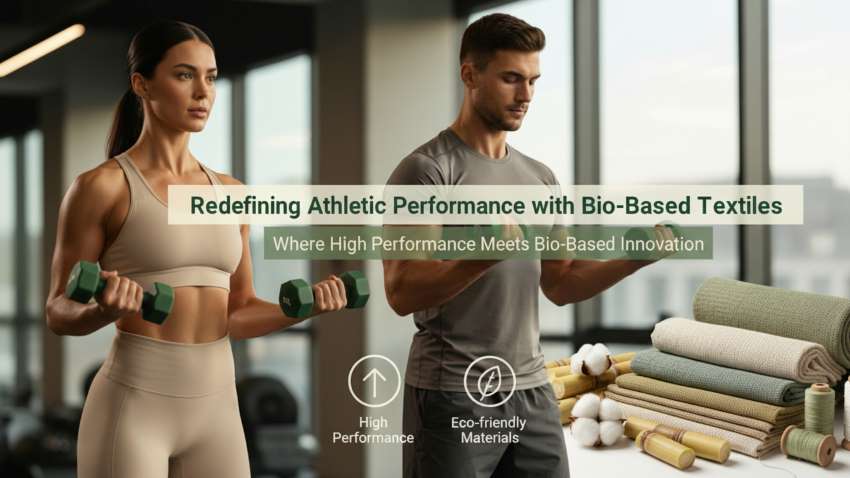
 Bio-garmenting is the new thing for the climate conscious consumer. Researchers, designers alike are constantly looking for new sustainable fabrics, processes to reduce the carbon footprint of garments. Now, Canadian-Iranian designer, Roya Aghighi has made a stunning invention, developing textiles with algae, which turn the surrounding carbon dioxide in the air to oxygen through the process of photosynthesis, reports Business World.
Indeed, Aghighi’s apparels show the way how textiles can be made, with living, photosynthetic cells. Still at laboratory stage, if this works out and reaches the market, one can look forward to a line of sustainable bio-couture for the eco conscious consumers.
Sustainability goals with carbon neutral clothing
A scenario where ones favourite dress lasts for two months only if it’s watered every week and put in the sunlight for atleast 7-8 hours a day. And to dispose the dress one simply needs to compost it and return it back to the soil without pushing it to a landfill or dumping in an incinerator that lead to fumes that raises the AQI of your city.
A 2017 Accenture survey had revealed 33 per cent consumers would buy more if they knew the manufacturer’s name. Indeed carbon-neutral apparel is perhaps the best way of reaching sustainability goals for brands. Carbon-neutrality encompasses strict benchmarks related to effluence free manufacturing, fertilizer free crop cultivation and 100 per cent water recycling to conserve ground water levels and most importantly, the tenets of buy, conserve and compost.
Stats and studies reveal, the global apparel industry emits 3.2 billion tons of CO2 annually, or 10 per cent of the global carbon emissions and more than 20 per cent of wastewater in addition to 93 million meters of textile waste. What’s more it takes over 70 million barrels of oil to produce all the global consumption of polyester fibres which constitute around 65 per cent of all clothing manufactured in factories with weak carbon footprint management systems.
While bio-couture, which involves sourcing alternative textiles from wood, fruit, bamboo, algae is the way forward, it may be costly for a mass-premium offering. And it’s yet to achieve critical mass in terms of pricing, mass production, evolved supply chains. However, given the right push, bio-couture will definitely achieve its moment of glory.
With the world focusing on reducing CO2e emissions to 45 per cent by 2030, and 0 per cent by 2045 perhaps it’s time to look for alternative ways of manufacturing. Much like handloom India could show the way with a huge manpower of skilled weavers, artisans and growers abounding in almost each village. Coupled with urban exfiltration and genealogical skills, India can easily lead the charge of carbon neutrality. Meanwhile designers like Roya Aghighi need to test their invention in the Indian market to stay relevant.
CHIC Shanghai postponed from August to in October 2021
 With higher precautionary measures in place, CHIC Shanghai scheduled from August 25 to 27, 2021 is now being postponed to October 9 to 11, 2021. Almost 500 brands will be present their range at the Exhibition and Convention Center in Shanghai. “As the most important meeting place for the fashion industry in China, the safety of all exhibitors and visitors of CHIC is our top priority. For this reason, we have decided to postpone the next edition of CHIC in Shanghai to October in order to support the measures to combat the pandemic and enable all stakeholders to participate safely and efficiently,” said Chen Dapeng, President of China National Garment Association and CHIC - China International Fashion Fair.
The fair has been taking place physically again from July 2020, in compliance with strict safety and hygiene regulations. Various digital platforms are being set up in parallel. Among the brands lined up for the upcoming fair are: JINTIANSHI (menswear), VINI Bespoke (menswear), Zaijiu (womenswear), Jiebeidi (womenswear), COFNA (childrenswear), Laura Vita (shoes), Hattershub (headwear), MANNYLONQ (CHIC-Young Blood) and Dragon Heart (CHIC-Young Blood) and exciting up-and-coming designers such as KIMUSSO, Yujiantian and Wuma.
The fair expects 60,000 visitors. In the works are seminars and workshops on topics such as recognition and new opportunities of new retail in AI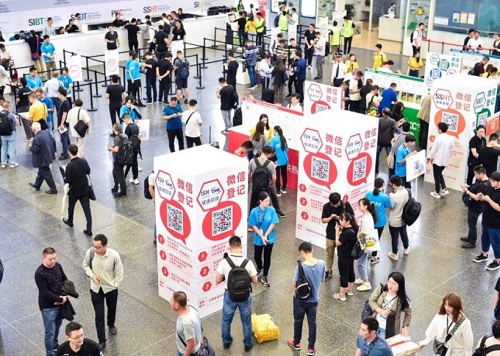 Fashion; 2021 Maker of Silk Road & Innovation of Design Infinity -- The Innovation and Entrepreneurship Competition of China Textile & Apparel SME.
The Chinese market continues to grow with, retail sales of consumer goods increasing by 23 per cent in the first half of the year, and Q@ growth of 13.9 per cent. The trend towards “premiumization” in the fashion market is being fuelled by China's growing middle class, which will make up 65 per cent of households by 2027. High-quality niche brands are particularly popular with young, fashion-conscious consumers.
Meanwhile CHIC has developed special solutions for digital participation via the CHIC digital platforms, as well as a range of innovative hybrid options that combine digital communication and product presentation. Individual business needs are matched via CHIC ́s digital tools and social media networks, efficient business talks are being coordinated using CHIC’s broad network in the industry.
CHIC Shanghai presents the entire selection of fashion segments in clearly structured, curated exhibition areas, from women's fashion, men's fashion, children's clothing, shoes, bags and accessories to designer collections. After CHIC Shanghai in October, the next edition of CHIC will take place from November 3- 5, 2021 in the southern Chinese metropolis of Shenzhen.
Prime Minister’s four-point export boosting agenda to drive Atmanirbhar Bharat: Texprocil
ManojPatodia, Chairman, Cotton Textiles Export Promotion Council (TEXPROCIL) believes, Prime Minister NarendraModi’s emphasis on four points to increase exports – increase in manufacturing, reduction in transport and logistics cost, government walking shoulder to shoulder with the exporters and expansion of international markets for domestic goods – will help achieve the goals of Make in India and Atmanirbhar Bharat.
Patodia also states that PM’s“personal intervention will ensure that all the Indian Missions abroad will actively participate along with the Export Promotion Councils in ensuring that the target set for each importing country is achieved by promoting India’s products with the overseas buyers.
As pointed out by some of the ambassadors of Indian Missions abroad, the acute shortage of containers and the need for greater focus on logistics development were emerging as major challenges. Patodia urged the Government to step in urgently to address the issue of container shortages faced by the exporters which is turning out to be very serious day by day.
The chairman also appealed to the government to include textiles in the priority list while negotiating FTAs with UK, Canada, Australia and the EU
China to set up new industry platform to replace BCI
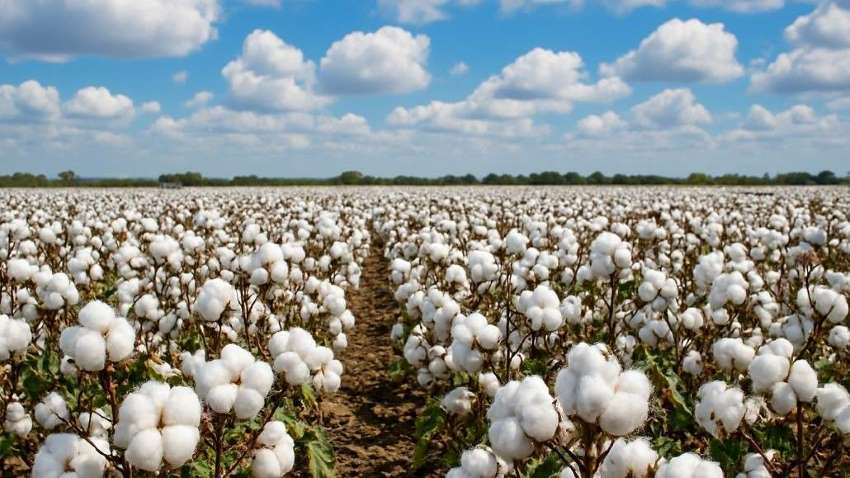
Chinese cotton industry is moving ahead with plans to form a fairer and more transparent international industry standard-setting platform to replace the Better Cotton Initiative (BCI), a Switzerland-based nongovernmental organization, as the latter failed to facilitate the positive and sound development of the global cotton supply chain.
The BCI, which had been the leader in the global cotton industry, has been under heavy fire both in China and abroad for its baseless "force labor" claims against cotton from Northwest China's Xinjiang Uygur Autonomous Region and is losing membership and leadership in the global industry.
In the latest development, US brand Levi Strauss was standing down from the BCI's leadership amid debate over the group's response to "alleged human rights abuses" in Xinjiang's cotton industry, the Wall Street Journal reported on Friday, citing people familiar with the matter.
The US firm's reported move came after the BCI and H&M sparked widespread anger in China over their baseless claims against Xinjiang cotton. Meanwhile, several other large international fashion brands, including FILA and MUJI, expressed their strong support for Xinjiang cotton in defiance of BCI's claim.
Chinese industry experts said Levi's move is in line with expectation since the BCI's illusion over Xinjiang cotton not only damaged its own industry reputation but also bring about risks of uncertainty to the global textile supply chain, in which Xinjiang cotton holds a significant share.
The weakened BCI has created an opportunity for the Chinese industry to establish a new coalition for quality evaluation, say experts.
Next Transformers ED to focus on Pakistan denim industry
Denim education program Transformers ED is focusing on the Pakistan denim industry in its next schedule. Being held from September 14-16, the denim education program will provide three days of comprehensive information on the denim supply chain geared toward students in the region who are entering the fashion industry. The event will be organized in collaboration with two of Pakistan’s vertically integrated denim companies, Crescent Bahuman and Diamond Denim by Sapphire Group.
The English-speaking program is taking place online, reports Sourcing Journal. It features presentations and panels focused on denim production, what makes a responsible denim supply chain, logistics for successful textile recycling and circular business models, and creative branding and denim trends. The program has a new theme every day starting with ‘Technology Day,’ which homes in on the first step in the supply chain from fibers to dyeing. Topics include natural, man-made cellulosic, and synthetic fibers and chemical management in fabric production.
‘Sustainability and Responsibility Day’ covers the latest textile recycling developments, Cradle to Cradle approaches, social responsibility and a special presentation from the Zero Discharge of Hazardous Chemicals (ZDHC) and the Conscious Fashion Campaign on the United Nations Sustainable Development Goals (SDGs). ‘Design and Trends Day’ features tips for conducting research and finding the best sources of inspiration, and the evolution of denim trends.
India, UK agree to launch negotiations on bilateral Free Trade Agreement
India and the UK have agreed to start negotiations later this year on a bilateral Free Trade Agreement besides kicking off a series of trade working groups from September. Piyush Goyal, Minister of Commerce and Industry and Liz Truss, UK’s International Trade Secretary have decided to enhance India-UK trade partnership and take forward negotiations for a bilateral Free Trade Agreement. Truss spoke with Goyal to discuss the scope and ambition for a UK-India free trade agreement following the close of the Department for International Trade’s public consultation last month.
These discussions will help both sides better understand each other’s position on potential chapter areas in any trade deal, including tariffs, standards, IP and data regulation. They also discussed the newly-established Enhanced Trade Partnership, and confirmed their commitment to timely implementation of the market access package.
Truss reaffirmed her ambition to negotiate a trade agreement that delivers results for the British people and businesses, including those in digital and data, tech and food and drink. Both ministers agreed that continuing to engage with the business community was vital throughout the forthcoming negotiations.
Uniqlo joins the Accord agreement
Japanese fast fashion brand Uniqlo has become the latest to join the Bangladesh Accord on Fire Building Safety. As per a Women’s Wear Daily report, the landmark agreement on garment worker safety was signed in 2013 following the Rana Plaza factory collapse that killed over 1,100 garment workers.
The Accord was originally scheduled to expire in May, but public pressure from activists, brands and organizations led to three-month extension to the agreement Several brands like Asos, G-Star, Espirit, S Oliver have committed to renew or expand the Accord beyond the three-month period, indicates Remake’s live tracker.
These brands including Zara and its parent company Inditex, have communicated email statements of intent. However, Ayesha Barenblat, Chief Executive Officer and Founder, Remake, has also urged American brands especially PVH and American Eagle Outfitters to join the agreement.
Textile Ministry utilized 98% of NHDP grants in 3 years: Piyush Goyal
The Union Textile Ministry utilized 98 per cent of grants under the National Handloom Development Program (NHDP) in the last three years, informed Piyush Goyal, Union Minister of Textiles. The ministry was granted Rs 353.05 crore as revised estimate under grant-in-aid, against which it incurred an expenditure of Rs 347.65 crore, he added. The ministry provided financial assistance to eligible handloom agencies and weavers for purchase of upgraded looms and accessories, design innovation and product diversification, infrastructure development, marketing of handloom products in domestic as well as overseas markets under various components of NHDP.
Micro Units Development and Refinance Agency (MUDRA) loans were provided at concessional rates as well. Banks also sanctioned MUDRA loans on the basis of their internal credit appraisal parameters. There was a dip in the number of viable proposals from the state governments. The conditions emanating from the novel coronavirus disease (COVID-19) pandemic led to disruptions in economic activities, leading to demand and supply shifts in the off take of raw-materials and finished goods.
The ministry also set up design resource centers in weavers’ service centres in Delhi, Mumbai, Varanasi, Ahmadabad, Jaipur, Bhubaneswar and Guwahati to build and create design-oriented excellence to facilitate weavers, exporters, manufacturers and designers access design repositories for sample / product improvisation and development.
The Handloom Export Promotion Council organized international fairs to promote marketing of handloom products in 2020-21. Besides, the ministry provided financial assistance for raw material, infrastructure projects such as dyeing / printing, reeling / spinning, marketing complex, design studies, value addition etc.
Levi’s Strauss’ sustainability chief exits Better Cotton Initiative
Jeffery Hogue, Sustainability Chief, Levi’s Strauss’ has exited the board of the Better Cotton Initiative, cutting short a four-year term that was scheduled to end next year. As per Sourcing Journal, Hogue is currently focused on building the denim giant‘s sustainability team and preparing the release of its first sustainability report and ESG disclosure.
Levi‘s maintains its status as a member of the cotton sustainability program, which features boldface names such as Adidas, Burberry, H&M, Ralph Lauren and Ikea on its roster, the spokesperson added. Kenneth Roth, Executive Director, Human Rights Watch, alleged Levi’s was vacating its spot because BCI has softened its stance on Chinese government’s use of Uyghur Muslims forced labor to produce cotton in Xinjiang.
BCI’s engagement on the issue has continued to confound industry watchers. On one hand, the organization has pulled out of all field level activities in Xinjiang while on the other hand, it has scrubbed all public references to why it was doing so; thus becoming a target of opprobrium from both China, and anti-slavery campaigners.