FW
Eloquii launches plus size wedding range
Eloquiiis launching a wedding collection for sizes 14 and above. The collection is in different fabrics that include the likes of satin, lace, tulle and sequins. The 50-piece collection comprises jumpsuits, slip dresses and formal gowns.
Eloquii is a clothing brand specifically dedicated to dressing sizes 14 to 28. Based in the US and founded in 2012, Eloquii offers women plus size fashion, clothes, and accessories. The company designs trend-leading, fast fashion apparel and brings trend-driven, feminine, polished fashion from the runways, working on a compressed design cycle and dropping new styles every week.
More than 60 per cent of women in the United States are a size 14 and up, but they continue to be underserved. Women are having a hard time identifying their own body shape, which informs how they shop. Women often misidentify their body shape. They may consider themselves to be hourglass-shaped when they are not and are actually pear-shaped. This discrepancy happens because of the way brands market and sell their clothing.For many retailers, extended sizing means simply making straight-sized garments in larger sizes, a process that neglects the fact that women have different sizes and shapes. Of the 62,000 specialty stores in the US, only 2,000 of them focus on plus size women.
Fast fashion challenges luxury brands
Established disruptor brands the likes of Shein, ASOS, Boohoo, and PrettyLittleThing, who are maturing at their peak, are hot on the heels of luxury brands in terms of conversations surrounding fashion. So says leading consumer intelligence platform Talkwalker.
As sustainability continues to dominate and define the fashion industry, challenger fast fashion brands are shaking things up, by developing products people want at the price and convenience level consumers now demand.For both luxury fashion houses and fast fashion brands, sustainability and ethics are hot topics.
Luxury houses are keeping a close eye to align with new consumer behaviour. Fast fashion brands have a big challenge ahead to align with consumers’ growing demand for ethical change.Luxury brands are spoken about more by consumers, but not necessarily favoured, with sustainability, customer service and support as key conversation drivers. Fast fashion, on the other hand, is surrounded by more operational conversations focusing on convenience and service.
For the newer challenger fashion brands struggling to break through into mainstream media despite their maturity, social media platforms such as Twitter dominate the conversations. Those driving online conversations are often largely from younger demographics. This is overwhelmingly true for the fast fashion brands where mostof conversations are from the social profiles of millennials or younger.
Vardhman, India profit up 273 per cent
Vardhman Textiles’ yearly profit has shot up by 273 per cent. Ebitda has risen by 144 per cent. However, profit margins have taken a hit thanks to the steep price rise of cotton per candy.But this worry seems to be fading away as cotton prices have come down significantly since May 2022.
Vardhman Textiles is India’s largest vertically integrated textile manufacturer that is engaged in manufacturing cotton yarn, synthetic yarn, woven fabric, sewing thread, acrylic fiber, tow and garments.
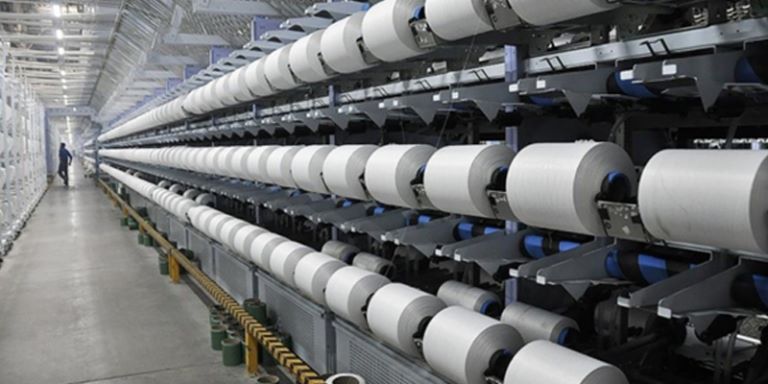
It is also one of the largest exporters of cotton yarn to the US and the EU.In its yarn business; it has a spindle count of 1.2 million, providing it a production capacity of 670 MT a day. Its cutting-edge spinning technology sourced from global leaders makes it a preferred choice of customers worldwide, owing to the quality of products and flexibility for product customization. It is also one of the first movers in the manufacturing of recycled yarns in India.
The company’s balance sheet is quite strong with the debt-to-equity ratio at 0.2 and free cash flows have also improved. The current P/E ratio of 6.82 is far better than that of peers. The P/B ratio of the company stands at only 1.35 compared to the sector’s average of 5.95.
Looming uncertainties worry luxury brands betting china
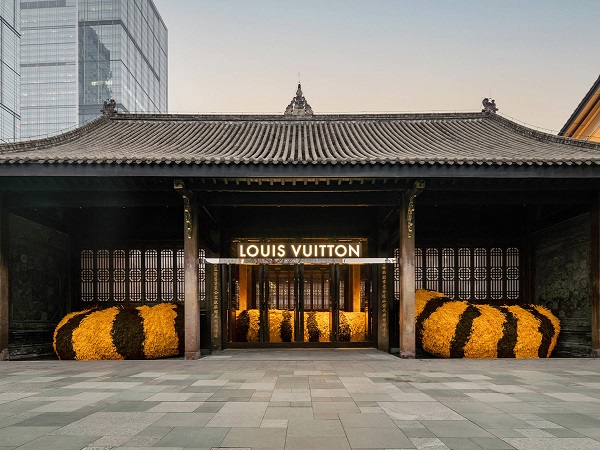
Some luxury brands are estimating a negative impact of -10 to -40 percent of revenue this year thanks to fresh lockdowns in major Chinese cities. Given the primary signs of recession in North America and Europe, the reliance on China as the engine for the growth in luxury is much less certain than in 2021. On top of this, the posh hospitality sector is suffering quite dramatically in China as most international travel has come to a standstill while domestic travel decreased significantly. This is reiterated by Bain & Company - domestic sales of personal luxury goods in China jumped 48 percent in 2020 and 36 percent in 2021, totaling nearly 471 billion yuan ($70.7 billion), a near doubling in just two years and then crashed in 2022.
Increasing challenges for luxury brands
However, the overall positive outlook for China is not changing. The country is consistently increasing its share of global wealth and more of its population is able to afford luxury purchases and experiences. However, there are massive challenges: Luxury must deal with rapidly evolving customer expectations, the fastest rise of Gen Z clientele in any country within the world, and an increasingly strong national sentiment where affluent customers change preferences towards domestic premium and luxury brands. Nike and Adidas had to find out the hard way over the last 18-24 months how fast local rivals like Anta and Li-Ning were able to outpace them, resulting in significant sales and market share losses.
For the first time in many decades, geopolitics poses a big risk to the operations of international brands on the mainland. Over the last months, we witnessed the sudden exit of luxury brands from Russia with the war in Ukraine and just how fast entire markets can be lost. Just in case of an escalation of the already increasing tensions in Southeast Asia and China’s ambitions with Hong Kong and Taiwan, the high dependency of luxury brands on China are often troubling. China is becoming the most important challenge for luxury brands. It has been already for many years, but the stakes are much higher now. A new level of strategic excellence and much higher managerial expertise in global portfolio management, global capabilities, and global empathy is what is required now. The “all eggs in one basket” strategy that helped many luxury brands to punch in significant growth over the last years, especially in 2021, can easily backfire. Luxury brands will have to recalibrate their global footprint, turn Europe back to a growth market, and expand in North America – all of this while these regions may head into recession. Still, China will remain a key marketplace for luxury brands. However, the upper the stakes get, the more western brands have to radically adapt their structures and capabilities to continuously play to win. If luxury brands hoped that 2022 are going to be “a walk in the park,” they were overly optimistic.
Import duties create price disparity
It should be noted that price disparity continues to plague the domestic purchase of luxury goods in China, where the difference from European prices can be as high as 40%. The huge Chinese duties on luxury goods led to the success of the Hainan Duty Free Store up until 2021. This is an indication that luxury brands might be better off investing in duty free hubs like Hainan to continue attracting domestic purchase.
As luxury brands are questioning on their presence and profitability in China, it seems closing down retail experiences can only do such brands more than good. Instead, they might want to expand to the second tier cities to mop up new clientele.
US banned Chinese cotton yarns enter Indian market
The US ban on textiles originating from the Xinjiang province of China has compounded the problems for India's cotton yarn spinning industry.
The Chinese yarn that can't go to the US is now finding its way into the Indian market at cheaper rates, further reducing the demand for domestic cotton yarn that has already been down.
So the domestic industry has been affected adversely.Most mills have either shut down their spindles or have gone for making substitute fibers like viscose, polyester etc.
India's yarn exports in August 2022 fell to less than one-third of the normal monthly yarn exports. Export orders for Indian yarn, textile, garments, etc. are very low, while Indian domestic cotton and yarn prices are still higher by 23 per cent than New York futures prices.
The entire spinning industry is depressed. Exports have fallen by 70 per cent. Indian yarn exported to China and Bangladesh gets converted into fabric and garments and then gets exported to Europe and the US. A fall in garment imports by Europe and the US due to recessionary pressures, in turn, has already cut the demand for Indian yarn from China and Bangladesh. The impact due to the US ban on fabrics from Xinjiang has added to that.
September export of Bangladesh down 12 per cent
Bangladesh's apparel export earnings fell 12 per cent in the first 18 days of September 2022.
This fall in export receipts has been putdown to record inflation in the sector's major destinations fuelled by the ongoing Russia-Ukraine war. In the face of reduced consumer demand, a number of retailers, including Walmart, have already cancelled some orders. Besides, some buyers are requesting exporters to delay shipments or suspend orders ready for delivery.
The slowdown of apparel shipments was expected from August 2022 as most factories have been facing a fall in work orders, which is being reflected in export earnings.The fear is that it might continue till May 2023. The industry is experiencing a slowdown as retailers are stuck with too much inventory at their stores.The war-driven economic recession has badly affected clothing demand. Some knitting factories in Bangladesh have shut down because of order shortages that have continued over two months. Due to high inflation and increased bank interest rates in export destination countries, a number of buyers have been going slow in placing new orders over the last two months and many of them are asking to hold shipments.
Entrepreneurs are looking for new orders from new markets, especially from Japan, Korea and India, for the survival of the industry.
Domestic brands give tough competition to global ones in China’s apparel retail market

A surge in nationalist sentiment and growing hostility to foreign labels is compelling global fashion brands to reduce their footprint in China. A report by SCMP indicates, US clothing brand Gap is reducing its retail footprint in China by cutting down the number of stores to 143. And experts say, foreign brands in China continue to struggle with competition from domestic brands that offer cheaper products via live-streaming and e-commerce platforms.
Around 62 per cent of Chinese consumers bought clothes via e-commerce platforms in 2022, as per data from iiMedia Research while 58.5 per cent customers continue to buy clothes through traditional offline and online platforms. They spend between 201 and 600 yuan on clothing purchases while prices of brands like Gap and Zara range between 300-600 yuan.
Incorporating more local designs
The apparel industry in China continues to adopt more local elements to cater to the demands of young Chinese consumers, says the “China Youth Consumption Report” from iiMedia Research. Western firms’ boycott of Xinjiang cotton has accelerated this trend with search for Chinese clothing brands increasing 137 per cent, reveals Baidu’s 2021 big-data search report. Younger consumer sare also opting for Chinese brands, says Yanie Yanson, Founder, Pompom.
Swedish brand H&M’s sales declined 40 per cent Y-o-Y in fourth quarter 2021 fiscal as it publicly boycotted Xinjiang cotton. The brand closed its flagship Shanghai store in June though it returned to Tmall later. Owned by the Gap Group, Old Navy closed all stores and exited the Chinese market in March 2020 to expand business in North America. Similarly, British clothing brands Top Shop and New Look suspended operations in China in 2018 due to weak performance.
What’s more, monotonous designs are also preventing international fast fashion brands from expanding their business in China. Lower prices, diverse designs, and higher quality, are helping Chinese brands boost business locally. This has made the clothes market in China extremely competitive.
C.L.A.S.S. advocates smart production at White Sustainable Milano
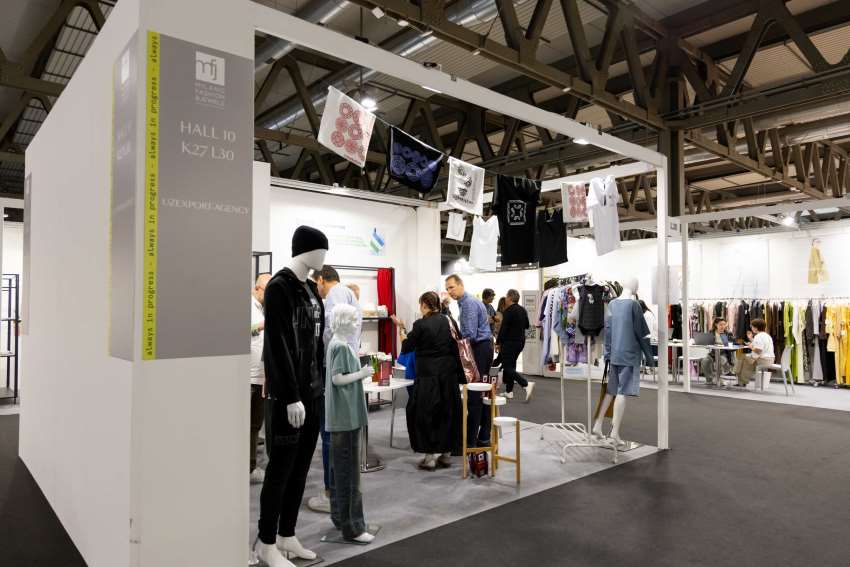
C.L.A.S.S. or Creativity Lifestyle And Sustainable Synergy returned for the second time to White Sustainable Milano, Italy, September 22 to 25, 2022. The objective is to represent a selected and smart path of the production chain related to materials, technologies, production, customization, finishing processes and dyes that are increasingly less impactful on the environment.
An online space called C.L.A.S.S. Smart Shop is offering eco-high-tech materials representing a vast range of categories able to create a new generation of fashion. The Smart Shop is dedicated to students, designers and new generation brands who want to explore and test premium materials mixing style, innovation and responsibility, with high quality, transparency and responsible costs. International protagonists of the technological and digital transition will discuss important topics such as the digital product passport, greenwashing, innovative materials and technologies, regenerative agriculture and new frontiers of retail. C.L.A.S.S. highlights all the ingredients that can bring the next generation wardrobe to life by communicating the real value to the end consumer.
C.L.A.S.S. (Creativity Lifestyle And Sustainable Synergy) is an international eco-hub, which advocates for a new generation of fashion where the fusion of design, innovation, communication and responsibility shapes an informed and competitive business. C.L.A.S.S. supports the whole supply chain to trigger change in the system while activating values that speak clearly to contemporary consumers.
India’s second PLI scheme offers wider incentives
The second production-linked incentive (PLI) scheme for textiles is likely to offer incentives for manufacturing garments and home textiles. These categories cover blankets, bed spreads, and textile accessories like lace, button, and zippers. Three investment thresholds, of Rs 15 crores, Rs 30 crores and Rs 45 crores, are being considered, with double turnover as the criterion for incentives that would range between 8 and 10 per cent under the Rs 4200 crore scheme.
It is also likely to add a minimum number of stitching and sewing machines as another benchmark to avail the sops. The scheme is expected to attract investment and reduce the import dependence in textile accessories. Such value addition sectors are labor-intensive that require low investment but have a high potential to create jobs. Selected companies would have to achieve the minimum turnover, which is two times the investment, in the first year and then a 20 per cent increase in turnover over the previous year. In the first edition of the PLI scheme, the minimum investment required was Rs 100 crores and Rs 300 crores while the minimum turnover required to be achieved for incentives was Rs 200 crores and Rs 600 crores respectively.
Bangladesh tops green garment factory count
Bangladesh now has the highest number of green garment factories in the world with 150 such factories. Of these, some 44 are platinum rated, 93 gold rated, nine are silver standard and four are just certified. Currently, nine of the top 10 green garment factories in the world and 40 of the top 100 are located in Bangladesh. In recent years, a silent revolution has taken place in the garment industry of Bangladesh. In South Asia, Bangladesh has taken the lead in green initiatives. The world’s highest rated LEED platinum denim factory, knit factory, washing plant and textile mill all are situated in Bangladesh.
Bangladesh, the second largest readymade garment exporter in the world, has taken a leading position in sustainable green industrialization with the world’s several top ranked green factories. Indonesia is the second largest, with 40 green factories, followed by India with 30 and Sri Lanka with ten. After independence in 1971, Bangladesh was held up as an example of a failed state. People were used to thinking of the Bangladesh readymade garment industry as a place of forced labor, child labor and small factories. It’s hoped that about ten per cent of the total readymade garment sector in the next decade will use green technology.