FW
Remake’s new transparency report calls Nudie, Mud Jeans rockstars
Remake’s first brand transparency report calls sustainable denim brands Mud Jeans and Nudie Jeans as Rockstars. The report ranks 40 brands against a series of guidelines developed in partnership with human rights, climate, water and waste experts.
Using the brands’ sustainability reports and other public-facing documents, Remake uses the monikers ‘rockstars,’ ‘wannabes,’ ‘offenders’ and ‘up and comers’ to rank brands on topics like traceability and transparency, maker well-being, environmental sustainability, sustainable raw materials, and leadership, diversity and inclusion. It lauds Nudie Jeans for its initiatives like repair shops and water recycling programs. Remake also lauds Mud Jeans for its use of recycled denim and a detailed Code of Conduct, which outlines the social and environmental responsibilities of Mud and its suppliers.
Reformation was included in the “wannabes” list because of its decision to expand its supply chain into China. The brand was awarded a score of 53. J. Crew Group Inc.-owned denim label Madewell was criticized for its failure to scale its sustainable practices beyond its Eco-Denim collection.
The report’ also lists “offenders” such as Zara, H&M, Uniqlo, Forever21 and Urban Outfitters. This list also includes Everlane which was recently slammed for its convenient transparency and the negative attention it received from then-presidential candidate Bernie Sanders for alleged union busting.
Streetwear label Supreme earned a score of zero, bottoming out on Remake’s offenders list due to its lack of transparency. Its recent acquisition by VF Corporation, the owner of sustainable leaders like The North Face and Timberland, may be the start of a more transparent future.
Isko teams up with Arena for a unisex denim collection
Turkish denim mill Isko has teamed up with the Italian aquatic apparel company Arena, to launch a Fall/Winter 2020 unisex denim pieces collection. Featuring Isko’s lightweight denim fabric Bluejym, the collection uses Isko Blue Skin, a stretch technology that offers 360-degree elasticity. The technology ensures easy fabric movement without tension. This fabric is an internal part of Isko’s athleisure range of performance woven fabrics.
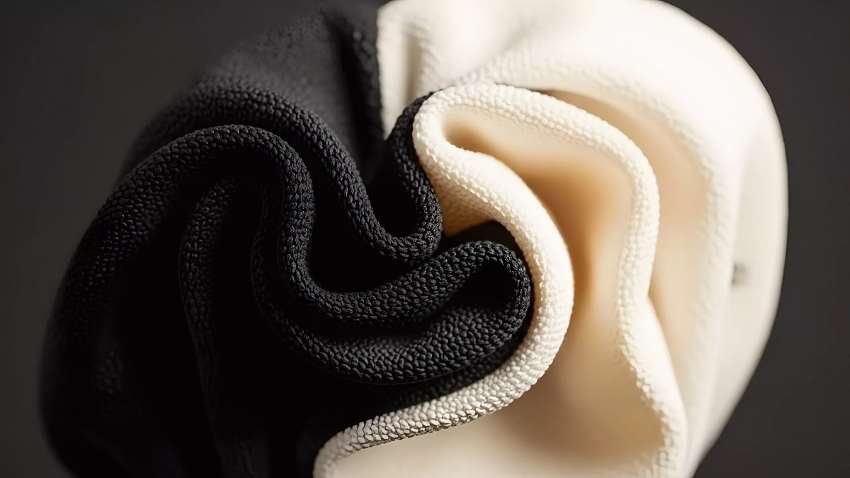
The denim garments in the collection reflect the aesthetic of ’80s activewear. The black jeans have been curated from joggers with a patch logo near the front pocket. The collection also features a unisex jacket that has asymmetrical panels of black-and-white denim. The logo has been designed with a jacquard weave that is placed on the sleeve of the jacket. The collection also offers a reversible half-zip jacket, bomber jacket and cropped women’s hoodie. This has been designed to reflect the bold multi-coloured print from the ’80s.
Arena is popularly known for its brand’s “creative lab”, where experts mix sports heritage with contemporary trends. The company aims to create garments characterized by the maximum freedom of use.
Canopy grants high rankings to Lenzing for circular economy adoption
In its new rankings non-profit organization Canopy has granted Lenzing 30.5 points for their work on circular economy. The company got this position due to Refibra technology as well as high level of transparency in wood and pulp sourcing. Lenzing scored 4 points more than it did in previous year. Lenzing has launched a social impact and afforestation project in Albania in the South European forests to address urgent issues including land degradation, biodiversity loss, deforestation and climate change.
For this project, Lenzing has joined hands with Canopy to ensure that the wood sourcing is in line with sustainable practices in a pulp mill in Brazil. The new plant will comply with the highest productive and energy-efficient facilities in the world and feed 40 per cent excess bioelectricity generated on-site as “green energy” into the public grid.
The plant will produce lyocell fibre with Refibra technology that uses textile waste as part of the feedstock. This will take the company a step closer towards creating a circular economy. This technology has been available since 2017 that combines environmentally responsible lyocell technology with a closed-loop production process, by also ensuring cotton waste materials are upcycled. The fibre is currently available with 30 per cent recycled textiles as a raw material.
Canopy’s has ranked world’s 31 largest wood-based fiber producers with respect to their sourcing. It recognizes the brand’s efforts to use alternative non-wood feedstock and their achievements for lasting conservation, especially regarding critical forests around the globe.
L Brands’ Q3 sales beat expectations
As per IBS data from Refinitiv, L Brands Inc reported better-than-expected sales in third quarter as it benefited from a surge in demand for Bath & Body Works’ products. The company benefited from a sharper focus on hygiene standards during the pandemic which helped it to offset continued weakness at its Victoria’s Secret unit.
Andhre Meslow, CEO, believes the results were driven by continued strength at Bath & Body Works, whose comparable sales surged by 56 percent, improvement in performance of Victoria’s secret, whose sales grew by 4 per cent. The company reported a net income of $330.6 million, or $1.17 per share, compared with a loss of $252 million, or 91 cents per share, a year earlier, when it recorded some impairment charges. Net sales rose by 14 per cent to $3.06 billion, exceeding analysts’ average estimate of $2.67 billion.
Bangladesh apparel exports decline 7 per cent in October
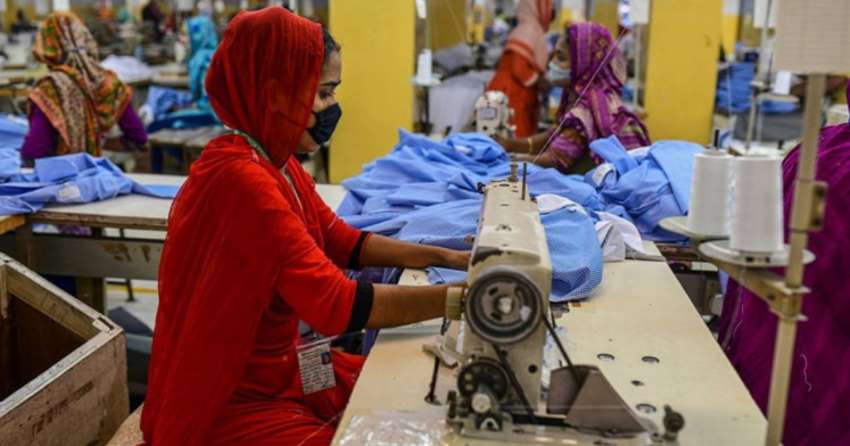
Apparel exports by Bangladesh declined 7.8 per cent year-on-year and 7 per cent month-on-month in October to $2.320 billion. As per a report by the CCF Group, exports of knitted apparels declined 2.2 per cent year-on-year and 0.8 per cent month-on-month to $1.34 billion and the export of woven apparels declined by 14.4 per cent year-on-year and 7.4 per cent month-on-month to $0.99 billion.
From January-October, Bangladesh's apparel exports declined by 19 per cent year-on-year to reach $ 22.38 billion, The export value of knitted apparels declined by 16.5 per cent to $ 11.5 billion and that of woven apparels declined by 21.5 per cent year-on-on-year to 10.87 billion
In October, Bangladesh's home textile exports declined by 69 per cent year-on-year and 28 per cent month-on-month to $102 million, Cumulative export volumes from January-October increased by 20.8 per cent month-on-month and 9 per cent year-on-year to $743 million.
International Woolmark Prize finalists announced
United Kingdom’s Bethany Williams and Matty Bovan, France’s Casablanca, Nigeria’s Kenneth Ize, Canada’s Lecavalier and South Africa’s Thebe Magugu are the finalists for the International Woolmark Prize. The winner will get a reward of AU$200,000 and an opportunity to be sold at retailers around the world. The winner of the Karl Lagerfeld Award for Innovation will receive AU$100,000.
The judging panel for the event will include educator, writer and activist Sinéad Burke, Garage magazine fashion director Gabriella Karefa-Johnson, talent scout the and BoF editor-at-large Tim Blanks. They will review the six finalists' Merino wool collections in February 2021. The aim of these collections is to build each item responsibly through a transparent supply chain, and celebrate the year’s theme of ‘less is more.
L Brands’ Q2 revenues rise to $3.05 billion
Victoria’s Secret parent company L Brands Inc. reported quarterly earnings after the market closed, improving on top and bottom lines, and causing company shares to rise more than 14 percent in after-hours trading as a result.
For the three-month period ending October 31, the company’s total revenues increased to $3.05 billion, from $2.67 billion the same time last year.
By brand, the Victoria’s Secret business, which includes the lingerie, beauty and Pink divisions, decreased by 14 percent to $1.3 billion. The sales of Bath & Body Works surged to $1.7 billion during the same period from $1.09 billion a year ago. The company logged a profit of $330 million, compared with a loss of nearly $252 million in 2019’s third quarter, as a result.
The lingerie giant also showed some signs of improvement. Its total comparable sales were up 4 percent in the Victoria’s Secret business, while Bath & Body Works total comparable sales leaped 56 percent year-over-year as consumers continued to stock up on soaps and hand sanitizers.
In the direct-to-consumer channel, Victoria’s Secret’s sales rose by 42 percent, while Bath & Body Works’ sales increased by 132 percent.
Jessica Lomax named as Executive Vice President of Calvin Klein
Jessica Lomax, Senior Creative Director, Nike has been named as the Executive Vice President, Global Head-Design of PVH Corp owned Calvin Klein with effective from December 9, 2020, reports Fashion Network.
In the role, Lomax will lead Calvin Klein’s global design strategy and provide creative direction across all areas of the business, including licensees, the brand said. She will be responsible for defining and strengthening all product categories for the lifestyle brand, with a focus on essential hero product, in addition to driving collaborations and sustainable innovation.
Lomax excels in creating clear product visions that are rooted in the brand;s DNA and connected to what its consumer aspires today, said Cheryl Abel-Hodges, CEO,Calvin Klein. She hoped that under Lomax’s creative design leadership and through her collaborative and innovative approach, the brand’s product direction will continue to become more consumer-centric, sustainable, and inclusive.
Lomax’s appointment follows two recent hires to the Calvin Klein global leadership team, including Jacob Jordan, who was named as global chief merchant and product strategist in October after first joining Calvin Klein in a consulting capacity in May, and Linh Peters, who left Starbucks to become Calvin Klein's global chief marketing officer in November.
Mango’s online sales to reach €1 billion in 2021
Spanish fashion brand Mango expects its online sales to reach €800 million this year and €1 billion in 2021.
The brand’s online turnover increased by 5 percent till October. This increase waspartly due to the almost three million new online customers the firm has added this year, 900,000 of whom were added during the months of lockdown, when turnover grew by more than 50 percent.
The company had total sales of €2.374 billion in 2019. Of this, 24 percent were generated through e-commerce. Mango is considered one of the first companies in the fashion retail sector to launch e-commerce.
During these months, Mango has implemented various initiatives to meet the online shopper demand, transferring more than 200,000 garments from the brick-and-mortar channel to the online one. Mango also extended its return policy to 60 days and increased its digital marketing spend by over 30 percent so far this year.
BCI launches digital series on cotton sustainability
The Better Cotton Initiative (BCI) has launched a new Cotton Sustainability Digital Series for 2021 that will include an online conference on global cotton sustainability.
The month-long series will bring together the entire cotton sector to shape a more sustainable future for cotton. It will industry leaders and experts and explore the entire cotton value chain. Sessions will focus on topics including climate action, innovation today and social sustainability, according to BCI.
Lucy Shea, group CEO of Futerra, will speak on the topic ‘What will 2030 look like and how do we respond as brands, manufacturers, NGOs and citizens?’ on January 19, 2021. The discussion will explore the sustainability trends that are shaping the world around us and the fashion and textiles sector. In particular, participants can look at how companies who embed sustainability have proven to be more resilient in 2020 and are building back better, becoming the businesses that our future needs. The next ten years will see the disruption of almost every industry, driven by our fast-changing world and the shifting desires of consumers, especially Gen Z. The episode is sponsored by Supima cottons.