FW
British retail industry under pressure from online-only brands
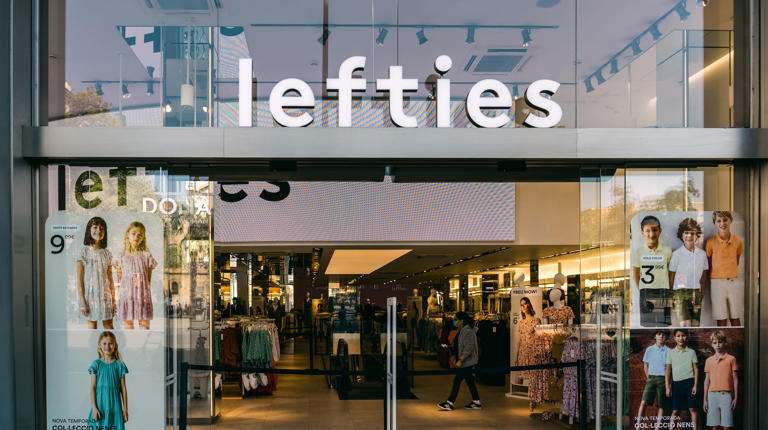
The retail industry is facing tremendous pressure from the growth of online-only brands such as Boohoo, ASOS, and MissGuided. As per a UK financial publication, Zara owner Inditex reported 14 per cent lower sales of €6.05billion during the three months ended October, which is 14 per cent lower than a year ago. The retailer's net income fell 26 per cent to €866million while its operating and inventory costs declined 10 per cent and 11 per cent respectively in the third quarter. The retailer follows a sales model based on fast fashion with higher sourcing exposure from Turkey and North Africa, sophisticated stock management, and consolidation around flagship stores.
On the other hand, the H&M sales model is based on predictable basics from Asia and India, keener pricing, and a simple website. Production lead times from China and Cambodia are typically four to six months whereas Zara’s products can be in store from Turkey and North Africa in just three weeks. Between June and September, Britain lost 78,000 jobs in the retail sector which shows jobs outlook for the sector remains dismal, says Helen Dickenson, Chief Executive, British Retail Consortium.
Though the government's furlough scheme had been effective in preventing job losses in the previous quarter, the industry still shed 78,000 jobs between June and September this year. The pandemic has already seen multiple retailers fall by the wayside, costing shops and jobs, and retailers face further costs in 2021 from both Brexit and the return to full business rates. The combined impact of COVID, Brexit and business rates is likely to significantly impact retail employment in the future.
Dickenson advised the government to provide continued targeted support to those firms most heavily impacted by the pandemic. By supporting retailers in their return to full health, the industry will be better positioned to bolster the country's economic recovery, she said.
Immense opportunities for apparel exports to Spain: AEPC
As per AEPC, Indian apparel manufacturers, including readymade garment players have immense opportunities to increase exports to Spain as the European country imports significantly from other countries. According to AEPC, India is currently the seventh largest readymade garment supplier to Spain with export value of $817.6 million in 2019. The country exported $217.6 million worth of manmade fiber garments to Spain.
At the 'India-Spain Synergies in Apparel and Textiles' organized by the AEPC, Madan Singh Bhandari, Deputy Ambassador of India to Spain said Indian apparel manufacturers can significantly increase their exports to Spain considering the recent transformations that the sector has undergone in India.A Sakthivel, Chairman, AEPC said in the last three months there has been an increase in exports compared to last year. Corona crisis has turned out to be an opportunity as India has been able to increase its production of medical textiles, technical textiles and also MMF based garments.
US’ cotton trousers imports fall during January-October’20: OTEXA
As per OTEXA figures, US’ cotton trousers import fell 25.61 per cent from January to October ’20. Total imports during this period was, $7.61 billion shrinking significantly from $10.24 billion in the same period in 2019. Out of 35 cotton trousers’ exporters to the US, only two countries managed to grow Y-o-Y basis -- Ethiopia and Myanmar. Ethiopia exported $58.34 million worth cotton trousers to the US during the period, marking 21.86 per cent surge from the same duration of 2019. On the other hand, Myanmar exported $17.68 million worth of trousers. Both showed resilience even in some other product categories made out of cotton in 2020.
Top exporter of cotton trousers to the US, Bangladesh exported $1.66 billion worth of trousers while Vietnam exported trousers worth $1.44 billion. India recorded a 34.40 per cent decline with exports value of $187.34 million. On the other hand, Jordan exported trousers worth $ 235 million during the same period.
China’s luxury market to grow by 48 per cent by year end
The Chinese luxury market is expected to grow 48 per cent to reach around $52 billion by the end of the year, says Bain’s annual China luxury report released in partnership with Tmall Luxury Division. As Business of Fashion reports, driven in part by the repatriation of luxury spending and acceleration of e-commerce adoption as a result of COVID-19 and international travel restrictions, this meteoric growth is forecasted to continue through 2025.
However, growth is likely to be uneven with China’s north and northeast regions underperforming in contrast to the south, east and southwest. Categories like leather goods and jewelry will lead this growth followed by ready-to-wear clothing and shoes, beauty and timepieces.
Bain predicts Chinese shoppers to remain cautious about travel for at least a year, making domestic destinations like Hainan key touch points for brands. It also noted that shoppers from or younger than the post-’80s generation continue to drive growth and that online shopping habits adopted mid and post-pandemic will continue to remain relevant.
Brands build momentum within the industry with new AI tools
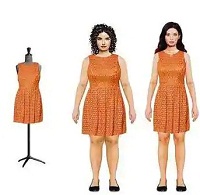 Being woven into every aspect of the industry, artificial intelligence is fast becoming an essential survival tool for fashion brands across the world. As McKinsey in its annual State of Fashion report says, AI startups with fashion and retail focus are being increasingly sought after as brands and retailers have shifted focus from brick and mortar stores to online sales.
New AI tools
As per a Live Mint report, Gurugram-based TryNDBuy, which deployed vision-based virtual layouts during the pandemic, has now gone live with brands such as Jack & Jones and Vero Moda. The retailer has engaged Zalora, a leading fashion e-tailer in Southeast Asia.
Similarly, Bengaluru-based AskSid, has introduced a chatbot known as AI bot that has helped reach a meaningful level of digital interaction with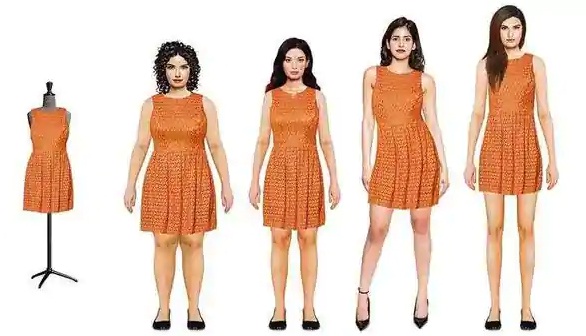 customers. The chatbot has helped the company achieve a big spike in revenue this year besides accelerating global expansion. From April-October 2020, the company’s revenues jumped almost 50 per cent, adds Sanjoy Roy, Co-founder and CEO.
AskSid currently operates in 23 countries, supports 15 international languages, and has also expanded into FMCG brands, including a top paints MNC. It recently advised a client to enter the Norwegian and Australian markets while it helped another whey protein seller shift its marketing focus from bodybuilders to people suffering from ailments such as arthritis and diabetes
Inducing a shift in consumers’ shopping behavior
Data and analytical tools like AskSid’s new AI tool help brands track shifts in demand across geographies, categories and channels. They helps brands penetrate deeper into retail analytics of their products. Tools like TryNDBuy induce consumers’ to shift their purchasing behavior from brick and mortar stores to online. They also help brands expand their product and consumer base. For instance, ‘Try Now’ icon introduced by Vero Moda in its New arrival houses a virtual trial room that offers consumers an opportunity to edit the body shape in full-screen mode.
Supported by the international VC SOSV and Taiwan-based MOX, TryNDBuy has bagged nine US patents for its computer vision modeling methods, says Nitin Vats, Founder and CEO. The MOX software has helped the startup expand into Southeast Asia by deploying its product in India. The startup is currently working on a virtual makeup solution.
Chinese apps, Youcam and Meitu, provide virtual makeup on real-time videos. However, these apps are currently unavailable in India. Makeup brand L’Oreal has also launched a solution named ModiFace that is currently limited to its own products.
AI-based startups face a unique challenge of attracting clients currently bombarded with such a plethora of virtual tryout solutions. To be successful, these startups can launch strategic tie-ups like the one introduced by TryNDBuy with Technopak Advisors. These can help them demonstrate their products before some of the leading brands and build momentum within the industry.
Honesty with consumers can help retailers boost transparency in operations
 With 20 per cent respondents to the State of Fashion 2020 survey done by Business of Fashion, ranking it amongst the top three themes impacting their business last year, transparency is fast becoming a norm in the fashion industry. The more the industry grows, the more consumers expect it to be transparent, says Sarah Ditty, Policy Director, Fashion Revolution. In fact, industry groups like Fashion Revolution often urge brands to publicize their emissions statistics, welfare initiatives and measure to source raw materials ecologically.
Balancing promises and actions
 strategies besides embracing rigorous and meticulous processes. However, they need to strike a delicate balance between making big promises and delivering on them, says Daniel Marks, Chief Creative Officer, The Communications Store.
Adopting sustainable retail
Being honest with consumers
Industry and fiscal support to direct Pakistan’s future textile growth
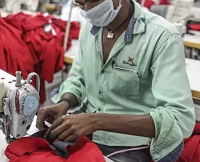 Single largest source of foreign exchange, Pakistan’s textile exports are back on a growth track, says a report by Dawn. Pakistan Bureau of Statistics’ recent figures reveal, from July to October 2020, Pakistan’s textile shipments surged 3.8 per cent to $4.8 billion from $4.6 billion a year ago. The fastest surge was in knitwear, home textiles and denim segments.
The factors that helped exports surge include US-China tensions and ongoing supply disruptions induced by the pandemic in India and Bangladesh, says MI Khurram, Chairman, Comfort Knitwear. These factors helped Pakistan grab additional export orders from Europe and America.
Government initiatives
To leverage its growth export potential, the government announced $5 billion investment across the textile chain that would double exports by 2025. It has also launched an energy package for the industry which not only eliminates peak electricity rates but also offers reduced tariffs on additional power consumption besides fixing power price at $0.07 a unit and gas tariff at $0.065mmbtu for the export industries.
The central bank too has lent a helping hand by reducing interest rates, approving refinancing of wages, deferring payments of the principal amount of loan and providing relief under the Export Financing Scheme (EFS) and the Long-Term Financing Facility (LTFF). Likewise, the State Bank has launched a long-term concessionary financing facility to boost investments in new capacity expansion and up-gradation of technology.
Quality issues impede US exports
Europe is the single largest market for Pakistan’s textiles as demand from the US remains subdued owing to rising infections. However, many manufacturers like Comfort Knitwear are planning to expand their production capacity in the US and increase market share. Until now, Pakistan has not been able to increase its unit prices in dollars due to product quality issues. Most textile exporters in the country are small to medium enterprises who do not have the capacity and wherewithal to improve product quality. Additionally, the cotton grown by them is of poor quality. Unless, Pakistan improves product quality, it will not be able to grow exports, points out Khurram.
Khurram Mukhtar, Chief Executive Officer, Sadeqat, affirms Pakistan is currently the most competitive textile exporting country in the world as it offers both cost and tariff advantages in European and American markets. He expects the demand for value-addition to grow in the country, and urges manufacturers to sustain their increased share in the international market.
Ensure policy support
To double its exports by 2025, Pakistan needs to ensure the current favorable policies are not rolled back in midway, Mukhtar says. However, many exporters advise the government and exporting community to control their optimism as resurgence of virus infections and raw material shortages may reverse the export gains in two to three months. Comparing the unprecedented growth in textile and clothing exports to a windfall, Mukhtar says, whether it will sustain for years or fizzle out within days will depend on how Pakistan directs the industry’s future.
India among world’s largest trousers exporters: Study
 Invented in Central Asia, trousers have become an important part of daily wear for both men and women. As per Textile Excellence, currently India is the 13th largest trouser exporter in the world after China, Bangladesh and Vietnam. In 2019, India exported $1,872.90 million worth of trousers to the world. Most of it to the US, the largest export market for Indian made trousers. India mostly exported cotton trousers to the US, which formed 52 per cent of its total trouser exports during the year.
Cotton woven trousers dominate export basket
In cotton, India mostly exported woven cotton trousers for men, which grew 13.40 per cent to $ 503.03 million during. On the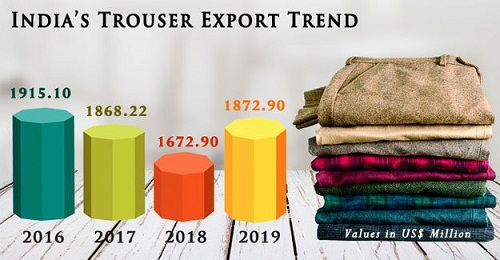 other hand, exports of knitted cotton trousers for men grew 15.23 per cent to $141.88 million in 2019 over the previous year. Export of women’s woven cotton trousers jumped 13.81 per cent to $228.09 million in 2019 over previous year, while exports of knit cotton trousers declined 8.01 per cent to $99.85 million.
Among other materials woven men’s trousers grew 17.47 per cent to $ 284.59 million while exports of knitted men’s trousers grew 15.56 per cent to $ 97.43 million. In women’s category, export of woven trousers made of other textile materials grew 12.16 per cent to $117.91 million in 2019 while knitted trousers grew 14.78 per cent to $75.95 million.
Trousers in synthetic fibers were the third most exported item in 2019 growing 8.89 per cent. In this segment, exports of woven trousers for women grew by 4.60 per cent to $137.64 million, while exports of knitted trousers grew 28.20 per cent to $23.05 million. For men, exports of synthetic fiber trousers grew 11.92 per cent to $99.81 million while that of knitted fiber trousers grew 7.72 per cent to $48.40 million in 2019.
Woolen trouser see miniscule growth
Exports of woolen trousers formed a miniscule portion of total trouser exports from in 2019. There exports declined 2.43 per cent to $15.27 million. In this segment, export of women’s woven trousers grew 44.57 per cent to $9.99 million while that of knitted trousers grew 800 per cent to $ 0.18 million. Exports of men’s woolen knitted trousers totaled $1.08 million in 2019 while knitted trousers totaled $4.02 million. Men’s trouser exports formed 63 per cent of the total trouser exports by India, while women’s trouser formed 37 per cent. Men’s trousers exports grew 13.91 per cent during the year while that of women grew 8.78 per cent.
US remains India’s largest export destination
The US was the largest market for Indian trousers during the year, with 25 per cent share of total exports. India’s trousers exports to the US grew 14 per cent during the year to $462.81 million; followed by UAE which grew at 12.23 per cent to $298.97 million. The country’s trouser imports of other textile materials grew by 15.18 per cent to $ 115.23 million.
UK was the third largest importer of trousers from India with import value of $140.38 million in 2019. However, import of woven men’s cotton trousers declined 15.54 per cent to $24.83 million.
India’s trouser exports to the Middle East countries like Saudi Arabia and Oman recorded significant growth in 2019. Saudi Arabia saw a 106.50 per cent growth to $77.2 million while Oman saw 4 per cent growth to $12.15 million.
US Cotton Trust Protocol welcomes first ten members
The US Cotton Trust Protocol welcomes its first ten US cotton textile manufacturers – Buhler Quality Yarns, Cap Yarns, CCW, Contempora Fabrics, Cotswold Industries Inc., Frontier Yarns, Hamrick Mills, Inman Mills, Parkdale Inc., Swisstex Direct as members. U.S. Cotton Trust Protocol membership enables these mills and manufacturers to prove that they are an approved supply chain partner for brands and retailers who are sourcing more sustainably grown cotton.
Mills and manufacturers who become members of the Trust Protocol have access to the Trust Protocol credit system to validate consumption of cotton and associated credits. The combination of a unique credit accounting system and the Permanent Bale Identification (PBI) system enables brands to have transparency throughout the supply chain to finished product.
The Trust Protocol has been invited to join Cotton 2040 and its CottonUp guide and also is on the Textile Exchange’s list of 36 preferred fibers and materials that more than 170 participating brands and retailers can select from as part of Textile Exchange’s Material Change Index program. In December the Trust Protocol also announced Gap Inc. joined as part of its integrated sustainability strategy and to help achieve its commitment to use only 100 per cent sustainably-sourced cotton by 2025.
Asian E-Tailing Summit features 40 business professionals
The fourth Asian E-tailing Summit (AES), organized by the Hong Kong Trade Development (HKTDC), from December 9 to 11, featured more than 40 business professionals from e-tailing service giants, online retail platforms and brand representatives. More than 11,000 viewers from 43 countries and regions joined the global live streaming of online webinars and presentations which examined the current business practices of small and medium-sized enterprises (SMEs) and shared global success stories and solutions, helping enterprises capture the opportunities brought by digitisation.
The summit kicked off with the keynote session, "Cross-border E-commerce in the New Digital Era", featuring heavyweight speakers from the United Arab Emirates, Thailand, Malaysia and Taiwan, including corporate representatives from FedEx, KPMG, Dubai South, eRomman, Priceza Co, SAP.
The second day of the summit featured webinars covering a range of topical issues in the e-tailing industry, including mobile commerce, personalised customer experiences and omnichannel retailing.
On the summit's final day, several e-commerce elites provided advisory services to companies interested in setting up their own e-commerce platforms. Jonathan York, Consulting Manager, Euromonitor International, analysed how companies can succeed in the Association of Southeast Asian Nations (ASEAN) market through e-commerce and explored the digital consumer mindset in the region. Frankie Ng, Hong Kong Lead, Shopify, shared how the brand uses a blend of technology and strategy to win in the increasingly competitive online environment, while Harrace Lau, Co-founder of eOneNet, introduced a 10-step internet success system to help companies turn around their online business and expand globally. And Fione Tan, President, 28Mall, helped business owners wishing to enter this market resolve problems relating to cross-border logistics, customs clearance and import duties, local customer services and last-mile deliveries.