FW
Pakistan benefits from early opening of textile mills
This early opening of its textile mills gave Pakistan an edge over competitors in textile exports, says the Eurasian Times. As Shahid Sattar, Secretary-General, All Pakistan Textile Mills Association, reveals, the country bagged all orders diverted from China, India and Bangladesh. As per a Bloomberg report, companies like Guess Inc, Hugo Boss AG, Target Corp and Hanesbrands moved to Pakistan when other Southasian nations went into lockdown.
External factors like the US-China tensions and ongoing supply disruptions induced by the COVID-19 pandemic in India and Bangladesh helped orders from the West to almost double since July, said Khurram Mukhtar, a textile exporter in Pakistan. Cost and tariff advantages over Chinese competitors in European and American markets and supply chain disruptions in India and Bangladesh helped Pakistan emerge as textile leader on a global scale.
The approach also prevented economic hardship that came after the lockdown. In contrast, India’s total lockdown trapped workers in the big cities that was followed by massive migration. Experts have argued that while the movement of labor from cities to villages was low in Pakistan, the virus that came to cities through international travelers, stayed in the cities only.
Future Fashion Factory receives £2 million funds for new projects
Industry-led research and development program Future Fashion Factory has secured £2 million in funding for new innovation projects. As per a Drapers Online, the funding will be used to discover sustainable alternatives to traditional materials and design processes. Future Fashion Factory has approved 13 new projects including a new digital system for 3D-woven fashion design under development by Twelve Oaks Software; a vegan, petroleum and freshwater-free alternative to down or polyester for insulated clothing put forward by SaltyCo; and HydroCotton’s approach to more sustainable cotton production.
Each of these projects addresses a challenge identified by industry partners from Future Fashion Factory’s community of more than 270 fashion businesses and professionals.
Set up last year, Future Fashion Factory aims to improve speed, productivity and sustainability in the UK’s clothing supply chain. It is led by the University of Leeds, in partnership with the University of Huddersfield and Royal College of Art. Based in Leeds, the program initially received £5.5 million in funding from non-governmental public body the Arts and Humanities Research Council and planned to raise an additional £3 million from industry.
COVID-19 dampens spirit as textile and apparel exports decline across countries
 The COVID-19 pandemic has affected flow of orders amongst major textile and apparel exporting countries of the globe. While India had already lost many textile orders to China before RCEP was signed, the agreement has further widened loss of orders.
Vietnam’s annual textile and apparel exports to drop
As per a report from Vietnam Industry and Trade Electronic News, Vietnam’s textile and apparel exports are expected to drop by 9.3 per cent to $24.76 billion in the first 10 months of this fiscal. Its annual exports are expected to drop by 10 per cent year-on-year to $33-35 billion on account of drop in demand from European and American markets.
As per reports, the value of Vietnamese textile and apparel exports dropped by 2 percent during the first quarter and by 27 per cent in the second quarter. Though they improved slightly in the third quarter, Vietnam’s textile and apparel exports are still expected to drop by 10 per cent year-on-year to reach $35 billion. This drop has forced textile and apparel companies in Vietnam to adjust their product structure and shift from traditional to high-end products including suits, shirts, work clothes, knitted garments and traditional shirts.
Sri Lanka notes lowest decline in apparel exports
The country saw a 21.97 per cent decline in textiles and apparels exports during the first nine months of this year, says a Daily Financial Times report. Sri Lanka’s apparel exports declined to their lowest in five years to $3.1 billion during the period.
Sri Lanka Joint Apparel Association Forum (JAAF) also estimates a 22.15 per cent fall in Sri Lankan textile and apparel exports to $1.4 billion. According to the association, the country’s exports to the EU fell by 21.36 per cent year-on-year to $1.3 billion while its exports to other countries/regions fell 23.25 per cent year-on-year to $400 million.
Insufficient raw material slow Myanmar’s orders
Statistics from Myanmar’s Ministry of Commerce reveal, apparel exports in FY2019-20 declined 6.95 per cent to $4.28 billion from $4.6 billion in the same period last year. The country’s apparel industry enjoys preferential tariffs on its exports to EU. Its apparel exports constitute 30 per cent of the total export value. However, the onset of the pandemic blocked its raw material imports slowing down its orders from the international market. As the result Myanmar had close down some of its apparel factories, leaving thousands of employees unemployed.
To avoid raw material shortage, experts advised Myanmar’s government and private units to establish a complete supply chain of spinning, weaving, dyeing and finishing, sewing and manufacturing in the apparel industry.
Jordan introduces discounts to boost sales
As per the Jordan Industry Association, in the first nine months of this year, Jordan exported apparels and leather worth approximately $1.27 million, reports Petra News. This was a 15 per cent year-on-year decline from previous year. Jordan expects this decline to widen to 25 per cent in Q4 of the current year before gradually returning to normal in early 2021. Some of these companies are presently manufacturing masks, protective clothing and shoes for local needs. They export around $550 million worth of goods annually, leading to a creation of 33,000 jobs.
Jordan’s weekend apparel sales account for 50 per cent of its total apparel sales, says a Jordan Times report. Though the country began preparations for winter sales in September itself, 90 per cent of its products remain unsold in the warehouses. To boost sales and increase cash flow within the industry, Jordanian merchants plan to discount prices this season, leading to fierce competition. Jordan currently has 11,000 apparel stores, which accounts for 60 per cent of stores in major commercial centers. The country exports its apparels to countries such as China, Turkey, India, Bangladesh, Egypt and European countries.
Xinjiang Cotton Ban: An opportunity for India to boost exports
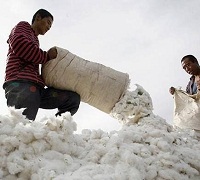 The US-China trade war intensified recently with the Trump administration banning cotton imports from the sprawling Chinese quasi-military organization, Xinjiang Production and Construction Corps (XPCC).
As per a report, the XPCC produces more than 2/3 of China’s cotton. In 2019, the organization exported around $11 billion worth of cotton textile and apparel products from China. US’ ban on cotton from this region would have sweeping consequences for apparel firms and other companies importing cotton products.
Intertwined supply chain makes traceability difficult
Many US firms rely on XPCC-produced cotton for the smooth functioning of supply chains. However, the intertwined nature of global supply chain makes it difficult for companies to trace XPCC imported cotton. Even the largest companies are unable to guarantee that the apparels made by them do not contain XPCC cotton. For such firms, COVID-19 has highlighted the importance of having a diversified supply chain. Many have already shifted to the China+1 model with the XPCC ban further expediting their efforts.
The ban may actually work in India’s favor as it may encourage global brands to place more orders with Indian exporters, says credit rating agency, ICRA. Some Indian exporters have begun receiving increased orders while others are negotiating with international buyers to fill the vacuum caused by the ban on XPCC cotton.
India to fill vacuum caused by XPCC ban
This had raised the prospects for Indian cotton exports. Cotton Association of India estimates India’s cotton exports to rise by 63 per cent this fiscal to touch 65 lakh( 6.5 million) bales against June estimate of 40 lakh bales. In the previous year, India had exported 50 lakh(5 million) bales reported Cotton Corporation of India. The reasons for improved estimates include: higher demand for surgical gowns and mask production, coupled with lower input prices domestically.
Even as the value of Indian rupee fell to a two-month low in early November, global cotton prices rose to their highest levels in 17 months, which increased traders’ profit. At the beginning of November, Indian cotton traded at around 74 cents per pound to importers in China, Bangladesh and Vietnam; while cotton from Brazil and the United States traded at 77 cents per pound.
This year, India is expected to lots of surplus cotton to boost exports. In fact, downward revision of production figures by the US from 17.06 million bales in September to 17.05 million in October has helped boost Indian exports.
Bangladesh to diversify from RMG exports
World’s second-largest apparel exporter Bangladesh plans to diversify its exports away from readymade garments to preserve its economic growth momentum, said AHM Mustafa Kamal, Finance Minister.
As per a Business of Fashion report, readymade garments currently account for more than 80 percent of the nation’s total exports, with the bulk of the shipments headed to either Europe or the US. The pandemic-induced global demand slump has already contributed to a slowdown in exports, which makes up about 15 percent of the economy. The government seeks to encourage exports of everything from electronics to jute.
Diversification of exports assumes urgency for the South Asian nation for reasons beyond the pandemic. Bangladesh, which is among the rare few economies to keep expanding in a world hit by recession, is set to jettison its least developed country status by 2024 — a classification that currently makes it eligible for the European Union’s “Everything but Arms” trade deal that grants duty-free, quota-free access for all exports, except arms and ammunition.
Filo organizes webinar to present its 55th edition
A webinar to present the 55th edition of Filo to operators and the press was held recently. The meeting had two parts. The first part had, Paolo Monfermoso, General Manager, Filo, explain the objectives and the new projects of the exhibition, while the second part saw Gianni Bologna, Creativity and Style Supervisor, describe product development proposals for the exhibition.
Monfermoso reflected on the difficulties and uncertainties affecting the textile industry. He advised industry leaders to step up their efforts to improve the textile supply chain in the international market. He further focused on the high participation recorded by the online presentation of the 55th edition of Filo. According to him, the webinar formula highlights the choice of presenting product development proposals through a mix of live speeches and pre-recorded videos Classified under the title, ‘single tickets, the product development proposals of the 55th Filo are divided into three sections: Re-creating, Re-thinking, Re-starting.
The three sections will showcase timeless and seasonless garments that express reassuring continuity with Italy’s handcrafted and artistic manual traditions. Filo-the international exhibition of yarns and fibers for orthogonal weaving, circular knitting and technical fabrics will be held from February 24-25, 2021 at MiCo – Milan Convention Centre in Milan.
YKK launches ViralOff zippers at Lineapelle
YKK has launched its first ViralOff zippers at the Italian trade fair Lineapelle ‘A New Point of View’’ from September 22-23, 2020. The company launched a line of zippers that are tape treated with Viraloff a technology patented by the Swedish company Polygiene, an important global reality for the hygienic treatment of garments which, applied in the finishing phase, eliminates 99 percent of viruses on fabrics in about two hours.
The chemical components of these zippers are eco-sustainable and the treatment of fabrics with an antibacterial product such as Viraloff encourages a reduction in the frequency of washing of the garments, prolonging their life cycle and the consumption of energy, water and chemical additives.
Following a philosophy of the “Cycle of Goodness”, YKK focuses on contributing to the containment of the virus that even a detail such as the zipper can offer. Moreover, the zipper is the protagonist of the motto that completes the YKK logo “Little Parts, Big Difference” and in which the Group has invested for more than 80 years.
US commerce department to investigate USITC claims
As per a Sourcing Journal report, the US Department of Commerce will continue to investigate United State International Trade Commission (USITC) claims that the US industry is being materially injured by imports of polyester- textured yarn from Indonesia, Malaysia, Thailand and Vietnam as they are allegedly sold in the US at less than fair value.
The investigation was initiated on a petition filed by US polyester textured yarn spinners Nan Ya Plastics America and Unifi Manufacturing claiming imports were being dumped in the US market below fair market value and was causing harm to their businesses. The petition listed 36 US importers of polyester textured yarn from those countries and 26 exporters combined from the four countries.
The US imported polyester textured yarn worth $38 million from the four countries in 2019. It imported another $103 million worth of the product last year from Mexico, India, Indonesia and Malaysia. The USITC public report, ‘Polyester Textured Yarn from Indonesia, Malaysia, Thailand and Vietnam’ contains the views of the commission and information developed during the investigations. It can be accessed on the USITC website.
ShanghaiTex 2021to be held in November 2021
The 20th International Exhibition on Textile Industry, ShanghaiTex 2021, will be held at Shanghai New International Expo Center, Pudong, Shanghai, from November 23-26, 2021. In response to the ‘contact-free’ trend in this e-commerce era, ShanghaiTex will invite all confirmed exhibitors to participate in the complementary online exhibition. International buyers can view the products and send instant inquiries to exhibitors on a 24/7 basis. The online + offline platform Textech will host a series of virtual and offline events and promotion services. The platform will allow exhibitors to promote their business via various channels.
ShanghaiTex will be sponsored by Orient International (Holding) Co, China Council for the Promotion of International Trade Shanghai Sub-council and China Chamber of International Commerce Shanghai Chamber of Commerce. The event will be organized by Shanghai Textile Technology Service & Exhibition Co, Shanghai International Exhibition Co and Adsale Exhibition Service.
Levi Strauss & Co urges EU to set more aggressive sustainability goals
Levi Strauss & Co has urged the European Union to set more aggressive targets for sustainability, and signed a global sustainability coalition, reports Sourcing Journal. Jeffery Hogue, Chief Sustainability Officer, Levi Strauss &Co said, the planet can’t afford for progress to take a backseat right now. As per United Nations, global carbon dioxide emissions need to fall by 45 per cent till 2030 in order to reach net zero by 2050.
Levi’s and 170 other companies and investor CEOs are calling on the European Union to establish more ambitious environmental goals. The companies recently signed an open letter urging EU heads of state and the European Commission to set an EU 2030 greenhouse gas (GHG) emissions reduction target of at least 55 percent, which will put the continent on track to becoming climate-neutral by 2050.
Levi’s also plans to improve performance within its supply chain, which makes up 63 percent of its overall carbon footprint. It pledged to reduce supply chain emissions 40 percent by 2025, a goal it will achieve by establishing new targets for suppliers and expanding its partnership with the International Finance Corporation, a global development institution focused on the private sector in developing countries.