FW
Anantapur jeans industry in Andhra Pradesh faces testing times
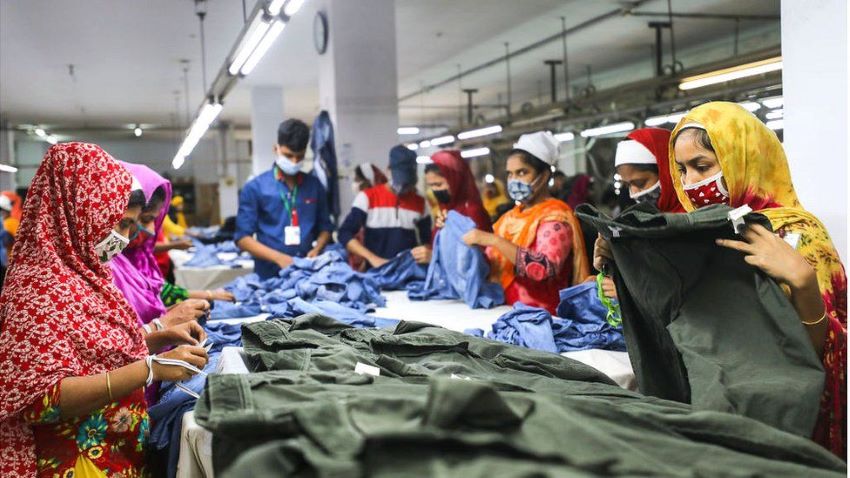
Increasing raw material costs have pushed the jeans industry of Anantapur into a crisis. The jeans business turnover of this town in Andhra Pradesh which crossed Rs 1200-odd crores annually has fallen by more than 50 per cent. From a production of 10,000 jeans pants a day, production has fallen to 2000 jeans pants. The economic slowdown has paralysed production.
As per Rayadurg Readymade Garments Association costs of raw materials like colors, threads and zips have doubled. Transport costs have risen. Disruptions in transport due to the pandemic, particularly in states like Kerala, Karnataka, AP, Tamil Nadu and Maharashtra, lessened the volume of business and thereby production. The industry was hit hard by two waves of the Covid pandemic. The town dubbed as a jeans town used to export jeans including tops and bottoms on a massive scale. But today several units in the industry have downed shutters and downsized their workforce consisting mainly of women. The earnings of the 35,000-odd workforce have dipped. This home-based business was the best bet for housewives, who could sit in their houses and safely earn at least Rs 10,000 a month. But now with financial constraints regular buyers insist on instalment payments to continue purchases while company suppliers want payment upfront and do not accept partial payments as before.
Brands, manufacturers should sign petition to stop Amazon’s deforestation, urges Slow Factory

Amazon is currently being plowed down by cattle farmers producing leather for the fashion industry, say researchers from sustainability nonprofits Slow Factory Foundation and Stand.earth. Researchers have identified dozens of fashion brands whose factories source hides from the Amazon, including Nike, Adidas, American Eagle Outfitters, H&M, Zara, Coach, and Cole Haan. The destruction of the Amazon rainforest is moderating climate change by reducing its ability to absorb carbon dioxide. Fashion brands are adding to this problem by sourcing leather from the Amazon. They should instead opt more sustainable leather alternatives, says the study.
Buyers to be blamed for climate change
Known as the world’s carbon sink, the Amazon rainforest plays a vital role in keeping the earth’s temperature’s stable. However, fire and deforestation are destroying this vast jungle, says a study in the July edition of the scientific journal Nature.
Greg Higgs, Director-Research, Stand.earth, points out instead of small-scale farmers, many of whom live below the poverty line and big companies buying their cattle hides should be blamed. Stand.earth traced the journey of these hides and which industries are buying them. Through custom and export data it identifies two main industries buying it: auto industry, which uses the leather in car seats; fashion industry, which uses it in shoes, handbags, and accessories.
Research by Slow Factory shows, cow hides are moving from leather tanneries in Brazil to leather manufacturers in many countries and then to fashion brands that turn the leather into products. Factories of over100 brands source leather from Brazil, many of which are some of the biggest labels in the world.
According to Higgs, companies work with leather factories that source from many countries, including Brazil, India, and China. Since all the leather is combined once it arrives at the factory, the brands can claim they have no way to tell if they’re using Brazilian leather sourced from the Amazon. Companies often use this as an excuse to keep using these factories.
Brands can be the change
While fashion companies contribute to the problem, they can also help bring about systemic change, opines Celine Semaan, Co-founder and CEO, Slow Factory. They can compel the Brazilian government to regulate the deforestation of the rainforest. Consumers can also cancel brands.
Brands and consumers can address this problem by auditing their supply chains in a better way, force tanneries and manufacturers they work with to disclose where they source their leather, and direct them to stop buying from suppliers contributing to deforestation. They can also pledge to stop buying leather from suppliers that can’t trace where their leather is from, in order to ensure that none of their products are contributing to deforestation.
The Slow Factory itself has partnered with MIT to develop Slowhide, a material that mimics leather but is all natural and plant based. Similarly, a company called Mylo has developed a leather alternative made from mushrooms that is used by brands like Lululemon and Stella McCartney. Consumers can also play a role by refusing to buy from brands that don’t commit to more sustainable practices. Slow Factory urges people to sign a petition demanding that brands and manufacturers fix problems in their supply chain to stop deforestation.
Zaitex develops denim wash
Zaitex Fashion has developed a denim treatment. It is a laser improver, born to enhance laser treatments on denim garments and give them a much more natural and authentic effect, similar to manual scraping. Zetakin LST ennobles the features of the fabric and keeps the original cast and shade of denim. Usually, laser application may have unexpected results on denim garments, like a grey/brownish patina on the surface, spoiling the natural look of the fabric, making necessary additional washing and rinses to get them away. The laser improver Zetakin LST fixes these common issues of laser finishing and can be applied by spray gun, by soaking or even better by spraying with the latest nebulising technologies.
The process of washing improves the fastness properties of indigo-dyed denim jeanswear and in addition, by altering the types of washes, various fashion looks are achieved. The wash down and other post make processes applied to denim garments are many and varied. Often the objective is to distress the garment so that it looks old and worn. This distressing gives the garments a fashion appeal and also softens an otherwise harsh fabric. These post make process can have a devastating effect on the sewing threads and therefore the seams, if care is not taken in their selection and application.
Weavers benefit from Staubli solutions
Staubli offers state-of-the-art machinery and system solutions for optimising workflows in the weaving mill. These systems that enhance the efficient performance of virtually any textile mill will be on display at next SITEX 2022. Staubli offers solutions that are perfectly adapted to the specific needs of each individual mill. Staubli offers a complete range of warp tying (knotting) solutions for every type of yarn. From very fine to coarse yarns and PPT tapes, Staubli has the solution for the perfect warp change. The new jacquard machine is equipped with a new electronic architecture concept that provides reliable data transmission for hook selection even at high speeds. The new design offers easy maintenance for higher production output.
Staubli offers a large product portfolio of cam motions and electronic rotary dobbies for frame weaving with air-jet, water-jet, rapier, and projectile weaving machines. Staubli cam motions and rotary dobbies are ideally operated with the new maintenance-free e32 and e33 transmissions. This combination significantly improves the user-friendliness of frame weaving, reduces maintenance, and increases the profitability of the entire installation.
Active in the Indian textile industry for over half a century, Staubli is very familiar with the specifics and requirements of Indian weavers and the demands of their markets. Staubli offers not only machinery and systems, but solutions that allow weavers to enhance their productivity and profit from significant time savings.
Siddhartha Shukla is Lanvin’s new deputy GM
Lanvin has appointed Siddhartha Shukla as deputy general manager. He is an Asian-American executive and a luxury expert. Shukla will oversee Lanvin’s global expansion, concentrating on commercial development, product strategy, digital excellence and brand positioning initiatives. Throughout his career, Shukla has been at the forefront in business transformation, product innovation and brand marketing, questioning the status quo and paving the way for fresh growth opportunities.
Shukla, 43, speaks four languages and has already notched up a wealth of experience in the course of his career. A Yale graduate, he formerly worked at premium US label Theory, which he joined in 2013 as chief marketing officer, rapidly climbing the corporate ladder to become in two years the label’s chief brand officer. He had previously spent a year at Reed Krakoff. In the 12 years before then, he had been in charge of international communications at Gucci, between 2000 and 2006, and at Yves Saint Laurent, until 2012.
Lanvin is owned by the fashion and luxury division of the Chinese conglomerate Fosun. Lanvin expects to return to its 2019 pre-pandemic sales levels in 2021, thanks to strong commercial performance in China and the US and the growing success of its accessories. Lanvin’s collections are distributed via 25 monobrand stores and some 300 retailers worldwide.
China’s technical textiles sector grew 12 per cent in two years
Over two years China's technical textiles industry grew by 12 per cent. As per the National Bureau of Statistics from January 2021 to September 2021 production of nonwovens and cord fabric was down 1.01 per cent and up 29 per cent respectively. Operating income of enterprises in the technical textile industry decreased by 14.74 per cent with an average increase of 10.78 per cent in the past two years. Their total profit dropped by 63.78 per cent year on year, seeing an average increase of 14.12 per cent in the past two years. The operating profit margin reached 5.25 per cent, seeing a year-on-year decrease of 7.11 percentage points.
The operating income of 31 listed companies in the third quarter fell by 1.15 per cent and their total profits declined by 33.59 percent. Among them listed companies in the fields of textiles for transportation vehicle and filter textiles enjoyed a good development momentum.
China's exports of nonwovens, special yarns, twine and rope (cable), ribbon in the first three quarters was up by 6.91 percent. Export of nonwovens was down by 4.52 percent. Its export volume was up by 8.06 per cent. The export value of industrial textiles increased 39.74 per cent. The export of chemical fiber nonwoven protective clothing (including medical protective clothing) fell by 79.81 per cent.
Turkey expects rise in readymade garments exports
The Turkish ready-to-wear industry expects exports to jump 15 per cent in 2022. The reason for this optimism is European markets are eyeing more imports from Turkey. As per Mustafa Gültepe, Head, Istanbul Apparel Exporters’ Association (IHKIB) European brands are looking at Turkey due to problems in the supply chain, increased freight and logistics costs. The disruptions that the pandemic has caused in the global economy, including in supply chains across continents, have prompted many global fashion retailers to consider turning away from low cost manufacturing hubs in Asia. Some plan to shift their production to Turkey.
Straddling Europe and the Middle East, Turkey is well placed to benefit from changes to global supply chains, and its strategic location and strong manufacturing base are seen as a plus. There is a major opportunity ahead for Turkey and its ready-to-wear sector, given the disruptions in the supply chains and the fact that global brands are preferring to purchase from nearby regions. Thanks to the major interest, the industry has achieved a big jump in exports for the first time in seven years.
The country wants to be at the top of the global league. But problems such as access to raw materials and financing for new investments pose obstacles to achieving the foreign sales goal next year.
Better Cotton helping farmers in sustainable cultivation
Better Cotton is helping farmers in China, India, Pakistan, Tajikistan and Turkey perform better on environmental, social, and economic criteria. In Tajikistan, Better Cotton farmers use 16 per cent less water than farmers not on the program. In India they achieve nine per cent higher yields, and in Pakistan they use 12 per cent less synthetic pesticides.
Better Cotton focuses primarily on supporting farmers on the ground. Continuous improvement is a core principle for Better Cotton. Its focus is on helping cotton communities to survive and thrive, while protecting and restoring the environment. It collaborates with businesses and civil society organisations from across the cotton sector, to advance sustainability and encourage demand for Better Cotton among suppliers, manufacturers, retailers and brands. Working with close to 70 different field-level partners, Better Cotton continues to reach more and more of the world’s cotton-farming communities.
Nearly all of them – farmers and farm workers – work on smallholdings less than 20 hectares in size. The initiative helps them enjoy better yields, improved working conditions and greater financial security. Over 2.4 million farmers now have a license to sell their cotton as Better Cotton. In total, Better Cotton has reached almost four million people whose working lives are connected to cotton production.
Sri Lanka aims to be a global apparel hub by 2025
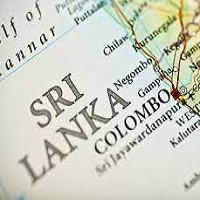 Sri Lanka’s apparel industry forayed into exports in the late 70s. This ushered in forex and recognition to the industry. Facilitated by the 200 Garment Factories Program, Sri Lanka expanded manufacturing across the country during the 90’s. This helped the country uplift its rural economies. As per a Knitting Industry report, its manufacturing evolved further in the last decade as it focused on end-to-end partnerships and complete customer solutions. However, the industry’s full potential is yet to be realised.
Known as a trusted partner within global supply chain of leading brands and retailers, Sri Lanka has witnessed significant disruption in its economy due to the pandemic. This has made its vision of elevating the country to an $8 billion global apparel hub by 2025 more criticals.
Aligning to changing trade scenario
Global apparel exports reached $493 billion in 2019. However, Sri Lanka’s contribution was just 1 per cent of this at $5.3 billion. The country now aspires to grow its apparel exports to $8 billion. Despite high labor costs and less export market access, the Sri Lankan apparel sector progressed by leveraging other sources of competitive advantages. The country is known to be a reliable and high quality apparel supplier, which has elevated its reputation and overall positioning amongst reputed global brands including Victoria’s Secret, Marks & Spencer, Boss, NIKE, Calvin Klein, GAP, Levi’s, Ralph Lauren, Lululemon, Calzedonia, Intimissimi and Tommy Hilfiger.
Unlike other regional counterparts, Sri Lanka’s apparel sector also attracts better professional talent. Many fabric manufacturers have established their factories within the country’s Free Trade Zones while labor-intensive apparel manufacturers have relocated to rural areas.
While the Sri Lankan apparel sector is on its way to realize its true potential, it needs to leverage these strengths and align itself to changing trade shifts. With the political and economic tensions between the Far East and West increasing, a significant amount of trade is likely to shift away from China 2022 onwards. Sri Lanka’s policymakers including its industry umbrella organisation, the Joint Apparel Association Forum (JAAF), and its constituent associations, including the Sri Lanka Apparel Exporters Association (SLAEA), plan to facilitate this process of achieving the sector’s vision.
Conducive environment for innovation
To boost apparel exports, Sri Lanka needs to retain existing concessions under the EU and UK Generalized System of Preferences (GSP) Plus schemes while securing tariff reductions to other countries. The country’s needs to increase its export quota of eight million garment items per year to India, one of the fastest-growing regional economies.
Sri Lanka aims to evolve as an innovative apparel hub, it needs to create a safe and conducive environment for innovation by focusing on Intellectual Property and data protection laws. Similarly, it needs to reform its colonial-era labor laws and provide favorable policies and incentives for investments related to backward integration and automation.
PLI scheme made flexible for manmade fiber, technical textiles sector
Certain flexibilities may be provided to investors under the production linked incentive (PLI) scheme for the manmade fiber and technical textiles sectors to help them meet the strict timelines for achieving the mandatory prescribed minimum annual turnover. The idea is to ensure the industry does not miss incentives due to genuine problems they may encounter in their business activities.
Under the scheme, if participants fail to achieve the prescribed minimum net incremental turnover for any given year, they will not be eligible for claiming incentive for that particular year. They will only be eligible for benefits in the remaining years of the five-year block.
Benefits under the PLI scheme are to be provided for five years from 2025-26 to 2029-30 on incremental turnover achieved during 2024-25 to 2028-29. As per part one of the scheme, beneficiaries need to invest a minimum of Rs 300 crores in plant, machinery, equipment etc. They will earn an incentive of 15 per cent of turnover the first year and thereafter one per cent lower every year for the next four years. In the second part, the minimum investment limit is lower at Rs 100 crores, while incentives, too, are lower, starting at 11 per cent in the first year and getting reduced by one per cent each year in the four subsequent years.