FW
South Africa to guide textile units on sound practices
South Africa will assist small and medium enterprises in the textile sector to address environmental challenges through sustainable business practices. This will be done by implementing eco-innovation and life-cycle approaches to improve circularity within the textile industry. The Innovative Business Practices and Economic Models in the Textile Value Chain – or InTex – project is being implemented by the National Cleaner Production Centre South Africa (NCPC-SA) working with a technical partner, Centre for African Resource Efficiency and Sustainability (CARES). The project is funded by European Union and managed by UNEP in Tunisia, Kenya and South Africa.
During the first phase of the project, a target of 10 companies will be assisted and at the end of the phase five case studies will be developed to share the impact and encourage further uptake of circular economy principles and innovative business practices in the sector. The whole point of this project is to promote innovative business practices and economic models in the textile value chain. The second phase of the project will see the implementation of the project being extended to other textile companies through hosting of training and capacity building workshops.
Small and medium units will benefit from the training workshops by learning about eco-innovation, product environmental footprint and circular business models and gain access to tools and guidelines that can help make their business more sustainable, circular, and resilient. Further, by being part of the project, they will also learn how to calculate and communicate the environmental footprint of their textile product and develop new business strategies and underlying business models by following the eco-innovative approach.
Now Burberry enters clothing renting business
Burberry is branching out into clothing rental. The luxury fashion house has partnered My Wardrobe to offer some of its most iconic pieces, including the famous trench coat, for rent for a minimum of four days, and up to 14 consecutive days. And if the customer doesn’t want to give it up, it’s also possible to buy a given product used, at a more affordable price than buying it new. The choice covers everything from scarves to trench coats, T-shirts, dresses, pants and sneakers.
Rented clothing is gaining popularity among youngsters as this is the only way they can afford to buy high-end designer wear trendy clothes for events such as weddings, theme parties, photo-shoots and film making. Women’s online clothing rental and ethnic wear segments dominate the global market share. Men‘s end user and western clothing style segments are also growing at a robust rate.
Such initiatives help mitigate fashion’s impact on the planet. Whether it’s buying second-hand, recycling, repairing, upcycling or clothing rental, all these alternatives to traditional fashion help significantly reduce the fashion industry’s environmental footprint. Emissions from this rapidly changing sector are expected to reach 2.7 billion tons a year by 2030. Many fashion companies are now tackling the problem head on, offering new approaches to the way fashion is consumed.
MAS Holdings enters adaptive wear
MAS Holdings has ventured into adaptive clothing. The vision is to normalize the use of adaptive wear through universal design thinking, specialized garment construction and fastener placement, to unlock everyday clothing solutions for temporary and permanent conditions. To create truly meaningful and inclusive clothing which further enhances ease of dressing and delivers greater comfort to adaptive users, MAS will leverage specialized garment construction to provide sensory-friendly finishes, employ magnetic or auto-aligning or auto-locking fasteners, accessory pouches, wicking fabric for sweat absorption and discrete closures.
MAS plans to develop specially-constructed garments – particularly intimates, swimwear, active wear and recovery wear – facilitating independent dressing for those with varying disabilities. These include amputees, wheelchair users, those with muscular dystrophy or mobility impairments, as well as people undergoing physical rehabilitation or recovery post-injury or surgery.
At present, adaptive wear – clothing incorporating the unique needs of consumers with disabilities into their designs and construction – is offered only by a handful of major brands and retailers. Even the limited designs on offer can lack visual appeal.
MAS is one of South Asia’s pioneers in intimate wear manufacturing. Founded in 1987, it is a fully integrated, sustainable apparel manufacturer, employing over 1,00,000 people across 16 countries. MAS spans 57 manufacturing plants with established design locations placed in key style centers worldwide. MAS provides design-to-delivery solutions to leading global apparel brands.
Intertextile Shanghai Apparel Fabrics in March
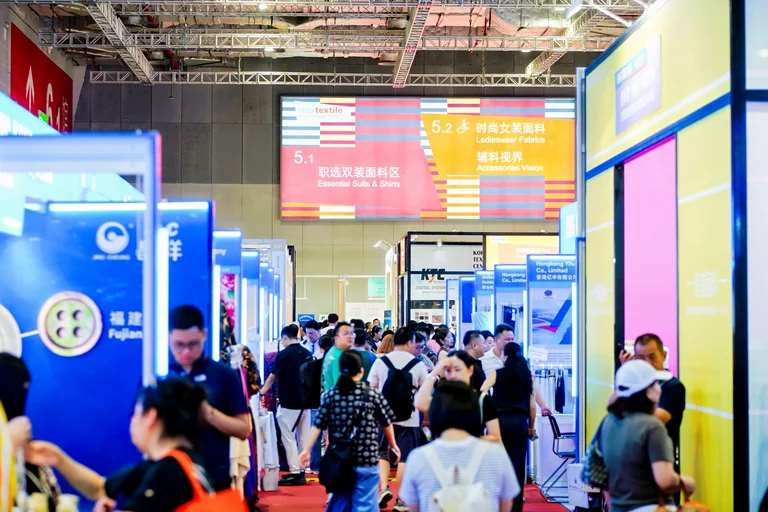
Intertextile Shanghai Apparel Fabrics will take place in China, March 9 to11, 2022. This is aimed at supporting the global textile and apparel industry in business recovery, information exchange and making progress on combating climate change. Intertextile Apparel is the ideal trading platform for global exhibitors to meet with genuine buyers who are looking to place orders. The entire textile supply chain can be found under one roof for buyers to conveniently source the products they are looking for. Exhibitors and visitors will also be able to catch up with the latest industry developments via Intertextile Apparel’s trend forum, seminars, panel discussions and product presentations, which will cover topics on design and trends, market information and business strategies, sustainability Issues, and technology and solutions.
Intertextile fairs have remained a consistent source of business trading for the industry over what has been a challenging couple of years, with both the spring and autumn editions successfully taking place in 2021. The resilience of Intertextile Apparel, the global apparel textile flagship, has been mirrored by the strong recovery of the Chinese market, with the two progressing together in the rapidly changing climate. China’s textile industry has continued to expand and has experienced growth in terms of production, revenue and profit in the first three quarters of 2021.
Lycra launches new portal to empower customers
Lycra has launched an online customer portal that empowers brands, retailers, and garment makers to connect to a global network of mills on a single platform. The company is known for its solutions in the apparel and personal care space. Staying competitive in retail means moving at lightning speed and the portal leverages Lycra’s connectivity across the apparel and personal care value chains and offers a one-stop seamless solution to rapidly move customers’ ideas from concept to launch.
The digital experience allows brands and retailers to connect with mills and manufacturers in a virtual capacity without losing the inherent advantages of an in-person connection. It allows users to source fiber solutions using its digital fabric library, directly connect with mills to begin or expand on business relationships, learn about new capabilities, and virtually peruse product catalogues. Its platform features a knowledge center, where users can access exclusive content such as webinars, white papers, and videos covering new fiber technologies, industry trends, marketing, and sustainability, among other topics.
Customers can scout marketing and merchandising solutions through the portal, inclusive of brand assets and garment hang tags. And requests can be submitted for trademark license agreements and fiber certifications. Lycra’s long-term goal is to get to a fiber made with post-consumer content.
Australia’s International Sourcing Expo in November
International Sourcing Expo Australia will be held from November 15 to 17, 2022. The event is aimed at helping businesses and industries reinvigorate their global sourcing activities and build sustainable alliances with production partners. The premise is to bring companies together for commerce, connection and education.
The expo is for anyone looking to improve or diversify their supply chain and product offering, compare production capability and costs, produce their own label or start a new sourcing business. International Sourcing Expo will be co-located with Footwear and Leather Show and China Clothing Textiles Accessories Expo. Businesses can connect on an international scale and in a dynamic trade show environment rich with sourcing opportunities and potential production partners, as well as education and industry insights. Thousands of apparel, textile and footwear industry leaders from Australia and the Asia Pacific will converge for the event. The impact of the pandemic has affected and disrupted many businesses and supply chains. The event will be relevant more than ever before to businesses who seek to source and cooperate internationally.
International Sourcing Expo is being organized by the International Exhibition and Conference group, the seminal producer of global sourcing events in Australia. From 2023 the show format will be expanded to include additional dates and product categories.
UK brand saves time with Kornit
Save Our Souls Clothing has implemented the Kornit Storm HD6 Lite system for just-in-time production of its alternative custom apparel.
Save Our Souls, based in the UK, offers print services to a community of artists driven by a love of tattoos, music, art, and life, with a growing catalogue of designs applied to a variety of apparel at the time it is ordered, ensuring minimal inventory waste and carbon footprint.Kornit Digital is a worldwide market leader in sustainable, on-demand, digital textile production technologies.
Adding the Kornit Storm HD6 Lite has provided Save Our Souls with consistency, quality, and reliability to print, pack, and ship most orders in a single day, offering customers an exceptional experience that keeps them coming back.Replacing a fleet of smaller, low-capacity digital direct-to-garment (DTG) machines, the Kornit system has enabled the company to scale its business upward with minimal time and labor needs.Kornithas enabled Save Our Souls Clothing to produce higher quantities with a single operator while eliminating pretreatments and heat presses from the routine. This has empowered Save Our Souls to launch the Buy That Merch platform for artists, broadcasters, and musicians to produce and sell their own merchandise directly, without the fees associated with existing online marketplaces.
Primark launches jeans in line with guidelines
Irish fast fashion chain Primark has debutedits first collection designed in line with the Ellen MacArthur Jeans Redesign guidelines.
The range uses organic cotton and recycled content. The collection meets all of the Jeans Redesign standards, with adult jeans in the collection made from either 70 percent organic cotton, 29 percent recycled cotton and one percent elastane, or 70 percent organic cotton and 30 percent recycled cotton. Children’s jeans are made of 78 percent organic cotton, 20 percent recycled cotton and two percent elastane. All of the organic cotton and recycled cotton used by Primark in this collection is fully traceable. Zips and buttons can be removed and the denim can withstand a minimum of 30 washes.
The Jeans Redesign guidelines were established in 2019 based on expert-provided insight as a way to set a standard for garment health that would make it easier to recycle denim at its end of life. The guidelines include minimum recyclability requirements such as using cellulose fibers from regenerative, organic or transitional farming methods, including easy-to-remove hardware, and foregoing the use of any hazardous chemicals. In addition the fabric should be able to withstand domestic washing.
Indonesian trade imbalance with South Korea persists
Trade between Indonesia and South Korea increased 29 per cent from January 2021 to September 2021 compared to the same period last year.
Much of Indonesia’s textile exports are in the form of raw materials such as spun yarn which is later processed into cloth by the textile industry in South Korea. Finished goods processed in South Koreaare sent back to Indonesia to meet the domestic market demand and some are re-exported to the United States and Europe.
Indonesia’s textile trade balance with South Korea is expected to remain in deficit despite the Indonesia-Korea Comprehensive Economic Partnership Agreement (IK-CEPA) which comes into force next year.Under the agreement, South Korea will eliminate more than 95 per cent of its tariff lines and Indonesia will eliminate over 92 per cent and give preferential tariffs to support Korean investment. CEPA will not only impact industries such as automobiles but also technology. CEPA will also facilitate exchanges of professionals in areas such as science, technology, software and robotics, promoting cooperation in high-tech industry.
However the implementation of the IK-CEPA will not have a significant effect on boosting the export performance of Indonesia’s textile industry. The market structure created by South Korea has forced Indonesia to export raw materials.
Joulik partners with Dutch retailer
Joulik haslaunched a capsule collection in partnership with C&A.
Joulik is a brand from Brazil. C&A is a Dutch retailer. The pieces include dresses, pants, blouses, accessories, and even shoes. This is the third collaboration of the brand with the Dutch retailer. The first collection in 2014 took almost two years to be launched, with Joulik closely following all stages of product development. In 2017, the second partnership came out, and now comes the third collaboration, which is already on sale in stores and in e-commerce throughout Brazil. But this collection is smaller due to the unpredictable scenario generated by Covid and when the partners started work on the collection, at the beginning of the year, they still didn’t have an idea of what the future would be like. Joulik made a hand-drawn sketch of the pieces, then passed it on to the computer and transformed them into vectors to carry out color tests. C&A has a bigger and faster production since their structure is much bigger than Joulik’s.
Founded in 2009, Joulikbegan with shirts and hand embroidery. C&A's supply chain encompasses more than one million people, employed through 788 global suppliers, across four different sourcing regions.C&A started trading in 1841 as a textile warehouse.