


FW
Fifth edition of INTIMASIA 2023 aims to revamp India’s intimate wear market

The fifth edition of INTIMASIA 2023, one of Asia’s largest intimate wear trade shows is set to return with a bang after a Covid hiatus from February 20-22, 2023 at Bombay Exhibition Center, Mumbai. The show will feature over 200 leading brands in segments such as: innerwear, thermals, shapewear, sleepwear, loungewear, swimwear, activewear, sportswear and socks. With numerous behind-the-scene manufacturers of finished product of the intimate market, INTIMASIA will also feature a specialized sourcing section featuring another 100 raw material suppliers presenting fibres, fabrics, laces, elastics, trims, accessories, labels, packaging and machinery.
Key brands target middle class
Yusuf Dohadwala, Chief Organiser of INTIMASIA and CEO of IAAI explains, “With this edition of INTIMASIA, we are spearheading the next revolution of growth in the Indian intimate wear industry. This will be an unprecedented event, with all the movers and shakers of the industry under one roof. We are in the golden era for the intimate wear industry, in India, and the next 10-15 years will see immense growth and opportunity in the segment. With the complete industry supply chain from brands to manufacturers to suppliers and distributors to retailers all gathered in one common pursuit, we will witness an event like none other before.”
Key brands expected to participate are: VIP, Bodycare, Triumph, Amante, Paris Beauty, Macho Hint, Zivame, Bonjour, FCUK, One8, Sloggi, BodycareKids, Rupa, Lyra, LUX Dollar, Spykar- Underjeans, Macroman, Onn, Little Lacy, Ladycare, Lancy Care, Slumber Berry & Honey, Laika and Softline among others. Some of the participating raw materials and suppliers will include TENCEL, R-ELAN, Raj Krupa, SafeXpress, Morgan Tecnica, Balaji Kotak, Sheela Foam, Shreeji JS Fashion, Ankush Textiles, Carvico, Chaitanya Fabrica, Runlam, DevdeepTex, Texpro, Elaspra, Rainbow, Ambica among others.
Largest trade event in apparel industry
Supported by leading trade organizations such as the Intimate Apparel Association of India (IAAI), Federation of Hosiery Manufacturers Associations (FOHMA), Wholesale Hosiery Traders Association (WHTA) and Ministry of Micro, Small & Medium Enterprises, the fifth edition of INTIMASIA is a much-awaited one as a premier industry event. The trade show is expected to attract over 15,000 retailers and distributors from India and neighbouring countries and is set to be India’s largest trade event for a particular segment of the textile and apparel industry.
Indian intimate wear market to grow exponentially
The innerwear and comfort wear segment currently valued at Rs 60,000 crores is expected to reach over Rs 90,000 crores by 2026, says a recent Wazir Advisors study. The intimate apparel segment is now coming into its own with the aspirational middle class striving for a better lifestyle and the upper class with high disposable income. Intimate wear is no longer a secretive segment confined to the bedroom or treated as just a necessity as it’s now become a fashion item peeking seductively from outer-wear clothing when on the streets.
Sleepwear, loungewear and swim-wear are now fashion statements made popular by bloggers and celebrities on the same lines as party wear and high-streetwear. The intimate wear segment is expected to be speed dial with double-digit growth even if other segments of the Indian manufacturing industry may be hit by the upcoming predicted recession, as it is now an all-season fashion wear for both at home and on the street.
India launches loads of textile schemes in 2022
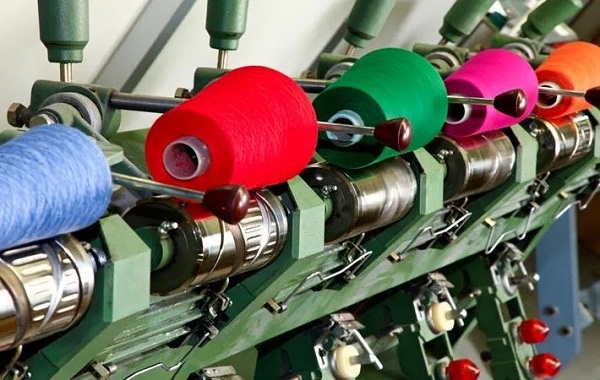
The year 2022 was an eventful year for the Indian textile sector. Under the National Technical Textile Mission (NTTM), 74 research proposals were approved in the category of specialty fiber and technical textiles. Seven PM Mega Integrated Textile Region and Apparel (PM MITRA) parks have been approved to develop world-class infrastructure including plug-and-play facilities with an outlay of Rs 4445 crores for a period up to 2027-28.
The guidelines in respect of the scheme have been published. Proposals from 13 states have been received. A total of Rs 621.41 crores in subsidy were released in 3159 cases under the Amended Technology Upgradation Fund Scheme and special campaigns were organized at major clusters for settling backlog cases. A total of 73919 persons have been provided training of which 38823 persons were provided placement under the Samarth scheme for capacity building in the textile sector.
The Production Linked Incentive (PLI) scheme was launched with an approved outlay of Rs10,683 crores to promote the production of manmade fiberapparel, manmade fiberfabrics, and products of technical textiles in the country.
NIFT adds to existing campuses
A National Institute of Fashion Technology (NIFT) campus at Daman was made operational for the academic session 2022-23. Moreover, new campus buildings for Bhopal and Srinagar are also coming up. Projects in the silk sector have been initiated. A jute scheme covering 170 jute growing blocks with 1,89,483 hectares has benefitted 4,20,309 jute farmers. Export performance rose by 38 per cent from last year with a current value of Rs 3786 crores. The value of exported jute diversified products is Rs 1744 crores. A total quantity of around 26.87 lakh bales of jute bags has been indented.
Cotton and pashmina sector gets assistance
Cotton cultivation has increased by five per cent compared to last year. A brand named Kasturi for Indian cotton has been launched to encourage mechanized harvesting of cotton, improving the quality of cotton and reducing labor costs. Further 75000 hand-held kapas plucker machines have been distributed. A revolving fund of two crore rupees has been set up for procurement of pashmina wool. Portable tents have been distributed to the nomads of Leh in order to improve living conditions. Further 300 predator-proof corrals have been constructed for the safety of pashmina goats along with the distribution of 50 sheep shearing machines to Uttarakhand.
Handloom and handicraft get major supports
Financial assistance has been provided to handloom clusters. Weavers have been provided improved looms and accessories. Skill upgradation training has been imparted to handloom workers. Assistance amounting to Rs18.49 crores has been released for marketing events. In the handicrafts sector a total of 272 marketing events were organized. Pahchan cards were issued to 30 lakh artisans. Training programs and design workshops were conducted for the benefit of artisans. Modern toolkits were distributed to artisans.
European textile industry under pressure
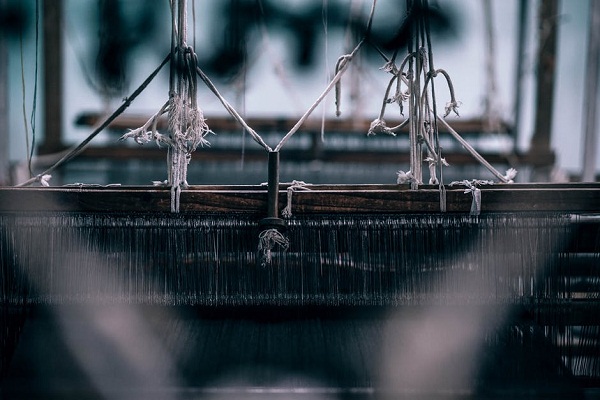
The European textile industry is facing a loss of competitiveness. For one the energy cost in Europe is six times higher than in the US, China, and neighbouring countries. This factor alone has almost erased the business case for producing in the EU.
At present, many textile and clothing companies are producing at net loss or have shut down production. Industrial conditions have worsened in such a way that there is no business case to invest in Europe or buy products produced or processed in the EU. It is only the sense of responsibility of entrepreneurs towards European society that is keeping plants and production running. While the EU is passive and extremely slow in articulating a credible and effective response to the energy crisis, its main international competitors and trade partners have developed comprehensive state-aid frameworks for their domestic industry. It is expected that energy prices will remain high and volatile, opening the door for imports to gain substantial market shares in the EU.
Comprehensive relaunch plan could be a saver
The market situation has eased somewhat over the past months, but the crisis remains because gas prices are still extremely high in comparison to last year. This suggests that the current loss of competitiveness of EU manufacturing will not be recovered even with lower energy prices, unless measures are taken to correct the playing field on which the EU industry has to operate in the international markets. Only with an ambitious and comprehensive relaunch plan can Europe be able to restore its credibility as a global manufacturing powerhouse. If the status quo is maintained, not only the EU will not be able to recover its competitive position on the global business stage, it will also fail in its plans to reach zero-net emissions and achieve circularity. These ambitions need massive capital investments.
Urgent action needed
The whole value chain, from fibers, nonwoven, to fabrics, clothing manufacturers, is facing unprecedented pressure deriving from the current geopolitical situation, the new macroeconomic conditions and competition. The industry fears the situation is going to worsen if no emergency action is taken, especially because a recession is expected in the coming months. The main structural component of EU manufacturing is small and medium units which are particularly exposed to the current crisis as they do not have the financial leverage to absorb the impact of energy prices for much longer. Urgent EU action is needed to ensure their survival. Access to finance and markets must be safeguarded for all those actors who are capable and willing to invest in Europe, on the basis of reciprocity. In these challenging times for geopolitical stability, ensuring strong trade ties with the EU’s traditional allies and partners is of the utmost importance.
The roll-out of an investment and state aid plan should not interfere, but rather support, the dialogue with the US (and other partners) and the deepening of the EU’s trade and investment partnership.
Global brands make a beeline to tap growing India’s luxury market

The Indian luxury market is expected to grow by ten per cent over the next five years. Global brands have been making a beeline into India though strategic tie ups.
The country’s fashion market is driven by premiumization, greater penetration of e-commerce and a higher focus on private labels as well as entry of international brands. Wealthy GenZ buyers are making a beeline for high-end stores. They are keen to splurge, and spend the big bucks right now.
Surge in ultra high net-worth individuals
There's also a surge in the number of Indian ultra high net-worth individuals. This population has risen 11 per cent between 2020 and 2021, and is expected to grow by as much as 39 per cent between 2021 and 2026. These big spenders are powering the Indian luxury market. India's luxury goods market is expected to grow annually by eight per cent. The number of wealthy Indians has grown substantially over the last decade. There has been an 11 per cent increase in people with incomes above $30 million since 2011. That number is expected to climb to 39 per cent by 2026.
India voted seventh most valued nation
India has also been voted as the seventh most valued nation brand. With an increase in 32 per cent in its brand value, India has moved up one position in the most-valued nation brands list.
US leather imports from China up 29 per cent
US imports of leather apparel and accessories from China during January 2022 to September 2022 grew by 29 per cent year on year.
During this period US imports of leather apparel and accessories from China were 27 per cent of its total imports. The other top five suppliers were Italy (15 per cent), Cambodia (12 per cent), France (eight per cent), Indonesia (six per cent), and India (six per cent).
India is making efforts to boost leather exports. The US-China trade war offers huge opportunities to Indian leather exporters to raise shipments to the United States. This is the only industry where exports of value-added products are almost five times more than the import of inputs/components/accessories and capital goods.
US imports from China have been surging since 2020 when it touched rock bottom. Shipments in January 2021 to September 2021 were 12 per cent higher than inbound shipments in the corresponding period of the preceding year when they came crashing down by 45 per cent year on year. Inbound shipments were $4.831 billion from January 2017 to September 2017, and then they witnessed a downward trend to slip by two per cent year on year in January 2018 to September 2018. They further reduced to $3.393 billion in the corresponding period of 2019.
Fabric market growing at seven per cent
India’s textile fabric market is growing at a CAGR of seven per cent. Textile fabric covers polyester, cotton, poly-cotton and other varieties of fabrics.
The rise of e-commerce portals, which gives small-scale producers who were confined to a specific geographic area more exposure, has increased the demand for clothing. Overall the demand for clothing will rise in the next few years due to social media, e-commerce, influencer marketing, urbanisation and increased disposable income, which will all contribute to the growth of the textile fabric industry.
At the same time, China’s textile fabric market is expected to grow at a CAGR of seven per cent from 2022 to 2029.To achieve a substantial market share in the worldwide textile fabric market, and strengthen their position, manufacturers are pursuing expansion methods such as current developments, mergers and acquisitions, product innovations, collaborations, joint ventures and partnerships etc.
As low-cost, lightweight, multifunctional materials gain popularity in athletics apparel during the next few years, market participants will discover attractive prospects. Through efforts to improve products, research and development will help the market grow even more.
Despite all the challenges across the globe, the global textile fabric market is showing good growth.
Turkish apparel exports grow maximum at five per cent
Turkey’s apparel exports grew by around five per cent from January 2022 to November 2022. The export revenues earned by Turkey in the first eleven months of 2022 are the highest ever and the growth has been driven by soaring demand from Europe amid supply chain bottlenecks and soaring shipping costs.
Exports in November alone rose by close to two per cent, marking the highest November sales so far. Exports of readymade garments however fell five per cent in November 2022 as compared to November 2021.
The European Union imported $ 920 million worth of Turkish ready-to-wear goods in November 2022, followed by the Commonwealth of Independent States with $ 200 million, and other European countries with $ 188 million.
Turkey has a target of becoming one of the top three textile exporting countries in the world. The country is already one of the top five textile exporting countries and overtook countries like South Korea and Italy to claim the fifth spot.The industry has increased its share in global textile exports to an all-time-high of three percent. Turkish textile companies are exporting their products to more than 200 countries. Turkey is well known for near-shore manufacturing capabilities that are of high quality.
PLI scheme gets good response
The production-linked incentive scheme for India’s textile sector has attracted investments of Rs 1,536 crores.
Approval letters were issued to 56 applicants who met the eligibility criteria. Applications under the PLI scheme for textiles were received through a web portal from January 1, 2022, to February 28, 2022. The PLI scheme with an approved outlay of Rs 10,683 crores was launched to promote the production of manmade fiber, apparel, manmadefabrics and products of technical textiles in the country to enable the textile industry achieve size and scale and become competitive.
Applicants who have completed the mandatory criteria for the formation of a new company have had approval letters issued to them. Investment to the tune of Rs 1,536 crores has been made so far.
There is now the second edition of the Production Linked Incentive (PLI) scheme. The scheme for garments, made-ups and home textiles will have lower minimum investment and turnover requirements so as to attract small and medium entities. The incentives on offer are slightly lower than what was offered under PLI 1 but the scheme is still attractive. The minimum investment requirement for the first part is Rs300 crores with a minimum turnover requirement of Rs600 crores. Part two requires a minimum investment of Rs100 crores with a minimum turnover requirement of Rs200 crores.
Pak: November textile exports free fall by 19 percent
Pakistan’s textile exports plunged by 19 percent in November 2022 as compared to the corresponding period last year. So says All Pakistan Textile Mills Association (APTMA).
At a time when the country is faced with immense economic challenges and looking toward the IMF and friendly countries for inflows of dollars to meet its external liabilities, the continuous fall in textile exports is alarming and expected to add to its economic woes.
The textile sector plays a significant role in supporting the economy and continues to be in the spotlight owing to country’s dependence on foreign exchange.This vital sector, which also provides massive job opportunities, contributed around 60 percent to total exports during the last fiscal year. The devaluation against the dollar which would have given Pakistan’s textile exporters a competitive advantage over its competitors in terms of pricing has not helped. Instead the sector is faced with a crisis that includes liquidity constraints, energy shortages and non-functioning of new projects.The recent floods also destroyed the cotton crop with only five million bales available this year while the demand of the industry is above 14 million bales.
Also foreign exchange issues have curtailed the import of cotton and other essential inputs.
Pakistan cotton production may fall by 43 per cent
Pakistan’s cotton production for the year 2022-23 is estimated to fall by 43 per cent compared to the past year.
The primary reason for this year’s situation is the devastating monsoon floods that damaged major cottongrowing regions. Pakistan is the fifth largest cotton producer globally but the country will need to import at least five million bales in the ongoing fiscal year to meet the demand from the textile sector.
Farmers in Pakistan have continued to grapple with severe droughts and catastrophes like floods. Sugar mills have come up in cotton growing areas. Sugarcane has proved a better alternative for farmers tired of failing to protect cotton from pinkboll worm and other constraints, but the reward cannot outweigh the cost borne by the country in terms of losing textile exports.
The country’s fields have been populated with biotechnology cotton, originally developed for temperate environments with lower pest infestations and never intended for subtropical climates like in Pakistan and India.Bacterial treated cotton doesn’t grow well at temperatures above 40 degrees, which are usually the average in summer. Given the year-long crop cultivation with no crop planning, insects stay in the field for the whole year. Transgenic varieties can prove to be the key in battling pests, weeds, and climate.











