FW
VDMA-German Textile Machinery delegation promotes sustainability in India
The VDMA Textile Machinery Association is spearheading a delegation visit to India, set to take place from December 4 to December 8, 2023. This mission involves 13 leading textile machinery manufacturers and is aimed at promoting sustainable and efficient textile production. Supported by the German Federal Ministry for Economic Affairs and Climate Action, the event is organized by SBS Systems for Business Solutions in collaboration with VDMA India.
On December 5, Ahmedabad will host a technology showcase, while Coimbatore will follow suit on December 7. Decision-makers and experts within India's textile and nonwoven industries will have an opportunity to explore the latest textile machinery innovations, spanning various stages of the value chain, from spinning to finishing. Participating companies include Andritz, Baldwin, Groz-Beckert, and more. The VDMA represents over 3,600 European engineering firms, underlining its commitment to innovation and sustainability, with an emphasis on small and medium-sized enterprises.
In a bid to boost sustainability and efficiency in India's textile industry, the VDMA Textile Machinery Association has organized a delegation visit by 13 renowned German textile machinery manufacturers. Supported by the German Federal Ministry for Economic Affairs and Climate Action and in collaboration with VDMA India, this event is set to take place from December 4 to 8, 2023. With technology showcases scheduled in Ahmedabad on December 5 and Coimbatore on December 7, industry decision-makers and experts will have the opportunity to explore cutting-edge textile machinery solutions.
The 13 VDMA member companies and their Indian partners cover the entire textile value chain, encompassing spinning, knitting, weaving, nonwovens, dyeing, and finishing. Notable participants include Andritz, Baldwin, Groz-Beckert, and Saurer. The VDMA, representing over 3,600 European engineering companies, aims to advance innovation and sustainability in the textile sector, with a particular focus on SMEs. This event aligns with India's push towards sustainable and efficient textile production.
Eastman's Naia Renew: Revolutionizing sustainable fashion
The 2023 Textile Exchange Conference is shining a spotlight on responsible materials, and Naia from Eastman is taking center stage as one of the event's sponsors. Naia Renew, a breakthrough in sustainable fibers, combines molecular recycling technology with eco-conscious sourcing. Comprising 60% sustainably sourced wood pulp and 40% certified waste materials, it can be blended with other sustainable fibers, offering endless fabric possibilities while significantly reducing its carbon footprint over its life cycle.
Eastman's patented carbon renewal technology transforms hard-to-recycle waste materials into biodegradable fibers, aligning with its goal to eliminate textile waste from landfills and incinerators. The company actively engages with industry players through the Alliance of Chemical Textile Recycling to advance chemical recycling technology and maximize the use of recycled textile waste.
Naia Renew's fully traceable and responsible supply chain adds to its allure, with certifications and support for reforestation projects. Fashion brands like Patagonia and COS are already adopting Naia cellulosic fibers, underlining their commitment to sustainability without compromising quality or performance. Ruth Farrell, General Manager for Eastman's textiles division, highlights how Naia Renew empowers sustainability without trade-offs.
European luxury brands are not disclosing production origin on their labels
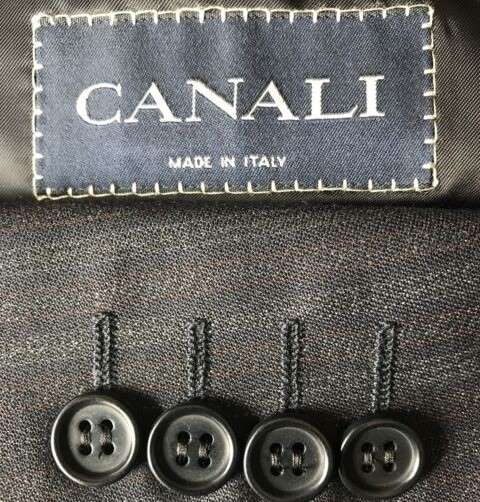
For years, fast fashion brands the likes of H&M and Zara have been pulled up for not being truthful about their sustainable supply chain, mostly dismissed off as ‘green-washing’. What is interesting is sitting at the topmost echelons of fashion, most European luxury clothing labels haven’t been truthful either about their supply chains – the fact that from textile to stitching to embellishments, most haute couture are actually produced in Asian hubs that have been reliable providers of craftsmanship and quality for the likes of Saint Laurent, Dior, Chanel, Louis Vuitton and so on.
However, with European Union laws being circumvented, these brands can stitch a button here or sew an applique there in Italy or France and have the right to say that these garments are made in Italy and France. The belief is that revealing the garments are actually made in China, India or Vietnam would damage a luxury brand’s reputation as Western luxury buyers do not approve of their high-ticket items being made in poor countries.
They are under the false belief that countries like Italy and France actually have skilled labour working on handmade items – there is a handful and their handmade pieces are priced well above the usual luxury ticket. As Isabel Marant the French designer behind the eponymous label points out, the bulk of all haute couture is India-made nowadays not only for the practicality of cost but also for skills that no other country can offer when it comes to handcrafted work.
Luxury labels have obfuscated transparency
Sitting lofty, talking about sustainability and innovative technologies that propel such luxury labels as the bearers of the ethical way to a greener world is just the public-facing story. By not acknowledging their supply chain as a long practice, these are the well-known labels that have been the reason the international fashion sector is moving at a snail’s pace when it comes to transparency.
For the first time in 2023, two brands scored 80 per cent in the Fashion Transparency Index Study done by Fashion Revolution. In fact, 28 per cent of the 250 brands studied failed to cross double-digit transparency percentages. As luxury labels don’t want to insert the source ‘Made in India, Made in China’, the average score in transparency of 250 of the world’s largest fashion brands went up by a mere 2 percentage points to just 26. As long as Western fashion executives harbor the misconception that their Western luxury consumers might question the working condition and product quality at source, transparency will remain obfuscated.
In the realm of social media, much has been discussed on how hubs like India offer exquisite craftsmanship and are also major supply source for many of the finest luxury fashion labels.
India finally gets her acknowledgement
The first-of-its-kind Dior Fall 2023 collection held at Mumbai’s iconic The Gateway of India put the spotlight on Indian contribution to French haute couture brand as it paid its long-overdue homage to Indian craftsmanship. International fashion media wrote their own tributes to these craftsmen as other collections let out their Indian stories. The India factor in luxury clothing is now being acknowledged with leading labels like Bvlgari, Hermes and Balenciaga now crediting and using Made In India for some of their statement pieces. However, this still remains the exception and not the norm.
High-end fashion brands do have things they want tightly shut in the closet. As this sector has high profit margins, the operational costs can only be kept to a minimal, which makes them seek shores where labor is cheap, and labor laws not conducive to the vast population of workers engaged in production. However, its time they reveal their actual sourcing hubs and be more transparent.
GenovaJeans
The GenovaJeans initiative, held in Genoa from October 5 to 8, celebrated the new generation of jeans and set the premises for the creation of a community dedicated to this iconic, revolutionary, and highly innovative garment.
30 prominent industry leaders, divided into three categories (heritage, new creatives, and production chain), created a unique and inspiring experience in valuable historic venues in the heart of the city. Presented in-group exhibitions, they forged a circular journey from the design to the creation of jeans, from the ingredient to the final outfit, and vice versa.
Heritage brands
Heritage brands, exploring the history, evolution, and best practices of this iconic garment, were hosted inside the Biblioteca Universitaria and included:
Blue Blanket Division
Blue Of A Kind
Diesel etc
Here is a closer look at some of the heritage brands featured at GenovaJeans:
Blue Blanket Division
Blue Blanket Jeans is a brand that draws from vintage-inspired garments to create collections considered contemporary in terms of style and sustainability. One of their claims is #BEST UNWASHED, proposing RAW garments that, through the genuine and natural wear and frequent use, tell the story of the owner who wears them, thus fulfilling two major requirements expressed by designer Antonio Di Battista: genuine and natural wear and a moral commitment to environmental impact, making them sustainable.
Blue Of A Kind
Blue of a Kind is meant to be not just a fashion company, rather a community built around an idea.
Diesel
The Diesel items presented at GenovaJeans this year belong to a new generation denim collection that promotes circularity: Diesel Rehab Denim.
Brands must speak out against Bangladesh wage board's outrageous proposal
Bangladeshi garment workers protesting for higher wages
The ongoing wage talks for the Bangladesh ready-made garment sector could result in a new poverty wage of just 95 USD per month (10,400 Tk), based on an outrageous proposal presented by employers at the latest Wage Board meeting.
Trade unions and labour organizations reject this barefaced attempt to keep workers trapped in poverty. The deficient offer results from the reluctance of major fashion brands to actively support workers in their struggle for decent wages.
Living-wage-committed brands such as Asos, H&M, M&S and Uniqlo must end their silent complicity with cutthroat business owners, pay higher prices for their products and support Bangladeshi trade unions’ demand to raise the wage to at least 207 USD (23,000 Tk) per month.
“If the new minimum wage is as low as 10,400 Tk, this means that the majority of workers cannot survive on an income they earn for a 48+ hour workweek in this industry,” says Kalpona Akter, president of the Bangladesh Garment and Industrial Workers Federation. “International buyers should take responsibility now before the situation gets even worse.”.
Trade unions have staged several demonstrations in Bangladesh and have reached out to over 60 major brands sourcing from Bangladesh. Brands were urged to support the demand for 23,000Tk, commit to sourcing from Bangladesh after the minimum wage increase, and absorb the higher cost of labour in their purchasing prices.
This was underlined by the BGMEA’s recent call on the ACT brands urging them to consider the higher cost of living and inflation that workers are facing by paying a “fair price” and be more “empathetic and rational on pricing and sourcing practices”.
A few brands have acted upon the call from trade unions and published individual statements in support of their wage demands.
The silence of buyers encourages employers to continue violating the human right to a living wage that ensures workers and their families a life with dignity.
Uster FiberQ: Data-Enabled Raw Material Management for Textile Excellence
Raw material management is a top priority for Uster Technologies, as evidenced by its FiberQ solution, part of the new Uster 360Q suite of pioneering solutions for excellence in textile manufacturing. FiberQ is a data-enabled solution that helps spinners optimize their raw material sourcing and utilization, leading to higher quality consistency, minimum waste, and mixing costs.
Fluctuations in raw material prices and quality are constant challenges for spinners, and volatile market demand for yarns adds to the pain. Market conditions are unpredictable, so the big challenge is to implement reliable planning for cotton sourcing and yarn production to cover all scenarios.
Efficient raw material management can be the basis for profitable mill operation. The recipe involves minimized raw cotton inventory to combat price fluctuations, combined with the state-of-the-art raw material management to make maximum use of those valuable stocks. And the vital ingredient is reliable data.
Uster FiberQ is a comprehensive and convincing solution for raw material management in spinning mills.
Uster’s second webinar on raw material management, titled “How raw material data can boost profit in spinning,” will focus on how spinners can apply Uster solutions to address today’s raw material management challenges and boost their profitability.
Softlines Inspection Team Holds Seminar on Quality Control in Tiruppur, India
To showcase its industry knowledge and connect with its customers, the Softlines Inspection team held a seminar on the Inspection Quality System and DPI/FRI Criteria in Tiruppur, India, a southern city. The seminar was a joint effort with the Tiruppur Exporters Association (TEA) and attracted 70 suppliers and manufacturers from Tiruppur and nearby regions.
The two-hour seminar covered a range of topics, including the importance and evaluation of quality control in a production environment, the analysis of current quality systems, the suggestion of best practices, and the introduction of new ideas to enhance overall efficiency.
The seminar was well-received by the attendees, who appreciated the opportunity to learn from the Softlines Inspection team and share their own experiences. The Softlines Inspection team is committed to providing its customers with the highest quality inspection services and is always looking for ways to improve its offerings.
Bangladesh's Garment Industry Diversifies Export Markets
Bangladesh's garment industry is diversifying its export markets and reducing its dependence on Europe and the United States, the traditional primary markets. This strategy has paid off, with positive results.
The share of apparel exports to non-traditional markets, such as Asia, Latin America, Africa, and Australia, is growing and becoming more significant. Data from the Bangladesh Garment Manufacturers and Exporters Association (BGMEA) shows that non-traditional markets accounted for 19.3% of the $11.6 billion garment exports in the first quarter of the current fiscal year 2023-24, up from 17.4% in the same quarter last year.
Moreover, garment exports to these non-traditional markets grew by a remarkable 25% year-on-year, while growth in Europe, Bangladesh's biggest market, was only 11.4%. In contrast, growth in the United States, the second-biggest market, was much lower, at about 3%.
One key reason for this shift is that exporters are looking for new opportunities as Europe's market is saturating. Again, buyers in non-traditional markets are shifting away from Chinese suppliers.
The diversification of Bangladesh's garment export markets is a positive development for the industry and the country as a whole. It reduces Bangladesh's reliance on a few key markets, making the industry more resilient to shocks. It also opens up new opportunities for exporters to grow their businesses.
The government is supporting the diversification of export markets through initiatives such as export promotion campaigns and trade shows.
EREKS-Blue matters launches REMATTERS: Textile circular economy pioneer
As the global clamor for climate action and environmental preservation intensifies, EREKS-Blue Matters, a prominent industry player, takes a pioneering step with the launch of REMATTERS Textile Recycling Solutions. This dynamic endeavor is set to overhaul the textile and apparel sector by championing Circular Value Streams.
With a rich history spanning over 40 years in the textile and apparel domain, REMATTERS Textile Recycling Solutions brings a wealth of experience to the fore. Their mission aligns with the waste hierarchy principle, placing emphasis on waste reduction, material reuse, recycling, resource regeneration, and sustainable practices. REMATTERS goes further by assisting clients in establishing post-consumer textile recycling centers, offering a holistic solution for the circular supply chain.
At the heart of REMATTERS' success is its cadre of field experts, adept at tailoring solutions to individual client needs. Their industry connections and knowledge make them invaluable in establishing textile recycling centers with precision and efficiency.
Through REMATTERS, businesses can seamlessly reduce their ecological footprint while boosting their profitability. The ultimate aim is to cultivate a Complete Supply Chain that champions textile circularity. Romain Narcy, CEO of REMATTERS, urges organizations to join their mission towards a circular economy for a more sustainable future.
REMATTERS Textile Recycling Solutions, a subsidiary of EREKS-Blue Matters, offers expert guidance and customized solutions to drive circularity in the textile and apparel industry, paving the way for a sustainable future.
Coats Digital's GSDCost enhances Denimville's efficiency
Denimville, a prominent global jeans and sportswear manufacturer based in Guatemala City, is poised to elevate its production capabilities by integrating Coats Digital's GSDCost into its operational framework. The move is expected to optimize production efficiency, reduce costs, and standardize cost-to-make processes for the company. Denimville, renowned for manufacturing high-quality fashion jeans for premier global brands like Abercrombie, Hollister, and Loft, aims to boost its method-time-cost efficiencies by 4% to 7% following extensive GSDCost training.
With 1300 employees and an annual production of over 35 million pieces, Denimville specializes in unique dry and wet processes, emphasizing meticulous attention to detail and the use of premium materials. The adoption of GSDCost will enable them to deploy accurate, scientific methods across their production, streamline line balancing, reduce costs, and set realistic performance targets while ensuring fair wages for machine operators.
Denimville's commitment to modernizing its processes is evident, having previously implemented Coats Digital's FastReactPlan and VisionPLM solutions. GSDCost, a recognized international standard in the sewn products industry, facilitates a collaborative and transparent supply chain by establishing 'International Standard Time Benchmarks.' This common language and standardized approach support cost prediction, fact-based negotiation, and an efficient manufacturing process while aligning with CSR commitments.
Georgina Vazquez, Project Manager at Coats Digital, expressed excitement about the partnership, foreseeing substantial improvements in Standard Minute Values (SMV) within a year. Denimville's CEO, Daniel Hernandez, believes that GSDCost will further solidify their commitment to innovation and industry best practices, ensuring their competitive edge in the global market.