


FW
India’s cotton production declines to 15-year low in 2023-24: CAI
Poor yields caused by use of outdated technology for BT cotton seeds and erratic weather and pests have lowered India's 2023-24 cotton production to a 15-year low due, said Atul Ganatra, President, Cotton Association of India (CAI), at its Annual General Meeting.
India’s cotton production declined by 8 per cent to 294.10 lakh bales of `170 kg each this year as compared to last year. This has tightened our balance sheets adds Ganatra.
According to Ganatra, the biggest challenge before Indian cotton traders is increasing n production. This year, India’s lint production is expected to drop to 396 kg of lint per hectare i.e 2.33 bales of170 kg each per hectare which is very low compared to the world’s average yield of 675 kg lint per hectare, he adds.
The main reason behind this is the use of outdated BT seed technology, opines Ganatra. Climate change and El Nino are also hurting India’s cotton crop in a big way as 73 per cent of its area is non-irrigated. Also pink ball worms’ attacks lower yields, he adds.
The government’s policy of granting subsidies for mills expansion is helping boost their capacities. Cotton consumption in India is also expanding with the addition of almost 20 lakh spindles each year, Ganatra notes.
Uster revolutionizes spinning for quality and profit
In the dynamic landscape of spinning technology, Uster's integration of quality measurement instruments and advanced software heralds a transformative era. At the core of this evolution lies FiberQ, a pivotal tool ensuring unparalleled raw material consistency for maximum profitability.
Complementing this, the Uster Quality Expert meticulously monitors quality throughout the production process, offering spinners a comprehensive solution for enhanced quality and profitability.
Leading mills globally attest to the system's efficacy, substantiating its advantages through practical mill experiences and tangible data. The synergy between FiberQ and Uster Quality Expert, as highlighted by Stratos Fragkotsinos, Uster’s Head of Product Management Mill Management Solutions, is crucial in optimizing entire mill operations.
Fragkotsinos emphasizes the pivotal role of robust raw material management and reliable in-mill production processes in achieving quality yarn production cost-effectively.
In the pursuit of Industry 4.0, Uster recognizes the pivotal role of software solutions in steering advancements in quality control. With the launch of Quality Expert, now known as UQX, Uster extends its Think Quality concept, offering standalone software solutions that deliver uncompromising standards in analysis, unique Value Modules, and fault prevention mechanisms.
The benefits of UQX, ranging from fault prevention to waste reduction and improved productivity, are underscored by success stories from mills in India and Pakistan.
Uster's vision to elevate textile quality on a global scale materializes through its innovative solutions, redefining standards and contributing to the sustained excellence of spinning operations worldwide.
SRTEPC appeals for government aid amid Red Sea crisis
Amidst the escalating Red Sea crisis, the Synthetic and Rayon Textiles Export Promotion Council is urgently requesting increased duty drawbacks, State and Central tax rebates (RoSCTL), and higher Remission of Duties or Taxes on Export Products (RoDTEP) rates to alleviate the mounting challenges faced by textile exporters.
The Red Sea turmoil has severely impacted textile exports, causing shipment delays and a surge in operational costs. Ongoing attacks by militants on cargo ships navigating the Red Sea, a crucial trade route linking Europe and Asia through the Suez Canal, have compelled vessels to take a 6,000-nautical-mile detour around Africa. This diversion results in an extra 15 days of transit time, leading to a substantial spike in freight rates and insurance premiums.
Bhadresh Dodhia, Chairman of the Synthetic and Rayon Textiles Export Promotion Council, expressed deep concern over the situation, emphasizing that the crisis poses a significant threat to the textile and clothing export sector. Freight rates to European ports from India have already surged by 40%, with projections of further increases.
Dodhia urged the government to intervene promptly, providing essential support to ensure the survival and sustainability of textile exporters grappling with the crisis. He underscored that if the situation persists, it could not only adversely affect Indian exports but also disrupt the global supply chain, causing severe repercussions for the world economy.
Spring Fair 2024 unveils exclusive ‘The Little Black Book’ for buyers
Spring Fair, the UK's premier marketplace for Home, Gift, Fashion, and Everyday essentials, is gearing up for its 2024 edition at NEC Birmingham from February 4th to 7th. A highlight of the event is the much-anticipated launch of ‘The Little Black Book,’ a limited edition buyer's guide offering a sneak peek into the show's highlights.
Running from January 2nd to 7th, ‘The Little Black Book Week’ allows buyers to secure a limited printed copy by registering before January 7th. This exclusive guide, a buyer's essential, promises insights into new and returning exhibitors, 13 product sectors, masterclasses, and renowned speakers.
The guide's invaluable features include a floor plan, a color-coded guide, an A-Z Exhibitor List, and highlights of events at the Inspiring Retail Stage, Trend Talks stage, and Masterclass Studio. Buyers can efficiently navigate the vast product offerings, ensuring a seamless and enriching experience.
Soraya Gadelrab, Event Director at Spring Fair, hails ‘The Little Black Book’ as the buyer's bible, offering a head start on curating best-selling collections, discovering new products, and staying abreast of emerging trends.
For those unable to attend, digital copies will be available for registered participants. Spring Fair 2024 promises to be an unparalleled retail event, emphasizing discovery and innovation across Home, Gift, Moda, and Everyday essentials. Buyers are encouraged to register promptly for their free copy and ensure a front-row seat to the industry's latest and greatest.
Japan's apparel imports hit record high, weight-wise decline raises concerns
In the initial ten months of 2023, Japan's apparel imports soared by 2.08% YoY, reaching US $19.59 billion. Notably, October witnessed a sharp 11.40% MoM surge, totaling US $2.93 billion.
Despite the value spike, 5.29% decline in the weight of imports from January to October 2023.
China remained the leading apparel exporter, but with a 5.71% decrease, while Vietnam experienced a noteworthy 12.07% growth.
Other nations, including Bangladesh, India, Pakistan, and Indonesia, reported increased export values but faced simultaneous declines in shipment weight.
China's tariff shifts reshape global trade
In a strategic move to advance its development agenda, China's State Council has announced modifications to import and export tariffs effective January 1, 2024. The Customs Tariff Commission's declaration on December 20, 2023, underscores the nation's commitment to high-quality development, innovation, and advanced manufacturing.
The adjustments maintain tariff quota management for eight commodity categories, including wheat, with unchanged tax rates. Notably, sliding tariffs on designated amounts of cotton and favorable terms for chemical fertilizers, such as urea and compound fertilizer, are set to persist. The alterations also align with existing trade agreements, offering reduced taxes on imports from nations like New Zealand, South Korea, and Australia.
The impact of these changes extends beyond national borders, particularly in the chemical commodities market. Importantly, tariff shifts may present challenges for overseas traders in crucial substances like ethylene and propylene. Increased costs for specific chemicals, balanced by tariff waivers for medical goods, could reshape market dynamics. The provisional import tax rate introduces an element of uncertainty, potentially prompting price fluctuations.
While textile and chemical industries may face rising costs due to sliding cotton tariffs, reduced taxes on chemical imports from agreement nations may enhance competitiveness. Ultimately, these tariff adjustments signify a transformative phase for China's economic landscape, influencing both domestic and international trade dynamics.
China's cotton output plummets 6.1% in 2023 amid weather woes
China's 2023 cotton production plummeted by 6.1%, totaling 5.61 million tons, per the National Bureau of Statistics.
A 7.1% decrease in cotton acreage, primarily in Xinjiang, which contributes 90% of China's output, was attributed to adverse weather.
Experts link the decline to excessive rain, prolonged summers, and lower temperatures, impacting yields.
Cambodia's garment and travel exports slump 15% amid global economic slowdown
Cambodia's garment, footwear, and travel product exports suffered a 15% decline, falling from $11.7 billion to $9.9 billion in the first 11 months of 2023.
Apparel and textiles recorded $7.22 billion, down 14.8%, with footwear dropping 23% to $1.21 billion and travel goods decreasing by 9.8% to $1.47 billion.
The European Union, the United States, Canada, and Britain, key buyers of these products, contributed to the decline due to a global economic slowdown, particularly in the EU, said Ministry of Commerce’s Secretary of State Penn Sovicheat.
The sector, with 1,300 factories employing 840,000 workers, predominantly female, is crucial for Cambodia's foreign exchange earnings.
AEPC's 44th AGM unveils strategies for apparel industry growth
The 44th Annual General Meeting (AGM) of the Apparel Export Promotion Council (AEPC) unfolded crucial insights into the challenges and triumphs of the Indian apparel industry. Despite global uncertainties marked by two wars and inflationary pressures, AEPC remains optimistic about India's apparel exports, showcasing resilience amid adversity.
Chairman Naren Goenka announced that Indian apparel exports demonstrated a remarkable growth of 30.35% in 2021-22 and 1.10% in 2022-23, defying the pandemic-induced stagnation in global demand. AEPC is now steering the industry towards ambitious goals, aiming to elevate India's apparel exports from the current $16-17 billion to $40 billion by 2030.
To achieve this target, AEPC outlined strategic initiatives:
1. Establishing an in-house Market Intelligence Cell.
2. Reinforcing traditional exports of cotton through initiatives like promoting Kasturi cotton.
3. Guiding the industry towards technical textiles, MMF, and new product categories.
4. Diversifying markets beyond EU and USA, with a focus on emerging markets in FTA countries, Australia, UAE, Latin America, and Africa.
5. Emphasizing Environmental, Social, and Governance (ESG) compliance and sustainability through the "Certificate Program on Sustainability."
6. Advocating for increased Foreign Direct Investment (FDI) in the garment sector to enhance competitiveness.
Chairman Goenka also urged the extension of the ROSCTL scheme, highlighting its crucial role in planning business consistently amidst challenging market sentiments. The AGM concluded with gratitude towards government support and a commitment to foster strategic partnerships for sustainable growth.
Intertextile Apparel's SS 2025 trends embrace TURBULENCE
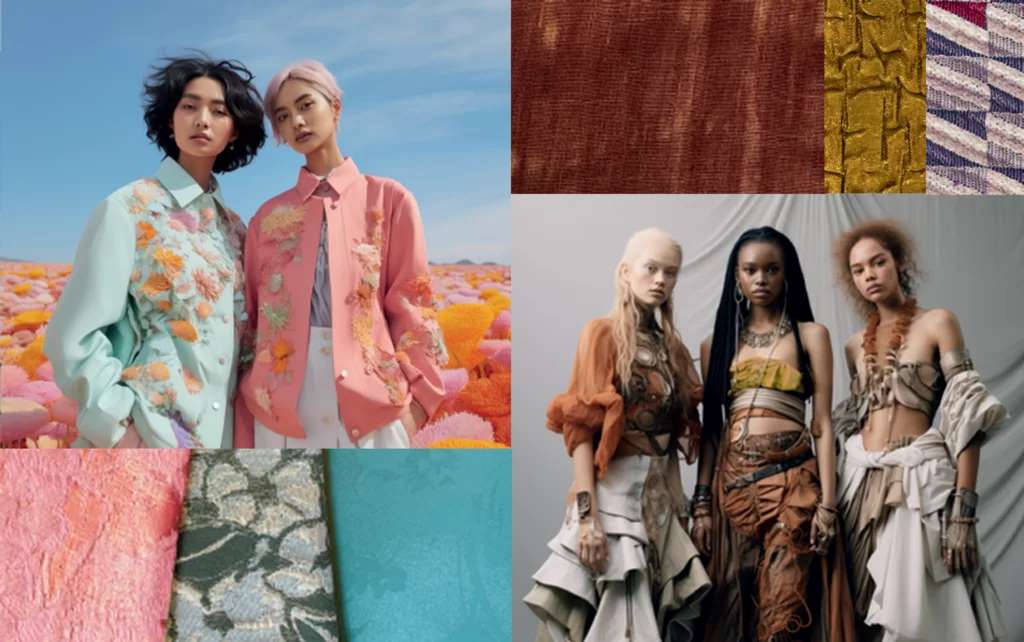
Embark on a journey through the dynamic world of fashion as TURBULENCE sets the tone for Intertextile Shanghai Apparel Fabrics – Spring Edition 2024. From March 6 to 8, the Trend Forum in Hall 5.1 at the National Exhibition and Convention Center (Shanghai) will showcase four trends—Grace, Immersive, Switch, and Voices—curated by the visionary DONEGER | TOBE from New York. Experience the unfolding of a complex and vibrant future in apparel trends.
In the ever-evolving landscape of fashion, a global committee of trend forecasters, including representatives from Elementi Moda in Milan, NellyRodi Agency in Paris, and Sachiko Inoue in Tokyo, has once again united to unveil the Spring-Summer 2025 trends. These trends, born from a tumultuous world, blend self-indulgence and self-expression, encapsulating the positivity and sensibility necessary to navigate the world's turbulence.
Ecological consciousness and everyday influencers shaping fashion
Fashion's trajectory is being reshaped by a dual force—ecological consciousness and the rise of everyday influencers. The committee identifies four distinct trends: Grace, Immersive, Switch, and Voices. Though interconnected by shared disorder, each trend manifests unique aspects that mirror the changing ethos of the industry.
Grace: A quiet luxury lifestyle
Harmony in simplicity. The Grace trend champions enduring luxury through the celebration of peace, love, joy, and respect. Utilizing ornamental delicacy, gentle colors, and high-quality materials, this trend promises a lasting sense of tranquility.
A silver-tinged color palette, featuring elegant hues and tender blooms, adorns gracefully wrought fabrics. Unprocessed toiles, irregular slubs, subtle shiny satin, featherweight jacquards, and printed sheer fabrics blend seamlessly to create an atmosphere of refined serenity.
Immersive: comfort and minimalist expression
Comfort in every detail. Immersive embraces comfort and a minimalist style, demanding attention with powerful, graphic, festive mixes that inspire a positive spirit of collaboration through fashion.
Cosmic and oceanic blues meet tropical dusk in a vibrant contrast. Fabrics range from the functional elegance of robbed stretch jersey and Sea Island cotton to the festivity of decorative embroidery and fluid viscose jersey, promoting a relaxed yet expressive style.
Switch: DIY high-tech experiments
Expressive experimentation. Switch heralds a new dimension of part DIY and part high-tech fashion, encouraging wearers to express their personal style through experimental twists on everyday situations.
Recycled polyester and polyamide, cotton satin, glazed poplin, multicolor deckchair stripes, and dotted variations converge in a vibrant palette of joyful pastels and energetic brights, aligning with the theme of joyful pleasures and fantasy experiences.
Voices: Dazzling freedom and new age fashion
Contrasting, dazzling freedom. Voices envisions a future of instinctive New Age fashion—an ode to Earth that combines raw character, positivity, and improvisation.
Exuberant tones and tinted darks in textural compositions define the color palette. Fabrics range from crackled crêpe and various organic fibers exuding ornamental rusticity to decorative and baroque elements featuring rich velvety surfaces and artistic patterns.
The unified textile value chain under one roof
As the apparel fair coincides with Intertextile Shanghai Home Textiles – Spring Edition, Yarn Expo Spring, CHIC, and PH Value, the entire textile value chain converges under one roof, creating an extended platform for invaluable business networking opportunities.
In this dynamic landscape where fashion and ecological consciousness intertwine, the SS 2025 trends offer a glimpse into a future where self-indulgence meets mindful expression, mirroring the resilience needed to weather the world's turbulence.











