


FW
Myanmar CMG garment exports exceed $3.1 billion from April-Dec’23
Myanmar’s export of CMP garments exceeded $3.1 billion value during the period of April 1-December, 2023, according to a report by the Ministry of Commerce.
Myanmar exported CMP garments to 80 countries including Japan, Poland, Spain, Germany, South Korea, the United Kingdom, the Netherlands, Italy, the United States, France, Denmark and Belgium.
In fiscal 2022-23, Myanmar’s earnings from CMP garment exports to over 100 countries reached $5.3 billion.
The Southeast Asian country's overall export earnings during the period reached over 10.13 billion dollars, according to the data.
Bangladesh garment exports to grow by 7-10% in 2024
After struggling from global economic slowdown in 2023, Bangladesh’s garment exports are projected to rebound to a 7-10 per cent growth in 2024.
Registering an exceptionally low growth rate, garments exports from Bangladesh grew by 4.35 per cent to $42.83 billion from January-November 2023.
The country’s garment sector has been growing by 10 per cent annually over the last decade, barring the COVID-19 period. The sector has become a nearly $50 billion export market, accounting for nearly 8 per cent of the $700 billion global market.
However, garment shipments from Bangladesh dipped in 2023 as inflation rose in major markets such as the European countries and the US.
This year, Bangladesh’s garment exports are also likely to get a fillip from the reduction in interest rates by the Federal Reserve in the next quarter.
Moreover, waning of old inventories in stores of American and European clothing retailers and brands due to sales during festival seasons such as during Thanksgiving, Black Friday, Cyber Monday, Boxing Day and Christmas, is also likely to boost demand for garment items from Bangladesh.
Moose Knuckles to launch new collection with LA-based Pleasures
Luxury outerwear brand Moose Knuckles will launch a limited edition capsule collection inspired by both Canadian heritage and Los Angeles lifestyle.
The brand has partnered with LA-based clothing brand Pleasures for the project. The new Moose Knuckles X Pleasures collection will offer a black Skeleton embroidered quilted puffer contrasted with white embroidery, in addition to the quilted Cropped Puffer adorned with reflective Pleasures and Moose Knuckles logos. It will also offer two hoodies, made from premium 100 per cent cotton and featuring myriad technical details for added comfort, in two designs: one with skeletons and the other with a Romanesque statue with flowers.
The collection will be launched with a campaign by Adam Powell focusing on celebrating the creative alignment between both brands within the outerwear and streetwear realms.
The limited-edition collection will be available from January 16 via Moose Knuckles' and Pleasures' respective e-commerce stores and at select wholesale partners.
Based in Canada, Moose Knuckles is one of the world's leading producers of luxury outerwear, sportswear, and accessories.
Make 70% local yarn sourcing mandatory for spinners, urges BTMA
Bangladesh Textile Mills Association (BTMA) has urged the government to make it a mandatory for spinners to procure 70 per cent of their total cotton yarn requirement from local sources.
In a letter of credit to Abu Hena Md Rahmatul Muneem, Chairman, National Board of Revenue (NBR), BTMA urged the government to ease ongoing dollar crisis.
Producing apparels from local yarn would help increase their value-addition to 65
per cent against 30 per when produced with imported yarn, it said.
BTMA argued that the local spinners can meet 85 per cent of the total demand of the export oriented apparel industry as they produce export-standard carded and combed yarn in huge quantities.
The association also urged NBR to scrutinise the compatibility of the import price of yarn with other competitor countries before releasing the goods from ports.
The spinning millers proposed to install a yarn count testing machine at land ports and recruit more manpower with required training to protect revenue loss.
India’s apparel retail revenues to reach $105 billion in 2024: Statista
Revenues in India’s apparel retail market are expected to surge at a CAGR of 3.58 per cent from 2024-2027 while reaching $105 billion in 2024.
The women’s apparel market is expected to lead this growth with a market volume of $50 billion in 2024, while menswear and kidswear will grow to $35 billion and $20 billion worth of market volume approximately, as per Statista.
Volume in the Indian apparel market is expected to increase substantially to 38.8 billion pieces by 2027. However, in terms of per person revenues, India seems to be lagging behind the major apparel markets such as the US, China and Japan, generating approximately $72 in 2024.
India’s average volume per person in the market is projected to be over 24 pieces in 2024, reflecting the diverse wardrobe needs of the Indian consumer.
Explore home-grow brands to increase global market share: CMAI
The Indian apparel industry can increase its share in the global apparel trade by leveraging the potential of its home-grown brands and offering international standards at reasonable prices, says Rajesh Masand, President, CMAI.
CMAI recently organised its first Brands of India exhibition in the UAE to showcase these brands in the international markets. The association showcased around 350 Indian brands to buyers in the Middle East and North Africa (MENA) region, affirms Masand.
Boosted by the Comprehensive Economic Partnership Agreement (CEPA), India’s apparel exports to the UAE are expected to grow by 15 per cent each year, adds Jayesh Shah, Vice President, CMAI.
Signed in 2023, the agreement abolishes import duty on goods exported by India to the UAE. The move is expected to boost India’s apparel exports.
Exhibitions like the Brands of India will also help Indian manufacturers of branded clothes to cater to evolving customer demands, adds Shah.
Cotton supply to reach 345 bales during 2023-24: CAI
Cotton Association of India (CAI), estimates, total cotton supply in the country will reach 345 lakh bales during the 2023-24 cotton season with each weighing 170kg. Additionally, cotton pressing during the season will remain constant at 294.10 lakh bales, predicts CAI.
Total cotton consumption during this period will surge to 311 lakh bales. However, production in Gujarat will decline by 9 lakh bales this year from 85 lakh bales output recorded last year. .
Total cotton supply until November 2023-end will reach 92.05 lakh bales this year. Of this, 60.15 lakh bales will come from the market yard, while 3 lakh bales will be obtained from imports. CAI will have an opening stock of 28.90 lakh bales.
Cotton consumption upto November 2023 will reach 53 lakh bales, while exports are expected to amount to 3 lakh bales.
For the entire 2023-24, India’s cotton consumption will reach 311 lakh bales. Cotton supply from Gujarat during the year will be around 85 lakh bales compared to approximately 94 lakh bales in the previous season.
Uniqlo to open 200 stores in North America
Uniqlo plans to open 200 stores in North America by 2027. The brand currently operates 72 stores across the US and Canada. It plans to open over 20 stores, taking the brand’s total store count to 92 by the year-end.
A few of the locations that the brand aims to open stores in 2024 include Providence, RI, in Spring 2024, a new market for the retailer, Tacoma Mall, Tacoma, Wash.; Alderwood Mall, Lynnwood, Wash.; South Shore Plaza, Braintree, Mass., and Staten Island Mall, Staten Island, New York.
Reasons for Uniqlo’s growth in the North America market vary from a focus on branding and customer interactions to providing superior products at valuable prices to customers, says Masahiko Nakasuji, Executive Officer, Fast Retailing Group and Head-Marketing, Uniqlo North America.
Since the opening of its first store in 2005, Uniqlo has grown a steady customer base in North America. It has also established its own brand concept, called LifeWear to offer iconic products and enhanced store experience to customers.
In 2022, Uniqlo North America opened an on-site repair service at its New York City flagship in SoHo. Called Re.Uniqlo Repair Studio, the hub can replace shirt buttons, mend seam rips and patch holes, among other services at a cost of $5. A part of the Re.Uniqlo program, the studio promotes a circular apparel system hallmarked by the four Rs: reduce, replace, re-use and recyle.
Winners and losers in 2023, countries re-shuffle in global apparel trade of exports, imports
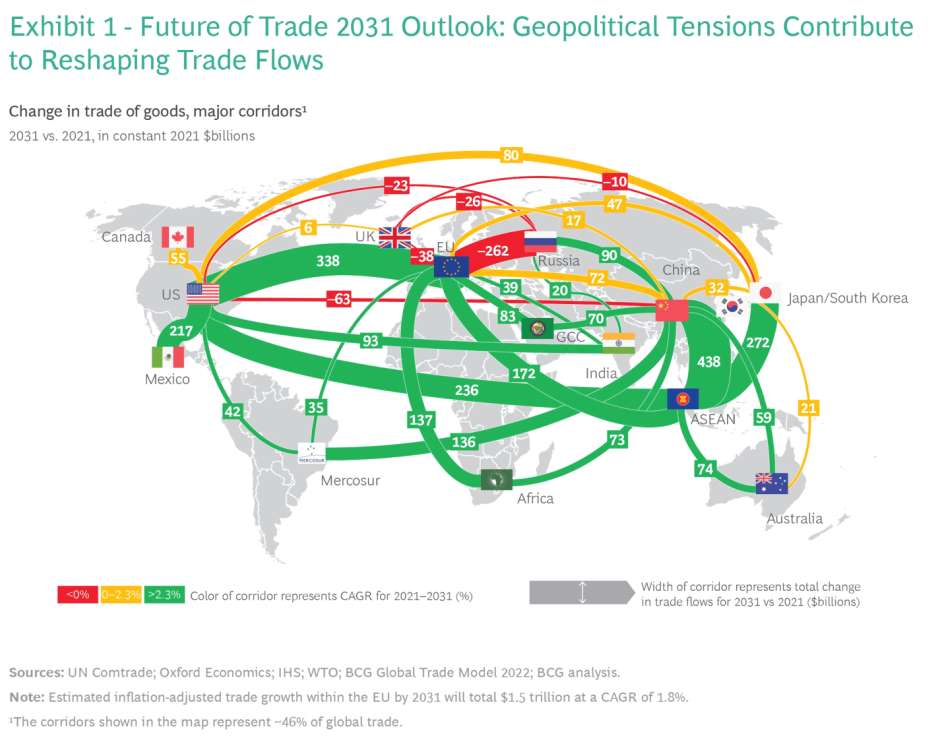
The year 2023 witnessed a dynamic tango in the global apparel trade, with export and import melodies weaving a complex symphony of triumph, transformation, and unexpected notes. Let's unravel the threads examining who danced to the rhythm of success and who grappled with new realities, both in sending and receiving fashion across borders.
Export: A Shifting Balance of Power
Top Gainers
• Vietnam: The undisputed maestro, Vietnam maintained its export dominance with a vibrant 15% growth. Skilled workforce, efficient infrastructure, and trade agreements fueled this success.
• Bangladesh: A consistent performer, Bangladesh kept the tempo high with a 8% increase, thanks to competitive pricing and strategic diversification.
• Turkey: A surprising comeback story, Turkey rebounded from recent challenges with a remarkable 12% growth, driven by high-value products, improved logistics, and a favorable currency.
Top Losers
• China: The long-reigning export king faced its first significant stumble in decades, with a 5% decline. Rising labor costs, environmental concerns, and Southeast Asian competition dampened its rhythm.
• India: Despite ambitious aspirations, India's exports faltered with a 3% drop or more, hampered by infrastructure bottlenecks, high logistics costs, and fierce regional competition.
• Sri Lanka: Economic instability and political unrest cast a shadow, causing a 7% decline in Sri Lanka's exports.
Import: Reshuffles across the Globe
Top Gainers in Imports
• United States: The insatiable fashion consumer, the US maintained its top spot with a steady 2% import increase, driven by a diverse appetite and global price competitiveness.
• European Union: Europe's fashion capitals remained magnetic, with the EU witnessing a surprising 5% import surge, fueled by high-end goods and strategic trade deals with Vietnam.
• Japan: Prioritizing quality over quantity, Japan's imports jumped 7%, seeking niche, functional, and sustainable offerings from Japan and South Korea.
Top Losers in Import
• China: The manufacturing powerhouse surprisingly saw a 4% dip in imports, reflecting a focus on domestic production and self-sufficiency.
• Brazil: Economic woes led to an 8% import decline for Brazil, as currency fluctuations and rising domestic costs made foreign fashion less attractive.
• Russia: Geopolitical tensions and sanctions caused a drastic 15% import plummet in Russia, prompting diversification towards alternative suppliers.
Factors orchestrated these dynamic shifts:
• Shifting consumer preferences: Sustainability, ethical choices, and fast-fashion trends influenced production and import locations.
• Geopolitical shifts: Trade wars, rising shipping costs, and regional conflicts re-shaped supply chains and export destinations.
• Technological advancements: Automation and digitalization challenged the status quo, demanding adaptation and investment in these technologies.
Looking Ahead: A Collaborative Future
The global apparel trade promises a vibrant choreography in the coming years. Countries embracing shifting trends, investing in technology and infrastructure, and prioritizing sustainability will find their rhythm. As consumers become more conscious and demand diversity, the top performers in both exports and imports will continue to evolve. The future of this intricate dance lies in collaboration, innovation, and a shared commitment to a sustainable and ethical fashion landscape.
Panipat textile and blanket exports to surge by 20%
This year, Panipat’s textiles and blanket exports are expected to increase by 20 per cent as compared to previous years, says Preetam Singh Sachdeva, President, Panipat Industrial Association.
According to Sachdeva, there are over 125 units manufacturing blankets in the town, especially both Mink and Flamo blankets having much demand not only in domestic market as well as in other countries due to better in quality as well as prices competitive as comparing to the blankets manufactured in China. The blanket industry records an annual business worth Rs 6,000 crore in international markets, supplying goods in United States, United Kingdom, Australia and many other countries.
Vinod Dhamija, President, Chamber of Commerce & Industry, notes, since the outbreak of the corona epidemic, foreign buyers have been diverting form Chinese manufacturers to those in Panipat. The blankets offered by these manufacturers are not only cheaper but also better in quality. This is resulting in a drop in procurement from the Chinese manufactures, adds Dhamija.
Declining sales of textile goods and blanket manufacturers in China are compelling a large number of manufacturing units in the country to shut down, adds Dhamija Panipat manufacturers consume nearly 1,250 tonne thread daily with this trend growing day by day.











