


FW
Womenswear brand Eka launches new collection
Womenswear brand Eka has launched a new re-purposed clothing range named ‘Ekaco.re’, that is a continuous collection to promote sustainability in the fashion industry.
The clothing line recently launched online with a separate, dedicated Instagram page to showcase its maiden collection. According to the page, the line is designed to be trans-seasonal, eliminating waste generated by left over stock from past collections when new ones launch. Clothing by Ekaco.re will retail until it sells out, no matter the time of year, and is designed to be versatile enough to be worn in different climates.
The line also recently launched offline with a showcase event at multi-brand luxury Indian fashion retailer Ogaan. Garments available at the launch included loose jackets, shift dresses, shirts, and palazzo pants in signature Eka hues of navy blue and ecru.
Eka, which means ‘one’ in Sanskrit, specialises in handloom textiles made by craft clusters in India. The brand’s studio is based in Gurugram and it also retails from multi-brand outlets in India and internationally.
US’ brassieres imports grow by 13.86% in June
Import data shows, US’ brassieres segment grew by 13.86 per cent in June ’20 over May ’20 and reached $124.30 million. Lifestyle pattern change and demographic dividend, rise in awareness on hygiene, and customization of product portfolios boosted the intimate wear market in the US.
Asia-Pacific emerged as a most potential manufacturing market for intimate apparel due to skilled labor, strong infrastructure, and low manufacturing cost. China is the major exporter of lingerie to North America. China, Bangladesh, India and Sri Lanka were suppliers in June, China the largest shareholder posted 19.47 per cent growth in its brassieres exports to the US to $ 50.10 million.
With $ 24.40 million export, Vietnam occupied the second position in brassieres export to the US. Though exports by the country declined by 30.21 per cent in June ’20 over May ’20.
With 346.38 per cent growth, Sri Lanka witnessed a massive growth with $ 13.26 million worth of brassieres to the USA in June ’20 as compared to only $ 2.97 million in May’20.
Bangladesh also grew ominously on M-o-M basis with 87.28 per cent bra export to the United States. It exported $ 4.34 million to the US in June ’20 as compared to the $2.32 million in May ’20.
Li & Fung appoints Deepika Rana as Chief Customer Officer
Li & Fung has appointed Deepika Rana as its new chief customer officer. The newly created position serves to leverage Li & Fung’s global network in 50-plus production markets and integrate its diverse supply chain solutions.
The new position will create a keenly focused customer-centric offering for the world’s leading supply chain solutions partner for consumer brands and retailers. Rana has extensive experience in strategic sourcing and operations, having started her career in J.C. Penney’s Purchasing Corp., India. Prior to joining Li & Fung, she was the managing director of May Department Stores in India.
With over 30 years of experience in managing and leading end-to-end functions in the supply chain at country, regional and global levels, Rana’s strength lies in her innate understanding of brands, retailers and vendors, and in forging long-lasting partnerships.
Over the past 16 years at Li & Fung, Rana has championed innovative solutions that have delivered positive results for both its customers and vendor partners. Rana holds a Master of Arts degree in Business Economics from the University of Delhi in India.
COVID-19 spurs luxury resale as retailers adopt new ways to attract customers
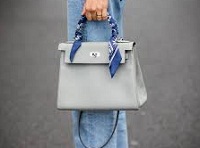 The COVID-19 pandemic has led people to reconsider the fate of luxury apparels they treasured for generations. ThredUp estimates the resale of luxury apparels have grown 21 times faster over the past three years, says a CNBC report. The report says, secondhand apparels are being adopted by not just youngsters but also boomers and Gen X’ers. As per ThredUp’s Resale Report, 50 per cent consumers are cleaning out their closets more often than they did pre-COVID.
Luxury resellers readjust business models
Milton Pedraza, Founder, Luxury Institute, says, more people are visiting resale sites to sell their possessions out of necessity. These include people from higher income groups who have lost their jobs. But, this has created more supply than demand in the market. With consumers being increasingly impacted by the economic fallout of COVID-19, demand for these products is likely to be far less than supply. He estimates demand for luxury apparels in the US to decline further over the next 18 to 36 months.
Coronavirus has forced resale companies to adjust their business models to short-term and longer-term challenges including difficulties in finding the required inventory; meeting consignment partners conforming to COVID guidelines and lack of physical social events. Stocks of The RealReal have fallen to almost half of the value of its first-day trade after its May 2019 IPO. The company’s revenues declined 21 per cent in its most recent quarter ended June 30, while net loss grew to near-$43 million, up from roughly $26 million in the same period a year ago. Julie Wainright, Founder and CEO, says the company has moved further away from the early COVID shutdowns. Its New York market has returned to growth since July though Los Angeles still lags due to rising COVID cases in California.
The company’s supply is recovering, says Mathew Gustke, CFO. While apparel sales have declined, the company has witnessed a growth in sale of handbags and jewelry, along with home furnishings and art. The company quickly adapted to curbside pickup and virtual appointments for consignment partners. With virtual appointments and curbside pickup, the company also sends a van for apparel delivery. Though the company expects in-home appointments to eventually return, it considers virtual plus curbside pickup to be more efficient and effective.
Legacy retailers tap the resale market
Some of the biggest legacy retailers like Macy’s Nordstrom and Gap are getting in to resale market. In August 2019, Macy’s collaborated with ThredUp to launch a 40-store pilot program to sell secondhand clothing. Nordstrom started selling secondhand apparel, shoes, and accessories at its New York City flagship store, in early 2020.
By selling secondhand goods, these retailers are not only showing their concerns for consumers’ demands but also trying to attract younger consumers to their stores.
Good prices, upswing in prices to boost India’s cotton prospects
According to Cotlook, good sale of reserved cotton, and continual upswing of base selling price have raised the sale of cotton stocks by CCI. By August 25, the corporation sold about 1.04 million tonne of its reserved tonne The corporation alongwith the Maharashtra Cotton Federation currently have 1.22 million tone of reserve cotton stocks. CCI raised the base selling price of reserved cotton on August 11 and 14. From August 11, the prices of 2018/19 cotton have increased on an average of Rs 100 candy from the beginning of August, and the 2019/20 cotton price increased on an average Rs 300/candy.
On August 14, CCI announced the latest discounts and prices of cotton stocks during August 16 and August 31. It raised the 2018/19 cotton prices by an average of Rs 100/candy, and 2019/20 cotton prices increased by Rs 100-200/candy. The corporation also began to suspend daily sales from August 25 to deal with outstanding sales.
With the good sale of CCI's cotton and continual upswing of prices, sale of Indian cotton turn to be a support to the global market. Moreover, these sales also support the CCI's new cotton procurement in new season.
Kingpins 24 to launch new marketplace ‘Kingpins Exchange’
In October, Kingpins 24 will launch a new marketplace Kingpins Exchange. The new website will originate from a recently signed partnership with Material Exchange, a Swedish company working with some of the world’s most important retail apparel and footwear brands to analyze, optimize and digitize their material sourcing and development processes.
The digital platform for denim mills will allow Kingpins exhibitors to showcase their textiles to denim brands year-round. Kingpins is looking for ways to create greater opportunities for business and build new ways for brands to conveniently source denim fabrics from exhibitors. The goal is to provide brands with tools to be able to source denim and related fabrics instantly, view detailed product data online and help buyers make informed decisions about the materials needed for product design and creation process.
As a part of the plan, Kingpins Show organizers have decided to change the format of Kingpins24 by shortening it. The first new format will debut on September 22 and will focus on Canada. It will feature a two-hour livestream of live and pre-recorded content and will be co-presented with Canada-based Ani Wells of Simply Suzette.
Topics for Kingpins24 Canada will range from new models of business, to future-proofing brick-and-mortar retail and circularity in denim design. Brands and designers joining will include the godfather of denim Adriano Goldschmied; designer and consultant Malin Ekengren; Denim Dudes’ Amy Leverton; Brandon Svarc of Naked & Famous; Kelly Drennan, founder of Fashion Takes Action; Philippe Cantin, senior director of Sustainable Innovations and Circular Economy at the Retail Council of Canada; and Sabine Weber of Sustainable Strategies & Solutions. Wells, Olah and Vivian Wang, Kingpins Show’s managing director, will act as hosts of Kingpins24 Canada.
Ready To Show-Virtual 3D Expo to help trade navigate in Covid19 era
 "Due to global pandemic, the year 2020 will see a massive drop in travels, a digital platform that can facilitate the same trade relations and business networking will be a boon for the industry."
So given all that ‘Ready To Show Virtual 3D Expo’ a global 4 days of high season exposure and visibilty to be held on Oct.,6-9th 2020. Organised by Tortona Design & Fashion Italy ‘A veteran organiser in Textile space’. A fair characterised by ‘For Itaian & Europian Buyer in the glorious past’. A unique platform mainly for NON-EUROPEAN producers, Ready Made Garments of all kinds, Fashion accessories like Shawls, Scarf, Stoles, Fashion Jewellery and Handicrafts, Fashion and Apparel Fabrics are all expected out of Asian Countries, ASEAN Countries amongst other Geographies notably Mauritius etc.
BOOTH FEATURES FOR EXHIBITORS ARE ALL NEW AGE WHAT VIRTUAL EXPO CAN POTENTIALLY OFFER
Event presents an excellent opportunity to connect, interact and conduct business with buyers, brands & retailers. Extensive promotion of the Virtual Trade Expo through different mediums – web, social, e-mailers and more is very aptly designed aiming at making the exercise business friendly & meaningful.
It clearly has a USP of connecting the exhibitors with ‘Selected Buyer’ along with all details for each participant, according to the product. It also has pre-arranged B2B Business meetings to make it a wholesome approach.
Additionally features like Webinars & Conferences are all there & in nut shell it is to ensure ‘Unique Virtual Experience Is Assured’ and surprisingly all this comes at a very affordable price intended to support trade in these trying times.
China lowers duties on Bangladesh imports
The Chinese government has lowered duties on goods imported from Bangladesh. Taxes on almost all goods from Bangladesh have been reduced by upto 60 per cent, reports China Briefing. Henceforth, China will offer a duty-free export advantage to an extra 5,161 Bangladeshi goods, with the number of exempt goods being increased to 8,256, provided by professional services company, Decan Shira and Associates. This includes the products authorized under the Trade Agreement of Asia Pacific (APTA).
Since 2010, Bangladesh exporters enjoyed majority of duty-free benefits, according to the report, with the most common imports into China being jute, plastics, crude hide, hides, frozen seaweeds and crabs, live eels, sesame seeds and cotton waste products. But these exports have shown no noticeable growth, given the duty advantages that the country has had over the last decade. Data by Export Promotion Bureau data shows, during the 2014-2015 fiscal year, total exports to China amounted to $791 million. By 2019, the figure rose to $831 million and by May, exports totaled $557 million.
US tariffs on homeware, wool may see retaliatory measures: UK’s Walpole
Walpole, the trade association representing British luxury enterprises warned, tariffs imposed on products like tailoring, wool, cashmere and linen homeware by the US Trade Representative (USTR) effective September 1 will see retaliatory tariffs of 25 per cent. Washington import tax on certain high-end goods from Europa had previously risen to 25 per cent, hitting luxury enterprises in the UK and in EU harshly in return for subsidies charged for the Airbus fleet.
Walpole said the disproportionate effects that the US EU tariffs have on UK producers and the creation of an imbalance between different markets could lead to US retailers turning to Italian and Chinese cashmere producers to avoid the tariffs on Scottish cashmere. This would impact brands and companies negatively and lead to scaling down operations and export volumes in the US and potentially cut jobs.
UK’s Department of International Trade (DIT) has advised Walpole to urge Liz Truss, the Secretary of State for International Trade, to push for the removal of all tariffs and to reach a resolution to this situation with expediency.
CFDA creates Black advisory board to ensure equality and inclusivity
The Council of Fashion Designers of America (CFDA) has created a separate Black advisory board responsible for all its efforts on inclusivity, diversity and equality. This board will be led by CaSandra Diggs, President.
The board will be chaired by executive board vice chairwoman, Tracy Reese and include Samira Nasr, editor-in Chief, Harper’s Bazaar; Bozoma Saint John, Chief Marketing Officer, Netflix; Stacie Henderson, Cofounder, Fashion Tech Connectsand Martin Cooper, CFDA member and co-founder, The Punctilious Mr. P’s Place Cards Company as its members
The CFDA has also appointed Bonnie Morrison to a newly created role to lead the strategy and execution of CFDA equity program initiatives with the goal of building opportunities for Black creatives and professionals in fashion.
In this role, Morrison will help support and execute new initiatives including the newly created CFDA task force and talent placement program made for Black creatives and professionals in the American fashion industry. In June, CFDA had announced that it would launch a series of new initiatives to combat systemic racism in the fashion industry in response to ongoing protests and public outcry against racism in the United States.











