FW
Shanghai Fashion Week organizes over 100 fashion shows
Held from October 08-16, Shanghai Fashion Week included over 100 shows on its official calendar, alongside a multitude of off-calendar and related events.
As per a Business of Fashion report, the show included several awards announcements, including the inaugural Hu Fashion Forward Prize, which saw Samuel Gui Yang win 500,000 yuan, or $77,600, as well as the fourth edition of the Shan Future Forum, a sustainable fashion event presented by fashion media veteran, ShawayYeh, and her YehYehYeh consultancy, this time around backed by Kering and OTB Group.
On October 11, the fashion week held the first ‘Her Power Fashion Dialogue’ at the Fosun Art Center that included a keynote speech from Xiao Xue, Former Editor-in-Chief, Elle China and Ambassador, Shanghai Fashion Week as well as round table discussions that included model, Liu Wen, tennis superstar, Li Na, and underwear upstart Neiwai’s founder, Liu Xiaolu.
The pandemic period has encouraged a number of Chinese-born designers to move home. This had led to an increased concentration of Chinese desingers at Shanghai Fashion Weeks in recent seasons. Some of the Chinese brands present in this edition of the event included Masha Ma Pronounce, Samuel Gui Yang and Louis Shengtao Chen.
Survey reveals a change in consumer attitudes towards luxury in key markets
A recent IFOP survey by French luxury goods trade association Comite Colbert reveals a change in consumer attitudes towards luxury purchases in key markets, especially in terms of second-hand goods.
As per a Women’s Wear Daily, the survey of 1,844 consumers included 60 percent Americans, 51 percent Chinese and 42 percent French consumers. It questioned luxury consumers, representing the top 20 percent of earners in the three countries, to see how their perceptions of luxury had changed since the pandemic.
Luxury as an investment emerged as a strong driver for 90 percent of Chinese consumers, 88 percent of Americans and 77 percent of French people.
Around 26 percent of consumers in the US said they often bought luxury goods second-hand; another 35 percent said they sometimes did, while 18 percent said they had not done so in the past, but planned to.
While the principal driver of second-hand purchases remained price, the need to be seen regularly with new products, galvanized by social media, was also a strong concern for consumers surveyed, especially among younger generations.
Regarding sustainability, 90 percent of Chinese consumers, 83 percent of Americans and 80 percent of the French said that luxury brands should set an example when it comes to environmental responsibility.
These findings echoed the concerns and actions of the Comité Colbert’s member companies. The body includes 90 French luxury houses and 17 cultural institutions.
EU’s new labeling scheme threatens to intensify greenwashing amongst brands
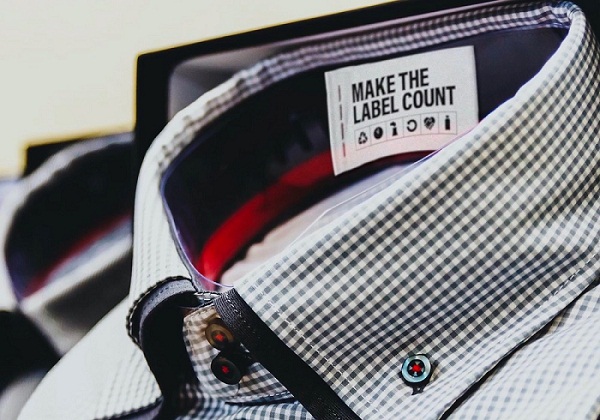
Industry leaders fear, European Commission’s new scheme to make every garment and shoe sustainable by 2023 may intensify the greenwashing trend amongst brands.
No listing of renewable fiber benefits
Titled as ‘Product Environmental Footprint’ (PEF), the scheme aims to encourage consumers to opt for eco-friendly products. However, the methodology to make this choice does not take into consideration environmental factors, says ‘Make the Label Count’, an initiative whose members include Australian Wool Innovation, the Campaign for Wool, Changing Markets Foundation, Cotton Australia, Fibershed, the International Sericultural Commission, the International Wool Textile Organisation and the Plastic Soup Foundation.
The framework of this scheme lists neither the benefits of renewable and biodegradable fibers nor the effects of microplastic pollution. Synthetics derived from fossil fuels are greener than their natural counterparts. This leads to not only misleading customers about the impacts of their products, but also eroding the system’s credibility and undermining the European Union’s overall sustainability goals, say campaigners group for the scheme.
The initiative can deliver great environmental outcomes if it amends the PEF methodology, the group adds in a report summing up concerns about the campaign.
The scheme was proposed by the European Commission in 2013 as a standard for measuring and validating environmental claims. It also aims to create a level playing field for products made by different member states. Using, life-cycle assessments, the PEF scheme has till date, identified 16 environmental categories in its methodology, including ozone depletion, human toxicity, land use and resource depletion. This has helped create a consumer-facing label that uses red, yellow and green “traffic lights” or an A to E grading scale to present an at-a-glance measure of a product’s environmental burden.
PEF mandates synthetic fibers analysis from their extraction at the wellhead. This magnifies the inequity between products made from natural and fossil fuel-based fibers, asserts Make the Label Count,
The final PEF framework is yet to be released by the European Commission. The commission has identified room for improvement along all the phases for the circular economy for design says Paola Migliorini. PEF also needs to introduce a EU strategy for sustainable textiles to enhance the scheme’s clarity.
A threat to earth’s existence
Usually, LCAs on textiles and clothing don’t include the use phase of the value chain, says Ingun Grimstad Klepp. The labeling system can be made functional by ensuring that it is known to everybody, secondly, it needs to trusted by consumers and lastly, it needs to use a fair methodology.
A label based on misinformation and twisted logic can unleash billions more items made of non-biodegradable petrochemical plastic polymers onto a patchy global waste system, says Livia Firth, Creative Director, Eco Age. It could affect ESG funds needed to tackle climate crisis besides sustaining more pollution.The company engaged in mislabeling loses the moral authority to combat other forms of greenwashing, adds Firth.
The industry is flooded with misleading claims on sustainability that threatens to damage the earth, adds Firth. Labeling a garment as sustainable is a serious issue that depends on the discipline and etiquettes needed to create a civilized planet.
Consumers shun fast fashion as eco-awareness rises
 Once a booming sector, the fast fashion industry is losing favor due to rising environmental consciousness amongst consumers and a growing preference for secondhand apparels. The industry is facing delivery delays due to the complex supply chains, adding to the woes of the retailers. British online retailer Asos reported a 12 percentage points decline in profit margins this year though revenues grew by 20 per cent. It expects higher freight costs and increased investment in customer experiences to lower annual profit by over 49 per cent.
Asos’ profits are also being impacted by doubling of transit times from Asia to the US, says Matt Friend, Chief Financial Officer. Besides, the company faces a deteriorating transit times in the European market. Other apparel brands in Vietnam are also facing factory closures, making it challenging for fast fashion retailers to sell out-of-season stock.
Secondhand apparel market to grow 11 times faster
Fast fashion also suffers from the growing number of environmentally-conscious consumers. A report by the National Retail Federation and IBM shows,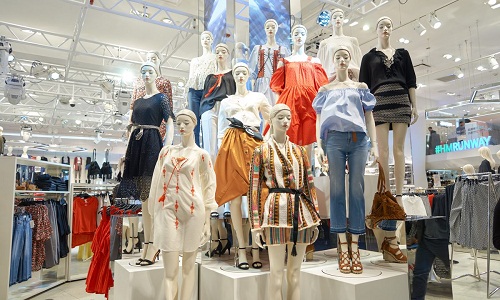 almost 57 per cent of consumers plan to focus on the environmental impact of their shopping habits and change shopping habits accordingly. Around 77 per cent consumers urge brands to be sustainable and environmentally responsible.
Against this, fast fashion brands are often accused of overproduction and throwing used garments away. As per recent estimates, US dumps around 11 million tonnes of clothing every year.
This is encouraging more consumers to opt for secondhand apparels. A ThredUP report shows, the market for secondhand apparels is expected to grow 11 times faster than the broader retail clothing sector over the next five years and reach $77 billion by 2025. The resale market will be twice as big as fast fashion by 2030, says James Reinhart, CEO.
Ready to change
Best known for serving fast fashion across the world, Sweden-based H&M is bracing itself for the changing winds. Owner of around 70 per cent of secondhand shop Sellpy, the brand is also collaborating with Sellpy on a new warehouse in Poland, as well as distribution and quality control efforts for garments and handling orders.
Victoria Beckham teams up with The Woolmark Company for a sustainable collection
Victoria Beckham has teamed up with the Woolmark Company to launch her first end-to-end traceable collection.
As per Fashion Network, the Victoria Beckham x The Woolmark Company uses Merino wool and features pieces for both women and kids.
The tonal collection is built around polo and crewneck sweaters, V-neck cardigans, and gift sets of scarves and headwear, with design details including colour blocking, intarsia and contrast stripes.
Design elements aside, as mentioned, sustainability is a key focus with Woolmark saying “the environmental impact has been considered throughout the design process, from sourcing materials to the development, manufacturing, production and packaging of each piece”.
That reflects the increasing emphasis placed by consumers on eco and ethical materials and production methods in the luxury products they buy, and it will be interesting to see the response to this new offer, as well as whether Beckham will produce more such collections.
The collection is made in Pescara, Italy, from 100% renewable and biodegradable Merino wool. The non-mulesed Merino wool used in the line is fully traceable to just five Australian woolgrowers.
Burberry names Jonathan Akeroyd as new CEO from April
British fashion house Burberry has named Jonathan Akeroyd as its new chief executive officer from next April. Akeroyd currently serves as the CEO of Milan-based Gianni Versace.
The 165-year-old group, Burberry had since June been searching for a replacement for Gobbetti, who had sought to elevate Burberry in the luxury sector during his four years at the helm.
He Known for its trench coats and trademark plaid, Burberry said, British national Akeroyd has accelerated growth at Italy's famous fashion house during his five year tenure there.
Gerry Murphy, Chairman, added, keroyd was the right choice to build on the British brand's creative heritage.
Burberry is a British luxury fashion house headquartered in London, England. It currently designs and distributes ready to wear including trench coats, leather goods, fashion accessories, eyewear, fragrances and cosmetics,
Established in 1856, Burberry originally focused on the development of outdoor attire, the house has moved into the high fashion market, developing gabardine, and products made exclusively for the brand.
Lenzinglaunches new matte Tencel™ branded lyocell fibers
The Lenzing Group is expanding its sustainable offering for the denim industry with the introduction of matte Tencel™ branded lyocell fibers. The new fiber type is specially designed to scatter light and permanently diminish sheen in denim applications, further enabling versatility of indigo-dyed denim fabrics.
The introduction of matte Tencel™ Lyocell fibers increases versatility in denim designs whilst reducing the ecological footprint of the resulting fabric and garment. Made with a resource efficient closed-loop production process, the new fiber type maintains all the comfort benefits of standard TENCEL™ Lyocell fibers to bring next-to-skin smoothness while giving dark indigo dye fabrics a deep and lusterless appearance.
In collaboration with global mill partners, Advance Denim (China), Artistic Fabric Mills (Pakistan), Arvind Limited (India), Kipas Denim (Turkey), KG Denim Limited (India), Panther Denim/ Tat Fung (China) and TextilSantanderina (Spain), Lenzingplans to launch the new matte TENCEL™ branded lyocell fibers at the Kingpins Digital Show.
Global baby diaper market to reach $60 billion by 2031: FactMR
As per a market research and competitive intelligence providerFactMR, the global baby disposable diaper market is anticipated to reach over$60 billion by 2031, progressing at a CAGR of 4 per cent over the period.
The market for super-absorbent baby disposable diapers expected to reach around $15 billion valuation by 2031. Ultra-absorbent baby disposable diapers projected to record above 2 per cent CAGR over next 10 years. The European market is expected to hold over 40 per cent share. Market in South Korea is expected to reach valuation of $7 billion by 2031.Market in Japan is expected to record 1.8 per cent CAGR over forecast period of 2021- 2031.
Diaper manufacturers are focusing on producing baby disposable diapers that are less harmful to the environment. Market participants are attempting to achieve this through various sales and marketing strategies, as well as mergers and collaborations with other players in the industry.
Rudolf Hub1922 launches chemical auxiliaries for denim processing
Rudolf Hub1922 has launched Offuel, the very first range of future-oriented chemical auxiliaries for denim processing based on alternatives to crude oil.
The Rudolf Hub1922 Offuel range is made of 11 finishing auxiliaries. All the 11 chemical agents are either existing, selected solutions, or brand new RUDOLF’s technologies.
Available, renewable raw materials are the common denominator throughout the Rudolf Hub1922 Offuel range and those renewable sources do not compete with human and/or animal nutrition, nor they compete with the production of any fuel. Rucogen® Upcycle RNB is the crown jewel within group #5. It’s a dispersing agent, specific for denim washing, based on chemically recycled, PET plastic waste. It’s about the upcycling of post-consumer, disposable PET plastic bottles into valuable textile chemistry.
The Rudolf Hub1922 Offuel range is a complete toolbox of chemical auxiliaries for wet denim processing. The range is an instrument for wide creativity. All its products were cleared by bluesign® -which makes them also ZDHC Gateway Level 3 - and all are compliant with the Standard 100 by OEKO-TEX®.
Rudolf GmbH is based in Geretsried, Bavaria, in 1922. It is specialized in innovative and high-quality chemical products, predominantly textile auxiliaries, products for textile care as well as construction chemicals.
United Colors of Benetton to increase sourcing from Bangladesh
Global fashion brand United Colors of Benetton plans to increase apparel sourcing from Bangladesh. As per Fashion Network, the company will collaborate with Bangladesh Garment Manufacturers and Exporters Association (BGMEA) suppliers in Bangladesh to build their capacities in manufacturing apparel products that have higher market demand.
The RMG industry in Bangladesh has diversified focus on non-cotton and other high-end material segments, said Monica Joshi, Head-Operations, Benetton Asia-Pacific at a recent meeting with BGMEA. On the occasion, Faruque Hassan, President assured Benetton of complete support to expand its suppliers’ base and sourcing volume in Bangladesh.
Hassan further said, an increase in yarn, chemicals and other raw materials prices has pushed up production costs in garment manufacturing. The industry needs to stabilize prices and empathize with supply chain partners to make the supply chain sustainable.