FW
Denim exports from Bangladesh to the US on the rise
From January 2021 to September 2021 denim exports from Bangladesh to the US rose 31.40 per cent, making Bangladesh the top denim supplier to the US reveal OTEXA figures. But in the same period prices of Bangladesh-made denim fell 2.46 per cent. While unit prices of denim made in Mexico grew by 1.25 per cent.
China’s dominance as one of the top denim sourcing countries has diminished significantly. Despite the fact that the country offers one of the bottommost unit prices among the top five denim exporting countries, all brands are lowering their reliance on Chinese cotton. And other prominent denim exporters are grabbing this opportunity. An array of suppliers from Vietnam, Pakistan and Cambodia to Egypt, Jordan and Nicaragua, have consistently posted gains. US companies look elsewhere to save costs and reduce risks. They are accelerating the efficient and effective diversification of their manufacturing base.
Meanwhile consumers in the US are more into basic denim rather than high end denim. The US market is embracing denim clothing well in 2021 after falling in 2020 and 2019 on a yearly basis. And prices of denim have drastically gone down. This shows that consumer buying trends have shifted from high end denim to basic jeans and the US is looking for low-cost sourcing countries.
Ghana introduces VAT exemption on certain textile products
Ghana is making efforts to recover after the Covid pandemic. This includes hiring an additional 38,000 nurses, waiving employee taxes and providing free water and electricity to millions of households. Several policies have been launched in the field of taxation. On main impetus is exemption of VAT on certain textile products. This is expected to increase the profits of business actors and expand their production.
VAT tax was bleeding textile companies. The tax component meant the cost was passed on to the depots, wholesalers, retailers and ultimately customers, who had to pay higher prices. Second, reviewing the reduction in import duty rates on all goods. The goal is that the policy of reducing import duty tariffs that are currently in effect can be more efficient and on target. Third, the reduction of the VAT rate on gold sales from unprocessed miners from three per cent to 1.5 per cent. Fourth, the creation of a property tax administration platform in 2022 with the hope of increasing tax revenue and tax administration accountability. Fifth, the imposition of electronic user fees on all electronic transactions, such as bank transfers and digital payments. The levy rate is 1.75 per cent. These various policies are expected to accelerate the recovery of the national economy.
Armani stops using angora wool
The Italian luxury company has added angora wool to the list of excluded materials under its fur-free policy and joins a string of brands banning the extremely soft wool removed from live rabbits, under pressure from animal rights organisations and more environmentally conscious shoppers. Armani’s move marks another step towards sustainability after the group banned animal fur in 2016 and signed in 2019 the Fashion Pact with other major industry players to address climate change.
Angora rabbit fur is being used for sweaters, hats, gloves, and more. Angora rabbits have long, soft fur. Most angora comes from rabbits on Chinese factory farms. The rabbits writhe in agony as workers tie them down and rip out their fur.Brands like Calvin Klein, H&M, Marks & Spencer, Tommy Hilfiger, and Topshop have dropped angora wool from their clothing lines. So far more than 300 major retailers have banned angora.
Then there is mohair. Most of the world’s mohair comes from farms in South Africa. Shearers throw angora goats, cut off swaths of their skin, and cut conscious animals’ throats. Workers pick up goats by the tails, likely breaking them. One farmer dumped rams into tanks of cleaning solution and shoved their heads into the liquid, which would poison them if they swallowed it.
Adidas completes second share buyback
Adidas has completed its second share buyback program this year. Between October 18, 2021, and November 25, 2021, the company bought back 1,619,683 shares. Taking into consideration the first share buyback conducted during the third quarter, Adidas bought back 3,471,205 shares.
Strong cash returns are an essential part of the company’s new strategy. Driven by the significant topline growth and strong bottomline expansion, Adidas will generate substantial cumulative free cash flow until 2025. The majority of this will be distributed to shareholders through regular dividend payouts in a range of between 30 per cent and 50 per cent of net income from continuing operations, complemented with share buybacks.
Dividends as well as share buybacks are key components of this strategy aimed at resulting in significant value creation. Against this background, Adidas plans to continue regular share buyback activities early next year. This will be complemented by returning the majority of the cash proceeds from the Reebok divestiture to its shareholders after closing of the transaction, which is expected to occur during the first quarter of 2022. As announced in October 2021, Adidas intends to cancel the majority of the shares repurchased as part of its buyback activities. For the third quarter Adidas’ inventories decreased 22 per cent.
Adaptive clothing market growing at four per cent
The global adaptive clothing market is witnessing a CAGR of 4.1 per cent. Adaptive clothing is clothing specially designed for people with varying degrees of impairment, which includes acquired disabilities, birth defects, congenital developmental disabilities, and other physical disabilities. Clothing specifically designed to meet the needs of these groups can provide a sense of empowerment and improve the quality of life for many individuals. There are options available that offer these individuals greater choices in terms of style, fit, and functionality, allowing them to purchase items that look great and function well.
Leggings, tights, socks, and pants are all types of adaptive clothing that are suitable for those who may be struggling to walk, talk or perform ordinary tasks on a daily basis. Leggings and tights are among the easiest types of wearable garments to break in, thanks to the way they hug the body and are designed to mold to the individual wearer’s shape and size. Adaptive apparel such as these particular types of clothing are made using high quality, durable materials that resist ripping, tearing, and fading.
Asia Pacific is expected to witness high growth, owing to the significant amount of population with various disabilities, particularly in economies such as India.
Hybrid edition of Gartex Texprocess opens in New Delhi on December 3
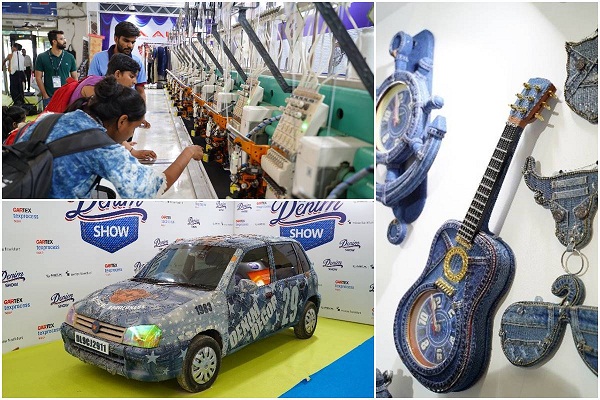
India’s leading B2B exhibition for garment and textile manufacturing Gartex Texprocess India 2021 opens on December 3 to 5, 2021in its first hybrid edition in the post-pandemic market. The event is a crucial business and networking opportunity for garment and textile manufacturers. The three day event to be held at Pragati Maidan, New Delhi will share space with Screen Print India.
Best technologies on display
After facing the challenges posed by the pandemic, the garment and textile manufacturing industry is looking to bounce back with growing industry demands. With an aim to support local businesses in the road to recovery, Gartex Texprocess India, the leading B2B platform on garment and textile machinery, fabrics, accessories, and allied industries is being organised by Messe Frankfurt India & MEX Exhibitions. Designed as a dedicated platform for buyers and sellers, Gartex Texprocess India will create a strong business environment where businesses can witness industry’s latest innovations, engage in hardcore networking and explore lucrative opportunities for their respective businesses.
The fair incorporates live product demonstrations of latest innovative machines and solutions offered by the sellers’ network with leading players from the industry. Over 100 brands will be on showcasing including: AURA, Baba Machines, ColorJet India, Ramsons Garment Finishing Equipments, Jaysynth Dyestuff (India) Limited, and Morgan Tecnica, among others.
There will be focused product zones: Digitex, India Laundry, Fabrics & Trims, Garmenting & Apparel Machinery, and Embroidery Solutions co-located with the Denim Show and Screen Print India. These incorporated shows and focused segments add more weight to the wide areas encompassing the entire gamut of garment and textile manufacturing solutions for the industry.
A major center of attraction at Gartex Texprocess India is the Denim Show that features top trends and advancements in denim. Uniting businesses for the first time after the pandemic, the Denim Show aims to provide a strong professional platform for the denim fraternity to witness development of original products and witness an innovative range of denim solutions, fabrics, finishes, and technology showcased by industry’s leading manufacturers such as: Creora, Arvind, Raymond UCO Denim, Reliance Industries, Ginni International, Jindal Worldwide among others.
The Digital Symposium at Gartex Texprocess will promote exchange of ideas, and showcase latest trends and innovations. Experts will share insights on valuable industry related topics like: Finding a Solution to Sustainable Garment Manufacturing; Carbon Neutrality in Denim Industry etc.
Screen Print India an added attraction
Held in co-location with Gartex Texprocess India, India’s leading B2B trade fair for the screen, textile, sublimation and digital printing technologies, Screen Print India is also set make its return as an hybrid edition. Showcasing latest trends, it will showcase top innovations and developments in screen and textile printing from brands such as Green Printing Solutions, J N Arora & Co, Konica Minolta Business Solutions, Skyscreen International and Zydex Industries among others.
Overall, the new edition of Gartex Texprocess India will provide a strong impetus to localisation by reconnecting businesses and supporting recovery and growth of the garment and textile industry.
Pakistan’s garment industry faces labor shortage
Pakistan’s garment sector is facing a shortage of skilled workforce across manufacturing hubs in the country. As per Sheikh Luqman Amin, North Zone Chairman, Pakistan Readymade Garments Manufacturers and Exporters Association (PRGMEA) the shortage deprived the country of taking the full advantage of its access to the European Union market though efforts are being made to upgrade the industry on modern lines and enhance the export volume in many fields.
For instance there is a great scope of growth in the value-added garment industry in the export-oriented city of Sialkot, which is produces 40 per cent of the world’s martial arts apparel. But the expansion of Sialkot’s value-added garment sector can only be made possible through the removal of hurdles like lack of skilled labor, expensive electricity and irregular gas supply. There is a large scope of additional growth after the continuation of GSP Plus status for another decade but there is no roadmap in place to produce professionals that can be absorbed by the industry. What is needed is amendments in labor laws and revising the age limit of laborers working in the industrial sector.
But despite the skilled manpower shortage, Pakistan is making great strides in apparel exports. Garment exports to the US grew 62 per cent in January to September 2021.
Pakistan October exports up 24 per cent
Pakistan’s textile exports grew 24.24 per cent in October 2021. As per Pakistan Textile Exporters Association (PTEA) chairman the textile export industry is entering the phase of sustainable economic growth after attaining stability and expects the segment to keep moving forward to achieve lofty growth rate. In the first quarter of the fiscal year textile exports grew 26.55 per cent compared to the same quarter of the previous year. The higher textile exports came on the back of strong growth in value-added products, particularly knitwear, home textiles, bed wear, towels and made up articles. Shipments of bed wear during the quarter grew by 21.3 per cent in terms of value. Exports of towels rose by 14.17 per cent compared to the same quarter of the previous year. In volumetric terms they increased by 7.75 per cent. Shipments of readymade garments surged by 22.34 per cent year on year and in terms of volume they increased by 20.5 per cent compared to the same quarter of the previous year.
Keeping in view the rebound in textile exports, Pakistan expects to achieve its export target owing to the export-oriented policies and the strong economic recovery in major export markets. The textile export industry is entering the phase of sustainable economic growth after attaining stability. The segment is anticipated to keep moving forward. The value-added sector is the main engine of growth since Pakistan’s exports of raw cotton, cotton yarn and cotton cloth have shown a declining trend.
India: Sutlej Textiles opens second unit in Himachal
Sutlej Textiles and Industries has opened an unit in Himachal Pradesh with an investment of Rs 240 crores. This is the company’s second unit in Himachal Pradesh and is expected to provide employment to 600 people and produce 120 metric tons of polyester. All together about 3,200 persons will be provided employment in both Himachal Pradesh units.
Sutlej Textiles and Industries is one of India’s largest integrated textile manufacturing companies. Over the years, Sutlej has evolved its product mix. It specialises in synthetic, natural and blended yarns, all types of spun yarns and home textile furnishing. The company also processes fabrics. It is one of the largest manufacturers of value-added mélange yarn in India, making single-ply, double-ply and multi-ply grindle, roving grindle core spun, slub and other fancy yarns. It is also a one-stop shop for all kinds of spun-dyed yarn manufactured from natural or manmade fibers across any blend and any shade in the count range of 6s to 50s. The company’s customers are spread across more than 60 countries, making it one of the largest Indian exporters of polyester viscose blended yarn with a growing presence in both developed and emerging economies like Australia, Argentina, Bangladesh, Bahrain, Belgium, Bolivia, Brazil, Canada, China etc.
Reliance launches fabric made of bottles
Reliance Industries has introduced a new product – R|Elan GreenGold Ecocean. To make R|Elan GreenGold Ecocean fabric, 100 per cent used PET bottles are rescued before they reach and pollute the oceans. They are cleaned, crushed and converted into flakes. The flakes are then washed and converted into high quality fibers, yarns, and fabrics. The fabric can be used in manufacturing casual wear, denims, formals and women’s wear. This fabric is also available for the home textile segment under the brand name Recron GreenGold Ecocean.
R|Elan GreenGold Ecocean exemplifies circular economy concepts and will support brands and retailers achieve their style goals and sustainability commitments at the same time. These factors are making R|Elan GreenGold Ecocean as one of the most sought-after fabrics among leading brands, retailers, fashion designers and style enthusiasts. Reliance has developed a wide GreenGold product portfolio that includes possibilities to combine sustainability with various functional benefits like moisture management, thermal management, all weather comfort and fibers that bio-mimic the bio-degradation process.
The making of R|Elan GreenGold Ecocean fabric helps in diverting and recycling waste. This not only helps in keeping water bodies cleaner but also keeps marine life safer. Many leading global brands have started preferring PET collected from beaches and shores that would otherwise end up in oceans, rivers, or lakes and have started using these to manufacture apparels and footwear.