


FW
Milano Unica: Exhibitors project positive outlook for 2022
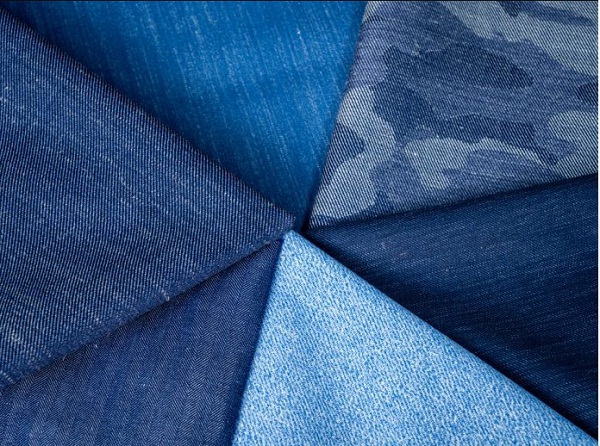
Optimism prevailed at the recently concluded textile trade show Milano Unica despite several geopolitical instability and supply chain issues faced by exhibitors. As per a Woman’s Wear Daily report the two-day show, which saw a 16 per cent rise in the number of attendees, was attended by over 342 exhibitors at the Milano Rho fairgrounds. The show opened with Barberis Canonico, President, Milano Unica paying a tribute to late designer Nino Cerruti. Textile executives attending the show projected a positive outlook for 2022. Giorgio Todesco, CEO, Marzotto Wool Manufacturing, confirmed a 35 per cent rise in seasonal orders compared to corresponding period in 2018-19.
Experts demand adjustments to rising prices
The industry is experiencing a better-than-expected recovery, noted Ercole Botto Poala, CEO, Reda. The Biella-based mill expects its turnover to increase to €90 million this year. However, Todesco said, consumers will have to adapt to increased retail prices even though narrowing price difference between super-fine wools and regular options may level off. Poala also forecasted an uptick in raw material prices in the long term. Meanwhile, Vasiliy Piacenza, Brand Manager Director, Piacenza 1733 pointed out, rising prices may not impact the premium luxury segment much with wealthy consumers.
To deal with rising raw material prices, the textile industry will also have to adjust its prices, said Filippo Vadda, CEO, Lanificio Fratelli Cerruti. Manufacturers like Marzotto Wool Manufacturing said, they aim to introduce cogeneration plants to offset rising energy prices. On the other hand, Eurojersey plans to refurbish its weaving and dyeing departments with an investment of €9 million this year while Lanificio Fratelli Cerruti will revamp its weaving room with new Itema looms. Companies currently involved in refurbishing operations also plan to expand their operations.
Rising interest in cotton alternatives
A growing interest in cotton alternatives was noted at the trade show as exhibitors included woolen shirts in their collection. Marzotto Wool Manufacturing introduced a soft and lightweight off-white version of the white shirt, while Reda blended wool and linen as a part of its Reda Active performance-inclined collection.
At Vitale Barberis Canonico, lightweight versions of denim-looking fabrics and mottled ocher suits were showcased while Piacenza 1733introuduced a textile derived from the Himalayan urtica dioica that blended with silk and wool and delivered tactile and shimmering effects to very light blazers. Como-based silk specialist Canepa introduced fabrics embellished with luxrex damasks, moiré effects as well as cloth-dyed paisleys. Its womenswear offerings included shimmering tie-dye fabrics that blended silk and poly, and fil coupè geometric-patterned textiles with Lurex lozenges.
Focusing on performance fabrics, Vitale Barberis Canonico’s Off Limits collection, introduced Technonatural range that blended recycled man-made fibers with viscose, hemp, linen and cotton boasting stretch qualities and textured effects. Similarly, Maglificio Maggia blended linen and Lycra, cotton and Coolmax or nylon to create knitted suits. The firm introduced technical knits into sportswear range besides offering clothes made from Lenzing’s lsdyocell Tencel.
To achieve denim and corduroy effects, Eurojersey continued to develop its Sensitive Fabrics. The company acquired new partners including Skims and the Brady Brand in the US.
Recycled Wool: An eco-friendly alternative to virgin wool
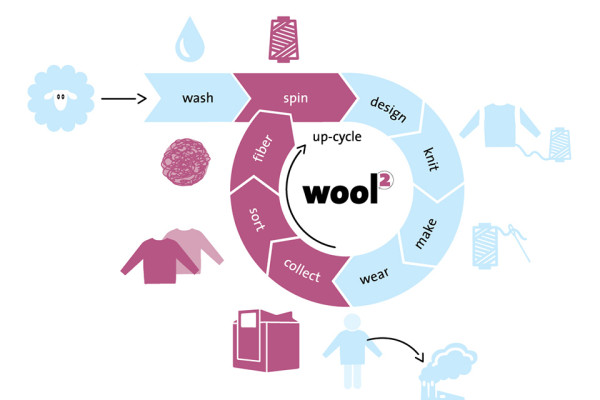 Traditionally, wool is not considered a vegan material as it is mainly sourced from sheep that are treated like a commodity and subjected to cruelty. On the other hand, recycled wool is obtained from scraps. It can also be easily broken down and turned into new products. There are three main ways to recycle wool, says the International Wool Textile Organization. Known as the closed loop system, the first method involves breaking down the garments into raw fiber state to turn them into new garments. The second method is known as the open loop system and involves turning old wool into materials like insulation or mattress padding. The third and last method involves turning old wool garments into innovative products.
More environment-friendly than virgin wool
Significantly better than virgin wool, recycled wool is free from harsh chemicals. The wool has a minimal impact on the environment and requires little water. Another advantage of recycled wool is its low carbon emissions. Recycled wool’s carbon emissions are 83 per cent lower than virgin wool. Also, dyeing process is easier as the wool scraps and garments are sorted by color before being recycled, Buying recycled wool is thus similar to buying a second-hand wool garment as it is infinitely better for the environment.
On the other hand, Virgin wool has a much higher carbon footprint and requires sheep to be bred and shaved, which leads to many ethical issues. Yet, many fast fashion brands like Zara and Mango continue to use virgin wool in their garments. They do not seem to make any real, long-term changes to their business models.
Buy from responsible brands
Completely natural, recycled wool is quite an eco-friendly material as it does not require any sheep hair to produce. Consumers who wish to purchase recycled wool need to ensure that the brand that sells it follow fair labor practices and is responsible in consumption of natural resources.
Karl Mayer launches Symm-Net articles with MJ 92/1 B
Karl Mayer has launched Symm-Net articles made using the new MJ 92/1 B
Symm-Net lace is characterized by an extremely delicate design, offering absolute symmetry. This is thanks to the particular configuration of the MJ 92/1 B – the new multi-bar jacquard raschel machine features a split-design jacquard bar with separate threading, and can thus work using both equal and counter lapping. In addition, the newcomer has two ground guide bars at the back for counterlappedelastane. For Symm-Net’s ground structure, GB1 works a pillar notation whilst the jacquard bar works a counter-lapped inlay. The result is a net structure with absolutely symmetrical, clearly defined symmetry.
To perfect the geometry, the two elastane bars with split threading – i.e. 1 in, 1 out – and counter-lapping patterning mirror the movement of the jacquard bar. The lapping patterns thus look as follows:
• JB 91: 0 – 0 / 2 – 2 // and JB 92: 2 – 2 / 0 – 0 //
• GB 93: 0 – 0 / 1 – 1 // and GB 94: 1 – 1 / 0 – 0 //
The ground structure is not only more uniform, but also more stable than its counterparts manufactured with equal lapping. The advantages of Symm-Net are particularly visible when working finer mesh constructions.
Moda at Spring Fair reports record-breaking orders
Ultimate fashion destination at Spring Fair, Moda has reported record-breaking orders and exhibitors experiencing their best trade show for years, with brands who participated in the Moda Catwalk seeing an immediate increase in orders. Hundreds of new season’s collections and must-have looks from womenswear, accessory, jewellery, and footwear designers and brands are being showcased over four days at the NEC Birmingham with retailers including Pamela Shiffer, Gormley Shoes, Lovely Looks, J Shoes, Goody2Shoes, Houstons Footwear, GASP, Russells of Omagh, Cordners, Boardwalk, Charles Ager Ltd, Greenes Shoes, Donaghy's, Anthony Ryan, Charles Ashley, The Rose Hanger, Hamish Munro, Wilkies, McElhinneys Department Store, Maddie& Marks, House of Bruar, Hoopers, Twinkle Toes, Hoggs of Fife, Snapdragon, MGO Leisurewear, The Children's Shoe Company, Precious Soles, etc.
Moda at Spring Fair is being held from February 06-09, 2022 at NEC Birmingham. Spring Fair is the UK’s most vibrant marketplace for wholesale home, gift, and fashion. As the definitive "shop for shops", it supports the retail industry like no other.
Located in the centre of the UK at the NEC in Birmingham, Spring Fair is easily accessible for UK and International retailers to meet every February, at the very start of the buying season. Together with a comprehensive line up of exciting exhibitors it offers a vibrant hub where not only ideas flourish but community, connection and collaboration thrives.
Bemberg by Asahi Kasei showcases Ecoalf’s FW21 collection at Première Vision
At Première Vision,Bemberg™ by Asahi Kasei showcased its latest Ecoalf’s FW21 collection, which perfectly embodies its values of preciousness, quality and refined aesthetic blended with innovation and responsible values.
The visionary Bemberg™ brand is renowned for its eco-high-tech yarns which are able to inject sustainability into premium textiles and are designed to match all styles and uses. Bemberg™’ is cool and sensual with a unique, supple drape. It is extremely antistatic and breathable, while its soft versatility makes it perfect for The Modern Wardrobe fashions, athleisure and everyday casual wear.
The Parisian exhibition completes the company’s celebrative two-chapter journey. The first half was presented during PittiUomo, where Bemberg™ showed archival suits crafted by the historic SartoriaLitrico and lined in Cupro. Behind them stood the new visual image of Bemberg™, focused on exceptional beauty, one-of-a-kind uniqueness and joyful comfort.
Spring Fair reopens after a two-year gap
Thousands of retail buyers, and owners of independent stores from across the UK flocked to Spring Fair at the NEC Birmingham as it opened its doors for the first time in two years. Open until Wednesday February 09, the show is expected to generate tens of millions of pounds worth of business, refuelling the retail industry and injecting newness.
Moda settled beautifully into its new home as the Fashion destination at Spring Fair, offering retailers the most diverse fashion buying destination in the UK with a comprehensive and inspiring line-up of industry leading womenswear, jewellery, accessories, footwear, and sustainable brands. Jewellery& Watch had its own distinct edit within Moda giving fashion and jewellery buyers the chance to see the widest collection of new season pieces across a wide variety of price points and explore crossover buying opportunities – all in the one location.
On the Inspiring Retail Stage, visitors were encouraged to hear from Karl McKeever, Founder of FutureView, about the opportunities that have arisen as a result of Covid, with many businesses unlearning and relearning behaviours, developing different ways of thinking and doing things, and becoming increasingly creative and collaborative in the process. Interior designer and finalist of TV show Interior Design Masters, Paul Moneypenny discussed his love of design, how to be brave with colour.
Kenya’s records Sh8 billion rise in textile and apparel accessories’ earnings
Boosted by higher sales to the US and the Netherlands, Kenya’s earnings from textile and apparel accessories grew Sh8 billion in the nine months to September 2021. As per Kenya Export Promotion and Branding Agency (Keproba) stats, textile firm’s revenues rose 31.1 per cent to Sh33.7 billion in the review period compared to Sh25.7 billion a year earlier. The US and The Netherlands were Kenya‘s largest export markets during the period, says Wilfred Marube, CEO, Keproba.
FTA with the US, and African Growth and Opportunity Act (Agoa) allows Kenya to export selected goods at preferential terms to the US, exempting them from paying tax. The initiative allows Kenya to export more than 6,000 product lines, which is mostly dominated by the export of textile and apparel. Locally, the revival of Rivatex also boosts Kenya’s textile sector by creating a demand for locally produced cotton and created thousands of jobs.
Likewise, the introduction of Bacillus Thuringiensis cotton, Kenya’s first genetically modified, insect-resistant cotton seeds, boosts cotton farming in the country. Keproba supports the sector by partnering with its key stakeholders including business membership organizations (BMOs) like Kenya Fashion Council to maintain high production standards and create value-added products that meet the global export market standards, adds Marube.
The agency recently developed a new strategy to increase uptake of locally designed and manufactured apparel, textiles, leather and accessories including through the ‘Buy Kenya Build Kenya’ campaign.
Malaysia’s Caely Holdings Bhd to boost lingerie production in Indonesia
Malaysia-based investment holding company, Caely Holdings Bhd, plans to form a joint venture to increase its lingerie production capacity in Indonesia. Gok Ching Hee, CEO says, the company is currently finalizing terms and conditions for the agreement with a potential JV partner that would then invest in a plant in Indonesia. Caely currently exports undergarments to Germany, the US and Canada. However, has been getting more enquiries from companies in Turkey, France and Australia. And this is encouraging them to expand, with the plant in Indonesia aiming to increase capacity threefold, compared to its factory in Teluk Intan, Perak.
The recent surge in orders is due to companies shifting away from sourcing their products in China, adds Gok The orders will help Caely use up the current capacity of its Indonesian plant, he states further.
India’s KPR Mills’ Q3 FY2022 net profit declines 12.57 per cent
In its Q3 FY2022, KPR Mill’s net profit declined by 12.57 per cent to Rs 211.77 crore against Rs 242.22 crore in Q2 FY2022. As per an Equity Bulls, the company’s total income grew by 4.90 per cent to Rs 1,285.83 crore from Rs 1225.72 crores reported during the previous quarter.
On a Y-o-Y basis, KPR Mills posted a 35.52 per cent growth in profit to Rs 211.77 crore for the period ended December 31, 2021 as compared to net profit of Rs 156.26 crore posted for the period ended December 31, 2020. Total income grew 36.86 per cent to Rs 1,285.83 crore during the period ended December 31, 2021 as compared to Rs 939.51 crore during the period ended December 31, 2020.
Stradivarius refreshes visual identity with a refined logo
To be more in line with its current brand positioning, Galician Group company, Stradivarius is refreshing its visual identity. As per a Fashion Network report, the move aims to assert the fashion retailer’s identity by creating a new more contemporary and refined logo, designed together with the Barcelona-based studio Ana Mirats and written in a font that was created exclusively for the brand.
The new visual illustrates Stradivarius’ two differentiating elements: treble clef, a symbol reflecting the dynamism of the brand; and the personalized font designed to provide readability and notoriety in a more contemporary style.
Founded as an independent brand by the Triquell family, Stradivarius is the fifth largest brand in terms of turnover for the Galician conglomerate that is behind Zara, Pull & Bear, Massimo Dutti, and Bershka. The brand closed the 2020 financial year with a total of 936 stores worldwide and a turnover of €1.283 billion, 26 per cent lower than the sales recorded a year earlier.











