FW
Calibrate cotton yarn exports, urges NarendraGoenka, Chairman, AEPC
NarendraGoenka, Chairman, Apparel Export Promotion Council (AEPC) requested the government to calibrate cotton yarn exports and reduce export benefit on cotton and cotton yarn export from India.
He assured, the garment industry will make all efforts to achieve the export target of $20 billion this fiscal. However, cotton yarn prices have increased by almost 125 per cent in the last 18 months, he said.
Goenka requested the government to ban cotton exports for a few months to ensure availability to the industry as an immediate measure.
He also urged for the formation of a Textile Advisory Group by the government as an active interface between different stakeholders in the textiles value chain, besides alarming and mitigating the crisis like raw material storage, increasing productivity and containing inflation.
Appreciating the government's move to mitigate the crisis through Textiles Advisory Group, Goenka said, AEPC will look at the issues linked to productivity be it good quality seeds, introducing the new varieties, crop insurance to farmers and use of technology in farm optimization and produce management, water availability, arability for the crop.
Bundlee signs deal with British footwear company to foray into footwear rental
Marking its foray into footwear rental, UK-based rental clothing service Bundlee has signed an exclusive deal with British footwear company Vivobarefoot.
The partnership allows customers to save time and money on purchasing new kids’ footwear.
Notably, the rental platform’s subscription model enables parents to save even £700 every year on their kid’s clothes, besides reducing customers’ carbon footprints by as much as 86 per cent with each rental.
More on the collaboration, Eve Kekeh, Founder, Bundlee, said that with Bundlee’s community growing exponentially, there wouldn’t have been a better time than now to unveil this new category.
Eve added that Vivobarefoot’s commitment to circularity and care for children’s feet makes it an ideal ally for Bundlee.
Founded in 2018, Bundleeoffers clothes for kids on a rental subscription basis.
Its prices range from £24 per month for curated essentials and £39 per month for 15 pieces from premium apparel brands, like Patagonia and Mori, amongst others.
Cotton prices decline as MCX slashes open position limits on cotton contracts
Cotton prices fell by around Rs 4,000-Rs 5,000 per candy of 350 kg in sport market as commodity future market Multi Commodity Exchange (MCX) slashed open position limits on cotton contracts to contain cotton prices and its speculative trading. MCX cotton contracts dropped around 2-3 per cent after tightening of the provisions.
MCX informed its members and traders that revised position limits will be effective from June 9, 2022. Traders’ overall open position limit has been cut from 3.80 lakh bales of 170 kg to 80,000 bales, out of which near month position will not exceed 20,000 bales. Currently near month position is fixed at 95,000 bales. Members’ overall open position limit has been reduced from 38 lakh bales to 8 lakh bales, while the near month position has been cut from 9.50 lakh bales to 2 lakh bales. As per the MCX circular, near month positions should not exceed one-fourth of overall positions.
Cotton traded at around ₹95,000-96,000 per candy of 356 kg. According to the traders, cotton prices have reduced in the last couple of days as demand from spinning mills reduced. MCX June cotton contract was at ₹44,100 per bale after a decline of 2.58 per cent. July contract also reduced by 2.48 per cent to ₹43,650 per bale.
Industry sources said that it was a long pending demand to contain speculative trading which was fuelling spot cotton prices. Sanjay Jain, Former Chairman, Confederation of Textile Industries (CITI), says, MCX’s decision will not impact cotton prices much as open interest positions are very low on either side.
Highlight garment’s ethical pricing issue on global platform, urge Bangladesh leaders
A Bangladeshi delegation comprising leaders of the Bangladesh Employers' Federation (BEF), Bangladesh Garment Manufacturers and Exporters Association (BGMEA) and Bangladesh Knitwear Manufacturers and Exporters Association (BKMEA) met ILO Director-General Guy Ryder at the ILO headquarters in Geneva to urge him to highlight the issue of ethical pricing of garment items in different global forums to ensure a sustainable industry.
Faruque Hassan, President, BGMEA emphasized on the need to ensure fair prices of garment items to make the apparel industry more sustainable, positively impacting the well-being of garment workers.
Production costs in garment manufacturing have gone up due to the spiralling prices of yarn, chemicals and other raw materials and high shipping charges, but prices offered by the buyers do not reflect the reality and rationality, he said.
The delegation apprised the ILO director-general of the current situation of the ready-made garment industry in Bangladesh, challenges and opportunities.
They also highlighted how the RMG industry of Bangladesh has gone through the tangible transformation in the areas of workplace safety, labour standards, and environmental sustainability.
With these achievements, Bangladesh has earned the global accolades and recognition as one of a safe and ethical apparel sourcing destinations in the world, they said.
Diesel ropes in EraldoPoletto as new Global CEO
An OTB Group company, Diesel has roped in EraldoPoletto as its new global CEO.
As per a Spin Off report, Polette will succeed Massimo Piombini, who after completing the mission of defining Diesel's strategy and repositioning plan, assigned to him by founder and chairman Renzo Rosso and the group's board, will hand over the company’s leadership to Poletteefrom July 1, 2022.
Poletto, CEO, North America, has already contributed to the development in the market of the new strategic direction taken by Diesel. The manager has 30 years of experience in the luxury and retail sectors and has held important positions in his career as, among others, CEO and brand president of the footwear brand Stuart Weitzman (Tapestry Group) and CEO of Salvatore Ferragamo and Furla, leading the evolution of the brands globally.
Donald Kohler, a manager with significant international experience in the fashion industry, where he has held such important roles as President, Burberry Americas, CEO, Americas & Chief Retail Officer, Ferragamo, and President, Ann Taylor Group, has been named to head the North American market.
Nigeria’s textile industry may lose millions of jobs on further decline, warn experts
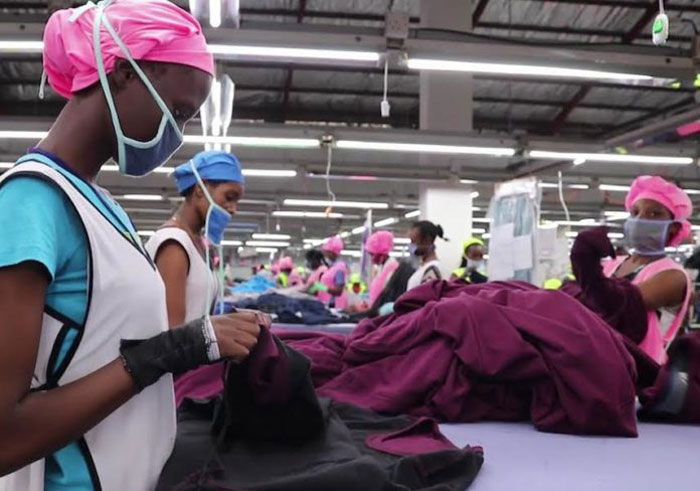
A strong pillar of its economy in the past, Nigeria’s textile industry is currently on the brink, having shrunk from 175 firms in 1985 to less than 20 in 2022. The sector’s employment has declined from 137,000 jobs in 1996 to less than 20,000 now. Nigeria’s textiles exports suffered a huge setback between 2003 and 2008. Sinking to its lowest level in 2006, textile exports has sunk almost zero today.
The Nigerian Textile Manufacturers Association (NTMA), held a press conference recently to address the state of poor competiveness. Led by Folorunsho Daniyan, President, NITMA the conference emphasized on the need for urgent government intervention to keep the industry alive.
Discouraging imports and boosting local consumption
Data released by the Nigerian Bureau of Statistics show, finished products dominated Nigeria’s textile imports in 2021. The all-commodity group import index of Nigeria’s textile products increased 0.47 per cent. Highest increase on the index was recorded by textile and textile articles followed by boilers, machinery and appliances, parts thereof and wood and articles of wood, wood charcoal and articles.
Disturbed by the report, Ali Baba, President, National Union of Textile Garment and Tailoring Workers of Nigeria (NUTGTWN) said, the latest report released by the NBS shows the surprise lead taken by the textile materials in the list of country’s imported commodities in 2021. NITMA estimates, over 95 per cent of Nigeria’s domestic textile market is dominated by imported fabrics and clothing materials.
Need for strict measures to boost exports
Daniyan says, the Nigerian textile industry suffers from high production costs that make products uncompetitive. Further, products are vulnerable to unrestrained smuggling and counterfeiting of Made in Nigeria textiles, poor patronage in spite of the Federal Government of Nigeria’s Executive Order of 2017. Daniyan urged the government to provide a conducive environment for the revival of textile industry and manufacturing activities in general. It also criticized the Nigeria Customs Service (NCS) for being ineffective in combating smuggling cheap textile products largely from China and other Asian countries.
The association urged NCS to adopt strict measures like conducting raids on smugglers’ warehouses in Kano, Lagos, Kaduna, Onitsha, and other cities. It also demanded the establishment of a Presidential Task Force of textile manufacturers and union to seize the goods smuggled into the country. Daniyan emphasized on the ability of African Continental Free Trade Agreement, (AFCFTA) to elude Nigeria of the illegal textile imports that can be produced locally.
Revive Kaduna complex and attract new investments
Peter Obi, Presidential Aspirant, Peoples’ Democratic Party (PDP) says, Nigeria can earn more foreign exchange by reviving the textile complex in Kaduna. Agreeing to this, Senator Shehu Sani also emphasizes on the need to boost employment in the industry.
One big challenge faced by sector is the huge shortage of raw materials like cotton, says Erneka Offor, CEO, Acting Executive Secretary, Nigerian Investment Promotion Commission (NIPC). Government’s slack in policies in cotton, textile and garment sectors is impacting growth . Nigeria also fails to attract new investments due to unproductive operating environment and infrastructural challenges like power cuts from public power sources and high diesel and oil costs. Marketing challenges like smuggling and dumping of textile products also make the industry uncompetitive, adds Offor. Any further decline may cause it to lose several direct and indirect jobs, he warns.
Decrease in crop size leads to cotton consumption outpace production in 2021-22: ICAC

This latest edition of Cotton This Month shows, a decrease in the size of cotton crop in top cotton producing countries like India, Argentina and South Africa that has resulted in consumption outpacing production in the 2021-22 season.
Consumption to exceed production by 265,000 tons
Yield of smaller-than-expected crops will lead to consumption exceeding production by about 265,000 tons. Production during the year is projected to reach 26.13 million tons while consumption is projected to reach 26.09 million tons. Total area under cotton cultivation will decrease 1 per cent during the year to 32.78 million hectare
To assess the impact of rising consumption, the secretariat uses stocks-to-use ratio that measures available cotton stocks as a share of cotton mill use to quantify the relationship between cotton supply and demand. Cotton price rise when the stock-to-use ratio declines due to tighter supply. In contrast, the ratio rises when supply exceeds demand, pulling cotton prices downwards. The total area under cotton cultivation also impacts prices.
Cotton forecasts to resume in August
The Secretariat plans to suspend publication of price projections and resume in August after re-evaluating the price situation. The current volatile market makes it difficult to predict accurate figures. Earlier too, it had suspended price forecasting in 2010-11 season of unprecedented high price and volatility.
Cotton This Month is published by the International Cotton Advisory Committee at the beginning of a month with Cotton Update published mid-month. The mid-month ‘Cotton Update’ contains updated information on supply/demand estimates and prices.
Transparent information on cotton production
An association of cotton producing, consuming and trading countries, the International Cotton Advisory Committee (ICAC) was formed in 1939. ICAC helps member strengthen global economy by providing transparent technical information on cotton production. The Association also acts as a forum for discussing issues covering the cotton supply chain from farm to textile manufacturing. It will provide a free access to its cutting-edge technologies like the voice-based app and virtual technology cotton training program. The intergovernmental commodity body covering cotton, ICAC is recognized by the United Nations.
Operating conditions of cellulose fiber enterprises in China improves in 2021
Compared to 2020, the operating conditions of most cellulose fiber enterprises in China improved significantly, according to the annual reports disclosed by Chinese listed companies.
Operating in the chemical fiber sector, FuningAoyang Technology Co registered a revenue of 1.048 billion yuan and a net profit of -1.068 billion yuan (-420 million in 2020). The huge losses are mainly caused by asset impairment losses, asset disposal losses and disposal costs of related employees. As per a CCF Group report, the company’s annual production declined by 36.26 per cent to 85,386 tons. The sales volume of the company declined by 36.84 per cent to 89,965 tons. The inventory declined by 90.67 per cent to 500 tons. On Apr 9, 2021, the company announced that it planned to sell viscose business, and the counterparty is Sateri China Investment Co., Ltd.
Jilin Chemical Fiber, a manufacturer of viscose filament yarn and viscose staple fiber reported a 29.7 per cent year-on-year increase in revenue of viscose filament yarn to 2.206 billion yuan, and the revenue of viscose staple fiber is 1.197 billion yuan, an increase of 72.52 per cent year-on-year. The production and sales of viscose filament yarn is 67,259 tons and 70,723 tons respectively, and the production and sales of viscose staple fiber is 106,052 tons and 103,797 tons respectively.
Nanjing Chemical Fiber improved its sales volume of viscose filament yarn to 897.37 tons during the eporting period. The inventory of viscose filament yarn has been sold, with revenues of 18.11 million yuan, a year-on-year increase of 92.84 per cent. The output and sales volume of viscose staple fiber is respectively 33.6kt and 30.8kt, with a revenue of 328 million yuan, a year-on-year increase of 24.56 per cent
Sanyou Chemical’s output and sales of viscose staple fiber declined to 681.7kt and 668.4kt respectively, compared with 749.6kt and 761kt in 2020. The revenue of viscose staple fiber increased by 21,03 per cent Y-o-Y to 8.284 billion yuanwhile the net profit declined by 124 million yuan to 270 million yuan
Xinxiang Chemical Fiber currently focuses on the production and sales of viscose filament yarn and spandex, and has suspended the production of viscose staple fiber. During the reporting period, the company produced 64,374 tons of viscose filament yarn, a year-on-year increase of 3,587 tons. The revenue totaled 2.045 billion yuan, a year-on-year decrease of 6.49 per cent. Zhongtai Chemical: the output and sales of viscose fiber is 569.9kt and 267.4kt respectively, and the output and sales of rayon yarn is 297.5kt and 300.3kt respectively. The revenue of the two is 2.881 billion yuan and 4.199 billion yuan respectively, a year-on-year increase of 80.7 per cent and 34.34 per cent respectively.
Fashion e-commerce contributes 37% to Nigeria’s economy: NEPC
The fashion e-commerce sector presently contributes to 37 per cent revenues to Nigeria’s economy, says DrEzaYakusak, CEO, Nigeria Export Promotion Council (NEPC),
Yakusakadds, fashion including textile and footwear sub-sector remains the second largest contributor to Nigeria’s Gross Domestic Products (GDP) after food, beverages and tobacco according to latest Statista 2020 figures.
Given the present circumstances, Nigeria has no option but to support the growth of its non-oil revenue sector for her economy to recover fast, Yakusak adds
There is no longer any doubt that sectors such as the apparel, garment, arts and craft, cosmetics and the beauty industry have continued to make tremendous contributions to the growth of the nation’s GDP.
’Available statistics from ecommercedb.com indicates that e-commerce transactions in 2020 was over $5 billion, presently, it is ranked 35th largest market for e-commerce globally with yearly record growth of 42 per cent.
Yakusak emphasized that NEPC is willing to render support to individuals and organizations that present viable and services of various sectors all of which forms the basis of its partnership with Agogo Africa to launch a credible platform to onboard fashion and related sectors for trading.
Digital Denim Week showcases Fall/Winter 23-24 collections of 83 brands
Around 83 exhibitors and more than 1,600 visitors, along with 1,800 professionals participated in the Digital Denim Week on May 17 and 18, 2022 at Berlin in Germany. These brands showcased Fall/Winter (F/W) 23-24 collections and their up-to-date sustainable R&D denim developments.
The elite show created an opportunity for denim manufacturers to meet with the creative minds behind brands.
Family-owned Italian laundry Blue Jeans Lavanderie showcased their chlorine- and potassium-free permanganate solution to attain the in-demand 3D effects seen on the Fall/Winter 22-23 catwalk.
Pacific Jeans proudly promoted ‘Made in Bangladesh’ at Denim PV in Berlin. The buyers visited Pacific Jeans stall at Denim PV and explored and experienced the premium jeans manufactured by Pacific Jeans. Bangladesh-based Square Denim presented its ‘ballerina’ impression with 85% stretch and no growth. Along with ballerina fabric – Square Denim also showcased vintage-inspired fabrics, ‘always raw’ finishes and ‘cactus’ denim manufactured with waterless dyeing in the F/W 23-24.
Turkey-based Isko presented its iconic fabric franchises like the Isko Reform, Isko Pop. Over 95% of Isko’s collection comprises a least 50 per cent recycled material – underlining the company’s emphasis on reducing virgin components.
Blue Jeans Lavanderie highlighted that the high-end denim market is beginning to transform from the worn-in vintage Levi’s look to bolder distinctions, needle piercing and color.
Pakistan-based Chottani presented a slow fashion notion that customs carved woodblock prints. Sustainability was the main attraction as recycled cotton and BCI cotton was the center stage of RealteksTekstil’s collection of tried-and-true indigo fabrics.Serbia-based Eurotay showcased A nostalgic collection that offers the 80s- and ’90s-inspired fabrics. A heritage range centers on selvedge denim with a worn look.
Another Pakistan-based denim manufacturer SM Denim’s booth attracted visitors with its eye-catching digital prints.Indigo Textile showed its zero-waste notion developed in collaboration with US designer Danielle Elsner.
Some of the other happenings at the Denim PV show included in-person and online fashion seminars, innovations at the show in the Trends Agora, Digital Denim Smart Talks to review the sector’s ecological progress and innovations in terms of sustainable materials, a Season Smart Talk donating new eco-friendly denim developments, and a Traceability Smart Talk to determine traceable-production solutions presented by the show’s exhibitors.