


FW
67th IIGF to feature 1,189 buyers from 59 countries
The upcoming 67th India International Garment Fair (IIGF) will feature around 1,189 international buyers from 59 countries, says Naren Goenka, Chairman, AEPC. The event will provide a direct marketing platform to MSME exporters from across the country. It will bring together around 500 exhibitors and over 2,000 overseas buyers and buying agents, he adds. Buyers will hail from countries like: US, Brazil, Japan, UK, Spain, Australia, Poland, Colombia, Greece, Italy, Egypt, Chile, Argentina, UAE, Thailand, France, Germany, Canada and Iran, etc
Held in January 2020, the last physical fair generated business worth $166.17 million. AEPC expects a 10 per cent growth this year despite adverse marketing conditions in various countries.
The global apparel market is expected to generate revenues of around $1.8 trillion in 2022 and $1.9 trillion in 2025 before it closes to $2 trillion in 2026, adds Goenka. AEPC has put up a stall for start-ups to showcase their innovations in the textiles and garment sector. Currently, there are 600 textiles start-ups in India and the Production Linked Incentive scheme would be a window to the investment flow into India and thrust exports of MMF Apparels and Technical Textiles along with scaling their production to match global demand, opines Piyush Goyal, Textile Minister.
The View Premium Selection ends on a successful note
View Premium Selection, the Preview Textile Show of Munich Fabric Start Exhibitions GmbH, ended on a successful note. Held from June 21-22, 2022, the event showcased over 300 pre-collections, from Akris, Baldessarini, Bogner, Calvin Klein, Cinque, Comma, Drykorn, Escada, Hugo Boss, Lala Berlin, Lagerfeld, Laurél, MAC, Marc Cain, Marc O'Polo, Riani, Schumacher oand Strells.
The View Premium Selection is divided into four areas: Fabrics, Additionals, Design Studios and Denim & Sportswear. Together, these form the trend and a business platform for information and inspiration for Europe's fashion experts.
Nick Müller, Max Müller Agency says, the event provides an initial orientation. Many people decide on their basic qualities here, thus know at an early stage how they will create their collection at an early stage. The atmosphere at the event is great with everything from maxi checks to metawear, from enthusiastic colors and shiny, moving surfaces to high-tech and textile being showcased, he adds.
C&S consolidates with Texo acquisition
C&S, a manufacturer of Italian fashion garments has consolidated its position in the formalwear segment by acquired Texo SRL, a cagli-based company with 10 years experience in the production of fashion apparel for Texo and for third parties.
C&S has also expanded its Style Services Luxe division by adding the Style Services Denim and C&S Experience initiatives in collaborations with the Haikure brand, and has signed license agreements for Europe for Jeckerson and Purple.
C&S was incepted over 40 years ago in Trestina, in the Perugia province. The company has revolutionizing itself by embracing the luxury segment, establishing itself as a special partner for the creation of jackets, shirts, outerwear, and denims. It has become an essential point of reference due to its unique approach, oriented toward sustainability and the Made in Italy supply chain. It is also the main interpreter of jeans’ evolving world, as well as luxury and formalwear.
Consumer behavior will remain unpredictable in future, say experts
Top industry executives at a recent Dublin conference said, they expect consumer behavior to remain unpredictable for the foreseeable future as global retailers and consumer goods makers continue to remain in a crisis mode. Since the beginning of 2020, the STOXX Europe 600 Retail EUR Price Index has stabilized at one-fifth its original value. The equivalent index for European food and beverage makers has declined by over 4 per cent
The faltering supply chain has also threatened the manufacturing and consumer goods industry over the past year as shipments remained trapped in log jams due the pandemic-induced lockdowns, panic buyers and sanctions on Russia. Shipping costs have increased by around 30 per cent, says logistics giant Maersk, which transports goods for companies like Walmart and Nike. Consumers goods companies are struggling with issues like soaring inflation, climate change and global food crisis, says Alan Jope, CEO, Unilever.
Inflation is rising, particularly in Europe, says Ayla Ziz, Global Head-Sales, Danone. Tobias Wasmuht, CEO, Spar International adds, the supermarket chain owner is trying to mitigate the impact by cutting costs and becoming more efficient. But, the increased raw material costs are likely to be passed onto shoppers, he warns.
Economic sanctions on Russia hurt Italy’s fashion sector
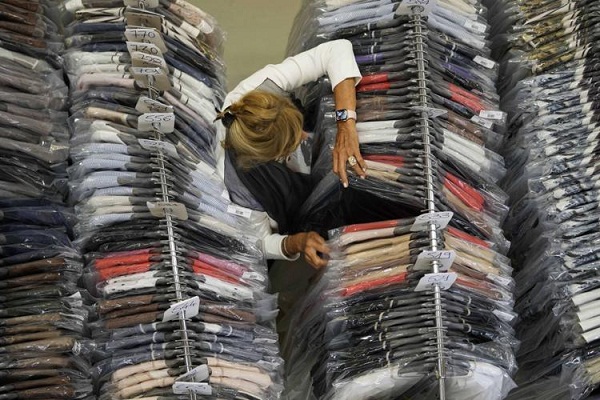
The economic sanctions on Russia following its war with Ukraine are making business difficult for many fashion brands in Italy -- the fashion capital of the world. They are especially hurting clothing and shoe manufacturers, as Italy is the largest global producer of these goods. The country exports fashion goods worth $101 billion annually.
Huge number suppliers losing business
Russian customers account for around 3 per cent of Italy’s total portfolio. However, their loss affects around 80,000 suppliers, says Fabio Pietrella, President, Fashion industry trade group in Italy. These customers account for 80 per cent of the money made by small Italian businesses every year, he adds. The Marche, Vento, Umbria and Emilia-Romagna regions in Italy are completely dependent on orders from Russia for survival. They connect the entire supply chain, adds Pietrella.
Some of the world’s most famous fashion companies like Gucci, Versace and Armani are Italian with a few having operations in Russia. However, these companies have been unable to find ways to get past the sanctions, notes Jeffery Sonnenberg, Professor-Business, Yale University.
Practical concerns stop companies from snapping ties
Even though fashion makers in Russia are extremely concerned over the aggression in Ukraine, they are compelled to continue doing business owing to practical reasons as it difficult to find a substitute, says Pietrella. Companies like D Exterior are also reluctant to cut ties with Russia as it has taken them years to build business in the country. D’Exterior makes 40 per cent of its revenues from Russia every year. The company is unsure of getting payments for 400,000 garment orders for Spring/Summer season, says Nadia Zanola, Owner.
Zanola however, does not intend to abandon Russia business as customers there appreciate the extra efforts needed to make good clothes, she says. She hopes, common Russian consumers are able to raise themselves from the crisis.
Infinited Fiber Company to set up regenerated textile fiber factory at Lapland
The Finnish fashion and textile technology company Infinited Fiber Company plans to set up a factory to produce regenerated textile fiber from textile waste in the Veisiluoto industrial area in Kemi, Lapland. The factory will be set up inside a shut paper plant leased to the company by Stora Ensos. The company will invest approximately €400 million in the project that is expected to create an estimated 270 jobs.
The factory will begin operating at full capacity in 2025 with the annual fiber production capacity totaling 30,000 metric tons. Most fibers produced in the factory will be exported. Infinited Fiber Company is a Finnish biotech founded in 2016 to commercialize a breakthrough recycling technology that can turn cellulose-rich raw materials – like cotton-rich textile waste, used cardboard, or wheat or rice straw – into high-quality textile fibers with the look and feel of cotton. The patented technology has been validated by leading brands and is ready to be scaled.
West Bengal to boost garment industry with an apparel hub in Maheshtala
The West Bengal government plans to boost the state’s garment industry by setting up an apparel hub on 10 acre in Maheshtala. As per a Knitting Industry report the hub will span a built-up area of 12 lakh sq. ft. and will be set up under the aegis of MSME and textile department.
The park will create over 1 lakh jobs for thousands of people residing in the neighborhood of Nungi and in adjoining Metiabruz. It will accommodate around 30,000 people, says Rajesh Pandey, Secretary-MSME and Textiles. The investment in the project will be to the tune of several lakh crores, he adds
The project will be developed on a develop-build-finance-operate-and-transfer (DBFOT) model that gives private operators the right to operate the hub. The state government is offering a parcel of land along with a boundary wall on lease for 99 years for developing the hub. The government will select interested private partners by this week.
Ensure sustainable cotton sourcing, urge Vietnam’s garment producers
Apparel manufacturers need to ensure they source cotton through sustainable supply chain and manufacture in an environment-friendly way, said leaders attending a conference on Sustainability in cotton supply chains held at HCM City in Vietnam recently. As per Trần Như Tùng, Deputy Chairman, Việt Nam Textile and Apparel Association the country is committed to achieving zero emissions by 2050, many local companies are reducing their environmental footprint. They need to ensure their cotton is sourced in a responsible way and is free from forced labor, he added.
Việt Nam’s textile and apparel industry aims to use power and water in a more circular, efficient and sustainable manner by 2039, he added further. Vũ Đức Giang, Chairman explained, companies making textile and apparel products need to ensure sustainability across all stages of production such as raw material farms, manufacturing lines and dyeing processes.
They need to use environment-friendly technologies and abide by global conventions on labor. Many Vietnamese businesses cannot export their goods to the US since they do not fulfill origin traceability requirements, he opined.
Võ Mạnh Hùng, US Cotton Council International, advised, businesses, especially exporters to the US, to partake in sustainable cotton programs to help certify businesses using transparent and sustainable material sources.
The US accounts for around 42 per cent of Việt Nam’s textile and apparel exports, and Việt Nam is one of the US’s biggest buyers of raw cotton. This year, Vietnam’s textile and garment exports to the US increased by 23 per cent to $22 billion.
Pakistan, Malaysia to benefit from bilateral trade: Chairman, PHMA
Pakistan and Malaysia can both benefit from the bilateral trade between the two countries, said Mian Kashif Zia, Chairman, Pakistan Hosiery Manufacturers and Exporters Association (North Zone) while addressing a Malaysian trade delegation at PHMA office in Malaysia. Zia said, the joint ventures and business-to-business meetings between business leaders of the two countries will help promote trade between them. Malaysia imports knitwear products worth $759 million from across the world. But, Pakistan’s exports to the country amounted to only $6.60 million in 2021.
Pakistan has a growing potential in the local market. Availability of abundant natural resources and independents investment systems, makes it the best investment destination, Zia explains. Muhammad Izwan Zainuddin, CEO, PUNB said, the balance of trade has always been in favor of Malaysia and we aim to get our legitimate share in trade with the country.
Mud Jeans launches Tuesday jeans range
Denim manufacturer, Mud Jeans has launched Tuesday jeans made from 100 per cent post-consumer recycled (PCR) cotton. As per a Sourcing Journal report, the jeans have were developed in partnership with Saxton University of Applied Sciences in the Netherlands and combine mechanically recycled fibers with chemically recycled fibers.
The brand used 67 per cent mechanically recycled fibers and 33 per cent chemically recycled fibers in the weft and 67 per cent chemically recycled fibers and 33 per cent mechanically recycled fibers in the warp. It recycled styles by own brand as well as jeans by other brands. The mechanically recycled portion was 98 per cent cotton and 2 per cent foreign fibers. The chemically recycled portion was 100 per cent cotton.
Meeting industry standards for durability, Mud’s 100 per cent PCR fabric is softer than the brand’s regular jeans that are blended with cotton. The chemically recycled fibers result in a softer fabric compared to the jeans it makes with virgin organic cotton.











