


FW
Zac Posen's Gap gown wows Met Gala
Zac Posen, Gap Inc.'s Executive Vice President & Creative Director, unveiled a stunning custom Gap gown for Oscar Award-Winning actor Da'Vine Joy Randolph at the Met Gala, showcasing Gap's commitment to creativity and cultural influence.
Posen's appointment in February signaled a shift towards cultural curation across Gap Inc.'s brands. The denim gown, inspired by romanticism and historic fashion, pays homage to Gap's heritage while embracing modernity.
Posen's creation features elements reminiscent of 18th-century evening wear, fused with Gap's classic 1969 denim. The gown's bold "international red" lining mirrors San Francisco's Golden Gate Bridge, while its aquatic forms evoke the city's surroundings. Posen's design also draws from literary inspiration, blending heritage with modernity akin to JG Ballard's "The Garden of Time."
For Randolph, the gown symbolizes strength and femininity, aligning with Gap's ethos of celebrating individual style. This collaboration marks Posen's debut project since assuming his new role, underscoring Gap Inc.'s commitment to innovation.
Posen, donning a Banana Republic suit, joined Randolph on the Met Gala red carpet, showcasing Gap Inc.'s diverse portfolio of iconic American brands.
ITM 2024 backed by Turkish government for global trade
The Republic of Turkey Ministry of Commerce has unveiled its 'Trade Delegation Supports List' for 2024, with a significant inclusion: the ITM 2024 International Textile Machinery Exhibition and Hightex 2024 International Technical Textiles and Nonwoven Exhibition. Both events, slated to take place in Istanbul, have received government endorsement, signaling a boost for Turkey's textile industry.
Scheduled to run from June 4th to 8th at the Tuyap Fair and Congress Center, the ITM 2024 Exhibition promises to be a nexus for textile technology leaders worldwide. Organized in collaboration with Tuyap Tum Fuarcılık Yapım A.Ş., Teknik Fairs Inc., and the Textile Machinery and Accessories Industrialists Association (TEMSAD), the event is poised to showcase cutting-edge innovations in the textile sector over five days.
Spread across an impressive 120,000 square meters and encompassing 13 halls, ITM 2024 and Hightex 2024 have secured their spots on the Ministry of Trade's prestigious support list. This designation will draw trade delegations from a multitude of countries, including Bangladesh, Algeria, Indonesia, and India, among others.
To facilitate the attendance of international delegates, Turkish Consulates and Commercial Attache Offices are streamlining visa applications. Companies eager to engage with the global textile market at ITM 2024 can seek assistance from these offices, ensuring seamless participation in one of the industry's foremost events.
With Turkey's Ministry of Commerce actively backing these exhibitions, ITM 2024 and Hightex 2024 are poised to foster invaluable connections and drive innovation in the international textile landscape.
Femography by MAS joins GenM collective for menopause fashion
Femography, a leading B2B apparel manufacturer specializing in feminine health and hygiene solutions, has partnered with GenM, the premier menopause partner for brands, to revolutionize the way menopause is addressed in the fashion industry. As the FemTech arm of MAS Holdings, a major player in South Asia's Apparel Tech scene, Femography is already making waves with its subsidiary, Become Clothing, a Founding Partner of GenM.
Femography's innovative approach spans the entire feminine journey, from menstruation to menopause, offering clothing solutions tailored to women's unseen needs. Through this collaboration, Femography aims to leverage GenM's MTick platform to highlight its menopause-friendly products globally, addressing the increasing demand for inclusivity and clear labeling in women's clothing.
Independent research from GenM underscores the urgency of this partnership, revealing that women feel overlooked and underserved by brands during menopause. GenM's MTick symbolizes a shift in how menopause-friendly products are identified, providing consumers with trust and control. Already endorsed by major retailers like Boots and Tesco, the MTick ensures that only products meeting strict criteria proudly display the symbol.
Femography's commitment to normalizing menopause conversations aligns with GenM's mission to empower women through this transformative stage. CEO Pilar Diaz emphasizes the importance of supporting women through life's phases, while GenM co-founder Heather Jackson praises Femography and MAS Holdings for their pioneering efforts in creating products that cater to women's needs. Together, they aim to drive purposeful change and offer women worldwide greater visibility, choice, and control.
Scaling back of imports causes a decline in shipments by Bangladesh apparel exporters
The scaling back of apparel imports by American retailers and brands has caused garment led to a decline in garment exports by Bangladesh to the US over the last few months.
Data from the Office of Textiles and Apparel (OTEXA), a department under the American Commerce Department, shows, garment exports from Bangladesh to the US declined by 17.68 per cent to $1.75 billion in the January-March period of this year. In the preceding January-February period, exports dropped by 19.24 percent to $1.18 billion.
This decline in garment exports to the US has become a trend over recent months. Despite a gradual easing of inflationary pressures and higher garment exports in previous years, American retailers and brands have been importing fewer garments. Combined textiles and apparel (T&A) exports declined by 17.37 per cent to $1.81 billion during the January-March period of the current year.
While retail sales started to pick up during the festive season last year, especially around Christmas, the revival has been slow. Many garment factories in Bangladesh faced prolonged closures due to wage hike movements from September to December last year, disrupting production severely. AK Azad, Managing Director, Ha-Meem Group, highlights, apparel demand has not fully recovered amongst the low-end low-end consumers in the US impacting Bangladesh significantly. Additionally, factors such as high interest rates in US banks, ongoing gas and power crises in the garment industry, and the absence of a deep-sea port in Bangladesh continue to cause delays in shipping goods, affecting manufacturers' ability to fulfill commitments to buyers.
Despite these challenges, retail sales grew at a steady rate during March, notes Mathew Shay, President and CEO, NRF. As inflation for goods stabilises, consumers continue to benefit from a strong labor market and real wage gains, prompting retailers to keep prices low to accommodate budget-conscious consumers.
Consumer Sentiments Index reaches highest point in April 2024: CMIE
Marking a substantial rebound from the depths experienced during the COVID-19 pandemic, Index of Consumer Sentiments has reached its highest point since at least March 2019.
Compiled by the Centre for Monitoring Indian Economy (CMIE), the index grew by 5 per cent to 110.9 in April 2024 as compared to April 2019. While rural consumer sentiment reached its highest level since 2019, urban sentiment dipped to a seven-month low. Consumers earning between Rs 1 lakh ($1,198.48) and Rs 2 lakh ($ 2,396.95) annually witnessed an 8.3 per cent increase in consumer sentiment compared to 2019.
However, consumer sentiment for the lowest earners declined by 3.4 per cent in April 2024 compared to April 2019. Similarly, those earning between Rs 2 lakh ($ 2,396.95) and Rs 5 lakh ($ 5,992.38) per annum, as well as those earning Rs 5-10 lakh ($5,992.38 – $11,984.76), experienced dips of 2 per cent and 3 per cent respectively. Earning over Rs 10 lakhs ($11,984.76) annually, the highest income group saw a difference of 12.5 per cent in consumer sentiment. Suggesting cautious optimism, nearly 27.92 per cent of households anticipate improved conditions for their families in the coming year.
Welspun Living appoints Naiyya Saggi as Independent Director
Global home textiles firm, Welspun Living has appointed Naiyya Saggi as an independent director with effective from April 25, 2024.
Spanning four years, Saggi's tenure as an independent director will end on April 24, 2028. Renowned as the founder of BabyChakra, Saggi has over 16 years of experience and currently is the Group co-founder and president of the digital-first beauty and personal care conglomerate, The Glamm Group.
A prominent figure in the startup ecosystem, Saggi is also an expert in building contemporary consumer brands, fostering communities, and advocating for women in technology,
Additionally, she serves as a member of The National Taskforce for Regulatory Issues at DPIIT Ministry of Commerce and as an elected Governing Council member of The Tech Entrepreneurs Association of Mumbai. This esteemed association represents the dynamic US$ 50 billion Mumbai tech ecosystem, boasting a membership that includes 50 Unicorn and Soonicorn founders.
Dipali Goenka, CEO and Managing Director, Welspun Living, cities Saggi’s strategic acumen and extensive experience in B2C and e-commerce along with her insights into consumer behavior and digital trends as factors driving Welspun Living's B2C growth strategy forward.
In response to her appointment, Saggi articulated her alignment with Welspun's values and her eagerness to collaborate with the board and management team to spearhead strategic initiatives. She emphasised her commitment to foster sustainable, inclusive growth that integrates profit with purpose.
Italian textile machinery sector sees divergent trends in Q1 2024
The Italian textile machinery sector in 2024 has commenced with a mixed bag of outcomes. According to data from ACIMIT – the Association of Italian Textile Machinery Manufacturers – the orders index for the first quarter has stagnated compared to the same period last year, resting at 61.2 points (basis: 2021=100).
The stagnation is attributed to divergent trajectories in domestic and foreign markets. While domestic orders surged by 15 per cent compared to Q1 2023, international orders experienced a 4 per cent decline. Notably, foreign market orders stood at 59.4 points, contrasting with Italy's robust 73.9 points. However, both figures fall short of 2021 levels.
ACIMIT President Marco Salvade remarked on the cautious sentiment prevailing in foreign markets, citing geopolitical uncertainties impacting investment decisions, particularly in key markets like China, Turkey, and India.
Conversely, domestic orders show a slight uptick. Salvade noted a partial recovery from the significant decline witnessed in 2023, although he remains cautious about a definitive reversal. He emphasized the importance of the Transition 5.0 plan in stimulating domestic investment and awaits its implementation to gauge market response. With order backlogs supporting four months of assured production, the sector remains cautiously optimistic amid global uncertainties.
Global ecommerce fashion industry set to reach trillion dollar milestone

In a pioneering forecast by Shopify, the global ecommerce fashion industry is projected to soar to a trillion dollars this year. Behind this monumental growth lies a significant transformation in luxury fashion, driven by a fusion of sustainability, technology, and personalized experiences.
Sustainability: Redefining luxury
Consumers, more conscientious than ever, are driving a seismic shift towards sustainability in luxury fashion. Reports indicate that over two thirds of shoppers are willing to pay extra for sustainable products, signaling a demand for ethical consumption. This shift extends beyond consumer preferences, with luxury brands increasingly embracing sustainable practices, from materials sourcing to second-hand markets. By prioritizing quality over quantity, luxury labels are pioneering a circular system aimed at reducing waste and prolonging the lifespan of clothing.
Moreover, eco-conscious designs are gaining traction as leading luxury brands incorporate sustainable materials and processes. Consumers are gravitating towards pieces with longevity, prompting designers to infuse collections with meaningful narratives, particularly around environmental initiatives.
According to Amanda McCormick Bacal, a prominent figure at Joor, "The future of luxury is marked by a transformative shift, which utilizes tech with human touch to create deeply resonant, individualized experiences."
Quiet Luxury: Elevating essentials
The trend of 'quiet luxury', characterized by understated elegance and superior quality, is undergoing a renaissance. With a staggering increase in global searches, quiet luxury is evolving into a more sophisticated iteration of everyday chic. Recognizable staples like tailored shirts and sleek denim are being reimagined with innovative textiles and subtle color palettes. High-profile showcases, such as Saint Laurent's Spring/Summer 24 collection, underscore this shift towards refined yet understated fashion.
Amanda McCormick Bacal anticipates that the quiet luxury trend will continue to gain prominence, with a focus on elevating wardrobe essentials into minimalist statement pieces.
Timeless Femininity: A resurgence
In a nostalgic nod to the past, timeless femininity is experiencing a revival, with references to the '50s and '60s dominating runways. Floral motifs, epitomized by roses, adorn garments, injecting a romantic allure into spring/summer collections. Modern bridal aesthetics, characterized by dropped waists and oversized sleeves, transcend traditional wedding attire, resonating with a broader audience.
Luxury fashion is embracing outdoor apparel and athleisure, blurring the lines between functionality and style. Brands like Gucci and Louis Vuitton are spearheading this movement, offering collections suitable for diverse settings, including workwear and evening wear. Athleisure dresses, crafted from stretchy fabrics with sporty details, epitomize the fusion of comfort and style.
Technology's role in luxury
The integration of technology into luxury fashion is becoming increasingly pronounced, with AI-driven solutions revolutionizing the shopping experience. From made-to-measure garments to virtual styling, brands are leveraging technology to offer personalized experiences. AI-powered try-on technologies enable consumers to visualize garments before purchase, while virtual stylists curate tailored recommendations.
Amanda McCormick Bacal emphasizes that technology, coupled with human touch, is driving a transformative shift in luxury fashion.
As the global ecommerce fashion industry surges towards unprecedented heights, the convergence of sustainability, technology, and personalized experiences heralds a new era of luxury defined by conscious consumption and individualized allure.
China factor looms over Surat's textile industry amidst QCOs
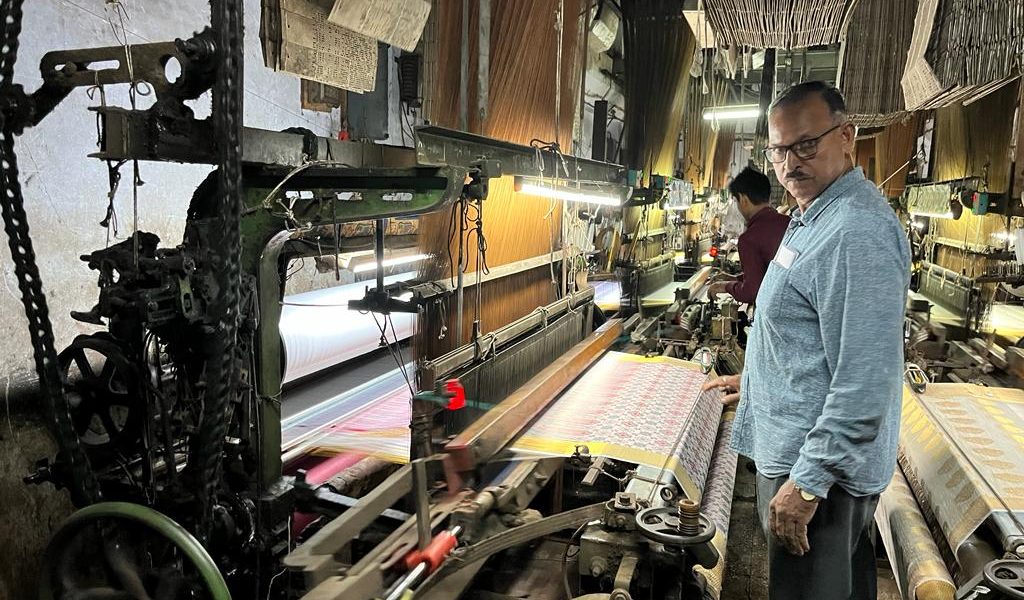
China has become a focal point for discussions in Surat, India's textile hub, amidst the upcoming Gujarat Lok Sabha elections. The government's issuance of Quality Control Orders (QCOs) targeting low-quality textile imports, particularly from China, has sparked concerns within the industry.
Impact on prices and viability
The primary concern for Surat's textile industry is the potential impact of QCOs on fabric and yarn prices. A significant portion of Surat's yarn supply comes from China at competitive rates. Blocking these imports has resulted in yarn shortages, pushing domestic prices upwards. This price rise is likely to trickle down to finished textile goods, potentially increasing the burden on consumers.
Industry experts also worry about the long-term viability of Surat's textile sector in the face of global competition. While QCOs aim to prevent low-quality imports and promote domestic manufacturing, they might disrupt the established supply chain. The industry argues that Chinese imports provide stability in both price and quality. Disrupting this source could make Surat less competitive in the global market.
MSMEs and the PLI scheme
Micro, Small and Medium Enterprises (MSMEs) and small weavers in Surat are particularly apprehensive about the QCOs. They believe these restrictions add unnecessary hurdles, especially since they were not included in the government's production-linked incentive (PLI) scheme due to the high investment quantum required.
Technical challenges and BIS oversight
The complexity of the technical specifications outlined in the QCOs poses another challenge. Many textile traders lack the in-depth knowledge required to navigate these regulations. The Bureau of Indian Standards (BIS) is responsible for overseeing quality standardization across various sectors, including textiles. QCOs are issued by central government ministries after consulting with BIS. Violations of these orders can result in hefty penalties and even imprisonment.
There are reports that the QCO list will be further expanded in the coming year, raising concerns about its impact on Surat's textile industry. The city, once renowned for its silk weaving, is now a commercial hub for textiles. The bustling textile markets of Surat, like Sahara Darwaja and Old Bombay Market, are the lifeblood of the city's economy. The industry hopes that a balance can be struck between quality control and maintaining Surat's competitive edge in the global textile market.
It may be noted, the textile industry in India is estimated to be worth $165 billion. Surat is a major center for producing synthetic fabrics and yarns. The recent QCOs pertain to various technical textiles, including geo-textiles, agro-textiles, and medical textiles.
Defying US sanctions, Xinjiang's textile industry booms with AI and 5G
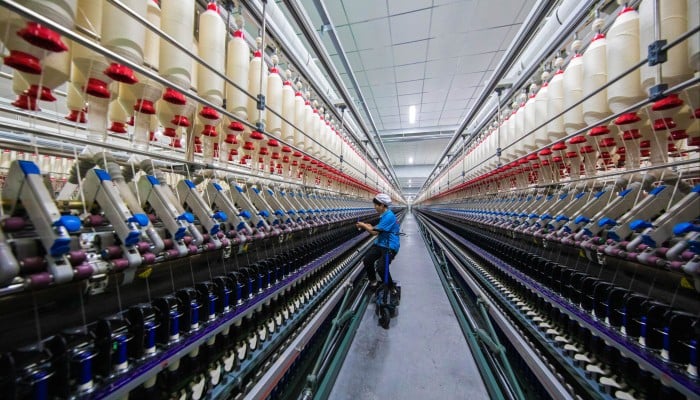
Xinjiang's textile industry has witnessed a record surge in exports despite US sanctions targeting the region's cotton production. This growth is attributed to a "revolutionary shift" powered by artificial intelligence (AI) and 5G technology.
Yarn exports rise despite sanctions
Customs data reveals a 74 per cent jump in yarn and raw material exports and a 30% rise in clothing exports from Xinjiang in 2023. This comes in stark contrast to a decline in textile exports from India and Vietnam. The increase is credited to a government-backed initiative that introduced AI and 5G into Xinjiang's mills. This resulted in a significant reduction in energy consumption and improved product quality, boosting global competitiveness.
Previously, Xinjiang's factories relied on automated spinning processes, but they lacked real-time monitoring and efficient energy management. The new AI-powered system connects all factory machinery, including air conditioners and air purification systems, optimizing energy use by over 1 per cent. AI also oversees yarn quality, preventing defects and waste.
China's extensive 5G infrastructure plays a crucial role in facilitating the rapid data transmission required for AI operations. Additionally, the cost-effectiveness of 5G technology in China makes it a viable solution for large-scale industrial applications.
Human rights a point of contention
The US government alleges forced labor practices involving Uygur Muslims in Xinjiang's cotton production. The US Uyghur Forced Labour Prevention Act (UFLPA) aims to prevent American companies from profiting from such practices. Also, the US Department of Labour emphasizes the difficulty of conducting proper due diligence in Xinjiang due to government restrictions and the absence of independent worker representation. Meanwhile, US lawmakers are considering further sanctions targeting Chinese fast-fashion retailers. Of course, China refutes these claims, calling them a fabrication intended to suppress Chinese businesses.
Meanwhile, China's Ministry of Industry and Information Technology aims to achieve digital connectivity and AI transformation in 70 per cent of the country's textile factories by 2025. Continued advancements in AI and 5G are expected to further reshape China's textile industry, including Xinjiang's production sector.











