


FW
Vancouver Fashion Week wraps up successful Fall/Winter 2024

Vancouver Fashion Week (VFW) concluded its successful Fall/Winter 2024 edition on April 28th, solidifying its position as a leading platform for international fashion. Held from April 23rd to 28th at the David Lam Hall, drew in a crowd of fashion enthusiasts, industry professionals, and media from around the globe.
This year's VFW lived up to its reputation for showcasing a dynamic blend of established and emerging talent. Over 50 designers, hailing from more than 25 fashion capitals, presented their latest collections, offering a glimpse into the upcoming trends for fall and winter.
A global stage for fashion
The runway buzzed with creativity, featuring everything from avant-garde couture to streetwear infused with international influences. Local Canadian talent shared the spotlight with renowned designers, fostering a vibrant exchange of ideas and aesthetics.
Kicking off the event was Tokyo-born designer Misaki Tanaka, whose brand Solit set the tone for a week of innovation. Throughout the week, established names like SuGolden, Chidori, and Jean De La Croix captivated audiences with their signature styles. Vancouver-based designer Eduardo Ramos closed the event with a show-stopping finale.
Diversity on and off the runway
VFW's commitment to inclusivity was evident throughout the event. The runway featured models of all ethnicities, sizes, genders, and ages, reflecting the beauty and diversity of the fashion world. This dedication to inclusivity is a core value of VFW, and it sets them apart from other fashion weeks.
Jamal Abdourahman, visionary producer and founder of Vancouver Fashion Week and Global Fashion Collective, emphasized that at VFW, diversity is their greatest strength. They aim to bring together incredible design talent from across Canada and around the world, presenting forward-thinking creative concepts to the industry. Abdourahman highlighted that fashion is a truly global phenomenon, and he finds it inspiring to witness such a strong mix of designers.
Beyond the Runway: A hub for industry growth
VFW isn't just about the runway shows. The event provides a platform for designers to connect with industry professionals, potential buyers, and media outlets. This fosters collaboration and helps emerging designers gain recognition on a global scale.
The week also included workshops, seminars, and networking events, offering valuable insights and fostering connections within the fashion industry. These events equip aspiring designers with the knowledge and skills they need to navigate the competitive fashion landscape.
Looking Ahead: The future of Vancouver Fashion Week
With its commitment to inclusivity, innovation, and nurturing new talent, Vancouver Fashion Week continues to solidify its position as a major force in the global fashion scene. The biannual event serves as a launchpad for emerging designers, a platform for established names to showcase their work, and a celebration of fashion's global appeal.
Vancouver Fashion Week will undoubtedly remain a must-attend event for fashion enthusiasts and industry leaders alike in the upcoming seasons.
New tariffs and its impact on China-Mexico trade in textiles & apparel
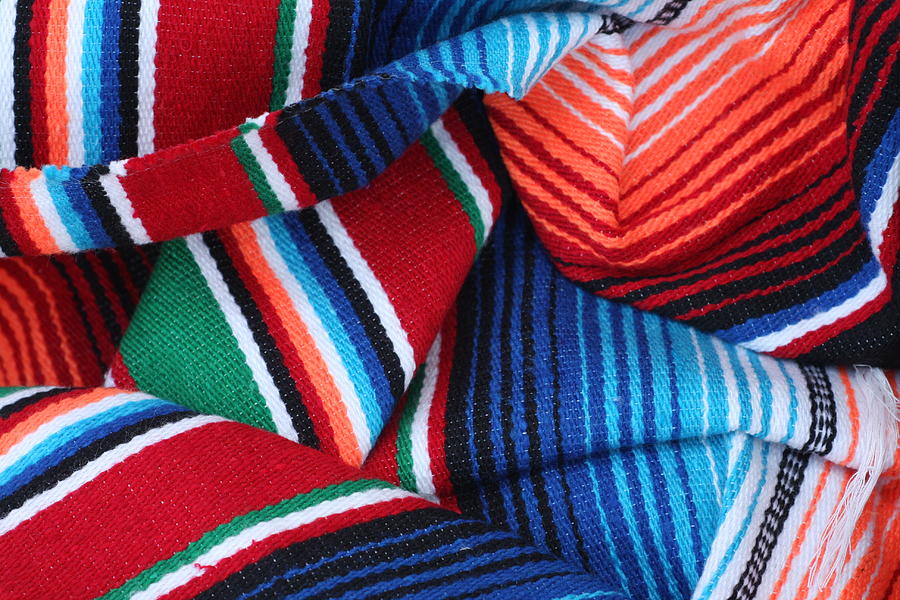
The relationship between Mexico and China, particularly in textiles and apparel, has seen a dramatic shift in recent years. Data from the Observatory of Economic Complexity (OEC) shows bilateral trade skyrocketed from a mere $550 million in 1999 to over $110 billion in 2021, a 200-fold increase. This growth continued in 2022 with a 27 per cent increase over 2021.
Mexico-China trade shift
Statistics reveal before 2018, trade between Mexico and China had been on a steady rise. Post-2018, US-China trade war created an opportunity for Mexico. Chinese exports to the US dipped due to tariffs, and Mexico emerged as an alternative production hub. This led to an increase in China-Mexico trade, particularly in textiles and apparel.
In fact, US tariffs on Chinese goods significantly impacted global supply chains. Mexico became a prime beneficiary, becoming a "springboard" for Chinese products entering the US market. This trend is evident in the growth of container traffic between China and Mexico. Xeneta, a shipping data platform, reports a 34.8 per cent increase in annual growth in 2023 compared to a mere 3.5 per cent in 2022. In fact, Mexico surpassed China as the top source of US imports in 2023, highlighting this shift.
Mexico's new tariffs, a hurdle for China
Mexico's recent tariff hike, ranging from 5 to 50 per cent 544 products, including textiles and apparel, entering from non-free trade agreement countries like China, presents a new challenge for Chinese exporters in textiles and apparel, along with other sectors like steel and furniture. These tariffs specifically target countries without free trade agreements with Mexico, directly impacting China. The Mexican government claims these measures aim to "provide certainty and fair market conditions" for domestic industries. However, analysts suggest a potential influence from the US, concerned about circumventing trade rules through Mexico.
Mexico-China trade in textiles & apparel (estimates)
|
Year |
Bilateral trade (US$ billion) |
Share of Mexico's exports to US (textiles & apparel) |
|
2018 |
50 |
30% |
|
2019 |
65 |
35% |
|
2020 |
72 |
40% |
|
2021 |
85 |
45% |
|
2022 (Est.) |
100 |
50% |
China navigating uncertainties
The new tariffs raise questions about the future of China-Mexico trade. It could potentially lead to increased costs for exports to Mexico. And loss of market share in the US if alternative sourcing isn't found. Here are some potential scenarios for China.
• Diversification: China may explore alternative export destinations in Southeast Asia or Africa to reduce dependence on Mexico.
• Increased investment: Chinese companies might invest in Mexican manufacturing facilities to qualify for free trade benefits and avoid tariffs.
• Negotiations: China could attempt to negotiate a free trade agreement with Mexico to secure better access to the market.
• Value addition: Shifting focus to higher-value products with greater profit margins could help offset tariff impacts.
• Compliance: Ensuring products undergo substantial transformation in Mexico to qualify for preferential treatment under trade agreements.
Indeed, Mexico's tariffs could be a harbinger of challenges for China's export-driven economy. The situation underscores the need for China to diversify its trade partnerships and potentially adjust its manufacturing strategy in the face of a shifting global trade landscape.
India unveils five-year Cotton Tech Mission to reclaim ‘White Gold’ glory

India is set to weave a new chapter for its cotton industry with the launch of a five-year Cotton Technology Mission (CTM) from 2024. This ambitious initiative aims to revitalize the sector, aptly nicknamed the country's "white gold," and solidify India's position as a global leader in textile sourcing and investment. The mission sets its sights on a two-pronged approach: reducing dependence on cotton imports and boosting the incomes of over six million Indian cotton farmers.
Regaining Luster: The mission's objectives
The mission has a three-pronged approach:
• Self-sufficiency in cotton: By promoting better yields and improved quality, the initiative aims to reduce reliance on imported cotton. This will stabilize domestic prices and strengthen India's position as a leading textile producer.
• Boosting farmer incomes: Through improved practices and technology adoption, the mission seeks to empower cotton farmers and increase their profitability.
• Technological advancements: A core focus will be on introducing new technologies to address challenges like trash content, contamination, and enabling real-time cotton quality assessment.
Steps for success
To achieve these goals, the mission will focus on several key areas:
Tech-savvy farming: Introducing new technologies to minimize trash content, contamination in cotton, and enable real-time sample testing will be a major focus. The mission will emphasize adopting best agricultural practices, including proper water management, soil health improvement, and integrated pest management techniques.
Quality first: The mission will emphasize adopting best agricultural practices, including utilizing high-quality seeds and implementing high-density planting techniques using indigenous cotton varieties. Ensuring access to high-quality, indigenous cotton seeds will be crucial for improving yields and fiber quality. Implementing high-density planting schemes, potentially with domestically developed cotton varieties, is another key strategy.
Beyond Bt cotton: While Bt cotton revolutionized yields initially, the mission acknowledges the need to move beyond this technology. The focus will be on sustainable solutions that address rising input costs and potential crop failures.
Focus on sustainability: Sustainable practices like organic farming methods and responsible water usage are likely to be promoted within the mission's framework.
Expected impact
Reduced imports: By achieving self-sufficiency in cotton production, India can potentially save foreign exchange currently spent on imports.
Strengthened textile industry: A robust domestic cotton supply will empower the textile industry, potentially making India an even more attractive sourcing and investment destination.
Improved farmer livelihoods: Increased yields, better quality cotton, and potentially fairer market prices can significantly improve the economic well-being of cotton farming communities. Sustainable growth: A focus on sustainable practices can ensure long-term environmental health alongside economic benefits.
Indeed, the Cotton Technology Mission has the potential to be a game-changer for India's textile sector and the lives of millions of cotton farmers. The success of the mission will depend on effective implementation, ensuring farmers have access to the necessary resources and training to adopt new technologies and best practices.
Textile Fairs India hosts premier textile shows in Mumbai
Textile Fairs India (TFI), a pivotal platform in the textile value chain, is set to host its renowned showcases in Mumbai from May 9th to 11th, 2024. With a legacy dating back to 2004, TFI has firmly established itself as a premier brand facilitating sourcing and networking opportunities within the textile industry.
Under the TFI umbrella, the upcoming event will feature the 30th edition of Yarnex, the 31st edition of F&A Show, the 3rd edition of Homtex, and the 4th edition of DyChem Texprocess Show. Scheduled at Hall No. 3 of the Bombay Exhibition Centre in Goregaon (East), the event promises a congregation of industry players from India and overseas seeking to explore current trends and forge business connections.
The inauguration ceremony on May 9th will be graced by Satyanarayan Agarwal, Founder & Chairman of Venkteshwar Group (SVG), alongside other distinguished figures from the industry.
India's textile sector, steeped in centuries-old tradition, stands today as a dynamic arena of innovation and economic prowess. Recognizing the sector's significance, the TFI shows aim to bridge crucial gaps in the textile supply chain, offering a professional platform for manufacturers and suppliers to showcase their offerings across various product categories.
The event will host 166 leading companies from India and abroad, showcasing a wide array of merchandise including fibers, yarns, apparel fabrics, trims, embellishments, dyes, chemicals, home textiles, and related services. Attendees will comprise decision-makers representing diverse segments of the industry, including international buying offices, garment manufacturers, fashion brands, retailers, and trade body representatives.
The robust participation of top-tier exhibitors reflects the buoyant market sentiments and underscores the enthusiastic anticipation surrounding the event. Textile enthusiasts and industry stakeholders alike can anticipate a vibrant showcase of the latest innovations and trends at the upcoming TFI event in Mumbai.
KM.ON clinches top 50 spot in Corporate Ventures ranking
KM.ON, the software division of Karl Mayer Group, celebrates a notable achievement as it secures a coveted position in Pioneers Innovation GmbH's prestigious TOP 50 Corporate Ventures for the current year. Renowned for its strategic innovation consultancy based in Vienna, Pioneers Innovation GmbH has been instrumental in fostering customer-centric innovations with sustainable impacts since 2009.
This recognition underscores KM.ON's commitment to delivering value-added solutions for both people and the planet. Two years ago, Pioneers introduced a rigorous scoring model to identify the most promising corporate ventures, with a focus on entities based in the DACH region – Germany, Austria, and Switzerland. Criteria for selection encompassed factors such as company size, growth stage, and financial turnover.
Standing out among its peers, all top DACH corporate ventures emerged within the last decade, boasting a minimum of 10 full-time employees and a robust online presence. KM.ON's inclusion underscores its alignment with these criteria, signaling its prowess in the software domain. The Karl Mayer extends warm congratulations to its esteemed software subsidiary, affirming its pride in this significant achievement.
Karl Mayer Group leads industry transformation at ITM 2024
As the Turkish textile industry faces economic challenges, Karl Mayer Group steps up its commitment to local customers, showcasing its prowess at ITM in Istanbul. With a new subsidiary in Bursa, the global player aims to provide enhanced support and tailor production solutions to meet evolving needs. Arno Gartner, CEO of Karl Mayer, emphasizes the importance of assisting customers through tough times, reflecting a personal dedication to their success.
From June 4 to 8, 2024, at Hall 3 Stand 303A, Karl Mayer presents itself as a strategic partner for navigating change. Under the theme "Master the Change," their innovative solutions address profitability amidst cost hikes, sustainable practices, flexibility, and reliable operations despite labor shortages.
The spotlight falls on the warp knitting industry, where Karl Mayer unveils the HKS 3-M ON PLUS. This versatile tricot machine boasts high-speed performance and flexibility, catering to diverse demands. A showcase of textile innovations highlights new opportunities, from seersucker fabrics to lace articles, catering to various sectors like fashion, home textiles, and footwear.
Additionally, Karl Mayer introduces Care Solutions products, including the Customer Portal and Energy Efficiency Solution (EES), promoting digital integration and sustainability.
Meanwhile, Stoll presents a range of machines tailored for Turkish customers, emphasizing productivity and cost-effectiveness. Notable exhibits include machines from the CMS series and the premiere of the ADF 530-32 ki FLEX E7.2, offering unparalleled versatility.
For warp preparation, Karl Mayer introduces Cascade, a system reducing steam consumption, and Bluedye, enhancing efficiency in denim dyeing. Predictive maintenance solutions like Smart Size Box aim to minimize downtime, ensuring continuous operations.
Expanding beyond textiles, Karl Mayer Technische Textilien showcases solutions for civil engineering, including textile reinforcements and composite structures, catering to infrastructure projects and disaster recovery efforts.
Innovative digital solutions take center stage with KM.ON's offerings, promising increased efficiency and product quality. The Digital Product Management (DPM) and Quality Monitoring System (QMS) revolutionize production management and quality control, empowering textile companies to optimize operations.
With a focus on innovation and adaptation, Karl Mayer and its partners lead the charge in mastering industry shifts, offering comprehensive solutions to propel businesses forward amidst change.
India's textiles exports inch up despite apparel sector slump reveal Texprocil stats
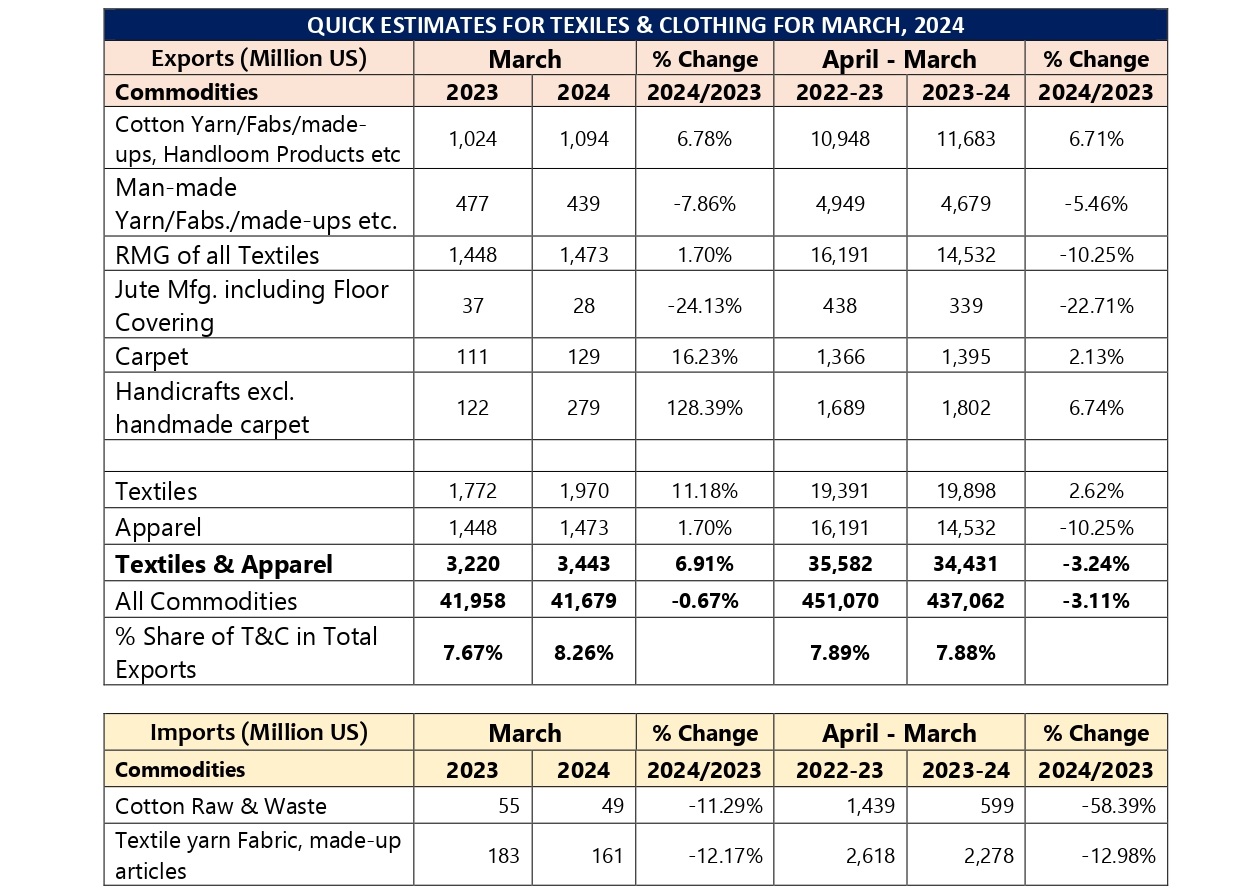
India’s textile exports grew by 6.91 per cent in March 2024 compared to March 2023, reveals latest Ministry of Commerce and Industry statistics. This growth was driven by an increase in exports of cotton yarn, fabrics, made-up articles, and handloom products, which rose by 6.78 per cent year-on-year in March 2024. However, the data also shows apparel exports declined by 1.70per cent over the same period. This could be due to a number of factors, including rising input costs and increasing competition from other countries.
Overall, textiles and apparel exports from India grew by 2.62per cent in the first three quarters of the 2023-24 financial year compared to the same period in the previous financial year. This is despite a decline of 3.24per cent in overall merchandise exports during the same period.
The Indian textile industry is one of the largest employers in the country, and it plays an important role in the Indian economy. The government has set a target of increasing textile exports to $100 billion by 2030.
Cotton exports on the rise
The Texprocil data shows that cotton yarn, fabrics, made-up articles, and handloom products were a bright spot for Indian exports in March 2024. These products saw a year-on-year growth of 6.78per cent and 6.71 per cent for the first three quarters of the financial year. This growth is likely due to a number of factors, including strong demand from overseas markets and a competitive rupee.
Overall textiles show positive growth
Overall, textiles exports from India registered a growth of 11.18 per cent in March 2024 compared to previous year. This suggests that the Indian textiles industry is performing well despite the headwinds faced by the apparel sector. Man-made yarn, fabrics, made-up articles exports grew by 7.86 per cent in March 2024, but declined by 5.46 per cent for the first three quarters of the financial year.
Exports of jute manufactures declined by 24.13 per cent in March 2024, but grew by 22.71 per cent for the first three quarters of the financial year.
Apparel exports decline
The data also shows, apparel exports have grew a modest 1.70 per cent in March 2024 compared to March 2023 but declined by 10.25 per cent for the first three quarters of the financial year. This decline is likely due to a number of factors, including rising input costs and increasing competition from other Asian countries.
India’s exports of carpets grew 16.23 per cent in March 2024 and 2.13 per cent for the first three quarters of the financial year.
The US remained the top market for Indian cotton yarn, fabrics, made-up articles, and handloom products, accounting for over 25 per cent of total exports. Other major markets include Bangladesh, China, Sri Lanka, and the United Arab Emirates.
Way forward
The statistics show, Indian textile industry is facing a number of challenges, including rising input costs, increasing competition from other countries, and a slowdown in global demand. Overall, the data suggests that the Indian textiles and apparel sector is a mixed bag. While some segments are performing well, others are facing challenges. The future of the sector will likely depend on a number of factors, including the global economic climate and the Indian government's policies. Meanwhile, the government is taking steps to boost the industry, such as by providing subsidies and relaxing labor regulations. The industry is also looking to expand its exports to new markets.
Stalled India-Canada FTA talks impacts textile & apparel industry on both sides
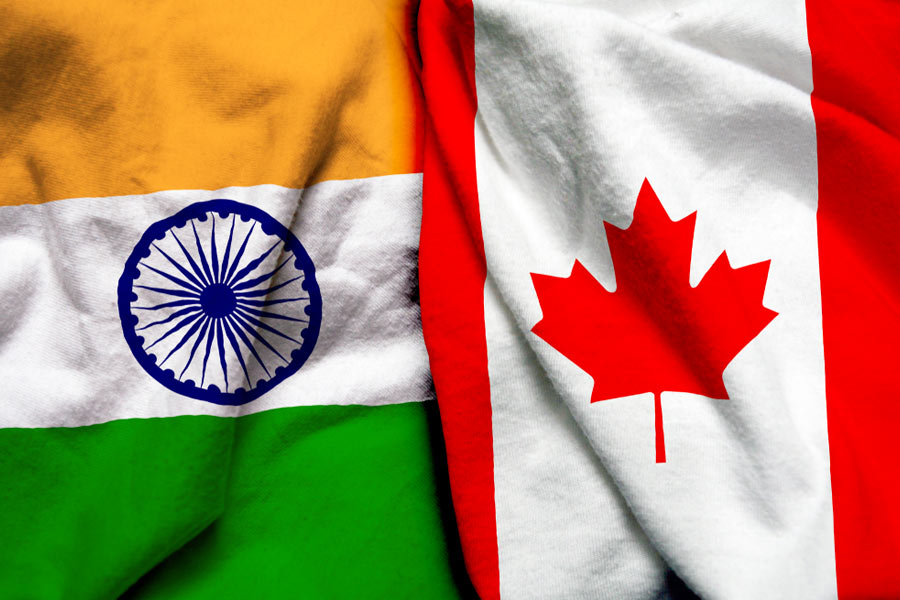
India-Canada bilateral relations have been under stress for the past few years. It hit a new low during G-20 meeting in Delhi when Canadian Prime Minister Justin Trudeau visited New Delhi. A lot was discussed in media on both sides about the nitty gritties of the visit that led to negativity. In between all this, the Free Trade Agreement (FTA) talks between India and Canada have been paused since September 2023 due to unresolved political issues, primarily concerning Khalistan extremism in Canada and the alleged killing of a pro-Khalistan activist.
The background
FTA negotiations had restarted in March 2022 after a decade-long hiatus but were halted again after six rounds. This was because the political tensions led to a tit-for-tat expulsion of diplomats. However, Canada's upcoming 2025 election might influence the future course of negotiations. Bilateral trade between India and Canada stood at $7.6 billion (CY 2023), with India facing a trade deficit.
What it means for the textile & apparel industry
Both countries were aiming for a comprehensive trade deal, with India seeking duty-free access for textiles, leather, and easier professional visas. Canada desired better access for dairy and agricultural products. The stalled talks are a setback for Indian textile and apparel exporters who could have benefited from duty-free access to the Canadian market. For Canada too, this means reduced access to the growing Indian market for apparel. And potential benefits like lower prices for consumers and increased investment are on hold. The missed opportunities are:
Exports: Indian textile and apparel exports to Canada could have significantly increased with duty-free access.
Imports: Canadian consumers might have benefitted from lower prices on Indian textiles and apparel.
Investment: The FTA could have attracted greater investment in both countries' textile sectors.
Going ahead, the two sides are looking for a resumption of talks but that depends on resolving political issues. Also, Canada's 2025 election outcome could impact future negotiations. Meanwhile, both countries might explore alternative trade deals with other partners. Indeed, the stalled India-Canada FTA talks are a missed opportunity for economic growth in both countries, particularly for the Indian textile and apparel industry. Rekindling negotiations and finding common ground on political issues is crucial to unlock the potential benefits of this trade pact.
From Tweed to Tweets: How legacy fashion brands are wooing Gen Z

For decades, global classical fashion houses have been synonymous with timeless elegance and impeccable quality. But in an age of fast fashion and hyper-connected Gen Z consumers, even the most storied brands need to adapt to stay relevant. Here's how these iconic brands are transforming themselves across product, retail, and communication strategies
Product transformation, breathing new life into classics
Gone are the days of rigidly traditional collections. Brands are reimagining their classics for a modern audience. "Luxury is no longer just about quality and craftsmanship," says Luca Solca, luxury goods analyst at Bernstein. Brands are infusing their collections with contemporary streetwear influences. Burberry, for instance, under creative director Riccardo Tisci, has introduced logo tees and sneakers alongside its signature trench coats. Their recent collection with streetwear giant Supreme broke the internet, showcasing iconic Burberry prints on hoodies and puffer jackets.
Similarly, Gucci has embraced gender-fluidity, with its flamboyant suits and androgynous silhouettes resonating with young fashion enthusiasts. Ralph Lauren is another example. CEO Patrice Louvet acknowledges the need for a modern update while preserving the brand's heritage. They've introduced a ‘Polo Ralph Lauren’ line featuring relaxed silhouettes and vintage-inspired pieces, resonating with a younger customer seeking a blend of comfort and timeless style. Similarly, Chanel reinterpreted its signature quilted handbags with bolder colors and funkier embellishments, appealing to a younger clientele who appreciate the brand's legacy with a modern twist.
Retail all about experiences over transactions
Luxury is no longer confined to physical boutiques. Brands are creating seamless online experiences that complement their brick-and-mortar presence. In fact, the rise of e-commerce has forced a rethink of brick-and-mortar stores. Luxury brands are transforming them into immersive experiences. Gucci has been at the forefront of this shift. Their Gucci App allows virtual try-on and exclusive content, blurring the lines between physical and digital shopping.
Chanel has opened interactive museums showcasing its history, while Dior has introduced cafes within its stores, blurring the lines between shopping and socializing. "We are creating destinations, not just stores," says Marie Claire Daveu, chief sustainability officer and head of communications at Kering. Prada, known for its opulent flagship stores, launched a user-friendly e-commerce platform featuring interactive features like 360-degree product views. This caters to a generation comfortable with online shopping and allows them to explore the brand on their terms.
Partnering influencers to make inroads
At the same time, brands are entering the world of social commerce. Gucci partnered TikTok, allowing users to purchase directly through the platform, blurring the lines between browsing and buying. Luxury brands are no longer above leveraging the power of social media. Prada, teamed up with Charli D'Amelio, the queen of TikTok, for a campaign that went viral. "We need to speak the language of Gen Z, and that language is digital-first," says Armando Branchini, CEO of Yoox Net-a-Porter.
Burberry too, is prioritizing social media engagement. Their partnership with TikTok star Khaby Lame on a recent ad campaign exemplifies their understanding of the power of influencer marketing in reaching younger audiences. Chief Marketing Officer John Dolph emphasizes the importance of "meeting customers where they are," a strategy that translates well to platforms like TikTok and Instagram.
Similarly, Valentino, has upped its social media presence with engaging content featuring diverse models and influencers. This resonates with Gen Z, who value authenticity and social consciousness. Additionally, brands are also collaborating with Gen Z celebrities and partnering gaming platforms to reach this digitally native generation on their turf.
Indeed, the road to staying relevant for a generation known for its disruptor spirit is not without challenges. However, by embracing innovation while staying true to their heritage, classic fashion brands are proving that timeless style can co-exist with the ever-evolving trendscape. This fusion is not just about attracting new customers it's about ensuring that the rich history and craftsmanship of these iconic names are passed on to the next generation of fashion enthusiasts.
Lenzing Group propels traditional wear revolution in Varanasi
The Lenzing Group, a frontrunner in wood-based specialty fibers, showcased their pioneering Tencel and Lenzing Ecovero fibers at The Lenzing Conclave in Varanasi on April 26th. This event spotlighted cutting-edge fiber options driving the evolution of the regional traditional wear textile industry.
Varanasi's weaving sector, renowned globally for its Banarasi sarees, stands amid a textile industry renaissance, urging a fusion of tradition with innovation. Lenzing's presentation unveiled a spectrum of sarees crafted using Tencel lyocell fiber, Tencel Luxe filament, and Lenzing Ecovero viscose fiber, blended with popular existing fibers. These advancements promise heightened comfort, enduring softness, and elevated sustainability standards, resonating deeply with the local weaving community.
Avinash Mane, Senior Commercial Director of AMEA & NEA region, Textiles Business, Lenzing Group, expressed gratitude to the Varanasi weaving community for their enthusiastic reception. Mane emphasized Lenzing's commitment to nurturing regional textile industries with innovative solutions, fostering quality, innovation, and sustainability in every saree produced.
The conclave not only stimulated industry discourse but also showcased innovative products and shared inspiring narratives from Varanasi's weaving artisans empowered by Lenzing fibers. Lenzing extends heartfelt appreciation to all attendees for their contribution to the conclave's success, marking a pivotal moment in the traditional wear landscape.











