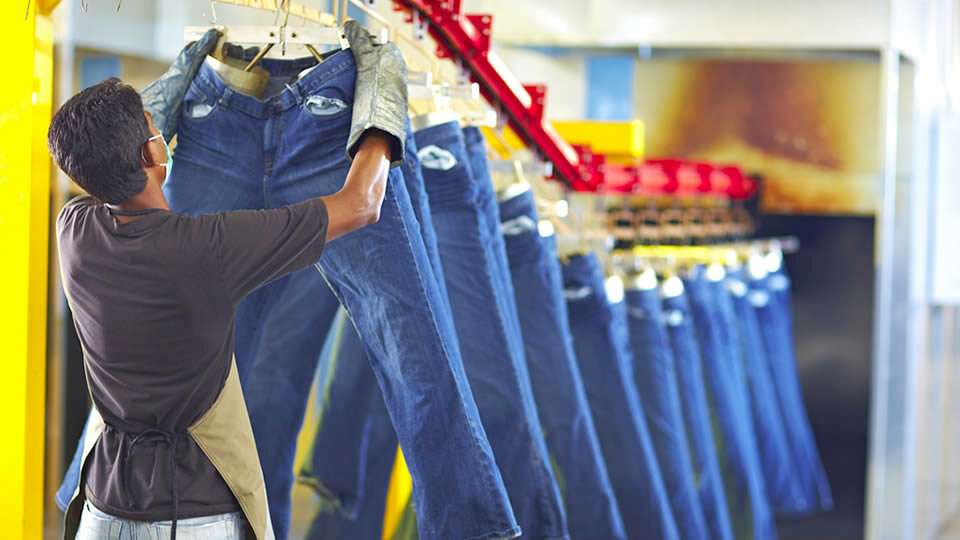
Lenzing leads in social responsibility and jobs
Lenzing Group, a leading provider of regenerated cellulose fibers, has garnered acclaim for achieving exceptional results in the Higg Facility Social & Labor Module (FSLM) certification across five of its production sites. The certification assesses various social impact factors including wages, working conditions, and employee treatment.
This achievement underscores Lenzing's commitment to addressing social challenges within the textile industry, such as precarious working conditions and human rights issues along the value chain.
Transparency in the supply chain emerges as a crucial tool in tackling these challenges, with Lenzing aiming to obtain valid social standard certificates for all its production sites by 2024. Their success in the Higg FSLM audit, placing them in the top 25 percent globally, highlights their dedication to fostering better working conditions.
Christian Skilich, a member of Lenzing Group's Management Board, emphasizes their proactive stance towards social responsibility, asserting that their efforts extend beyond mere rhetoric. Florian Heubrandner, Executive Vice President Commercial Textiles, emphasizes the importance of transparently prioritizing social sustainability alongside environmental concerns to enhance business relationships.
Moreover, a study by the Society for Applied Economic Research underscores Lenzing's significant role as an employer, creating over 25,000 jobs across its operational countries, both directly and indirectly. This recognition further solidifies Lenzing's position as a socially responsible industry leader in the textile sector.
European states join forces for sustainable chemical industry
In a landmark move, Dutch Minister for the Environment Vivianne Heijnen spearheaded a collaborative effort with France, the Czech Republic, and Ireland, presenting a groundbreaking proposal titled ‘A Call for a European Sustainable Carbon Policy Package.’ This initiative, unveiled to the European Commission and industry leaders on April 16, 2024, marks the first-ever concerted effort by European policymakers to advocate for the defossilization of the chemical industry.
At the heart of the proposal lies the urgent need to transition from fossil-based to sustainable carbon feedstocks, echoing long-standing calls from industry associations for a level playing field in energy and fuel sectors. With over 90 per cent of the European chemical industry currently reliant on fossil feedstocks, the proposal underscores the imperative to embrace sustainable alternatives like recycled materials, biomass, and carbon dioxide.
Heijnen emphasized the necessity of an overarching EU policy framework to drive this transition, focusing on market creation, sustainable carbon availability, and enhancing industry competitiveness. Key stakeholders, including Katja Wodjereck from Neste and Marco Mensink of Cefic, voiced strong support for the initiative, advocating for incentivizing the use of sustainable carbon sources and aligning policies with circular economy principles.
The proposal signals a pivotal moment in European environmental policy, offering a clear pathway towards a competitive, climate-neutral chemical industry. As more member states rally behind this initiative, it presents a significant opportunity to reduce Europe's reliance on external resources while advancing sustainability and achieving net-zero targets.
Adidas exceeds Q1 2024 expectations on strong brand momentum
Adidas CEO, Bjorn Gulden, expressed elation as the sportswear giant exceeded expectations in its first-quarter performance for 2024. The company reported a robust surge in sales, gross margin, and operating profit, outstripping initial forecasts. Notably, the direct-to-consumer (DTC) channels witnessed a remarkable uptick in full-price sales, driving down inventories and bolstering gross margins for both Adidas and its retail partners.
The stellar growth trajectory was primarily fueled by the Lifestyle segment, particularly buoyed by the exceptional performance of Originals footwear. Additionally, the higher-tier offerings in Running, Football, and Basketball contributed significantly to the company's upward momentum. Gulden emphasized the enduring demand for iconic footwear franchises like Samba, Gazelle, Spezial, and Campus, alongside the emergence of new favorites like SL72.
Despite persisting market volatility, Adidas sees progress across all fronts, leveraging enhanced brand resonance and improved sell-through to fortify partnerships with retail allies. Gulden reiterated the company's commitment to sustained investment in product innovation, brand elevation, and sales and marketing endeavors to drive continual growth. He underscored Adidas' relentless pursuit of excellence, acknowledging the ongoing journey toward optimization.
Looking ahead, Adidas eagerly anticipates capitalizing on the global sporting extravaganza, including the Euro 2024, Copa América, Olympics, and Paralympics, fostering an environment conducive to celebrating athleticism and camaraderie.
Financially, Adidas recorded a remarkable 8 per cent increase in currency-neutral revenues for Q1, propelled by robust brand momentum. Footwear revenues soared by 13 per cent, spearheaded by Originals and Football categories, while apparel sales witnessed a modest 2 per cent uptick. Lifestyle revenues surged impressively, driven by popular franchises and successful product launches across various segments.
The company's strategic focus on bolstering DTC channels yielded significant dividends, with a staggering 20 per cent growth in this segment. Strong double-digit growth in Own Retail and E-commerce underscored Adidas' prowess in navigating evolving consumer preferences.
However, challenges persist in the North American market, where a 4 per cent decline in sales was attributed to a conservative sell-in strategy amid lingering inventory concerns. Nonetheless, Adidas demonstrated resilience, posting robust growth in Europe, Emerging Markets, and Latin America.
Adidas' gross margin surged to 51.2 per cent, reflecting healthier inventory levels, reduced discounting, and a favorable business mix. Operating profit skyrocketed to €336 million, marking a substantial improvement from the previous year. Enhanced bottom-line performance translated into net income from continuing operations of €171 million.
Inventories witnessed a notable improvement, declining by over €1.2 billion year-over-year, indicative of successful initiatives aimed at inventory optimization. Furthermore, adjusted net borrowings witnessed a significant reduction, underscoring Adidas' commitment to prudent financial management.
Buoyed by its stellar Q1 performance, Adidas revised its full-year outlook, anticipating mid- to high-single-digit revenue growth and an operating profit of around €700 million. However, significant currency headwinds pose a challenge to profitability, necessitating strategic adaptations to mitigate adverse impacts.
Adidas remains steadfast in its pursuit of excellence, leveraging innovation, and strategic partnerships to navigate dynamic market conditions and sustain robust growth momentum.
Shoppers Stop promotes Kavindra Mishra, shifts directors
Shoppers Stop, a prominent departmental store chain, has announced significant leadership changes in a recent regulatory filing. Kavindra Mishra, previously serving as executive director and CEO, now steps into the role of managing director and chief executive officer.
Mishra's appointment, effective from April 29, 2024, is slated for a three-year term pending shareholders' approval.
With a wealth of experience, Mishra previously held positions such as chief commercial officer and CEO - Homestop within the company. Before joining Shoppers Stop, he served as the managing director and CEO of House of Anita Dongre and Global Desi.
Furthermore, the board of directors approved the appointment of Ashish Hemrajani as a non-executive independent director for a term of five years. Hemrajani, renowned as the founder and CEO of BookMyShow, brings substantial expertise in the online entertainment realm.
Additionally, Purvi Sheth joins as an (Additional) non-executive independent director, while Nirvik Singh assumes the role of (Additional) non-independent director non-executive, both for 5-year terms.
Sri Lanka’s apparel exports rise by 7.7% in March 2024: JAAF
In March 2024, Sri Lanka’s apparel exports increased by 7.7 per cent over the previous year to $148 million.
As per the preliminary data from the Joint Apparel Association Forum (JAAF), this robust rebound propelled the country’s apparel exports beyond the $1 billion mark for the first quarter, reaching $1.17 billion. Although this reflects a marginal decrease of 0.7 per cent from the same period last year, it signals a significant recovery from the challenges faced in 2023, when exports declined by 19 per cent to $4.5 billion from their peak of $6 billion in 2022.
Industry analysts attribute this resurgence in exports to improved market conditions.
In March, Sri Lanka’s apparel exports to all major markets increased, with the exception of the United States, the industry's largest market. This is despite a 6 per cent increase to $65.4 million recorded in February.
Exports to the US declined by 2.81 per cent to $147.75 million, while exports to the EU (excluding the UK) increased by 5.62 per cent to $124 million. Meanwhile, exports to the UK expanded by 11.93 per cent to $66 million, and exports to other countries spiked by 34 per cent to $80.72 million. Over the first quarter of 2024, overall exports to the US decreased by 5.11 per cent to $446 million, and exports to the EU (excluding the UK) dipped by 1.5 per cent to $339 million.
However, exports to the UK saw a notable uptick of 9 per cent to $183 million, and exports to other countries also showed a promising increase of 3 per cent to $207 million compared to the first quarter of the previous year.
Mayer & Cie to launch two new innovations at ITM 2024
Mayer & Cie will unveil two of its latest innovations at the upcoming ITM in Istanbul, booth 303 B, Hall 3. The two machine types to be unveiled by the company at the exhibition include the SF4 3.2 III and the Relanit 3.2 HS II, alongside smart solutions enhancing circular knitting efficiency.
Renowned for its productivity and energy efficiency, the Relanit 3.2 HS II receives upgrades including a new yarn guide for easier threading and improved needles and sinkers developed in collaboration with Groz-Beckert, reducing downtime and enhancing performance.
Addressing market demands, the SF4-3.2 III caters to lightweight elastic three-thread fleece fabrics, boasting exceptional plating capabilities and quality. Both machines feature the new Control 5.0 machine control system, offering SmartControl for operators and ClassicControl for knitting mill managers, enhancing operational efficiency.
Mayer & Cie introduces knithawk, an optical defect detection tool, preventing knitting errors early in the process, conserving resources and minimising wastage. Additionally, the company offers machine-specific upgrade kits and conversion kits for existing machines, expanding their capabilities at a fraction of the cost of new purchases.
The Senso Blue RS lubrication system, available for retrofitting, ensures precise oil application, reducing consumption by up to 20 per cent and achieving a recycling rate of up to 40 per cent, enhancing sustainability.
Mayer & Cie's commitment to innovation and sustainability extends to its service portfolio, which now includes braiding machines for specialised applications.
With a rich history dating back to 1905, Mayer & Cie continues to lead the circular knitting industry, generating around €100 million in sales in 2023 with approximately 450 employees worldwide.
Reebok launches collaborative collection with Engineered Garments
Footwear brand Reebok has teamed up with Engineered Garments to launch its latest collaborative collection titled, ‘Reebok BB4000 II.’ Available in two striking shades, ‘Metallic Gold’ and ‘Silver,’ these shoes are pay homage to 1980s college fashion and hip-hop culture.
Inspired by the bold metallic finishes and vibrant colors of the era, Daiki Suzuki, Owner and Designer, Engineered Garments' infused the shoe with a touch of nostalgia. His exploration of vintage basketball shoes led him to the Reebok BB4000 II, a perfect canvas for this collaboration.
The shoe's embossed brand logo adds texture and identity, while the chalk tone midsole provides a striking contrast to the metallic body. A durable rubber outsole completes the look, marrying Reebok's classic sneaker design heritage with Engineered Garments' contemporary, fashion-forward sensibilities.
This collaboration is poised to capture the attention of sneakerheads and fashion enthusiasts alike, offering a fresh take on retro-inspired footwear. The Reebok BB4000 II in ‘Metallic Gold’ and ‘Silver’ is now available for purchase in select stores.
India Chasing China's Crown: The race for the world's top consumer market
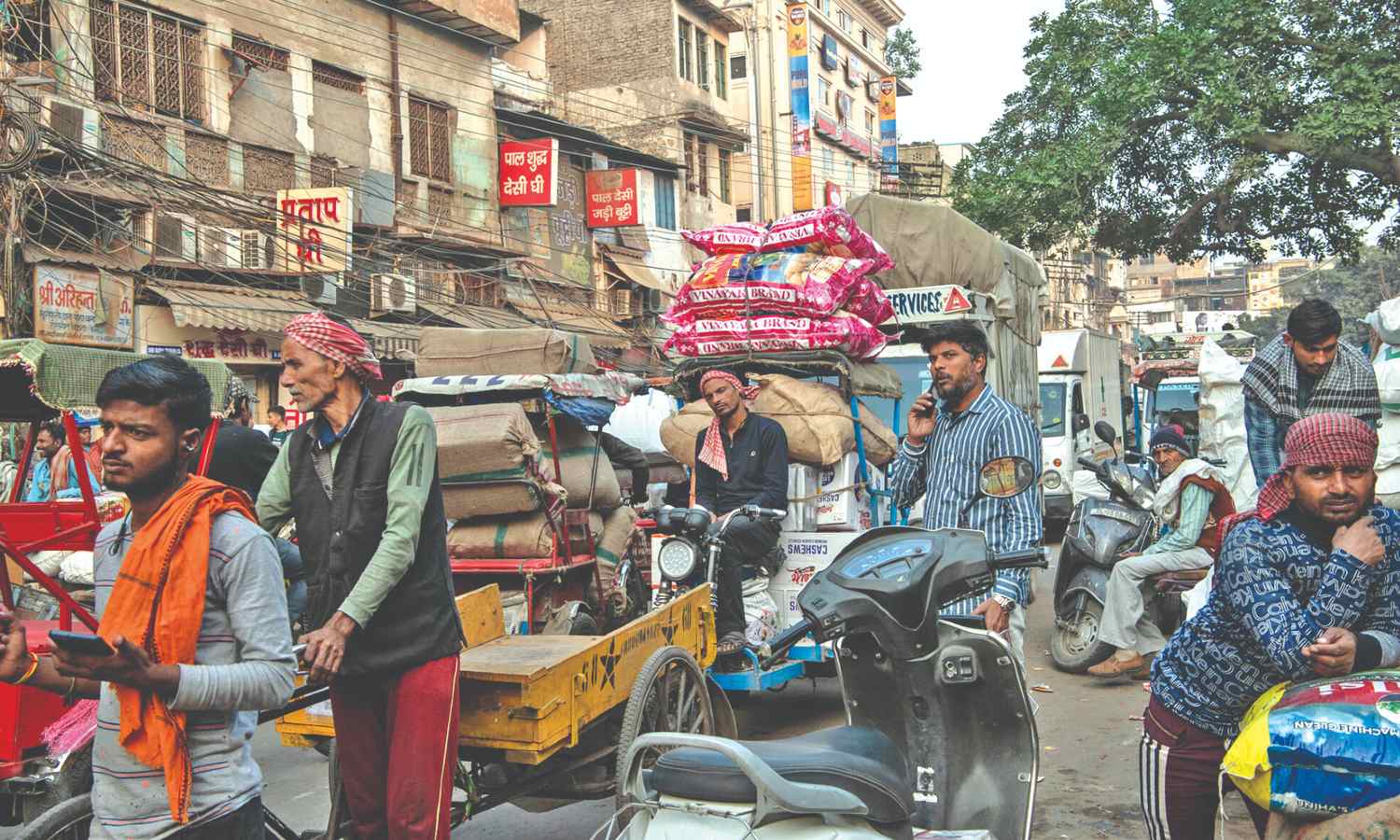
China's reign as the king of global consumers might be nearing its end, with challenger rising from the East -- India. Pushed up by a growing middle class and a youthful population, India's consumer market is poised for explosive growth, potentially surpassing China in the coming years.
China currently holds the top spot with a massive consumer base. While estimates vary, China is expected to have over 1 billion consumers by 2030, compared to India's projected 773 million. However, the growth trajectory paints a different picture. China's consumer base is expanding at a slower pace (around 15 per cent by 2030), while India's is expected to surge by a staggering 46 per cent in the same period.
Shifting demographics
One key factor driving this change is demographics. China faces an aging population, with a median age of 39 compared to India's India's median age of 28, which is a youthful population. This young Indian demographic presents a vast pool of potential consumers. However, China's seniors are also getting tech-savvy, with most expected to be online by 2030 with significant spending power concentrated in tech-savvy Gen Y.
Consumption trends
While China traditionally focused on quantity, its consumers are now prioritizing quality and experiences. This shift is evident in the rise of live-streamed shopping and the popularity of premium goods. India, on the other hand, is witnessing a rise in middle-class spending, with increasing disposable incomes.
Despite high internet penetration, challenges like youth unemployment and limited access to quality education could hinder India's digital innovation, a crucial driver for e-commerce growth. Additionally, data privacy concerns linger among Indian millennials, potentially slowing down online shopping adoption.
While both countries are witnessing a rise in online commerce, digital infrastructure disparity exists. China boasts of advanced e-commerce platforms powered by AI and live-streaming technology. India, on the other hand, faces challenges like youth unemployment and limited internet access in rural areas.
India needs to bridge the digital divide
For India to dethrone China, it needs to bridge the digital divide. Equipping its youth with the necessary skills and ensuring robust internet infrastructure across the country are crucial steps. Addressing data privacy concerns will also be essential to build trust and encourage online spending.
China, on the other hand, must broaden its consumer base beyond major cities and cater to migrant workers and rural populations. Additionally, fostering a culture of experience-based spending alongside traditional product consumption will be vital to retain its consumer leadership.
The race for consumer dominance between India and China hinges on their ability to innovate; adapt to changing consumer trends; and create inclusive economic landscapes. The victor will not only redefine global consumer spending patterns but also shape the trajectory of the world economy.
Fabric Innovation Meet by RIL showcases fabric brand R|Elan™
The recently held ‘Fabric Innovation Meet’ by Reliance Industries (RIL) in Bhiwandi, Maharashtra showcased the pioneering fabric brand R|Elan™.
Gathering over 100 esteemed fabric manufacturers, designers, and trade dignitaries, the collaboration unveiled R|Elan™ fabric innovations, meticulously crafted to meet the dynamic needs of today's consumers. Featuring a diverse range of fabrics redefining style and creativity, the event exemplified the relentless pursuit of innovation in the textile industry.
J Raghunath, Filament SBU Head, RIL, underscored the importance of continuous innovation and outlined both near and long-term growth perspectives for the industry. Polyester remains the fiber of choice in the textile industry, offering unparalleled availability, versatility, and quality, he noted. As Reliance expands its polyester capacity, the brand continues to focus on enhancing specialty and differentiated products, he added.
Emphasising the need for a shift in mindset, Raghunath urged Bhiwandi to transition from a commodity-oriented approach to specialty fabric production. He urged for the adoption of staple fibers and filament yarns from the R|Elan™ range, presenting a pivotal opportunity for the region to lead in textile innovation.
The innovative fabrics showcased at the event, including R|Elan™ GreenGold and R|Elan™ EcoGold from the sustainability range, R|Elan™ Kooltex and R|Elan™ FeelFresh from the performance range, and R|Elan™ FreeFlow and R|Elan™ SuperFeel from the aesthetics range, highlighted R|Elan™'s commitment to eco-friendly textiles. These fabrics not only embody sustainability but also incorporate cutting-edge functionality, addressing the growing demand for high-performance apparel.
The Fabric Innovation Meet served as a catalyst for industry stakeholders to explore the transformative potential of sustainable textiles, paving the way for a new era of environmental responsibility in fabric manufacturing.
Iran’s textile exports soar to $560 million during FY’23-24
From Mar’21, 2023 to Mar’19, 2024, Iran's annual textile exports stood at $560 million while imports soared to $2.2 billion, with fabrics accounting for a substantial portion.
During this period, the country’s exports to Iraq, Afghanistan, and Russia rose to 26 per cent, 18 per cent, and 6 per cent of the total exports, respectively. Kashan Customs Office served as the primary export hub, followed by Mashhad and West Tehran customs.
The UAE, China, and Turkey emerged as the primary exporters to Iran during this timeframe.
Emphasising on the importance of investing in the weaving sector to bridge this gap, Shojaeddin Emami Rauf, Secretary, Association of Iran Textile Industries, suggested that even small investments could significantly reduce imports and boost domestic production. He emphasised that government support for weaving units could stimulate investment in spinning and dyeing, leading to increased exports and currency retention.
According to Emami Rauf, the Iranian textile industry possesses the potential to multiply exports three to four times, provided there is adequate investment and governmental backing.
More...
Bangladesh fails to grab a share of the global T&A market as production costs rise
Despite the global demand for textiles and apparel being on the rise, Bangladesh continues to struggle to secure a share of this expanding market due to recent cost escalations. The country is witnessing a modest increase in demand while, on the other hand, China has experienced significant growth in inspections and audits by buyers, both from within China and internationally.
There was a 20 per cent rise in global demand for textile and apparel inspections audits in Q1FY24, reports quality control company QIMA. This growth can be attributed to various factors such as improving consumer sentiment, inventory replenishment after the holiday season, and the need for larger shipments to mitigate longer freight-transit times caused by the Red Sea crisis.
Despite China's resurgence in popularity among apparel brands, other competitors in Asia and beyond are also keeping pace. In Bangladesh, both US- and EU-based brands have increased their procurement, raising hopes for the country's export sector. However, concerns linger regarding the Bangladeshi government's recent policy move to reduce cash incentives for garment exports.
According to OTEXA data, Bangladesh's RMG exports to the US declined by 19.24 per cent in value and 12.79 per cent in volume during the first two months of 2024 compared to the same period in 2023. Similarly, exports to the EU also declined by 26.74 per cent during this period.
Fazlul Hoque, Former President, Bangladesh Knitwear Manufacturers and Exporters Association (BKMEA), highlights, China's aggressive pricing strategy poses a challenge for Bangladesh, which faces increased production costs.
Mahmud Hasan Khan, Former Leader, BGMEA, acknowledges the increasing inquiries from buyers but expresses concerns about the escalating costs of doing business, particularly due to issues with gas and electricity supply and the reduction in cash incentives.
Despite these challenges, Bangladesh’s export sector continues to be optimistic with emerging markets such as Australia, Japan, India, and Korea showing interest.
However, Bangladesh would first need to address cost-related issues and maintain competitiveness to capitalise on the growing global demand for textiles and apparel.
US consumers’ trail behind as sustainability sentiment score drops: Survey
With their sustainability sentiment score dropping from 51 last year to 49 this year, US consumers trail behind their global counterparts in environmental consciousness. As per the latest Global Vo
ces survey by direct-to-consumer firm ESW, the list is dominated by India, the United Arab Emirates, and China with scores of 75, 74, and 70 respectively, while countries like Japan, Germany, the UK, Switzerland, and Canada scored lower.
Martim Avillez Oliveira, Chief Revenue Officer, ESW, notes, consumers’ attitudes towards sustainability are heavily influenced by their geographic location. Despite longstanding efforts to promote environmentally responsible choices, factors like inflation continue to impact consumer behavior in the US.
The survey also highlights generational differences, with younger demographics showing higher sustainability concerns. Globally, Gen Z led with a score of 61, followed by Millennials at 60, Gen X at 53, and Baby Boomers at 49. In the US, Millennials scored highest at 59, though their score decreased from the previous year.
ESW identifies a significant portion of ‘environmentally attuned shoppers,’ with one-third scoring above 80 in the survey. Additionally, more than half of respondents worldwide indicated an increased awareness of greenwashing, with 27 per cent considering a brand's environmental transparency when making purchases.
The report emphasises the importance of brand authenticity, with 63 per cent of global respondents valuing truthfulness and transparency regarding a company's environmental credentials. Conducted online, the survey gathered responses from over 18,600 adults across 18 countries, ensuring representation of key demographics in each nation.
AussieBum to set up production unit in India
Renowned Australian brand specialising in men's swimwear, underwear, and clothing, AussieBum plans to establish its own manufacturing unit in India to target both domestic and international markets, says Sean Ashby, Founder and CEO.
With aspirations to claim a 3-5 per cent share of India's innerwear market by 2026, AussieBum has already commenced online sales and aims to leverage localised production for this endeavor. According to Ashby, this approach not only fosters employment opportunities but also integrates Indian talent and resources seamlessly into the brand's design and innovation processes.
Since its inception in 1999, AussieBum has evolved from a modest swimwear venture into a recognised global brand. Acknowledging India's emergence as a fashion hub where global and local styles converge, Ashby emphasises the brand's commitment to cater to the preferences of modern Indian men, who prioritise fashion, functionality, and sustainability in their apparel choices.
Against the backdrop of increasing consumer preference for sustainable fashion, AussieBum commenced its Indian operations in October 2023. The brand currently operates manufacturing facilities in China, Bangladesh, Thailand, and Vietnam, reflecting its global presence and commitment to quality production.
Currently valued at approximately Rs 48,123 crore, the men’s innerwear market is poised to grow at a projected Compound Annual Growth Rate (CAGR) of 11.5 per cent by 2025, reaching a market value of Rs 26,952 crore. AussieBum's entry into the market signifies a strategic move to tap into this burgeoning sector and offer consumers a blend of style, functionality, and sustainability.
EU tightens regulations on Chinese e-commerce platform Shein
In a recent development, the European Union has expanded its list of digital giants subjected to stricter safety regulations to include Chinese online retailer Shein. Alongside established giants like Facebook, TikTok, and YouTube, the fast fashion e-commerce platform now faces heightened regulations under the Digital Services Act (DSA), a pivotal legislative initiative aimed at regulating online platforms.
Starting from the end of August, Shein will be required to adhere to stringent guidelines outlined in the DSA. These measures primarily focus on safeguarding consumers against the purchase of hazardous or illicit goods, with a specific emphasis on shielding minors from potential harm. The European Commission, which oversees these regulations, has underscored the imperative of protecting consumers in the digital sphere.
With approximately 108 million monthly active users within the EU alone, Shein finds itself at the center of broader debates surrounding online commerce practices. Beyond the EU's borders, Shein has encountered substantial criticism, ranging from allegations of exploitative labor practices to exacerbating hyperconsumerism and environmental degradation.
The EU's regulatory efforts extend beyond Shein, encompassing other Chinese digital players like TikTok. This video-sharing platform, owned by ByteDance, has been under intense scrutiny, particularly regarding its impact on minors. In response to concerns raised by the European Commission, TikTok has taken steps such as suspending its reward program on its Lite app.
Brussels' proactive stance on regulating digital platforms extends to trade relations with China. Despite potential tensions, the EU has initiated investigations into various sectors, including the medical device market and green technology subsidies. These actions signal the EU's commitment to ensuring fair competition and safeguarding European interests in the global marketplace.