Stoll and KM.ON launch winter flat knitting training programs
Karl Mayer Group has crafted an advanced training program tailored for flat knitting training courses in November and December 2024. This includes two specialized courses from KM.ON and Stoll: an online Create Design course and an in-house Create Plus course for M1plus users.
Create Design, running on December 5-6, 2024, focuses on digital design-to-market skills. It guides designers with basic flat-knit knowledge through efficient digital workflows, covering knitting structures, digital yarn usage, and exporting for 3D apparel programs. Small class sizes of up to 10 participants allow for immersive learning, with coach Goran Sidjimovski emphasizing hands-on training.
The CreatePlus course, scheduled in German from November 4-8 and in English from November 18-22, is a five-day in-person session exploring the new Create Plus software. Participants delve into techniques such as jacquard, intarsia, and multi-gauge knitting while learning advanced pattern creation and fully fashioned shaping.
Additionally, a new e-learning course on flat knitting basics is now available anytime and free, targeting fashion and textile newcomers. This self-paced module covers core techniques over six chapters and serves as an entry point for those interested in digital knitwear design.
Gujarat HC allows Rs 82 crore sale of bankrupt mill's land after 35 years
After a prolonged 35-year legal struggle, the Gujarat High Court approved the sale of Aryoday Spinning & Weaving Mills Co Ltd’s 58,000-square-yard land in Ahmedabad’s Asarwa area for Rs 82 crore. This decision followed a protracted process, during which more than 60 per cent of the mill’s 3,285 workers died awaiting compensation after the mill’s 1989 bankruptcy.
Devbhoomi Agrifresh Pvt Ltd., seeking to buy the land, intervened after objections by other bidders delayed the proceedings. Advocate Dhimant Vasavada, representing the Textile Labour Association, stated that only Rs 55 lakh had been distributed to workers from prior sales of the mill's machinery, with most workers still awaiting their dues.
Justice Mauna Bhatt approved Devbhoomi Agrifresh’s bid, citing the court’s discretion to act in the best interests of secured creditors and the prolonged wait endured by workers. The court's decision marked the fifth attempt to sell the land at a fair price since 2016. The liquidation process, delayed by decades, highlighted the severe toll on workers who were denied timely justice and compensation.
China's dominance continues in apparel trade, India eyes growth: Wazir Advisors report

The latest apparel trade data for August 2024, as analyzed by Wazir Advisors in their monthly ‘Apparel trade scenario in keyglobal marketsand India’, highlights a global market that is still recovering from the disruptions of the past few years. While some key markets showed signs of growth, others experienced declines, revealing the ongoing challenges and uncertainties in the industry.
Apparel imports adivergent landscape
The performance of major apparel importing nations in August 2024 was uneven. The US for example, a major market, maintained its import levels at $7.8 billion, indicating no year-to-year change. This indicates that the US apparel market remains relatively stable. However, other markets experienced fluctuations.
The European Union saw a 10 per cent increase in apparel imports, reaching $9.0 billion, suggesting growing demand for apparels in the region. In contrast, the United Kingdom and Japan recorded import decline, with decreases of 6 pr cent and 8 per cent, respectively. This highlight the varying economic conditions and consumer sentiments across different countries.
China's dominance continues in apparel exports
China, the world's largest apparel exporter, maintained its position in August 2024. Despite a slight 5 per cent decline in exports to $13 billion, China's dominance in the global apparel market remains unchallenged.
India, another major player in the apparel export market, experienced no significant change in exports, remaining at $1.1 billion. However, the overall Indian apparel exports are projected to reach $15 billion in 2024, a growth of 5-7 per cent compared to the previous year. This indicates a positive outlook for India's apparel industry.
Mixed signals in apparel retail
The retail landscape also reflected mixed trends. In the US, apparel store sales were estimated 1per cent higher in September 2024 compared to the same period in 2023. This suggests a modest increase in consumer spending on apparel. Home furnishing store sales witnessed a more substantial growth of 15 per cent, indicating a rising interest in home decor and renovation. Also, for last several quarters, major retailers have reported lower inventory levels compared to sameperiod in the previous year. These retailers include GAP, Walmart, Target, Kohl’s among others.
In the United Kingdom, apparel store sales rose by 5 per cent in September 2024, indicating a stronger demand for clothing. However, the US Consumer Confidence Index declined by 4 per cent in September, suggesting some uncertainty among consumers. Which means consumers may be cautious about spending despite improving economic conditions.
Overall, the Wazir Advisors report indicates global apparel trade in August 2024 was a mix of positive and negative developments. While some markets experienced growth, others faced challenges. The overall recovery process continues to be uneven, due to factors such as economic conditions, consumer sentiment, and geopolitical events. As the industry navigates these complexities, it remains to be seen how the global apparel market will evolve in the coming months.
Blackpink member Jisoo named global brand ambassador by Tommy Hilfiger
K-pop star and a member of the Blackpink Group, Jisoo has been named as the new global ambassador by US-based fashion brand Tommy Hilfigerfor its Fall 2024 campaign. The brand has launched a campaign video showcasing the idol-actress wearing modernised prep classics from its fall 2024 collection.
In her campaign pictures on social media, Jisoo is seen wearing a Breton-striped cardigan, wool coats, and denim skirt pieces from the upcoming fall collection. According to her, the brand’s style resonates with her own personal style as it blends femininity with modern sensitivity in its latest collection.
Speaking about Jisso, Hilfiger affirms, with the K-pop star’s confidence and calmness reflected in her unique style, Jisoo fits perfectly with the brand’s expectations. She proves to be the ‘ideal’ ambassador for their prep classics collection, he adds.
Textile waste recycling is weaving a sustainable future, creating business opportunities
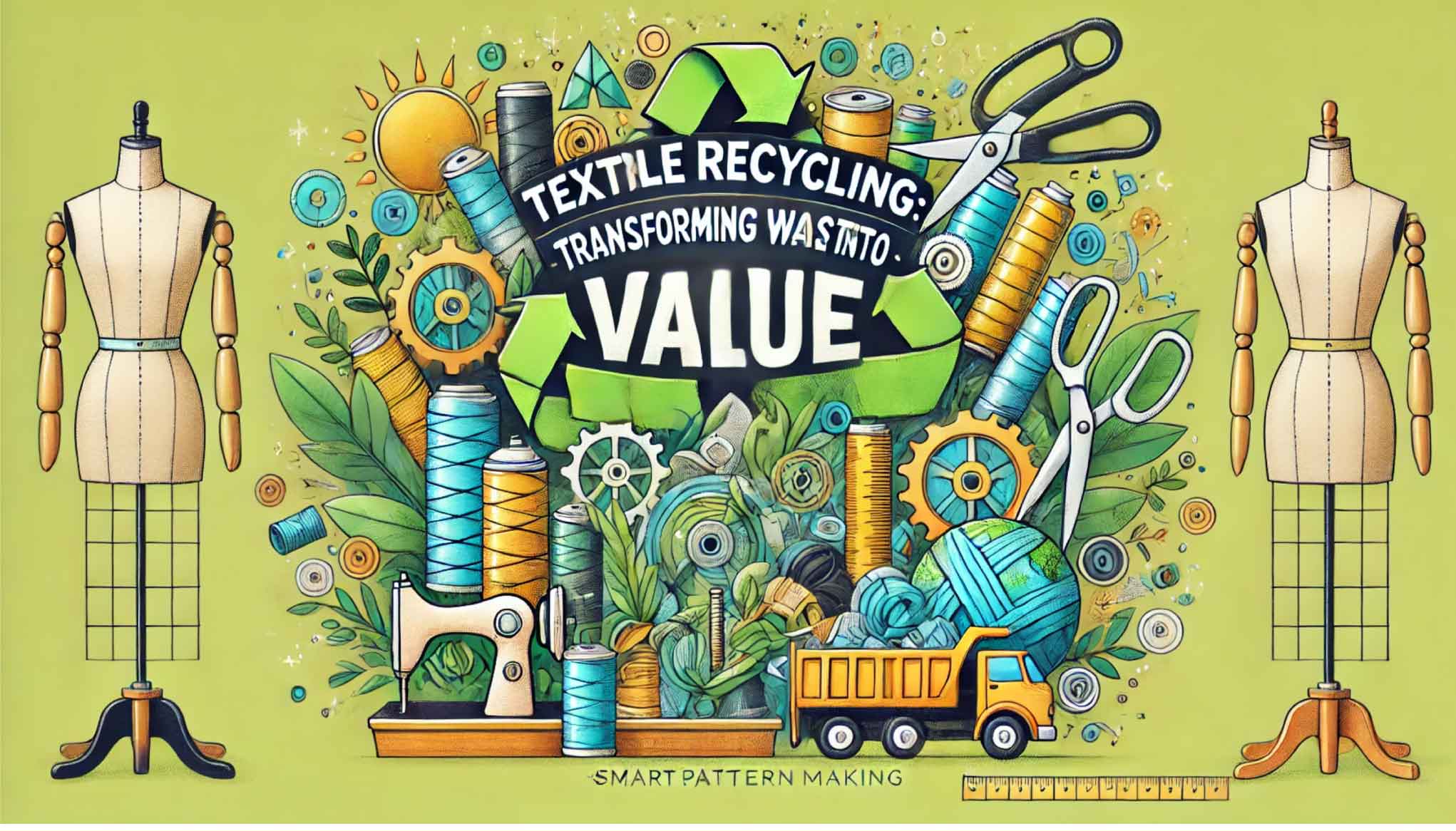
Mountains of discarded clothes, overflowing land fills, and polluted waterways bear witness to global textile and apparel industry's unsustainable practices. Textile waste, a by product of our insatiable appetite for fast fashion, is a growing environmental crisis. However, amidst this concerning scenario, a new thread of hope is emerging: textile waste recycling. This burgeoning field offers a promising solution to reduce landfill waste, conserve resources, and create a more circular economy.
Role of recycling to control a looming crisis
Every year, the world generates a staggering amount of textile waste enough to fill the Sydney Opera House every 20 minutes. As per the Ellen MacArthur Foundation, over 92 million tonnes of textile waste are produced annually, equivalent to a garbage truck full of clothes ending up in landfills every second. This waste, primarily composed of synthetic fibers derived from petroleum is not just an eyesore; it's a significant environmental hazard. The problem is particularly acute in developed countries, where fast fashion trends and consumerism fuel a relentless cycle of production and disposal.
Textile waste recycling presents a powerful antidote to this crisis. By diverting textile waste from landfills, the world can conserve precious resources. Recycling reduces the volume of textile waste ending up in landfills, mitigating pollution and conserving space. Recycling reduces the demand for virgin materials like cotton and polyester, lessening the environmental burden of their production. Pollution can be reduced as landfills leach harmful chemicals and generate methane, a potent greenhouse gas. Recycling helps mitigate these environmental hazards. What’s more it will create economic opportunities. Textile recycling fosters innovation and creates jobs in collection, sorting, processing, and manufacturing recycled textiles.
Table: Textile waste generation
Region Textile waste generation (mn tons) Recycling rate (%) Global 92 12 European Union 16 25 United States 17 15 China 20 10 India 5 20
A patchwork of policies
Recognizing the urgency of the textile waste crisis, governments worldwide are beginning to implement regulations and policies to promote textile recycling and reduce landfill waste. However, a globally harmonized approach is still lacking, resulting in a patchwork of regulations that vary significantly across countries and regions.
Table: Regulations across regions and countries
Region/Country Regulation/Initiative Description European Union Waste Framework Directive Sets targets for textile waste recycling and promotes extended producer responsibility (EPR) schemes. France AGEC Law Bans the destruction of unsold textiles and mandates separate collection of textile waste. Germany Textile Recycling Act Requires producers to finance the collection and recycling of textile waste. United States No federal legislation Several states have implemented EPR programs for textiles, and initiatives like the Sustainable Apparel Coalition are driving industry-led efforts. Japan Container and Packaging Recycling Law Includes provisions for recycling certain textile products. Australia National Waste Policy Focuses on waste reduction and resource recovery, including textiles.
Governments around the world are recognizing the urgency of the textile waste problem and are implementing regulations to promote recycling and reduce landfill waste.
Extended Producer Responsibility (EPR): EPR schemes hold producers responsible for the end-of-life management of their products, including textiles. This encourages manufacturers to design for recyclability and invest in recycling infrastructure. The EU Waste Framework Directive mandates EPR for textiles by 2025, while similar legislation is gaining traction in Canada and several US states.
Landfill Bans and Taxes: Several countries have imposed bans or taxes on textile waste disposal in landfills, incentivizing recycling and reuse. Italy, for example, has banned textile waste from landfills since 2016.
Minimum Recycled Content Requirements: Some jurisdictions are exploring regulations that mandate a minimum percentage of recycled content in new textile products. This would create a market demand for recycled fibers and encourage investment in recycling technologies.
Meanwhile, many initiatives across the globe are driving progress in textile waste recycling. Brand take-back program is one of them. Many clothing brands are launching take-back programs, allowing consumers to return old or unwanted garments for recycling or reuse. Patagonia's Worn Wear program and H&M's Garment Collecting initiative are notable examples. To add to it, organizations like the Sustainable Apparel Coalition and the Ellen MacArthur Foundation are fostering collaboration across the textile value chain to promote circularity and scale up recycling efforts. Also, innovations in sorting, fiber separation, and reprocessing technologies are making textile recycling more efficient and cost-effective.
Despite the growing momentum, textile waste recycling faces significant challenges. For example, many garments are made from blended fibers, making them difficult to recycle using conventional methods. Textile waste is often contaminated with dyes, finishes, and other impurities, requiring costly and complex pre-processing. Then the infrastructure for collecting, sorting, and processing textile waste remains inadequate in many regions. The economics of textile recycling can be challenging, as the cost of recycling often exceeds the value of the recovered materials.
A business opportunity
Despite the challenges, textile waste recycling presents significant business opportunities. First, companies that can efficiently recycle textile waste into high-quality fibers can tap into a growing market for sustainable materials. Brands can also create closed-loop systems by incorporating recycled fibers into their products, reducing their reliance on virgin materials and enhancing their sustainability credentials. Efficient collection and sorting systems are crucial for the success of textile recycling, creating opportunities for waste management companies and technology providers. And creative entrepreneurs are finding innovative ways to upcycle and repurpose textile waste into new products, from fashion accessories to home décor.
The moot point is that textile waste recycling is not just an environmental imperative; it is also a business opportunity and a catalyst for innovation. By embracing circularity and investing in recycling technologies, we can unravel the thread of waste and weave a more sustainable future for the textile industry and the planet.
Ritex Overseas targets Rs 300 crore turnover before exploring other avenues
Socks manufacturer and exporter Ritex Overseas aims to achieve a turnover of Rs. 300 crore before branching out into other verticals. The company also plans to expand its machines inventory from the current 3,000 to 4,000.
Ritex Overseas has an established research division focusing on socks. The division covers everything from design to yarn development. The company also exports its products to brands like the French luxury fashion house Balmain and plans to expand its export market.
Targeting the mass market, Ritex Overseas plans to produce high-quality products and offer them at lower prices to its customers. Although Ritex was incorporated in 1997, it began its journey in 1980 as Goswami Hosiery Works, initially specialising in socks dyeing before starting manufacturing in 1984. The company currently boasts a monthly production capacity of 2.5 million pairs of socks, utilising the latest knitting machines, according to Gopal Goswami, MD, Ritex Overseas.
Currently having a turnover of around Rs 60 crore -65 crore, the company plans to increase this Rs100 crore in this fiscal year.
Trutzschler, Murata Machinery achieve new milestone with 100th joint customer in China
Trützschler and Murata Machinery recently celebrated a major milestone in their enduring partnership, marking their 100th joint customer in China. This achievement highlights the success of their collaboration in advancing the IDF Vortex Spinning process, a cutting-edge solution that combines Trützschler’s Integrated Draw Frame (IDF) with Murata’s VORTEX machine.
Harald Schoepp, General Manager, Trützschler Textile Machinery Shanghai and Jiaxing, affirm, reaching this milestone with 100 joint customers in China showcases the strength of the partnership between the two companies. The innovative solution developed by these two companies together guarantees high-quality output and operational efficiency for their clients.
The partnership drives innovation within the Vortex spinning market, particularly in China, the largest market for this technology. By integrating the strengths of Trützschler’s IDF with Murata’s advanced Vortex spinning technology, the companies have successfully streamlined production processes, improved efficiency, and consistently delivered high-quality results.
This milestone stands as a testament to the collaborative spirit and dedication of Trützschler and Murata in pushing the boundaries of spinning technology, offering the industry a more efficient, integrated, and high-performance solution.
17th Bangladesh Denim Expo to register 44 exhibitors from 7 countries
Approximately 44 exhibitors from seven countries—Bangladesh, India, Pakistan, China, Turkey, Spain, and Italy—will participate in the 17th Bangladesh Denim Expo, scheduled to be held from Nov 04-05, 2024 at the International Convention City, Bashundhara (ICCB) in Dhaka.
These exhibitors will represent diverse sectors including technology, garment manufacturing, fabric production, and washing services. Organised by the Bangladesh Apparel Exchange, the event will gather global buyers, suppliers, designers, and manufacturers to explore the latest advancements in the denim sector.
This year’s theme, ‘The Blue New World,’ highlights a strong focus on sustainable practices and ethical fashion in response to evolving demands in the global apparel market. The expo will feature a range of displays, talks, and workshops centered on key areas such as design, technology, and sustainability within the denim industry.
Additionally, four panel discussions featuring international experts will address critical topics in the ready-made garment (RMG) industry. These will cover resilience in the face of industry challenges, strategies for Bangladesh to lead the global garment market by 2030, the impact of the GSP+ and LDC transition on the RMG sector, and buyer perspectives in Bangladesh’s evolving RMG landscape.
Turkey registers 12.5% decline insynthetic yarns exports in 2023: IndexBox
In 2023, Turkey registered a 12.5 per cent decline synthetic yarns exports to approximately 111,000 tons from the previous year. Despite these fluctuations, the overall export volume of synthetic yarns by Turkey increased at an average annual rate of 1.1 per cent from 2013 to 2023.
In value terms, Turkey’s exports of synthetic yarnsdeclined to $650 million in 2023, according to IndexBox estimates. The total export value increased modestly at an average annual rate of 1.6 per cent from 2013 to 2023 though notable fluctuations were observed.
The United States, Italy, and Russia were the top destinations for Turkish synthetic yarn exports in 2023, each receiving 13,000 tons, 13,000 tons, and 9,000 tons, respectively. Together, these countries accounted for 32 per cent of total exports. Belarus, the UK, Georgia, Iran, Spain, and Germany followed, collectively representing an additional 28 per cent of exports. Among these markets, Georgia saw the fastest growth in shipments, with a CAGR of 69.7 per cent.
In terms of export value, the United States ($100 million), Italy ($79 million), and the UK ($45 million) were the largest markets for Turkish synthetic yarn exports, together comprising 34 per cent of the total. Russia, Belarus, Georgia, Spain, Germany, and Iran made up an additional 30 per cent. Georgia also recorded the highest growth in export value, with a CAGR of 74.9 per cent during the review period.
By product category, yarn (other than sewing thread) of synthetic staple fibers, not sold for retail, dominated Turkey’s exports, with 74,000 tons accounting for 67 per cent of total volume. From 2013 to 2023, exports of synthetic staple fiber yarn (other than sewing thread, not for retail) grew at an annual rate of 2.6 per cent.
In terms of value, synthetic staple fiber yarn (other than sewing thread, not for retail) led exports with $388 million in 2023, followed by man-made staple fiber yarn (not sewing thread, sold for retail) at $216 million, and artificial staple fiber yarn (other than sewing thread, not for retail) at $46 million.
Sluggish domestic demand to impact RMG sector growth this year: CRISIL Ratings
Combined with a shift in consumer spending towards travel, electronics, and other services, the ready-made garments sector (RMG) in India is likely to be impacted by a sluggish domestic demand this year, as per a report by CRISIL Ratings.
Based on an analysis of over 140 RMG manufacturers with combined revenues of around Rs 43,000 crore, the reportprojects, this fiscal year, RMG exports will grow by 5 per cent -7 per cent. The report attributes this growth to the replenishing of inventories by US and EU retailers, although profit margins might remain flat due to anticipated lower cotton prices. Notably, exports contribute roughly 25 per cent of the industry's revenue.
Last fiscal year, domestic revenue rose by 10 per cent, while export revenuesdeclined by 7 per cent. This fiscal year, the trend is expected to reverse with exports rebounding exports and domestic apparel demand growth slowing down.
Gautam Shahi, Director, CRISIL Ratings, notes, RMG manufacturers faced revenue challenges in the first half of the fiscal year due to retailers' overstocking from the previous year. However, the sector is poised for a boost in the second half, driven by the festive season and an increased number of weddings.
Additionally, recent political unrest in Bangladesh may offer a short-term benefit to Indian RMG exporters. However, the advantage is likely to be limited due to the importance of RMG exports to Bangladesh's economy, differences in product offerings between the two countries, and favorable import duties that benefit Bangladesh’s RMG exports to the European Union.
More...
Kering’s Q3 2024 revenue declines 15% amid challenging luxury market
Kering's revenue for Q3 2024 reached €3.8 billion, marking a 15 per cent decline as reported and 16 per cent on a comparable basis. This downturn includes a 1 per cent negative currency effect and a 2 per cent positive scope effect, driven by the Creed consolidation. François-Henri Pinault, Chairman and CEO, emphasized the group’s focus on long-term sustainable growth despite unfavorable market conditions impacting short-term performance.
Retail sales were down 17 per cent, largely due to reduced store traffic, particularly in Asia-Pacific and Japan. North America and Western Europe showed mixed results across Kering’s portfolio, while wholesale revenue dropped 12 per cent.
Gucci saw a steep 26 per cent decline in revenue, down to €1.6 billion, with retail sales falling 25 per cent due to tough market conditions, especially in Asia-Pacific. Gucci’s wholesale revenue fell 38 per cent, reflecting its strategic realignment.
Yves Saint Laurent reported a 13 per cent revenue drop to €670 million. Retail sales decreased 12 per cent, and wholesale sales fell 20 per cent, despite continued success in its leather goods and fashion shows.
In contrast, Bottega Veneta grew its revenue by 4 per cent to €397 million, with a 9 per cent increase in retail sales driven by strong performance in North America and Western Europe. Wholesale sales, however, were down 10 per cent.
Other Kering Houses, including Balenciaga and Alexander McQueen, generated €686 million in revenue, down 15 per cent. Balenciaga’s leather goods performed well, while Alexander McQueen’s rebranding received positive reception.
Kering Eyewear and Corporate segment revenue rose by 32 per cent, driven by a 4 per cent growth in eyewear sales and contributions from Kering Beaute and Creed.
Amid economic uncertainty, Kering expects its 2024 operating income to reach approximately €2.5 billion. The group remains focused on optimizing costs and driving long-term growth for its luxury brands.
Bangladesh's apparel exports to EU sees fluctuations
Bangladesh's apparel exports to the European Union (EU) have seen a mixed bag in 2024. While August saw a 3.1 per cent increase, driven by knitwear and woven garment exports, the overall trend for the first eight months remains negative.
Knitwear exports from Bangladesh rose by 1.4 per cent in August, totaling €1 billion. Woven garment exports experienced a stronger growth of 6.2 per cent, reaching €602 million.
However, Bangladesh's total apparel exports to the EU for the first eight months of 2024 dropped by 3.51 per cent to €11.90 billion. Knitwear exports in this period fell by 6.51 per cent, while woven garment exports saw a slight increase of 1.05 per cent.
The EU's total apparel imports between January and August 2024 also decreased by 3.62 per cent. Despite these challenges, Bangladesh remains optimistic about future growth, citing improving EU economic conditions and government efforts to boost exports.
While Bangladesh's exports have fluctuated, China, the largest apparel exporter to the EU, has seen a steady increase. Turkey, the third-largest exporter, experienced a decline.
The overall trend in the EU apparel market has been a decline in imports, reflecting reduced apparel consumption. This has affected exports from various suppliers, including Bangladesh.
Moving forward, Bangladesh will need to navigate the challenges of fluctuating demand, competition from other suppliers, and the ongoing impact of global economic factors.
Shoppers Stop posts Rs205.9 million Q2 loss amid high inflation, weak demand
India's leading department store chain, Shoppers Stop, reported a second consecutive quarterly loss. The company attributed the decline to a combination of factors, including high inflation, reduced discretionary spending, and fewer wedding dates.
The department store chain's CEO, Kavindra Mishra, noted that subdued demand during the second quarter was primarily due to extended rains and a weak consumer sentiment. Rising inflation has forced consumers to prioritize essential goods, resulting in reduced spending on non-essential items such as apparel.
Despite the overall downturn, Shoppers Stop's beauty and personal care (BPC) segment continued to show growth, with sales increasing by 10 per cent during the quarter. This segment, which contributes over a fifth of the company's revenue, benefits from the growing Indian beauty market, which is expected to reach nearly $47 billion by 2032.
Overall, Shoppers Stop's revenue from operations rose 7 per cent to 11.15 billion rupees. However, the company's net loss for the quarter ended September 30 amounted to 205.9 million rupees, compared to a profit of 27.3 million rupees a year earlier.
As the Indian retail landscape continues to evolve, Shoppers Stop and its competitors are facing increasing pressure to adapt to changing consumer preferences and economic conditions.
Pilot Knit Garment adopts Coats Digital’s FastReactPlan for digital transformation
Thai sportswear manufacturer Pilot Knit Garment, part of the Yong Udom Textile Group, has selected Coats Digital’s FastReactPlan to digitize its manual planning processes. The solution aims to enhance efficiency, optimize On-Time Delivery Performance (OTDP), and reduce lead times by improving planning and forecasting accuracy across departments.
Established in 1986, Pilot Knit Garment, headquartered in Samutsakorn, Thailand, manufactures sportswear for global brands like Nike, Converse, and Jordan, producing 200,000 pieces per month with over 660 employees. Despite having access to high-quality fabrics, the company faced challenges managing production with manual Excel-based planning, leading to under- or overcapacity issues and extended lead times.
Managing Director Ampon Ruayfupan expects FastReactPlan to be transformative, improving fabric management and capacity utilization. The solution, part of Coats Digital’s Manufacturing Solution Suite, offers dynamic, real-time production updates, enabling Pilot Knit Garment to plan months in advance and respond swiftly to last-minute changes. Coats Digital's Haruethai Phaleesem emphasized the seamless integration with Pilot Knit’s Tega ERP system, providing greater visibility and streamlining production planning. The company aims to enhance efficiency, reduce costs, and maintain its competitive edge in the market.