Chinese buyers create positivity at Milano Unica

The exceptional number of visitors attending the various events was the result of a synergy developed between these impressive fashion trade shows featuring raw materials to finished garments. The Italian fashion network benefitted from the debut of finished clothing and footwear products inside Chic, accompanied by Milano Unica for the textile-accessories division, through the coordination between the Ice Agency, and the economic and institutional support of the Ministry of Economic Development.

After seven editions, the event is considered an essential point of reference. “The combined presentation with the fashion production chain is an example of the importance of creating a valid network, especially when it comes to distant markets,” said Silvio Albini, President of Milano Unica.
A total of 104 exhibitors displayed their offerings to 3,500 select visitors, the figures perfectly in line with the S/S edition held in March 2014. The Chinese market, is continuously evolving and currently undergoing a period of adjustment following the introduction of ‘new normality’, a result of the anti-corruption law passed by the government of Xi Jinping, welcomed Italian textiles and accessories with a new outlook. Following the constant growth in sales, a temporary halt in exports, especially for the woolen division had begun to worry Italian entrepreneurs operating at the initial phases of fashion production. However, after numerous seasons of overstocking, Chinese buyers showed a growing need to source fabrics.
As forecasted by experts at Bain & Company, the slowdown affecting the woolen division is expected to diminish, and export should become stable or even show signs of growth, thanks to a recovery of the ‘uniform’ market. Large Chinese companies that purchase formal outfits will create an important opportunity for classic-formal production. Italian firms are now witnessing change in the buying behavior of Chinese consumers, who are now moving to upper casual and sportswear products. This new tendency has motivated designers to innovate.
The passion of Chinese designers is demonstrated by special attention to exclusive products and services that only the Italian textile network is able to offer, like innovation, research and taste, that too in limited quantities. The Asian giant now seems to prefer small amount of unique products. Despite economic changes, the country's potential for growth is still very high because of the rise in purchasing power of the middle class consumers.
Cotton prices fall in India
India's cotton exports have begun to pick up. For the first time this season ending September, Indian cotton became the cheapest in mid-February. Lower shipping charges to nearby destinations give the country an added advantage. Prices are at least five cents a pound cheaper than US cotton and two or three cents lower than African cotton.
Demand from China is almost nil but there have been enquiries from Bangladesh, Pakistan, Turkey, Indonesia and Vietnam. China has not issued any additional import quota this year. It has been trying to reduce record stocks that have been built up over the last couple of years. China’s ending stock will account for 56 per cent of global inventory despite its efforts to cut it.
Currently ample cotton is available in India, while the US and Brazil have almost sold out their produce. However, exports from India since the beginning of the season ending September have been lower compared with the same period a year ago. Exports are estimated to be 58 per cent lower compared with last year.
Though exports are picking up, there is no danger of the domestic market being starved of supply. The practice of spinning mills in south India buying cotton from West Africa later in the season could also help keep prices on leash.
Bangladesh wants factories registered
Bangladesh plans to create a new sponsoring authority to oversee the country’s textile mills, making it mandatory for them to be registered with it. All existing textile units, according to the proposed law, will require getting registered with the authorities for obtaining support from the government and other trade bodies including financial institutions. If a textile factory fails to get enlistment from the sponsoring authority, it will not be allowed to work with the enlisted one under sub-contracting arrangement.
Believing textile mills have been set up in an unplanned and scattered way, the country feels now it is time to bring those under a system since safety and environmental issues have now emerged as a major obstacle for the country in satisfying overseas buyers. Mill owners say they are not against enactment of the law but not all textile mills have the ability to set up effluent treatment plants and are capable of ensuring all types of compliance issues in their factories. They say the government should make a plan to provide the necessary technical and financial support to small and medium capital-based factories.
According to the draft act, if factory owners fail to enlist their factories with the sponsoring authority, then the factory owner might be awarded up to three months’ imprisonment or a fine.
Invista's Cordura brand presents high tenacity fibers
Invista's brand Cordura is launching a new range of fibers designed primarily for the development of knitted and woven fabrics. The high tenacity polyester fiber range is air jet textured for enhanced abrasion resistance, tensile and tear strength.
Cordura fabric is known for its resistance to abrasions, tears and scuffs. Finished Cordura fabrics made using these qualifying fibers can be printed, laminated or used in uncoated forms and are suited for products such as luggage, upholstery and backpacks, footwear, military equipment, tactical wear, work wear and performance apparel, outdoor clothing, high performance sportswear.
Cordura Nyco and Cordura Denim fabrics designed for work apparel feature the same Invista T420 technology. These nylon 6,6/cotton blend fabrics offer the comfort benefits of cotton-rich fabrics combined with exceptional durability and are particularly suitable for those environments where working conditions are at their most harsh. Cordura Nyco fabric is based on an intimate blend of cotton and T420 nylon 6.6 fiber. It is said to offer comfortable durability in military and tactical uniforms while providing abrasion resistance and no melt no drip thermal protective performance.
These fibers will be displayed at the upcoming Techtextil trade fair for technical textiles and nonwovens, Germany, May 4 to 7.
www.cordura.com/
Tamil Nadu ships cotton from Gujarat
Textile mills in Tamil Nadu have started to use the shipping route, instead of road, to transport cotton from Gujarat. As against 1,200 containers of cotton transported by sea last year from Gujarat to Tamil Nadu, the volume this year increased to 2,600 containers till January. It is expected to touch about 4,400 containers by the end of this month.
The cost of transporting one bale of cotton by road from Gujarat to Tamil Nadu works out to nearly Rs 850. It is between Rs 640 and Rs 790 by ship. During the last three months, Southern India Mills’ Association (SIMA) has held discussions with the Indian National Ship Owners’ Association and the revised rates for transport by ship range between Rs 590 and Rs 730 for a bale of cotton. While one shipper is offering the service now, two more have expressed interest.
Some textile mills bring cotton from Gujarat by ship and even send return cargo (fabric or garments) to the northern states in the same container. SIMA had written to the Tamil Nadu chief minister, seeking steps to bring down the cost further. Most of the cotton from Gujarat or Maharashtra arrives at the Tuticorin port.
Tamil Nadu accounts for one-third of the textile business in the country and textile mills in the state account for 44 per cent of the total spinning capacity of the country.
Lesotho may lose AGOA benefits
An estimated one-third of Lesotho's textile and clothing production will be decimated if the African Growth and Opportunity Act (AGOA) is not renewed in September. Lesotho is a small landlocked country entirely surrounded by South Africa. It is the largest sub-Saharan African garment exporter to the US, accounting for 30 percent by value and 28 per cent by volume of exports from the region to America. About 80 per cent of the country’s textile and garment exports are US-bound.
Before AGOA, the Lesotho textile and clothing industry employed around 20,000 people, with South Africa and Europe being the principal export markets. In the years following the establishment of AGOA in 2000, the focus shifted to US and employment in the sector rose to 55,000. This has fallen back to 44,000 since the abolition of the World Trade Organization’s multi fiber arrangement (MFA), which sparked more intense competition from Asia.
Lesotho is the jeans capital of Africa, producing 26 million pairs of denim jeans annually. It also makes 70 million knitted garments a year.
Currently around 75 per cent of the industry’s investment is from China, Taiwan and Southeast Asia. While the early days of AGOA saw the development of poor quality temporary businesses, MFA abolition saw many of those players eliminated.
Gandhigram to promote natural dyed khadi
The Gandhigram Trust has plans to tap high-end natural dye textile market in the southern districts. To begin with, it will make available its natural dyed khadi saris and other textile materials through its sales outlets at Madurai and Dindigul.
The main objective of making natural dye saris in modern designs is to expand the market base and boost income of weavers and familiarise khadi products among the next generation. Already the trust has conducted a survey to study the changing preferences and tastes of young women with regard to colors and designs of saris. To give a new look to khadi textiles, the trust has roped in textile design experts and the Craft Council of India for production, marketing, support and training in weaving and designing.
Research is on to manufacture natural dyed khadi materials. All colors would blend easily with other colors in the natural dye yarn. But in chemical dyes, some colors would not match with some others. The trust plays a little with colors and uses only traditional designs for the border to give an aesthetic look to saris.
Khadi natural dye textile products were received well at the Natural Dye Bazaar organised in association with Cooptex in Chennai recently.
www.gandhigram.org/
Pakistan to impose sales tax on cotton
Pakistan will impose a standard sales tax on cotton in the Budget 2015-16 with a view to generating about Rs 50 billion in revenue. Currently sales tax exemption is available on local cotton and a 5 per cent sales tax is applicable on the import of cotton. However, in the upcoming budget, the government has proposed imposition of sales tax on cotton.
The government has set a cotton target for the next season (2015-16) at 15.49 million bales against the revised target of 13.48 million bales for the outgoing season (2014-15). The government had set an initial target of 15.1 million bales for the current season (2014-15). However, later the target was revised three times to finally set at 13.48 million bales due to multiple issues including water shortage, rains/floods, and shortage of certified seed.
A notification grants exemption on import and supply of plant and machinery not manufactured locally subject to certain conditions. Sales tax was charged at a reduced rate of 5 per cent on such plant and machinery, subject to the same conditions.
Nonwoven consumption set to grow
Despite a slowdown in nonwovens, the global per capita consumption is expected to grow from 1 kg in 2011 to 2 kg by 2025. And nonwoven and nonwoven-based products find wide applications in personal healthcare, infrastructure, air and water purification and mobility.
A recent symposium on hi-tech application of nonwovens by the Indian Technical Textile Association (ITTA) in Mumbai recently focused on the challenges facing the segment and the opportunities in the global nonwoven industry; innovations: growth driver of nonwovens; and emerging opportunities in agro and hygiene applications.
The Indian Technical Textile Association is the only association of technical textile industry which represents the technical textile value chain including raw materials, finished goods producers, consultants, machinery manufacturers, centers of excellence and R&D institutes.
The association has a membership of over 200 companies. The objective of ITTA is to promote, support, develop and increase the production, consumption and export of technical textiles. It wants to make India a powerhouse of technical textiles. To support and empower technical textile manufacturers and suppliers, ITTA has close interaction with the government of India and helps it in formulating policies to remove ambiguities in the system. ITTA is fully dedicated to its members’ success and aims to become the sole voice of the Indian technical textile industry to bring together all stockholders of the sector under one roof.
www.ittaindia.org/
Bangladesh set to be denim giant
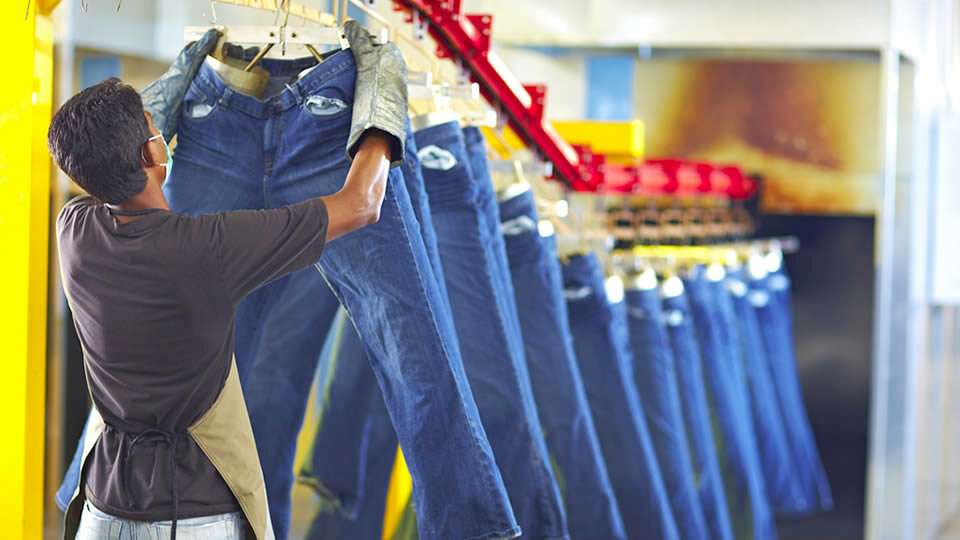
Bangladesh is fast turning into a major source of denim products as international retailers prefer the country to other destinations for its low prices. Bangladesh manufacturers are also increasing their production capacities because of the higher demand from foreign customers.
Denim will play an important role in raising exports of Bangladesh, which is already the second largest garment exporter worldwide after China. Currently, 25 denim factories are operating in Bangladesh. Five new companies have also been set up.
International retailers are coming in with increased volume of work orders, thanks to low prices. Among the global players in the $60 billion denim market, Bangladesh lags behind China, the US, Italy and some Latin American countries. Denim is expected to contribute around $2 billion to the country’s garment export target of $50 billion by 2021.
There has been a shift in work orders from China to Bangladesh. China is losing out on its denim business due to high costs of production and a shortage of workers. Bangladesh’s share in the global denim market stands at about one $1billion. Local denim factories produce around 20 million yards of the fabric a month, meeting half of the local consumption. The rest is imported.
More...
India may limit cotton export
India is mulling a 10 per cent cap on the volume of cotton to be exported. The proposal is to put a 10 per cent cap on the amount of exportable cotton per year and a 10 per cent duty on the export of cotton over and above this exportable surplus.
The reasoning is that this is in line with the budget proposal to save domestic industry by building a cotton reservoir. But this move raises doubts as the country is heading for surplus stocks amid an export scenario hurt by China’s import policy.
India exports nearly 60 per cent of its cotton to China, the world’s largest importer, which has a stockpile of nearly 63 million cotton bales. Due to China’s decision to offload its substantial stock of cotton, the market demand is lower than supply. This has resulted in prices of cotton coming down.
Cotton exports from India into China declined 26.4 per cent year on year over April-October 2014 compared to a 4.3 per cent decline the year earlier. Lower global cotton prices and the relatively stable Indian rupee will keep the attractiveness of Indian cotton under pressure in the export market. India’s cotton exports to other destinations are unlikely to replace the quantum of lower trade with China.
Phase out textile subsidy, WTO tells India
WTO member countries like the US, the European Union, Turkey, Japan have asked India to phase out export subsidies on textiles and the apparel sectors. WTO says India has crossed the export competitiveness limit (exports reaching 3.25 per cent of world trade) consecutively for two years in these sectors.
The sops that will have to be phased out include the popular Focus Product and Focus Market schemes under which exports to targeted markets are incentivised, the EPCG scheme and the interest subvention scheme for export credit. However, the government has not taken any decision on phasing out of subsidies.
India’s share in world trade for textile and clothing was 4.66 per cent in 2013 with exports worth $37 billion. Textile and clothing exports contribute more than 10 per cent to India’s export basket. They are the fourth largest product group in India’s outbound shipment basket.
As per the WTO, when the share of a developing country in global exports touches 3.25 per cent in any product category for two straight years, thereby gaining export competitiveness, it has to phase out export subsidies for the items eight years from the second year of breach. In case of nations with higher income levels, such subsidies are a strict no-no.
India, however, cites the WTO rule book to insist it has time until January 2018 as the multilateral trade body asked the country to consider phasing out the subsidies for textiles and clothing only in 2010.
Pakistan ginners asked to pay taxes
The Federal Board of Revenue (FBR) in Pakistan has warned ginners to pay taxes of one billion rupees before or on March 30, 2015. Otherwise notices would be served to them in default of payment of tax at the rate of Rs 6 per maund on binola (cotton seed) as per the agreement reached between the PCGA and the Ministry of Finance.
The Pakistan Cotton Ginners Association (PCGA) has asked members to pay tax on the sale of binola cotton seed at the rate of Rs 6 per maund till March 30, 2015, to save themselves from any trouble otherwise they would have to pay five per cent general sales tax on oil-cake (khal) and two percent on binola oil.
The Federal Board of Revenue and the Pakistan Cotton Ginners Association have reached an agreement to pay Rs 6 per maund tax on cotton seed instead of five per cent GST on oil-cake and two per cent on cotton seed oil.
Ginners would have to pay more Rs one billion as tax against the sale of 165.44 million maund of binola. About 88,23,511 tons of raw-cotton (phutti) was arrived in the ginneries. Of them 66,17,633 tons of cotton seed were sold to oil expellers.
Hong Kong hosts intimate apparel event
The eighth international symposium of intimate apparel was held in Hong Kong on March 17. It was organised by the Institute of Textiles and Clothing (ITC) of the Hong Kong Polytechnic University. The event was supported by the world's leading lingerie and beachwear trade show organizer Eurovet, the Hong Kong Intimate Apparel Industries’ Association and The Hong Kong Research Institute of Textiles and Apparel.
With the theme Intimate Apparel, Cradle to Cradle, the symposium held this year brought together local and overseas lingerie experts to share their insights and experiences. It discussed the latest product trends and development in the global lingerie market. It also sharpened the industry’s competitive advantage on future product lifecycle management. The aim was to promote the exchange of the latest knowledge in intimate apparel among academics and industrialists.
Among participants were lingerie designers, retailers, traders, suppliers, manufacturers and academics from Hong Kong, China, Asia and all over the world. Distinguished speakers shared their ideas and experience on the new development in sustainability of the global intimate apparel industry.
The Ace Style Institute of Intimate Apparel of ITC is the first lingerie institute in the Asia Pacific. Over the years, the institute’s research has reaped fruitful results and gained an international reputation.